Kugelgasse: Marburg's Steep Historic Lane
Marburg's Iconic Vertical Topography
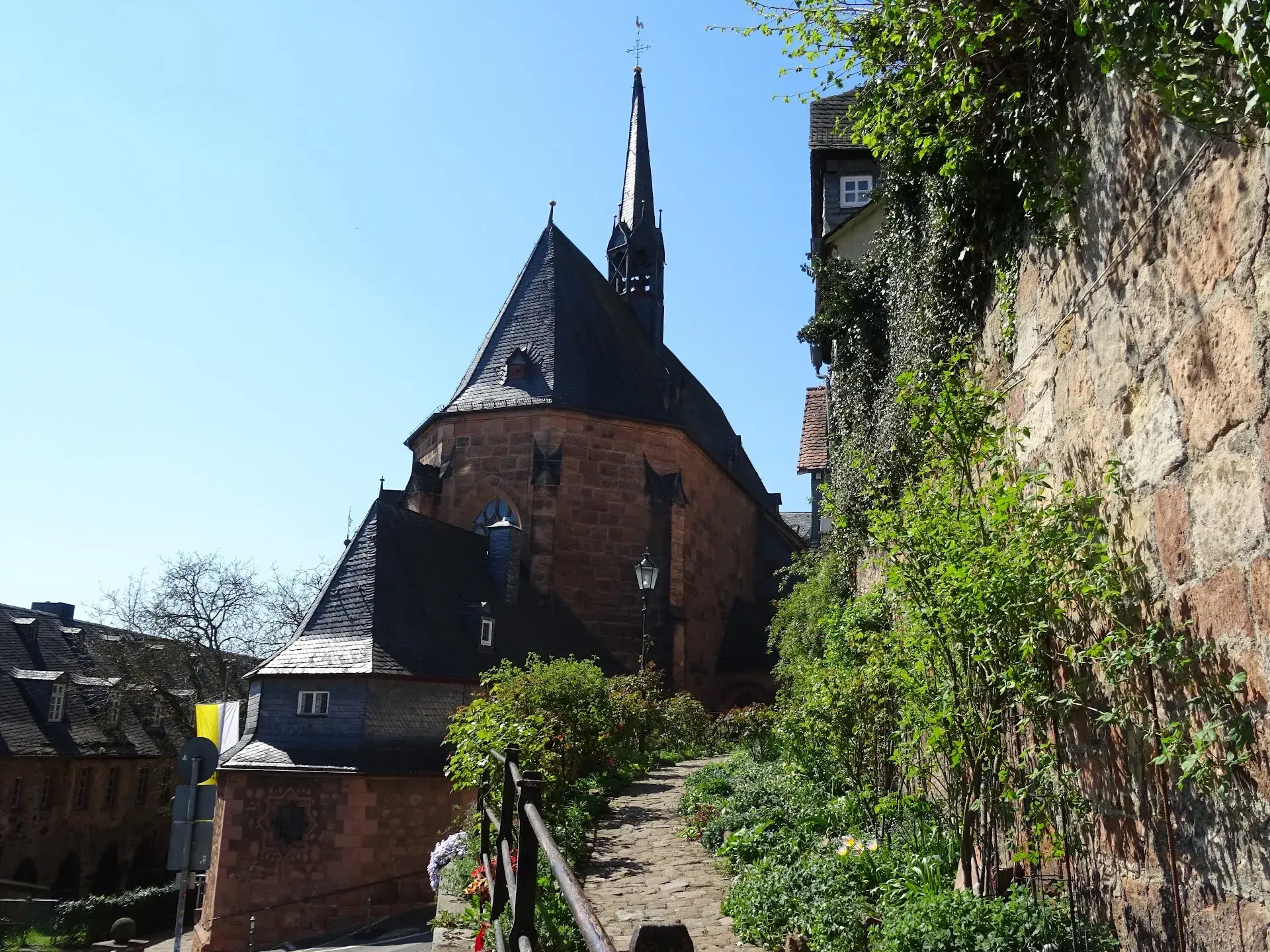
Jacob Grimm famously observed that Marburg has "more stairs in the streets than in the houses." This vertical reality is perfectly captured by the steep, cobbled ascent of Kugelgasse. The lane exemplifies the classic topographic layout of Marburg's Oberstadt, forming a quintessential pedestrian link from the bustling lower core around Barfüßerstraße to the quieter terraced slopes leading up toward the Landgrafenschloss. The route is defined by irregular basalt cobbles, stone curbs, and narrow step sequences that shift abruptly into pedestrian pathways.
The Legacy of the Kugelherren
The development of Kugelgasse was spurred in the late 1470s when Marburg alderman Heinrich Imhof and Elisabeth von Treisbach endowed a monastic complex for the Brothers of the Common Life. The lane takes its name from this religious community, known locally as the Kugelherren because of the conical hoods, or "Gugel," worn by its members.
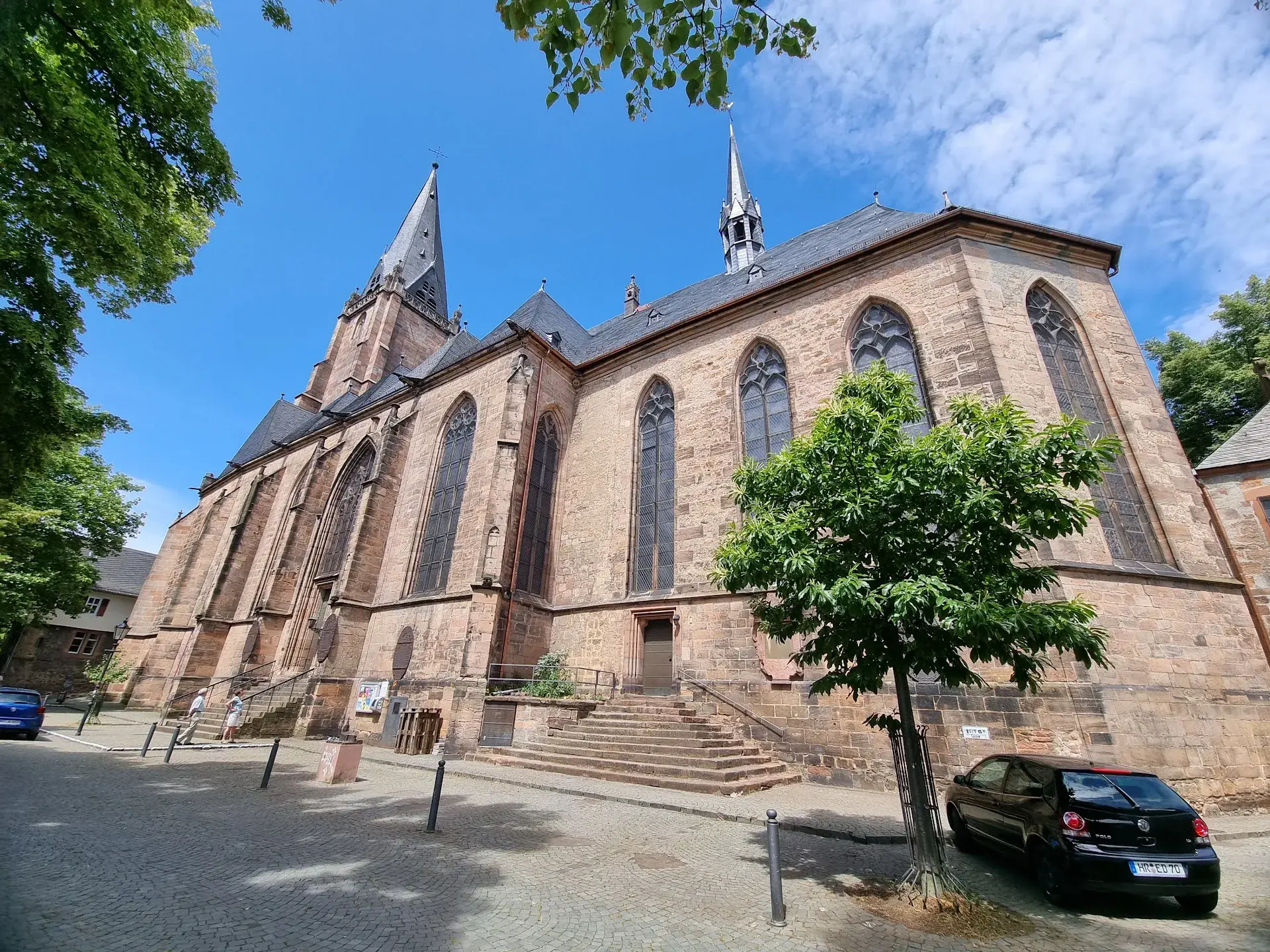
The area is anchored by significant monuments from this era. The Kugelkirche, built between 1492 and 1520, stands as Marburg's only complete, newly erected late-Gothic church structure. Nearby, the former fraternity house at Kugelgasse 10, completed in 1491, retains historical relief markings on its late-Gothic stone facade.
Reformation and University Repurposing
Following the introduction of the Protestant Reformation by Landgrave Philip the Magnanimous in 1527, the Kugelherren community was dissolved. The property was transferred to the newly founded Philipps-Universität Marburg. The university repurposed the church as a theology lecture hall and utilized the Kugelhaus for student dining and academic institutes. In 1827, the Kugelkirche was returned to religious use and operates today as an active Roman Catholic parish.
Half-Timbered Homes and Hidden Curiosities
Today, Kugelgasse serves as a quiet residential route integrated into the city's historic preservation programs. Terraced front gardens with creeping rock-wall vegetation line the ascent alongside preserved vernacular architecture. Notable residences include Kugelgasse 7, featuring a four-story timber frame dating to around 1600, and Kugelgasse 1. The latter was the historic home of Ludwig Bickell (1838–1901), Hesse's first district conservator and the founder of the Marburg University Museum of Art and Cultural History.
An elevated footpath along the upper retaining wall adds another layer of historical intrigue. Named "Auf der Schlimmen Mauer" (The Crooked Wall), local folklore attributes the title to a historical wall collapse. However, the name actually stems from the Middle High German root "slimb," meaning slanted or steeply inclined.
FAQ
How did Kugelgasse get its name?
Kugelgasse is named after the Kugelherren, also known as the Brothers of the Common Life. This religious community wore distinctive conical hoods known in German as a "Gugel."
What is the historical significance of the Kugelkirche?
Built between 1492 and 1520, the Kugelkirche is notable for being Marburg's only complete, newly erected late-Gothic church structure.
What does the name "Auf der Schlimmen Mauer" mean?
While local folklore suggests a historical wall collapse, the name translates to "The Crooked Wall" and actually derives from the Middle High German word "slimb," which means slanted or steeply inclined.
Discover Marburg like never before
Dive into Marburg hidden stories and secret spots with Ciceru interactive tours.
Explore tour
Audioguide
Quizzes
Maps
Solo
Couples
Groups & families

© Photo by M. E. via Google Maps · Google Places