St. Marien Church Marburg: History & Architecture
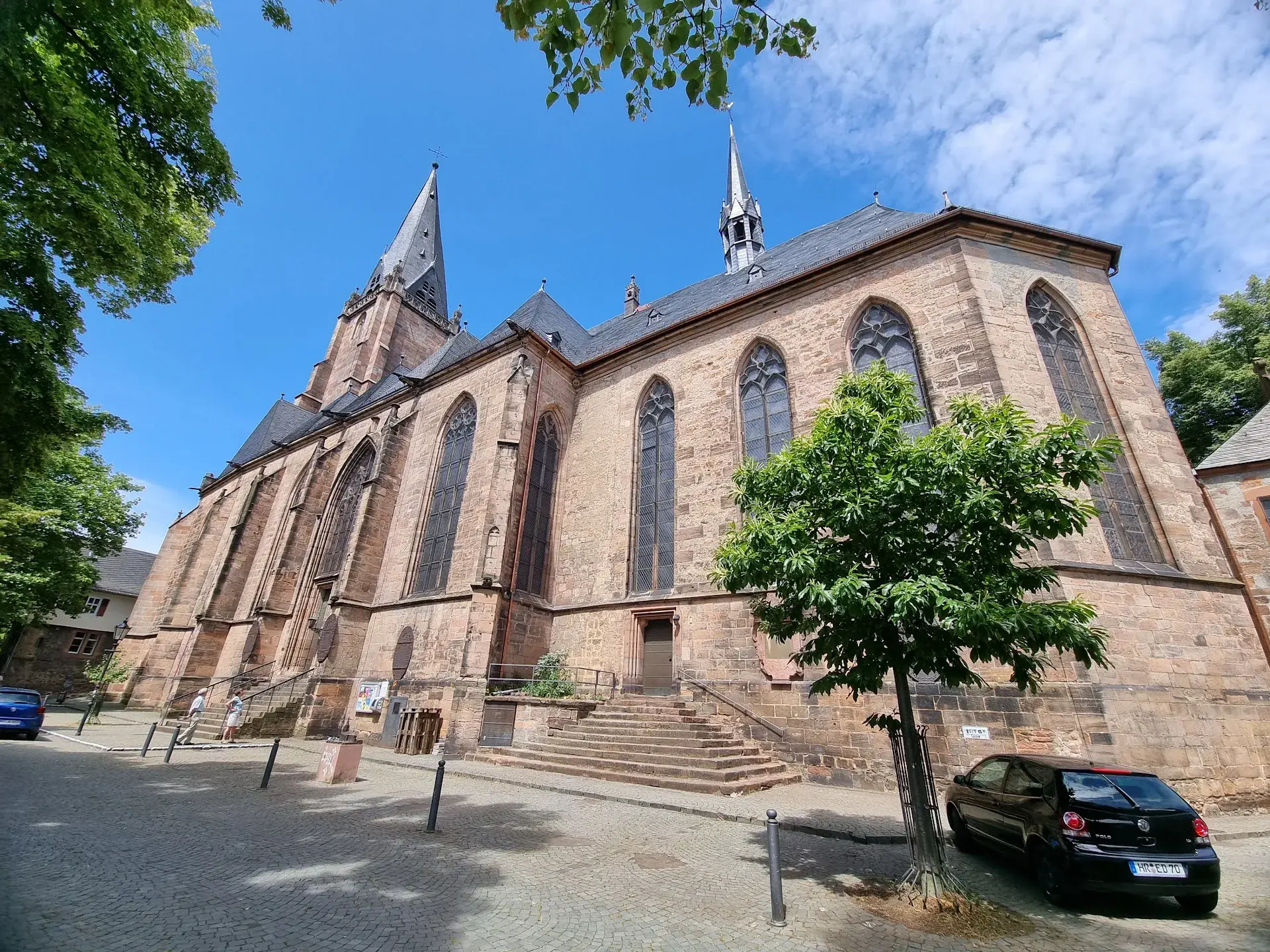
Halfway between the civic Marktplatz and the princely Landgrafenschloss stands the Lutherische Pfarrkirche St. Marien, easily identified by its unmistakably crooked spire. Positioned on an elevated terrace in the Oberstadt, the church serves as a primary overlook and architectural anchor for the city of Marburg.
Marburg's Oldest Parish Church
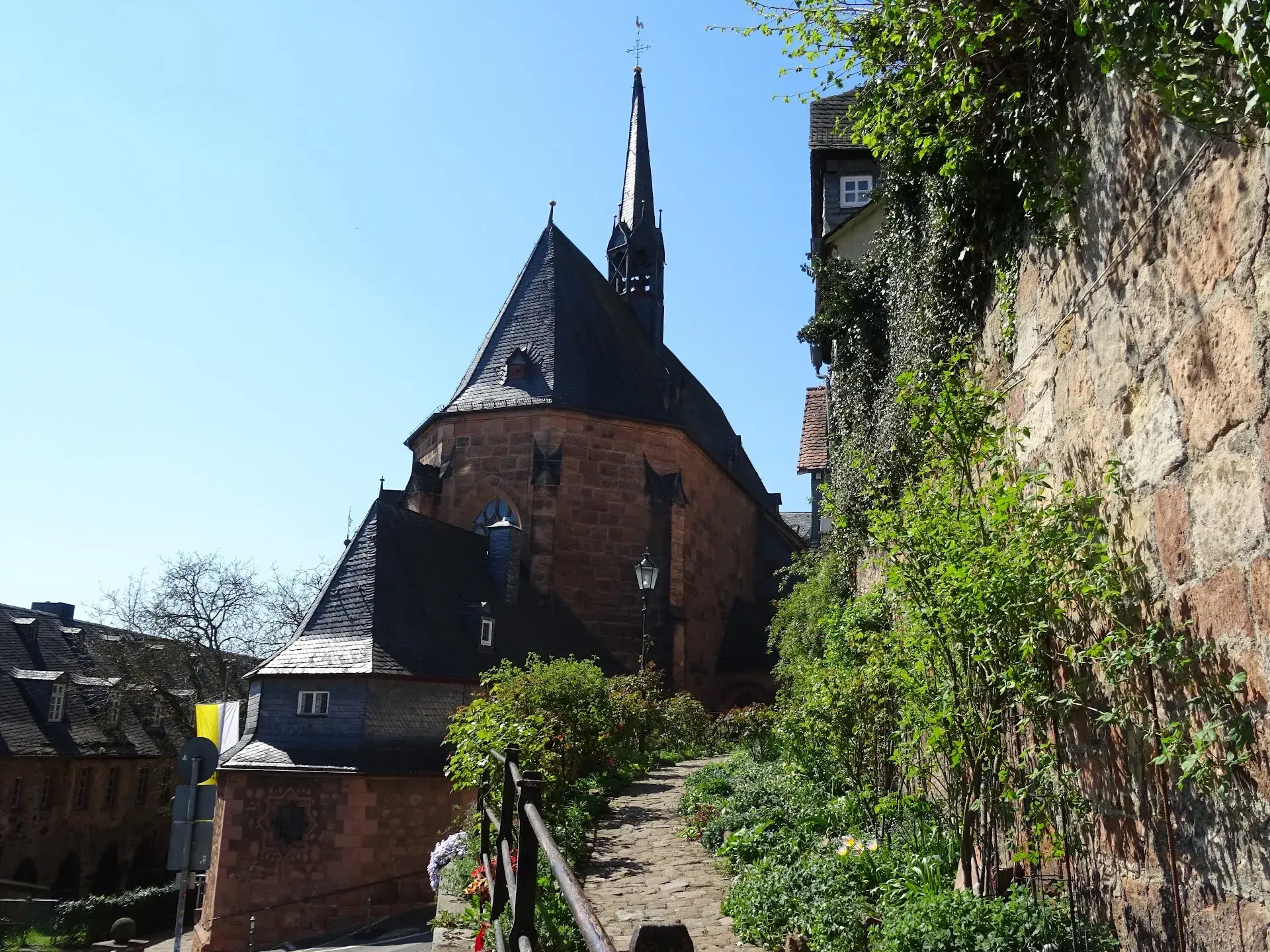
The Lutherische Pfarrkirche St. Marien is a three-aisled Gothic hall church. First documented in 1222, the site was granted independent parish rights in 1227. The current structure evolved over several centuries. A Gothic choir was built onto a Romanesque predecessor and consecrated in 1297. The nave was later erected between 1318 and the 1390s under the direction of master builder Tyle von Frankenberg. The west tower, capped with its distinctive wooden spire, was completed between 1473 and 1488.
While the Elisabethkirche located outside the city walls primarily served the Teutonic Order and pilgrims, St. Marien functioned as the main church for Marburg's urban burghers. The open terrace surrounding the building served as the town's primary cemetery until the 19th century and remains bordered by a Gothic ossuary built around 1320.
The Iconic Crooked Spire
Looking up at the church's tower reveals a dramatic visual torsion. The slate-covered wooden spire appears severely warped and rotated against the skyline. This iconic twist and tilt was not part of the original design. Instead, it is the result of centuries of structural timber warping, caused by the unilateral heat of the sun and prevailing weather patterns on the ridge.
Confessional Shifts and Interior Treasures
In 1527, Landgrave Philip the Magnanimous introduced the Lutheran Reformation, designating St. Marien as the city's parish church and the university church for the newly established Philipps-Universität. Later, in 1605, Landgrave Moritz attempted to impose Calvinism, a shift that led to the destruction of the church's medieval figurative art.
Despite this iconoclastic upheaval, a late 13th-century wall fresco of the Madonna and a medieval depiction of the legendary Saint Wilgefortis survived in interior wall niches. The church's Lutheran identity was eventually restored, anchored by a large Early Baroque altarpiece installed in 1626 by Andreas and Peter Franck. The choir also functioned as a ducal burial site for local rulers of the Hessen-Marburg line. Additional historic furnishings spanning the centuries include a Romanesque stone baptismal font, a 1625 brass baptismal vat, and a 1721 Baroque organ.
A Center for Culture and Worship
Today, the building serves as the central church of the local Lutheran parish and the deanery church of the Evangelical Church District of Marburg. It remains open to visitors daily. The church hosts a variety of regular services and events, including Bach organ and jazz liturgies, classical concerts, art exhibitions, and community peace vigils held on its historic terrace.
FAQ
Why is the spire of the Lutherische Pfarrkirche St. Marien crooked?
The twist and tilt of the wooden spire resulted from centuries of structural timber warping caused by the unilateral heat of the sun and prevailing weather patterns, rather than an intentional design.
What survived the 1605 destruction of art inside the church?
Despite the iconoclastic upheaval in 1605, a late 13th-century wall fresco of the Madonna and a medieval depiction of Saint Wilgefortis survived in the church's interior wall niches.
How old is the Lutherische Pfarrkirche St. Marien?
The church is Marburg's oldest parish church, first documented in 1222. The current Gothic choir was consecrated in 1297, and the nave was built between 1318 and the 1390s.
Discover Marburg like never before
Dive into Marburg hidden stories and secret spots with Ciceru interactive tours.
Explore tour
Audioguide
Quizzes
Maps
Solo
Couples
Groups & families

© Photo by Marcel Gülicher via Google Maps · Google Places