Alte Universität & University Church in Marburg
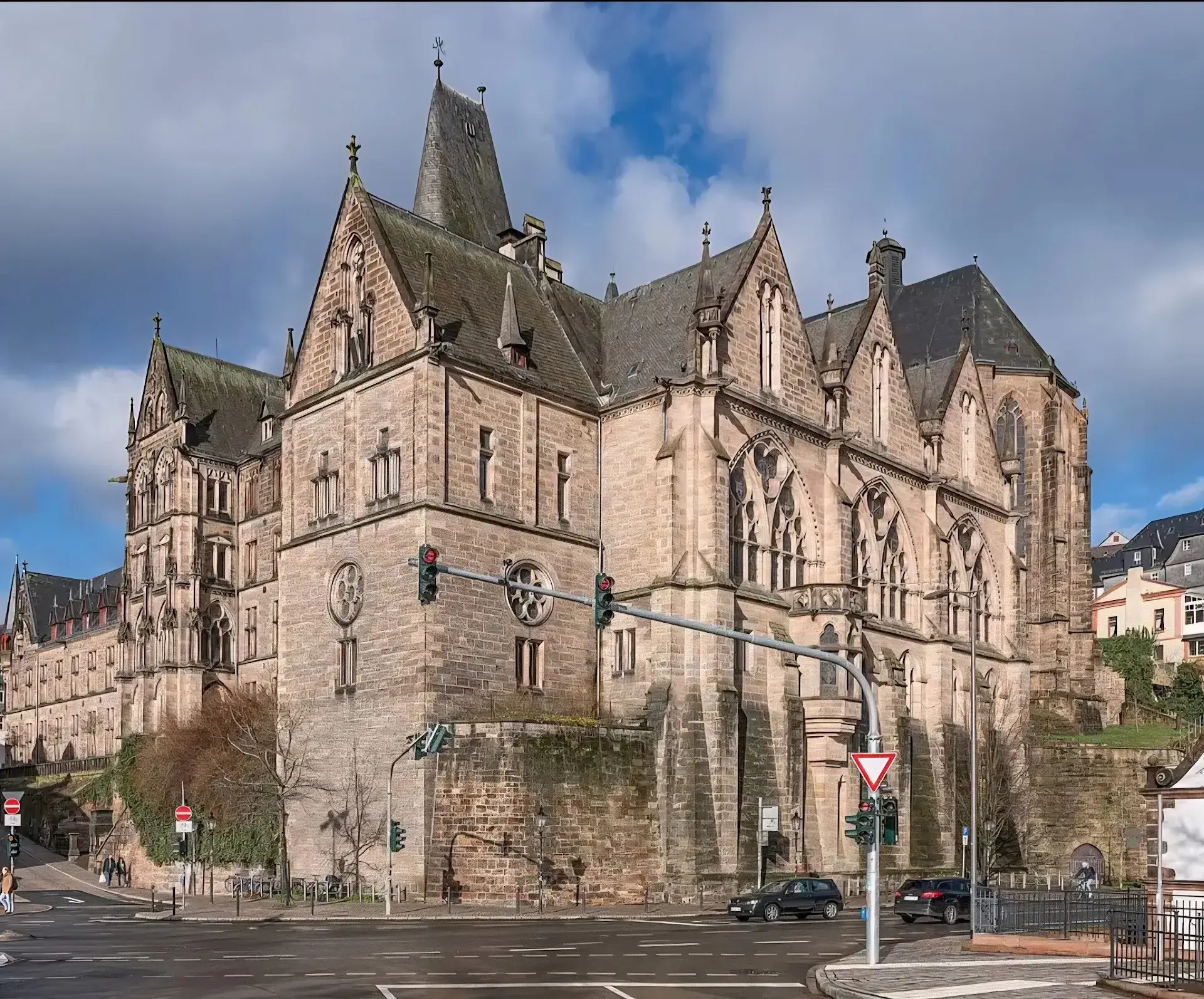
The Brothers Grimm discovered their passion for fairy tales at Philipps-Universität Marburg, but the grand building standing today is not the one they knew. Positioned on the lower slopes near the Lahn River, the Alte Universität (Old University) and the attached Universitätskirche (University Church) serve as a striking gateway linking the modern riverside campus facilities with Marburg's steep historic Oberstadt.
The Birth of a Protestant Institution
Founded on July 1, 1527, by Landgrave Philip I, Philipps-Universität holds the title of the world's first enduring Protestant university. The institution originally occupied a secularized 13th-century Dominican monastery. Following the Reformation, Landgrave Philip converted the convent into lecture halls and administrative quarters for an initial cohort of just 88 students and 17 teachers.
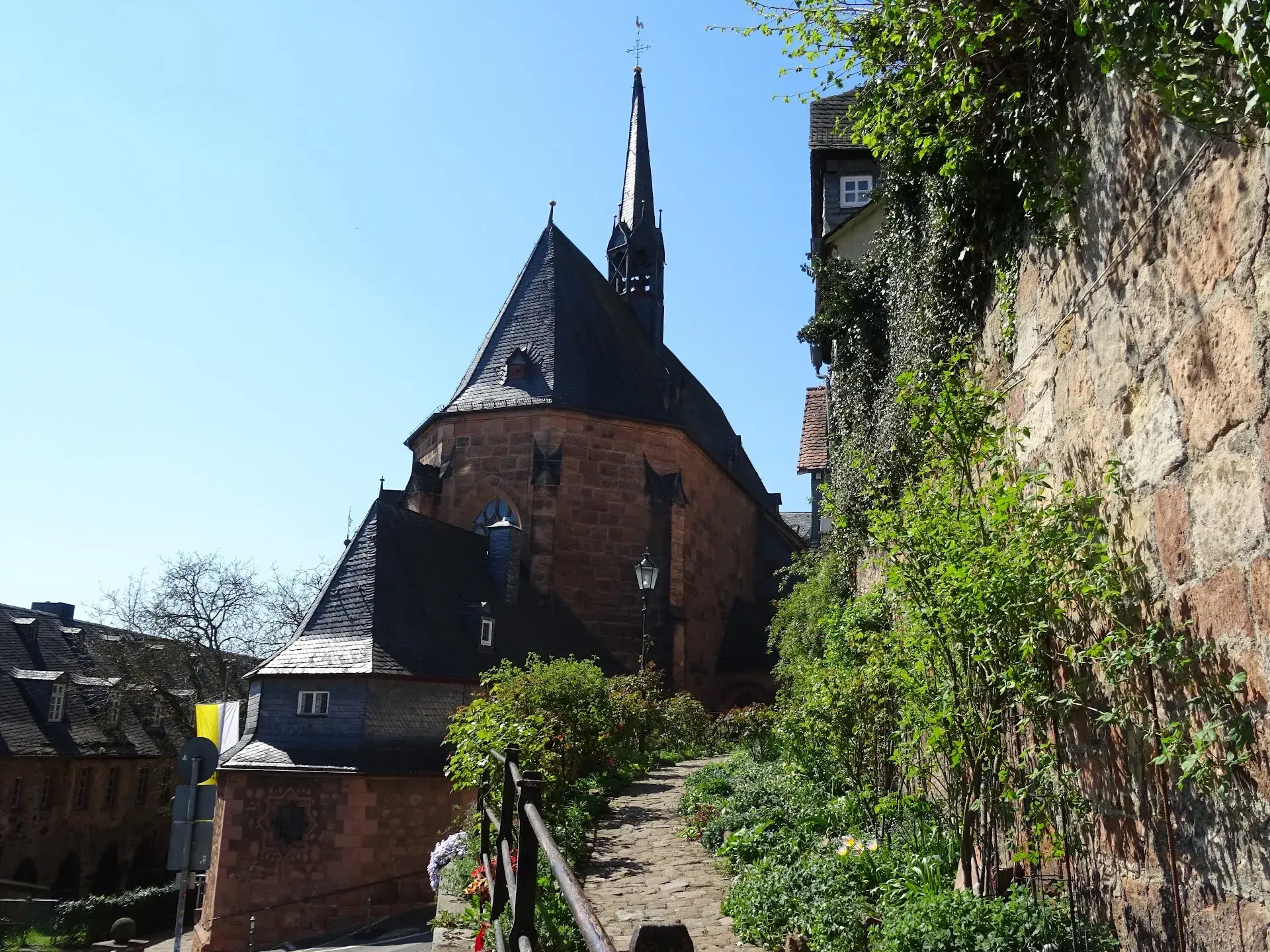
The attached 14th-century Gothic Universitätskirche, originally the monastery's church, served various practical roles over the centuries. At times, it functioned as a professor burial ground and even a grain storehouse. Today, it remains an active place of worship for university church services and religious gatherings.
The Brothers Grimm Era
Between 1802 and 1806, Jacob and Wilhelm Grimm studied jurisprudence at the university under the prominent legal scholar Friedrich Carl von Savigny. Savigny granted the brothers access to his private library and introduced them to the Romantic circle, sparking their lifelong dedication to German philology and folktales. Today, the university grounds serve as a key marker on Marburg's "Grimm-Dich-Pfad" (fairy-tale trail).
Despite the strong association with the famous authors, the Brothers Grimm never walked the halls of the current structure. They attended lectures in the drafty, crumbling medieval monastery that previously occupied the site. Jacob Grimm was particularly struck by the city's challenging topography during his time here, noting in a letter, "I believe there are more stairs in the streets than in the houses."
Neo-Gothic Grandeur
By the late 19th century, the overcrowded monastery was replaced by a monumental Neo-Gothic complex commissioned by the Prussian administration. Designed by university architect Carl Schäfer and constructed in phases between 1873 and 1891, the red sandstone building features soaring gables, turrets, and intricate tracery windows integrated with older masonry foundations.
The complex currently houses the university's Department of Protestant Theology. Its architectural centerpiece is the Alte Aula, a ceremonial hall completed in 1891 for academic festivities and graduations. The room is defined by its rich, dark coffered wooden ceilings and seven large-scale historicist wall murals painted by Peter Janssen, depicting key moments in Marburg's history. The university grounds also preserve a historic Karzer, a former lock-up where academic authorities once detained misbehaving students.
FAQ
What is the connection between the Brothers Grimm and the Alte Universität?
Jacob and Wilhelm Grimm studied jurisprudence at the university between 1802 and 1806. Under the mentorship of legal scholar Friedrich Carl von Savigny, they gained access to his private library and were introduced to early Germanic literature, sparking their famous collection of folktales.
Did the Brothers Grimm study in the current Alte Universität building?
No, the Neo-Gothic building standing today was constructed nearly 70 years after they left. The brothers attended lectures in the drafty, medieval Dominican monastery rooms that originally occupied the site.
What is the Alte Aula used for today?
The Alte Aula serves as the primary historic ceremonial hall for the university. It is used for academic festivities, graduations, and formal events, featuring beautiful coffered ceilings and large historic murals by Peter Janssen.
What is a Karzer?
The complex contains a preserved Karzer, which is a historic student lock-up where academic authorities once detained students for disciplinary offenses.
Discover Marburg like never before
Dive into Marburg hidden stories and secret spots with Ciceru interactive tours.
Explore tour
Audioguide
Quizzes
Maps
Solo
Couples
Groups & families

© Photo by Pawel aus Düsseldorf via Google Maps · Google Places