Ludwig the Bavarian: Duke to Holy Roman Emperor
The Election of 1314 and the Rise of a King
In October 1314, Munich transitioned from a regional ducal center to a fulcrum of European politics. Following the death of Holy Roman Emperor Henry VII, electors gathered in Frankfurt. A majority faction elected Ludwig IV of the House of Wittelsbach—known historically as Ludwig the Bavarian—as King of the Romans. Ludwig, born in 1282 and Duke of Bavaria since 1294, faced immediate opposition from a rival faction that elected Frederick the Fair of Habsburg. This contested dual election triggered years of conflict, culminating in 1322 at the Battle of Mühldorf on the Inn River, where Ludwig decisively defeated and captured Frederick to solidify his rule.
The Alter Hof: The Empire’s First Fixed Residence
Before Ludwig's reign, the Holy Roman Empire was ruled through itinerant governance, with monarchs moving continuously among palatial estates. Ludwig fundamentally altered this tradition by establishing his ancestral ducal seat, the Alter Hof in central Munich, as the empire's first permanent imperial residence (Kaiserresidenz).
The five-winged Alter Hof complex—comprising the Burgstock, Zwingerstock, Lorenzistock, Pfisterstock, and Brunnenstock—became the nerve center of imperial administration. The imperial regalia (Reichskleinodien) were secured inside the castle’s St. Lorenz Chapel, elevating Munich to the core of imperial power.
Papal Defiance and a Sanctuary for Thinkers
Ludwig’s reign was marked by intense constitutional conflict with the papacy. A dispute with Pope John XXII over sovereign imperial authority in Italy resulted in Ludwig’s excommunication in 1324. Defying the papal decree, Ludwig marched to Rome in 1328 and received a lay coronation from nobleman Sciarra Colonna and representatives of the Roman commune. This historic event was the only medieval imperial coronation conducted entirely without papal sanction.
In tandem with his political resistance, Ludwig sheltered prominent Franciscan theologians and philosophers escaping papal custody. Figures such as Marsilius of Padua, Michael of Cesena, and William of Ockham—the philosopher renowned for Ockham’s razor—found sanctuary in Munich. William of Ockham reportedly pledged to the emperor: "Defend me with the sword, and I will defend you with the pen." Operating out of the imperial court and Munich’s Franciscan friary for nearly two decades, these dissident thinkers produced foundational treatises advocating for the division of church and state.
Shaping Munich’s Urban Identity
Ludwig’s imperial status spurred significant urban and economic development in Munich. He expanded the city's municipal autonomy by granting brewing privileges and vital trade monopolies, particularly regarding the salt trade.
To safeguard this growing wealth, Ludwig commissioned the construction of Munich's second defensive ring wall. This fortification defined the physical perimeter of Munich's Altstadt for nearly 500 years, lasting through the late 18th century. Ludwig's reign also embedded imperial prestige into Munich's civic symbolism, prompting the city to adopt the imperial colors of black and gold. Growing friction between the city’s burghers and later Wittelsbach rulers eventually prompted the construction of the Neuveste in 1385, a fortress that later evolved into the Munich Residenz and superseded the Alter Hof.
Surviving Monuments in Munich
Emperor Ludwig IV died suddenly on October 11, 1347, collapsing from an apparent stroke during a bear hunt at Puch near Fürstenfeldbruck. His physical legacy remains visible across historic Munich today.
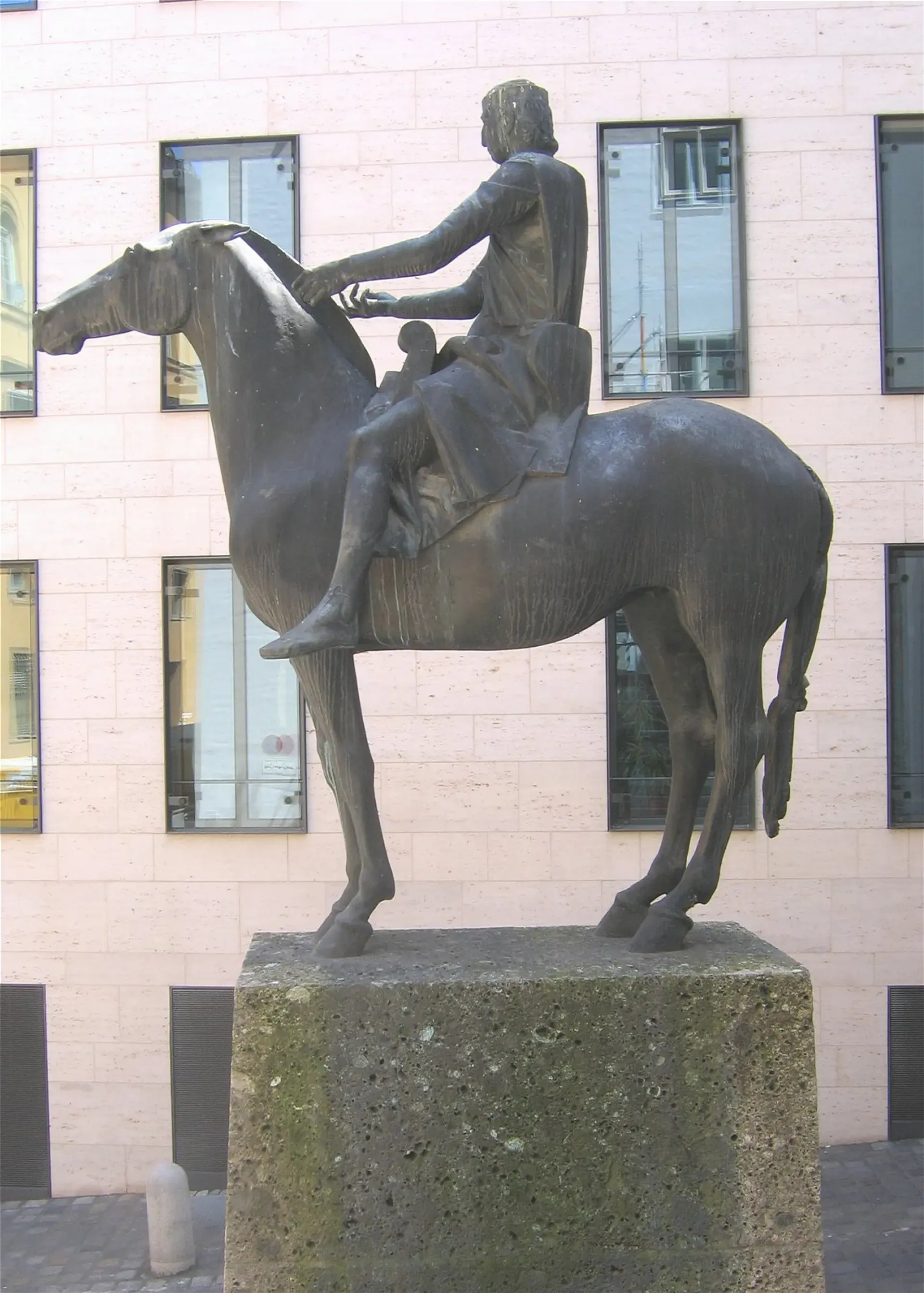
The Alter Hof now accommodates municipal offices, private apartments, shops, and dining establishments, while its central courtyard serves as a venue for community gatherings such as the open-air Sommerquartier and winter markets. At the Hofgraben entryway stands a bronze equestrian statue of Ludwig. In the vaulted hall below Alter Hof 1, the permanent exhibition "Münchner Kaiserburg" showcases preserved castle wall fragments dating to roughly 1200 alongside exhibits detailing Ludwig's governance.
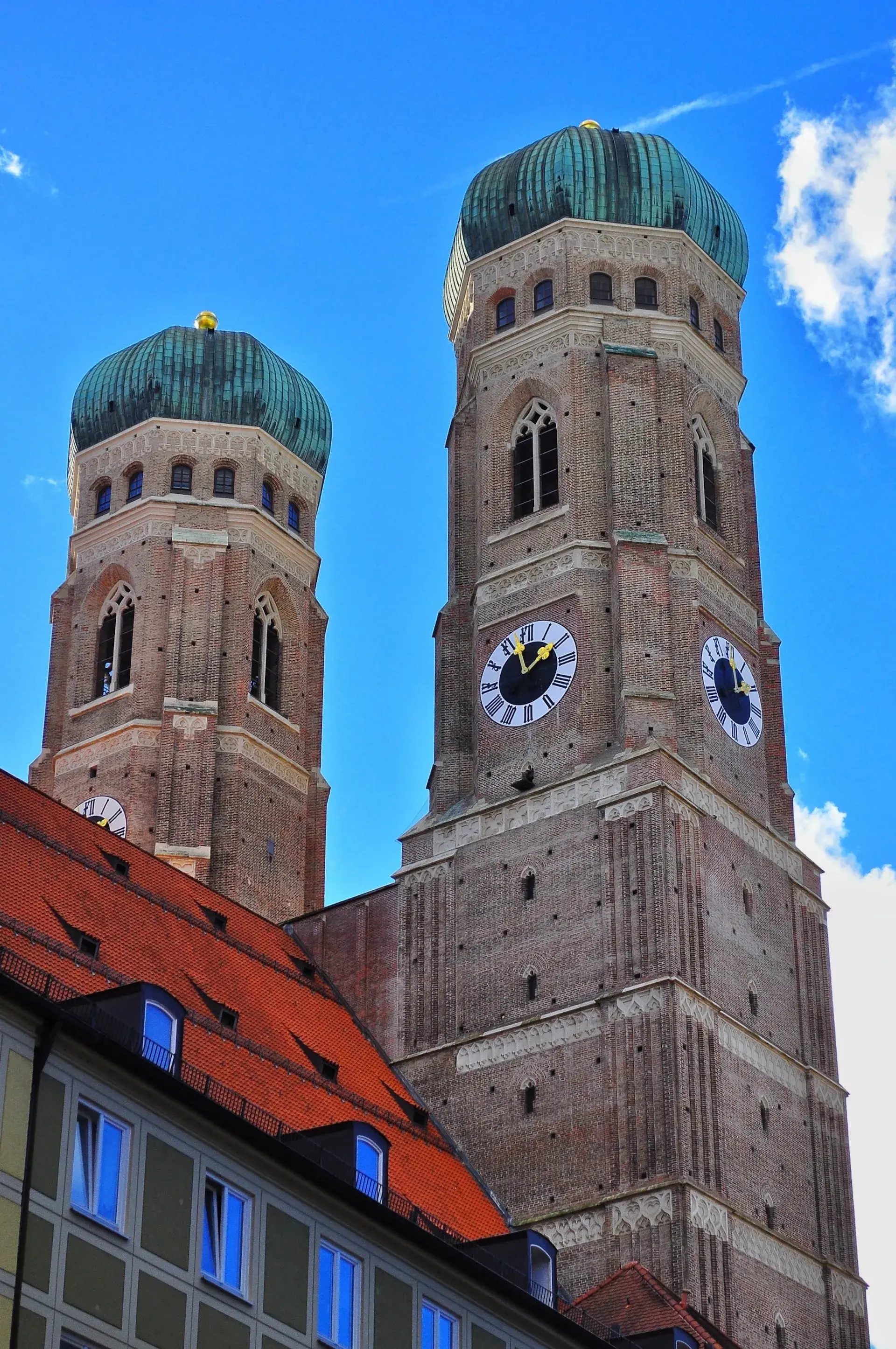
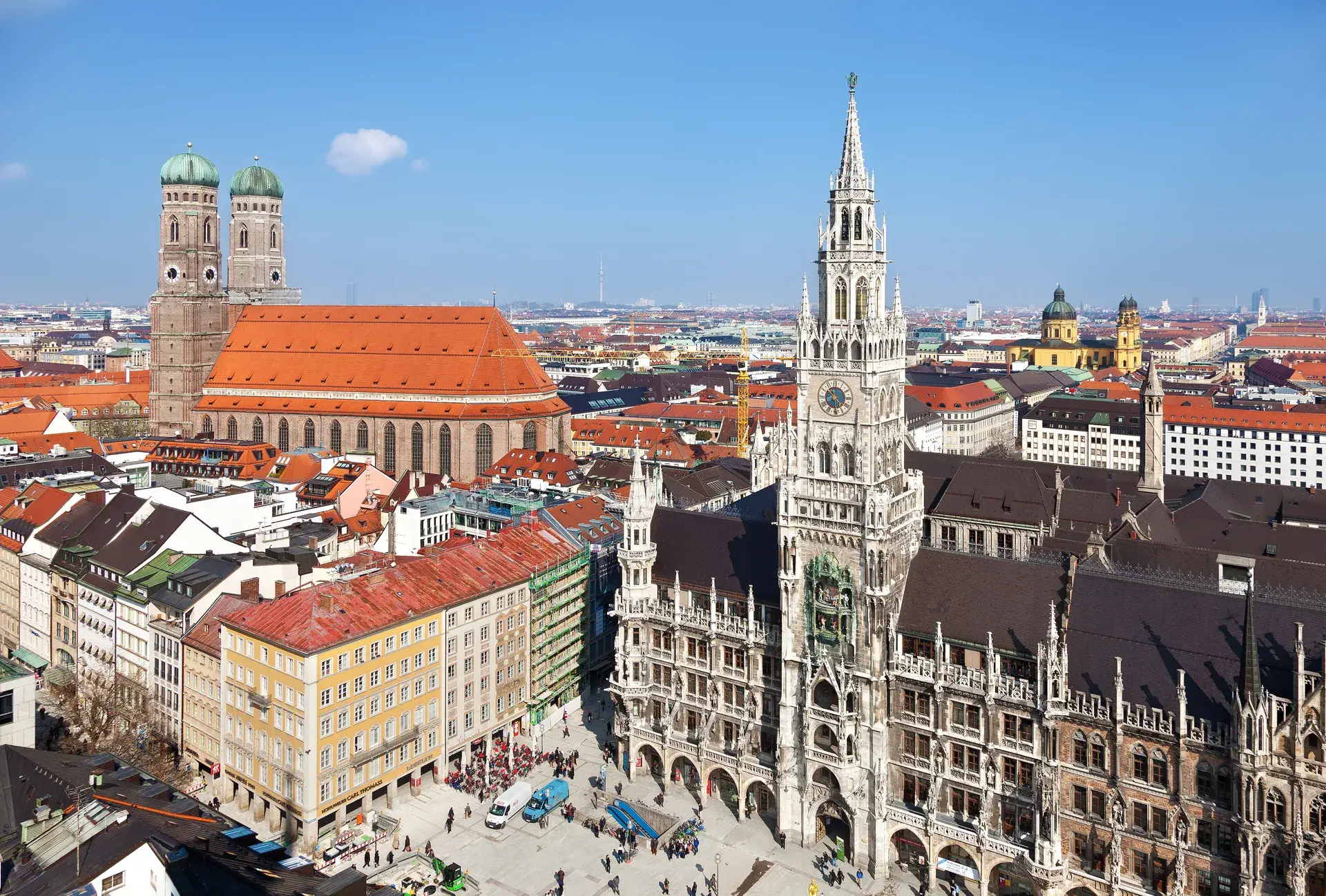
The Alter Hof's Burgstock wing features a prominent polygonal Gothic oriel known as the Affentürmchen (Monkey Tower). Local folklore claims a pet court monkey snatched the infant Ludwig from his cradle and carried him to the roof before returning him safely, though architectural analysis reveals the current structure was erected in the 15th century. Ludwig's remains are interred in the cathedral crypt of the Frauenkirche, while an imposing black marble cenotaph sculpted by Hans Krumpper in 1622 stands in the cathedral's south aisle.
FAQ
Why was Ludwig the Bavarian’s imperial coronation historically significant?
His 1328 coronation in Rome was conducted by Roman nobleman Sciarra Colonna and representatives of the local commune, making it the only medieval imperial coronation performed without papal sanction.
How did Ludwig the Bavarian change the governance of the Holy Roman Empire?
Ludwig broke with the custom of purely itinerant governance by establishing the Alter Hof in Munich as the Holy Roman Empire's first fixed imperial residence, where the imperial regalia were kept.
Which famous philosopher lived in Munich under Ludwig's protection?
William of Ockham, developer of the principle known as Ockham’s razor, lived in Munich under Ludwig's imperial protection for roughly the last two decades of his life, writing treatises on the division of church and state.
Where is Ludwig the Bavarian buried?
Ludwig is buried in the crypt of Munich's Frauenkirche, where a monumental 1622 black marble cenotaph crafted by sculptor Hans Krumpper is located in the south aisle.