Kloster Niedernburg Passau: Tomb of Queen Gisela
Discover the resting place of an exiled queen whose medieval abbey helped build a Prince-Bishopric empire. Situated in the lower Old Town peninsula of Passau, Kloster Niedernburg is a former Benedictine convent and Imperial Abbey that illustrates the city's historical role as a dynastic bridgehead connecting the Holy Roman Empire with Hungary.
The Resting Place of Queen Gisela
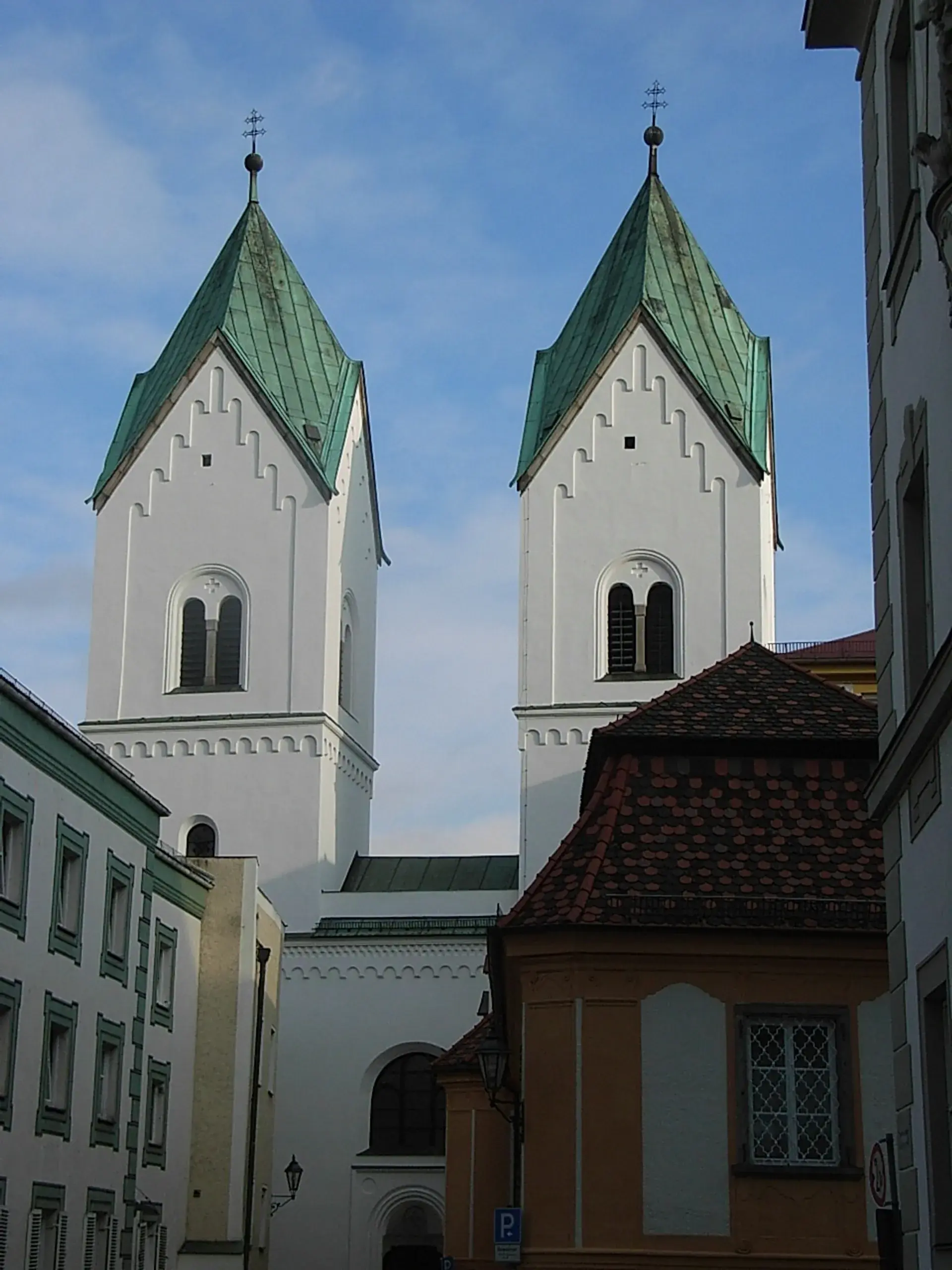
At the heart of the abbey complex is the Romanesque Church of the Holy Cross, which houses the late-Gothic high tomb of Blessed Gisela of Bavaria. As the sister to Holy Roman Emperor Henry II and the widow of King Saint Stephen I of Hungary, Queen Gisela lived a life at the center of European power. Following her husband's death in 1038, she was exiled and returned to Bavaria. She entered the convent around 1042 and served as its abbess until her death.
Today, her resting place operates as an active pilgrimage shrine, particularly for Hungarian travelers. The raised stone tomb, situated over an 11th-century grave slab in the south transept, is draped with the fabric of memorial wreaths and ribbons bearing the red, white, and green national colors of Hungary. Historically, Queen Gisela is traditionally credited with establishing the craft workshops that produced the Hungarian royal coronation mantle.
Imperial Power and Medieval Trade
Traditionally established in the 8th century by Agilolfing dukes, Kloster Niedernburg grew into a formidable political entity. In 1010, Emperor Henry II granted the abbey imperial immediacy alongside lucrative river customs and toll rights on the Golden Trail salt trade route.
The abbey's wealth and strategic importance eventually shaped Passau's political landscape. In 1161, Emperor Frederick Barbarossa subordinated the complex to the Passau Prince-Bishops. This transfer of power was a cornerstone event that aided the emergence of the local territorial principality known as the Hochstift Passau.
Literary Legends and Hidden Curiosities
The significance of Kloster Niedernburg extended deeply into medieval culture. The abbey is explicitly mentioned in the famous circa 1200 Middle High German heroic epic, the Nibelungenlied, as the character Kriemhild journeys down the Danube River.
Inside the Holy Cross Church, heavy Romanesque stone piers stand beneath Gothic vaults, framed by Baroque ceiling frescoes added after 17th-century city fires. The church also holds unexpected international connections, containing the medieval tomb of an 11th-century Armenian archbishop named Gregorius. Additionally, a section of the monastic complex serves as a museum displaying accessible 800-year-old Romanesque secco wall paintings.
A Continuing Educational Legacy
Following secularization in 1806, the abbey's political power dissolved, but its facilities found new purpose. In 1836, King Ludwig I of Bavaria transferred the complex to the Mary Ward Sisters to establish schools for girls.
This educational mission continues today. The historic monastery buildings at Klosterwinkel 1 now operate as a vibrant educational campus, housing the Gisela-Gymnasium, a girls' Realschule, and a student boarding residence.
FAQ
Who is buried at Kloster Niedernburg?
The church houses the late-Gothic high tomb of Blessed Gisela of Bavaria, an exiled Queen of Hungary, as well as the tomb of an 11th-century Armenian archbishop named Gregorius.
What is the current use of Kloster Niedernburg?
Today, the historic monastery operates as an educational campus featuring the Gisela-Gymnasium and a boarding residence. The church and Queen Gisela's tomb remain open as an active pilgrimage shrine.
How does Kloster Niedernburg connect to medieval literature?
The abbey is explicitly mentioned in the Nibelungenlied, a Middle High German heroic epic written around 1200, during a scene where Kriemhild travels down the Danube River.