St. Stephen's Cathedral: Passau's Baroque Masterpiece
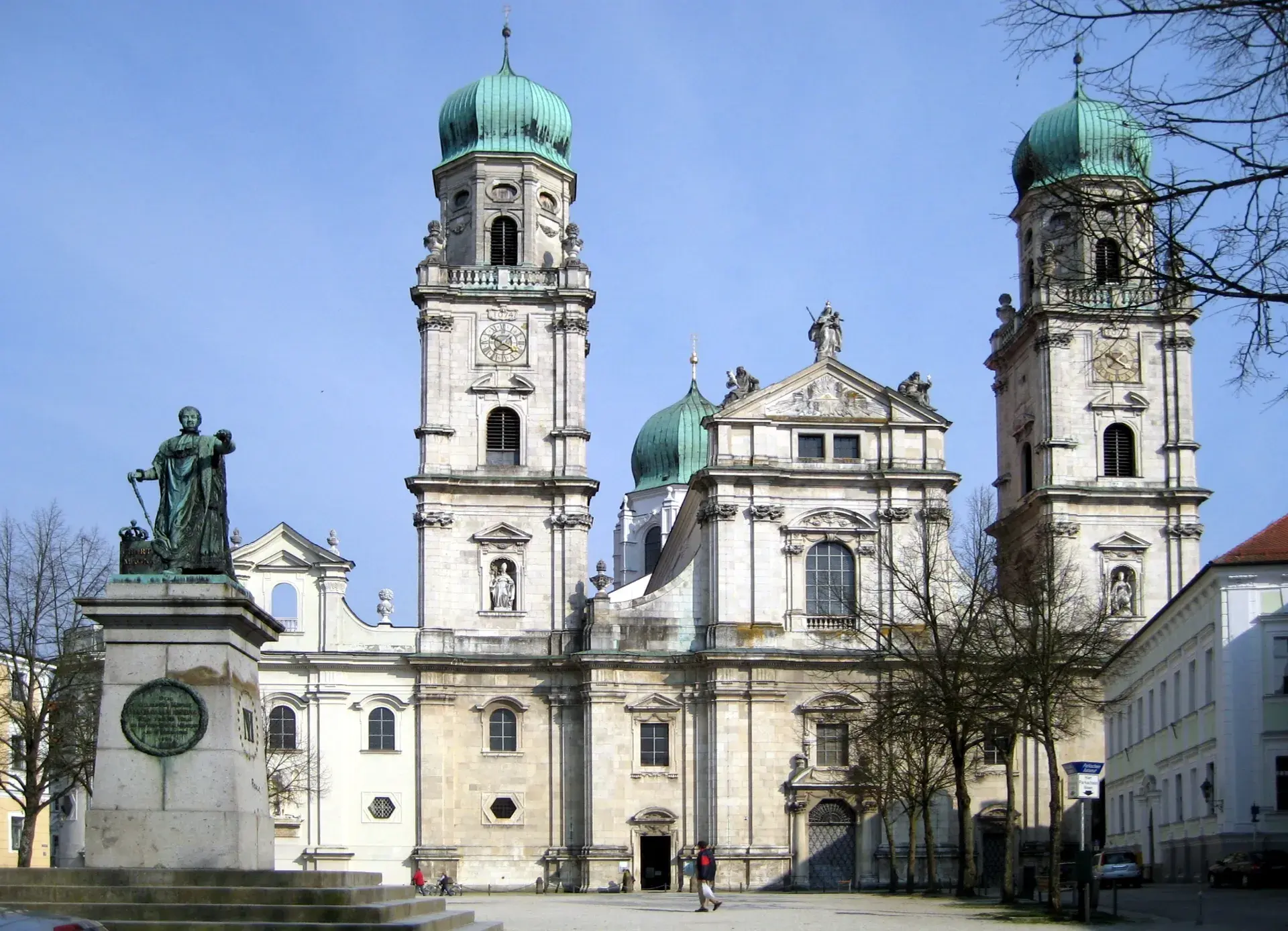
A devastating 17th-century fire left only a Gothic skeleton on the highest crest of Passau’s Old Town peninsula. Italian masters transformed these remnants into St. Stephen’s Cathedral, a monumental structure that now anchors the city skyline where the Danube, Inn, and Ilz rivers meet. Positioned beside the Bishop’s Residence, the cathedral links the historical government quarter to the commercial riverfront alleys and serves as the seat of the Catholic Bishop of Passau.
Rebuilding in the High Baroque
Episcopal churches have occupied this site since approximately 720 to 730 CE. The structure underwent Romanesque and Gothic expansions in 1280 and 1407. However, a catastrophic city-wide fire in 1662 gutted the Gothic cathedral, leaving only the eastern choir and crossing partially intact. Rather than completely demolishing the ruins, Prince-Bishops commissioned Italian architect Carlo Lurago to build a High Baroque nave over the remaining Gothic footprint between 1668 and 1693.
The resulting structure features stucco decorations by Giovanni Battista Carlone and frescoes by Carpoforo Tencalla. Measuring approximately 100 meters in length, it is widely considered the largest Baroque church interior north of the Alps. The exterior is defined by approximately 68-meter twin towers with octagonal domes, which were finalized in the late 19th century.
The Massive Cathedral Organ
St. Stephen’s Cathedral houses one of the largest pipe organs in Europe. This massive instrument consists of 17,974 pipes, 233 registers, and five separate sub-organs. During frequent organ concerts, sound from the multi-section instrument reflects off the vaulted ceiling, filling the high nave from multiple spatial directions to create a unique surround acoustic effect.
One of the five organ sections, known as the 'Fernorgel' or distant echo organ, is entirely concealed within the roof attic. It projects sound down to the floor solely through a specific opening in the ceiling vault called the 'Heiliggeist-Loch' (Holy Ghost Hole).
Hidden Curiosities and Active Heritage
Despite the overwhelming Baroque aesthetic of the interior, the cathedral retains a distinctively hybrid architecture on its exterior. When viewed from the adjacent Residenzplatz, exterior Gothic buttresses and the late-Gothic Stephanstürmchen spire are visibly attached directly to the Baroque nave.
Today, St. Stephen's Cathedral functions as an active Catholic church, hosting regular services and diocesan ceremonies. It is also a major cultural destination; tourist sightseeing is temporarily restricted during the frequent organ performances. Additionally, the cathedral's dedicated masonry restoration lodge, the Dombauhütte, remains active on site. In 2020, this ongoing craft heritage was added to the UNESCO Intangible Cultural Heritage list.
FAQ
Who designed St. Stephen's Cathedral in Passau?
The High Baroque nave was designed by Italian architect Carlo Lurago between 1668 and 1693. It features interior stucco decorations by Giovanni Battista Carlone and ceiling frescoes by Carpoforo Tencalla.
How many pipes does the Passau Cathedral organ have?
The Passau Cathedral organ contains 17,974 pipes, 233 registers, and five separate sub-organs, making it one of the largest pipe organs in Europe.
Are tourists allowed inside St. Stephen's Cathedral during concerts?
Tourist sightseeing is temporarily restricted during the frequent organ concerts held at the cathedral.