St. Paul Parish Church: Passau's Historic Gateway
Cross into the Old Town through Passau's oldest preserved city gate, following the exact entrance alignment used since the days of Roman fortifications. The City Parish Church of St. Paul and the adjoining Paulusbogen mark the definitive physical transition from Passau's modern commercial pedestrian zone at Steinweg and Rindermarkt into the narrow, cobblestoned streets of the medieval and Baroque Old Town.
A History Rebuilt from the Ashes
Recognized as Passau's oldest parish church, St. Paul traces its origins to a Romanesque predecessor dedicated to the Apostle Paul, which was consecrated on this rocky ridge around 1050. The site endured significant devastation over the centuries, with major city fires destroying the church in 1512 and again in 1662.
The present building is a High Baroque masterpiece constructed between 1667 and 1678. Italian master builder Carlo Antonio Carlone directed the architectural revival, while the interior furnishings were largely finished by 1701. Today, the building functions as an active Catholic parish church and a listed historical monument.
High Baroque Architecture and the Paulusbogen
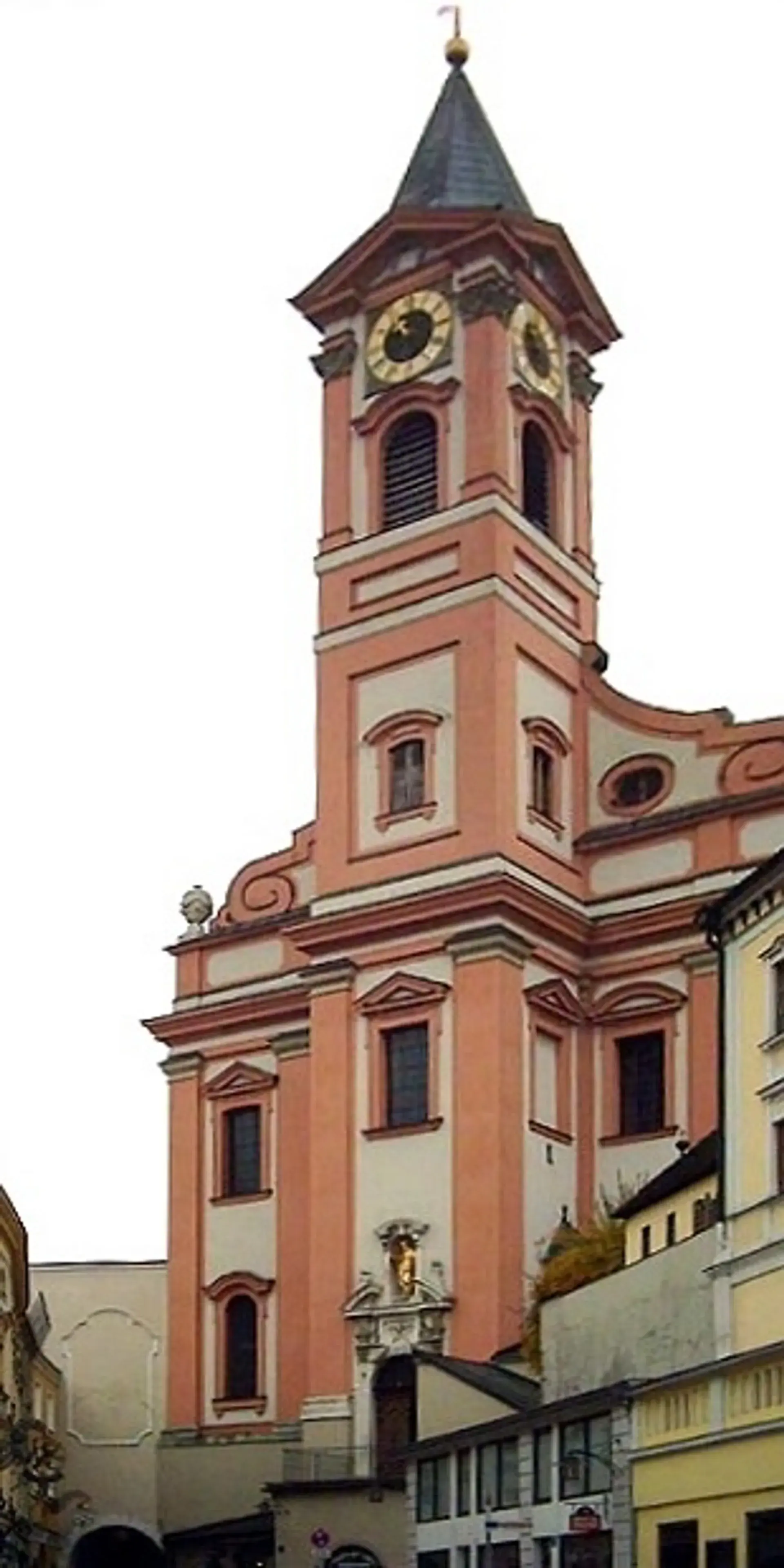
St. Paul is perched on a cliffside along the northern edge of the historic Roman wall. Its exterior displays a pastel cream and rose-pink facade framed by classical pilasters. Accessing the elevated church portal requires ascending a covered flight of stone steps that lead up alongside the gate arch.
The church is seamlessly integrated with the Paulusbogen, the oldest preserved of Passau's five remaining city gates. In a unique architectural arrangement, the sacristy of St. Paul is built directly into the upper superstructure of the city gate itself.
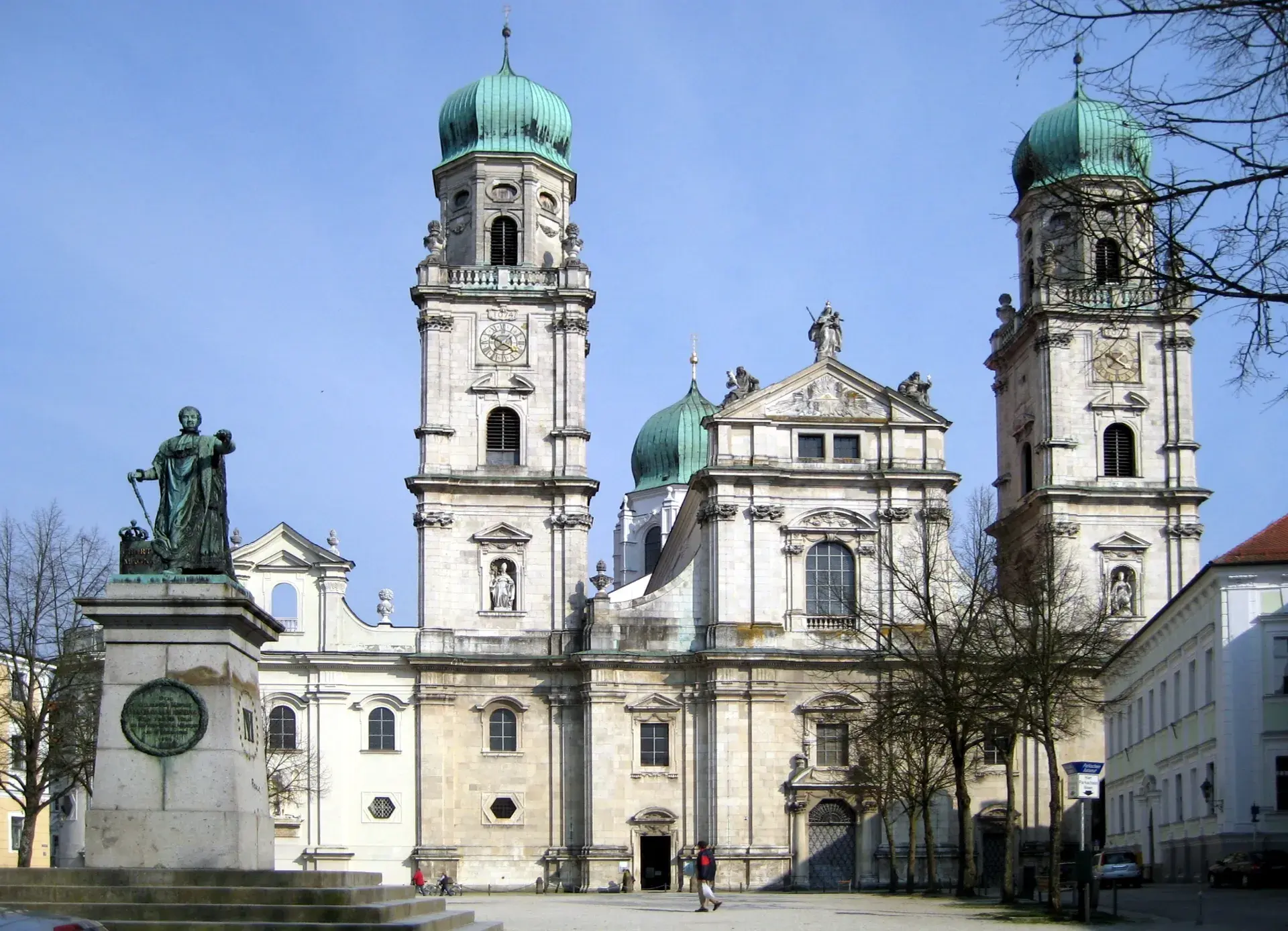
The prominent position and grand styling of the church frequently cause first-time visitors to mistake it for St. Stephen's Cathedral. The church features a three-story west tower that originally had a flat roof. A tall spire was added in the 19th century, but structural concerns in 1950 forced engineers to shorten the spire by four meters.
Dramatic Interior Contrasts
The interior of St. Paul offers a striking sensory experience defined by stark visual contrasts. Visitors are met with deep black-and-gold wooden altars and an ornate pulpit that stand out sharply against the bright, pale plasterwork and light vaulted ceiling.
The focal point of the sanctuary is the high altar, which showcases a dramatic altarpiece painting by Franz Werner Tamm. Completed in 1700, the artwork depicts the decapitation of Saint Paul, honoring the parish's namesake apostle.
FAQ
What is the Paulusbogen?
The Paulusbogen is the oldest preserved of Passau's five remaining city gates, occupying an entrance alignment that dates back to Roman fortifications. The sacristy of St. Paul parish church is physically built into the gate's upper superstructure.
Who designed the current St. Paul parish church?
The present High Baroque church was designed and constructed between 1667 and 1678 under the direction of Italian master builder Carlo Antonio Carlone.
Why was the spire of St. Paul's church shortened?
The church's three-story west tower received a tall spire in the 19th century, but it had to be shortened by 4 meters in 1950 due to structural concerns.