Passau Old Town Hall: History & Architecture Guide
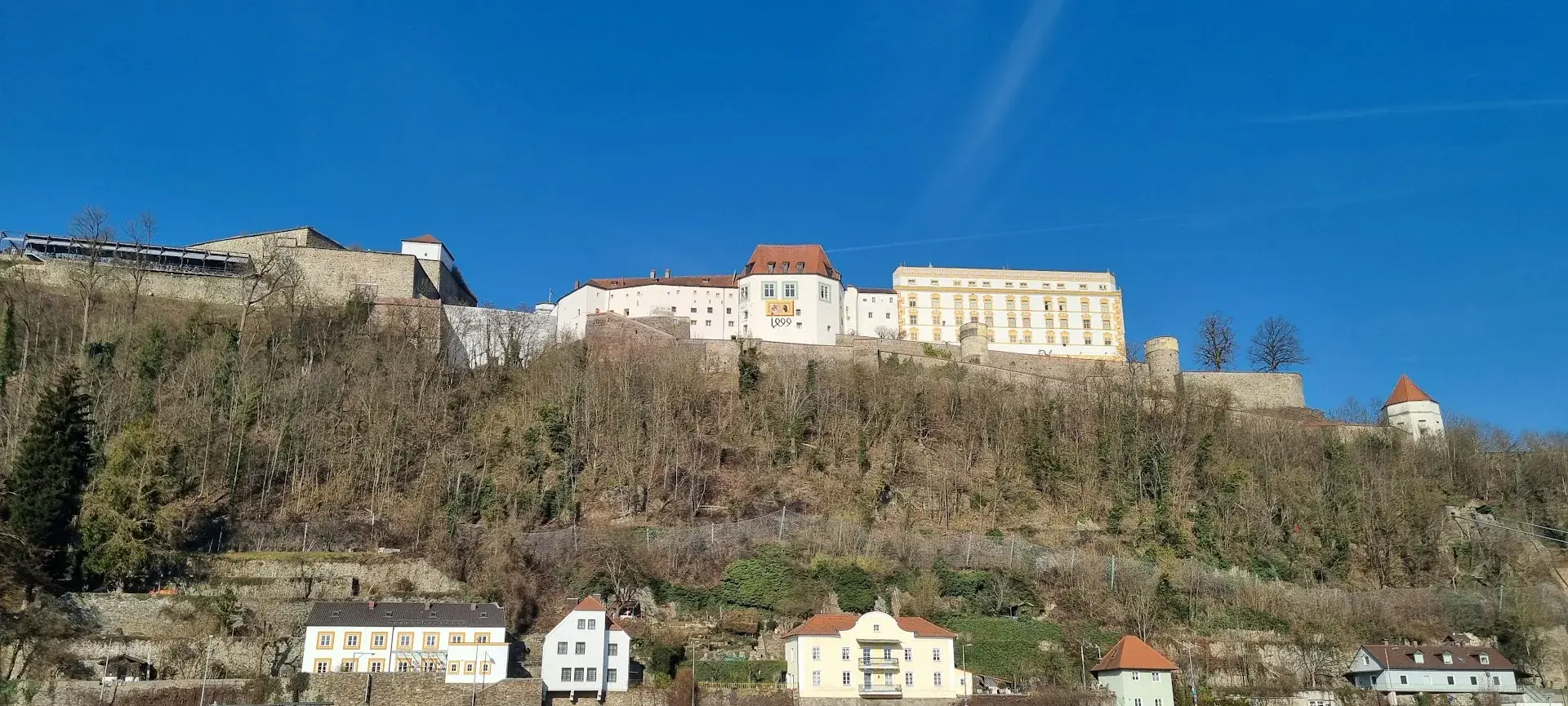
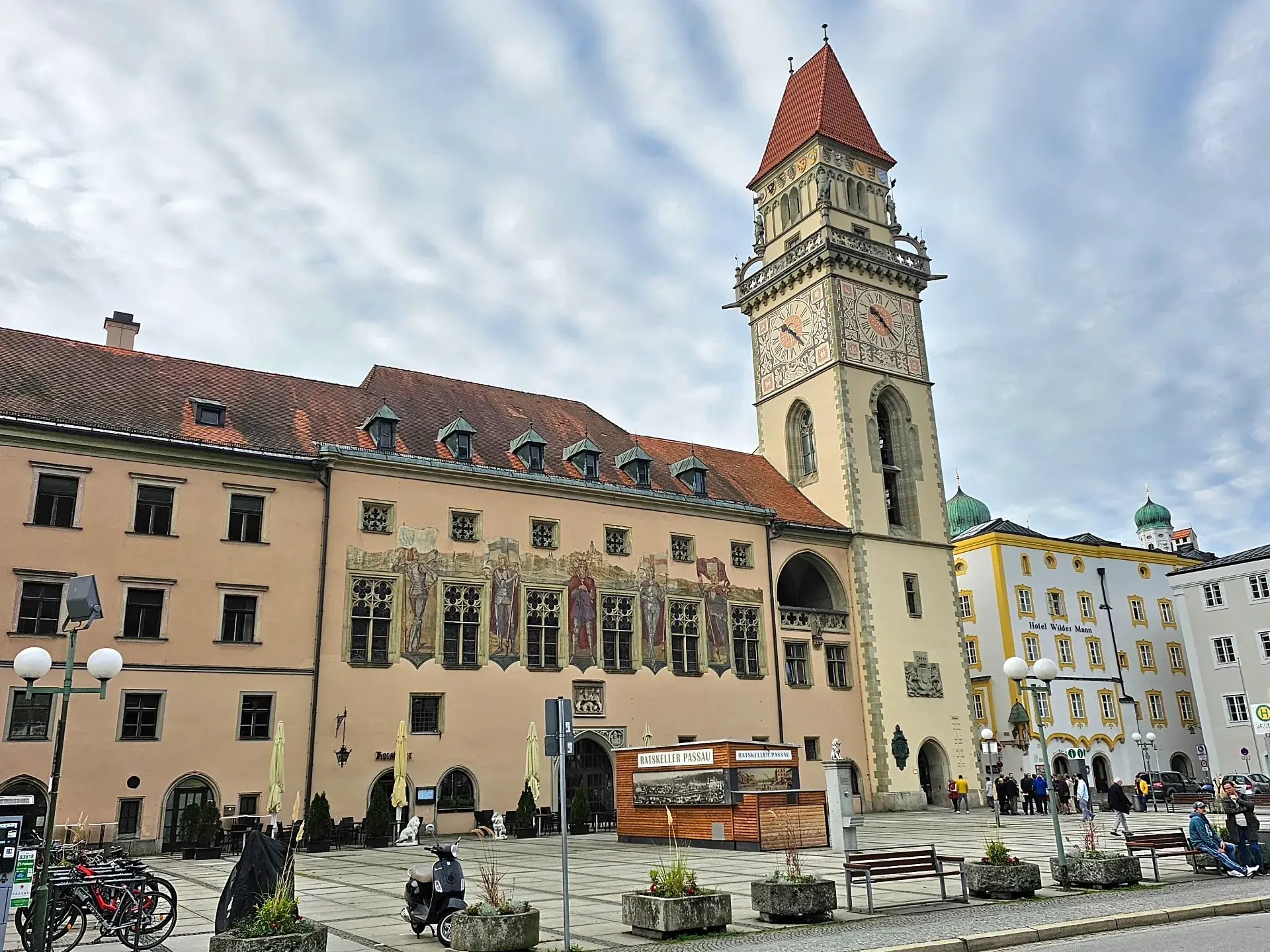
Bearing the carved marks of over four centuries of floods on its facade, Passau's Old Town Hall (Altes Rathaus) is a testament to the city's enduring relationship with its rivers. Situated on Rathausplatz along the Danube River, the historic complex bridges the riverside promenade with the alleys of the Old Town. Positioned directly next to the Passau Glass Museum, the structure offers clear views across the water to the Veste Oberhaus fortress.
A Complex Born From Patrician Homes
The origins of the Old Town Hall date back to 1298, when it was first mentioned following a local uprising. Rather than being constructed as a single civic building from the ground up, the complex was originally formed by fusing eight existing patrician houses together, a physical merging that began around 1405.
The building required massive reconstruction after devastating city fires in 1662 and 1680. Italian Baroque masters Carlo Lurago and Giovanni Battista Carlone were brought in to rebuild the interior. This reconstruction left the complex with a distinct Venetian style. In fact, the building's Mediterranean flair is a primary reason Passau earned the nickname "the Venice of Bavaria."
Decades later, the exterior saw further architectural evolution. Between 1889 and 1892, Heinrich Baron von Schmidt added the striking 38-meter Neo-Gothic clock tower that defines the modern silhouette of the building.
Murals, Music, and Flood Markers
The Old Town Hall functions as a canvas for both civic history and natural history. The exterior facade features vibrant murals added by Joseph Hengee in 1922, while the stone walls bear exterior flood markers recording water levels that span over 400 years. These markers reveal a surprising detail: the historical flood of 1501 remains higher than the devastating modern floods of 1954 and 2013.
High above the square, the Neo-Gothic tower houses a 23-bell glockenspiel. Twice daily, at 11:30 AM and 2:30 PM, the carillon rings out across Rathausplatz. While it generally operates on an automatic chime, the instrument is fully designed to be played manually by a musician.
Modern Civic Life
Today, the Old Town Hall remains an active center of Passau's civic life. The ground floor of the tower serves as the city's official tourist information center. Inside, a traditional German restaurant operates within the historic walls.
A 1446 Gothic staircase leads deeper into the complex, granting access to its historic chambers. The Great Council Chamber, notable for the expansive murals painted by Ferdinand Wagner between 1887 and 1890, regularly hosts public events and concerts. Meanwhile, the Small Council Chamber serves as the city's civil registry office.
FAQ
When does the glockenspiel at Passau's Old Town Hall ring?
The 23-bell carillon in the Old Town Hall tower rings twice daily at 11:30 AM and 2:30 PM. It can operate automatically or be played manually by a musician.
What is located inside the Old Town Hall in Passau?
The building houses Passau's tourist information center on the ground floor of the tower, a traditional German restaurant, the Small Council Chamber (used as a civil registry office), and the Great Council Chamber, which hosts concerts and events.
Why does Passau's Old Town Hall have a Venetian style?
After devastating city fires in 1662 and 1680, Italian Baroque masters Carlo Lurago and Giovanni Battista Carlone rebuilt the complex. Their architectural influence gave the building a Mediterranean flair, contributing to Passau's nickname as the Venice of Bavaria.
Discover Passau like never before
Dive into Passau hidden stories and secret spots with Ciceru interactive tours.
Explore tour
Audioguide
Quizzes
Maps
Solo
Couples
Groups & families

© Photo by Nobby via Google Maps · Google Places