Residenzplatz Passau: Baroque Architecture & Three Rivers
The Heart of the Venice of Bavaria
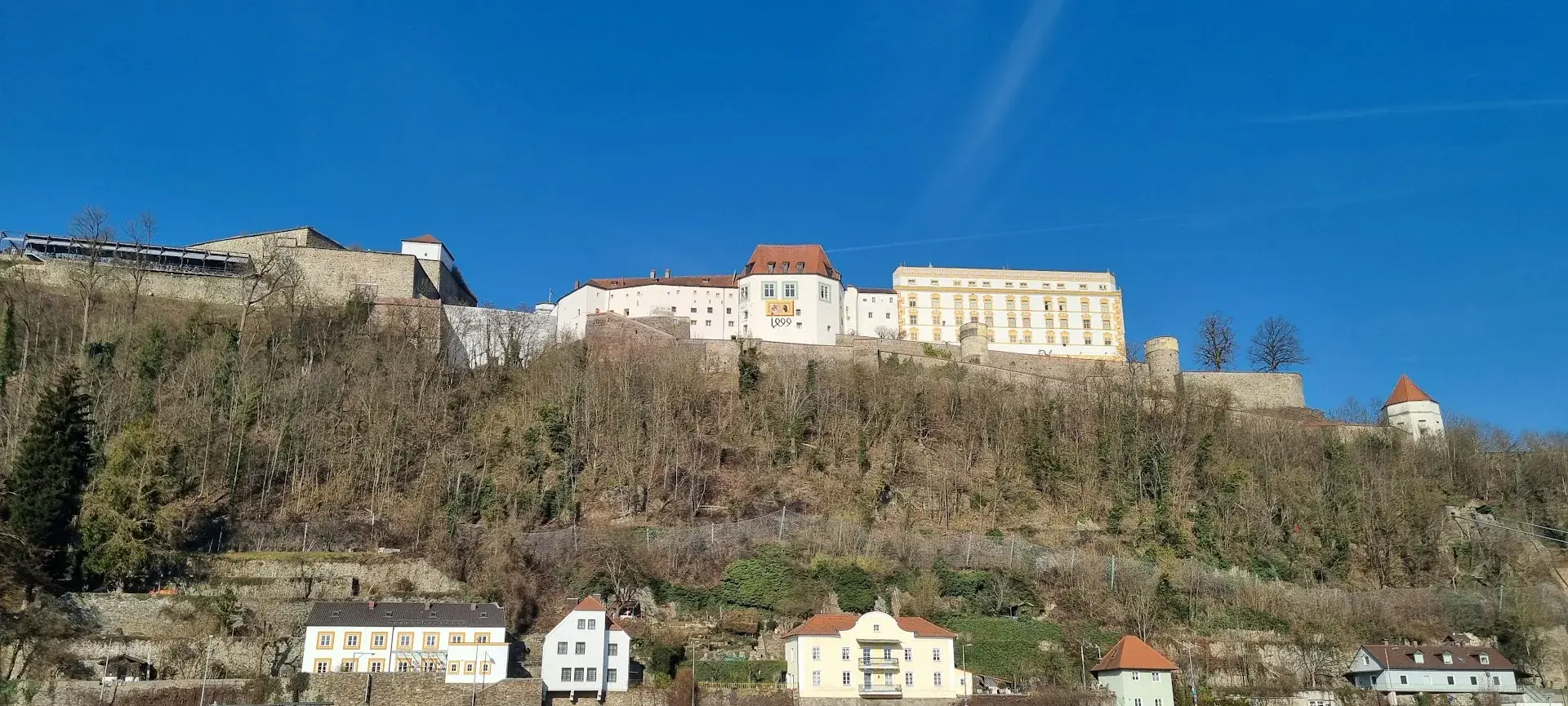
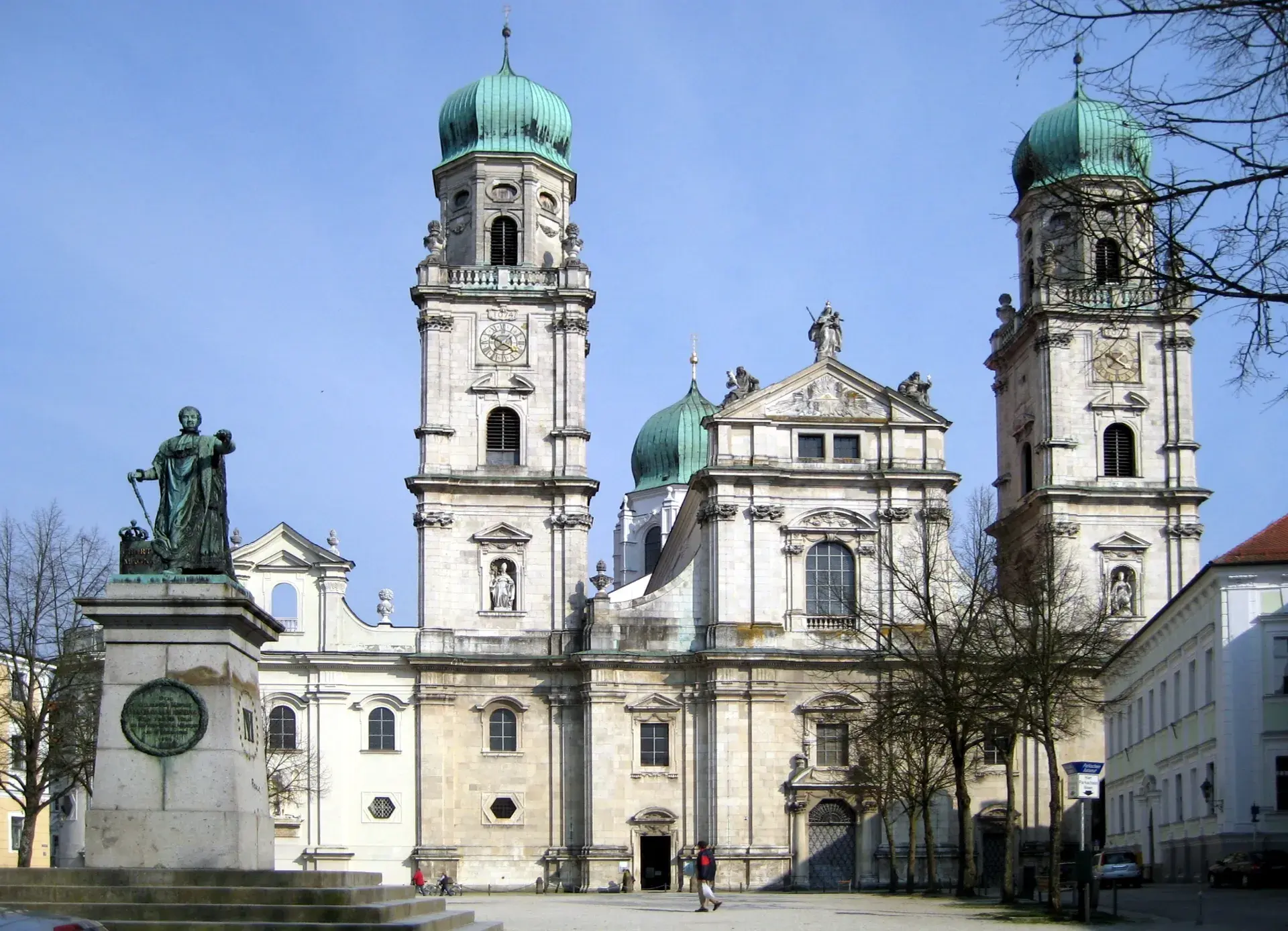
Residenzplatz stands as Passau's most cohesive late-Baroque square, physically manifesting the city's identity as the "City of Three Rivers." Bordered by the imposing Neue Residenz and the Gothic choir of St. Stephen's Cathedral, the plaza features a visual contrast of cobblestone pavement, pastel-painted historic facades, and ornate stucco work.
The square's distinct Mediterranean flair is a direct consequence of a catastrophic city fire in 1662. Following the devastation, Passau was largely rebuilt from scratch by invited Italian architects and stucco masters, including Carlo Lurago and Giovanni Battista Carlone. This heavy Italian influence earned Passau the lasting nickname the "Venice of Bavaria."
Decoding the Wittelsbach Fountain
The centrepiece of the square is the Wittelsbacherbrunnen (Wittelsbach Fountain), an octagonal monument carved in a Neo-Baroque style. The ambient gurgling and splashing of water cascading through its tiers provides a constant sensory anchor for the plaza. Designed by Munich sculptor Jakob Bradl between 1903 and 1906, the monument commemorates the 100th anniversary of Passau's 1803 incorporation into the Kingdom of Bavaria. It replaced an earlier 1860 fountain and a 1555 draw-well.
The fountain features a central statue of Mary (Patrona Bavariae) elevated on a high column. At the base, three cherub-like angels surround the column, each precisely encoding one of the local rivers that merge at Passau's nearby Dreiflüsseeck. The "Inn" angel wears a traditional Tyrolean hat to signify the river's Alpine origins. The "Ilz" angel is adorned with pearls, referencing the historic river pearl mussels once found there. The "Danube" angel wears ears of wheat in its hair. In a hidden curiosity of the design, Jakob Bradl used his own wife and four children as the models for these figures.
From Commerce to Episcopal Power
Before the 18th century, the plaza served a highly functional purpose rather than a ceremonial one. Known as "Unter den Krämern" (Beneath the Grocers), the site housed the Kramhaus, the city's main commercial warehouse.
In 1712, Prince-Bishop Lamberg ordered the commercial warehouse demolished. His court had outgrown the Alte Residenz (Old Residence), and he required space for a new palace. The Neue Residenz (New Episcopal Residence) was subsequently constructed between 1712 and 1730, showcasing a heavy Viennese late-Baroque influence in its architectural design.
Modern Administrative and Cultural Function
Today, Residenzplatz serves as a primary public gathering space and a standard focal point within Passau's historic centre. The Neue Residenz continues to function in its historic capacity as the administrative headquarters for the Bishop of Passau.
Additionally, portions of the residence complex, accessed via Residenzplatz 8, currently operate as the Diocesan Museum and Cathedral Treasury. Together with the connecting "Saalbau," these institutions display centuries of Passau's ecclesiastical art.
FAQ
What do the angels on the Wittelsbach Fountain represent?
The three angels at the base of the fountain represent Passau's three rivers. The "Inn" angel wears a Tyrolean hat symbolizing its Alpine origins, the "Ilz" angel features pearls referencing historic river pearl mussels, and the "Danube" angel wears ears of wheat.
Who designed the fountain in Residenzplatz?
The neo-Baroque Wittelsbacherbrunnen was designed by Munich sculptor Jakob Bradl between 1903 and 1906. He uniquely modeled the figures on the monument after his own wife and four children.
Why is Passau called the Venice of Bavaria?
After a catastrophic city fire in 1662, Passau was rebuilt by invited Italian architects and stucco masters. This gave the city, and specifically Residenzplatz, a heavy Mediterranean and Baroque flair.
What is the history of the Neue Residenz?
The Neue Residenz was built between 1712 and 1730 under Prince-Bishop Lamberg, who demolished the city's main commercial warehouse to make room for his new court. It features Viennese late-Baroque architecture and still serves as the Bishop's headquarters today.
Discover Passau like never before
Dive into Passau hidden stories and secret spots with Ciceru interactive tours.
Explore tour
Audioguide
Quizzes
Maps
Solo
Couples
Groups & families

© Photo by Francis C. K via Google Maps · Google Places