Finkenherd: Quedlinburg's Legendary Historic Square
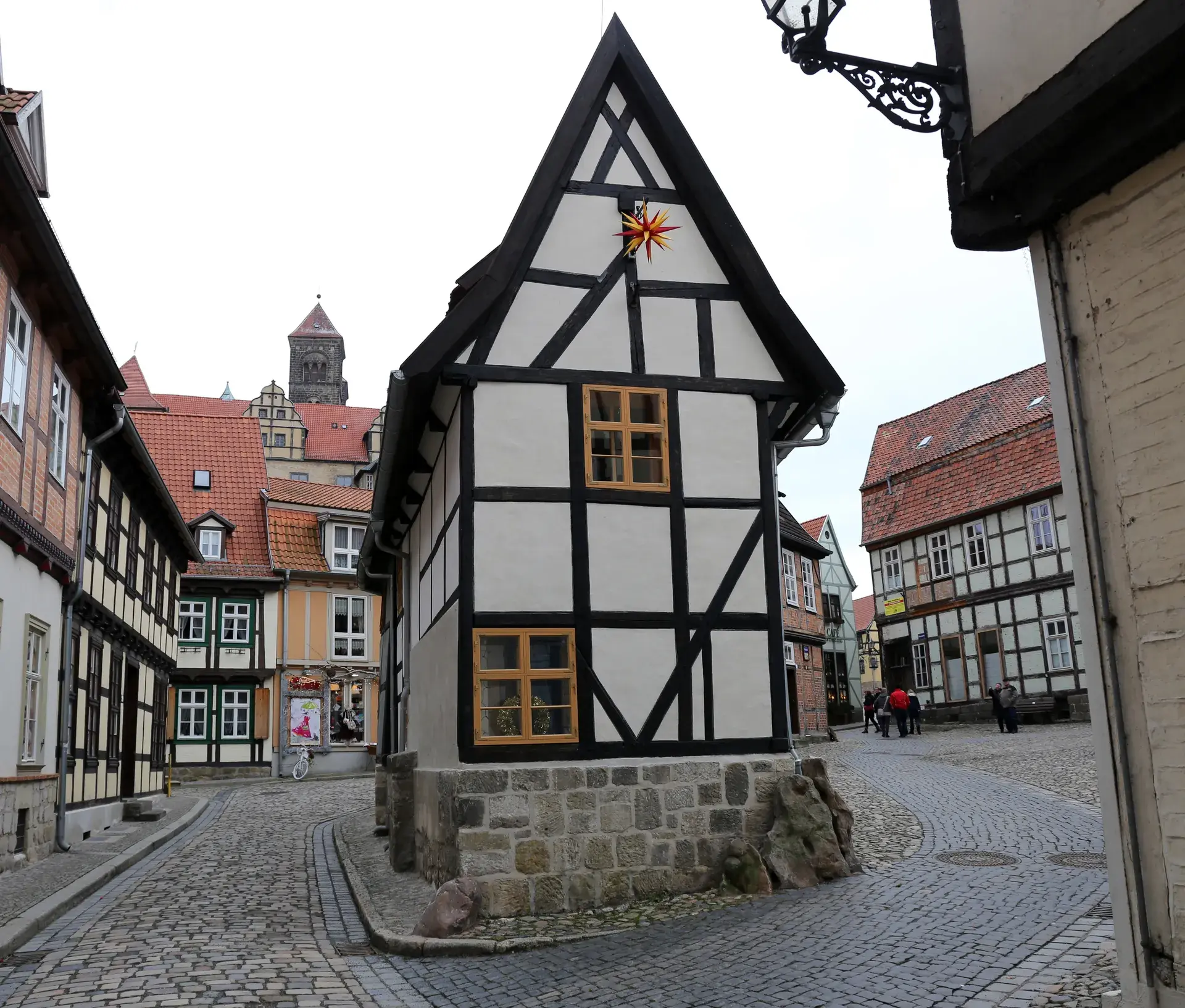
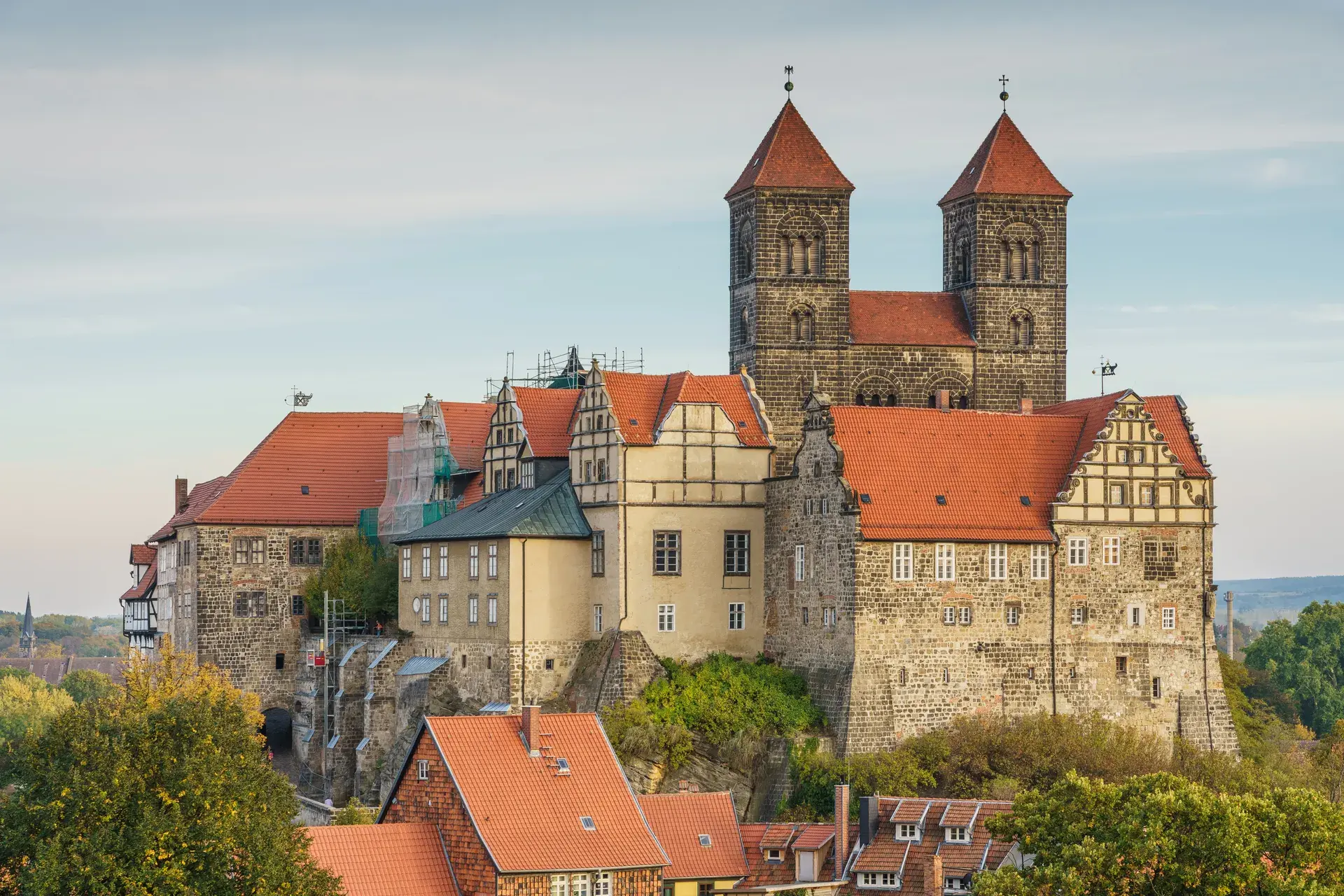
At Finkenherd, visitors take in the charming historic houses nestled right beneath the imposing cliff of the castle hill. Located in Quedlinburg's Westendorf quarter, this small historic street and square ensemble sits at the northern base of the Schlossberg. It serves as a picturesque pedestrian thoroughfare and a gateway to the city's UNESCO World Heritage core, seamlessly bridging Quedlinburg's preserved half-timbered architecture with its 10th-century imperial history.
The Legend of Henry the Fowler
According to local tradition, Finkenherd is the site where Duke Henry of Saxony was catching finches with bird nets in 919 AD when messengers arrived to offer him the crown of East Francia. This legendary event earned him the historical epithet "Henry the Fowler" (Heinrich der Finkler). Historically, Henry I was actually elected king by nobles at Fritzlar in May 919. Quedlinburg's Finkenherd is also not the only location to claim this story, as the town of Pöhlde in the southern Harz region holds a competing historical claim as the site of the crown offer.
Romantic Ballads and Royal Legacy
Following his election, Henry I established Quedlinburg as a major Ottonian royal palatinate. Upon his death in 936, he was buried directly above Finkenherd at the top of the Schlossberg. The enduring founding tradition of the bird-catcher was popularized across the German-speaking world by 19th-century romantic ballads. The most notable of these is Johann Nepomuk Vogl's 1835 poem, later set to music by composer Carl Loewe. Today, commemorative signage and a plaque display the traditional ballad's verses to those passing through the square.
Architectural Marvels in Miniature
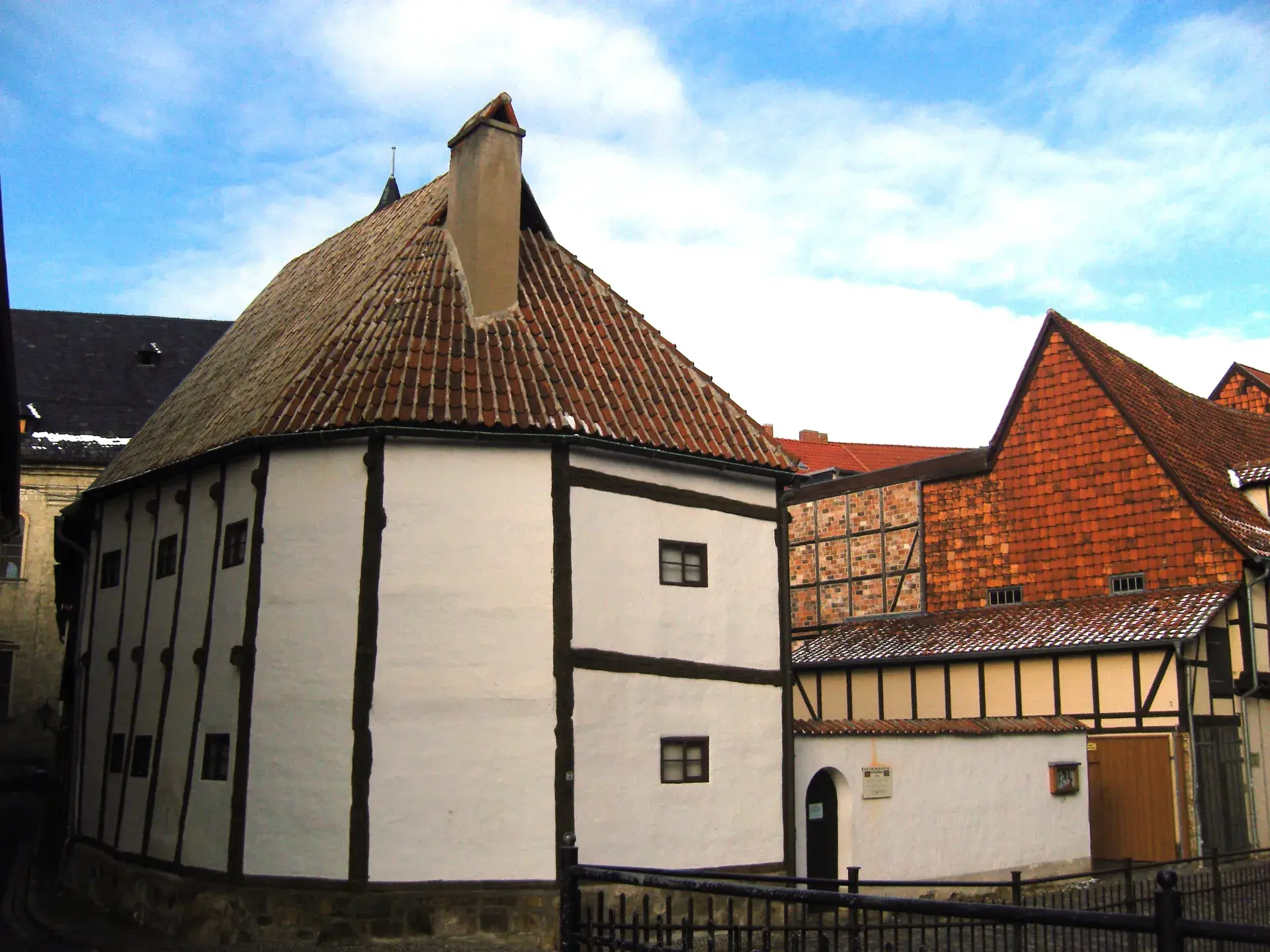
The lane at Finkenherd narrows sharply, pressing the cobblestone pavement against the towering sandstone bluff. The space is shadowed by multi-story timber facades featuring steeply pitched gables and cantilevered upper floors. Despite marking the legendary birthplace of the medieval German kingdom, the timber-framed houses standing at Finkenherd 1 through 4 are remarkably tiny. Constructed between 1500 and 1530 on former cemetery grounds, these modest structures were built more than six centuries after Henry I's reign. The adjacent property at Finkenherd 5 incorporates even older structural elements, including a sandstone barrel-vaulted cellar dating back to 1423.
A Thriving Cultural Hub
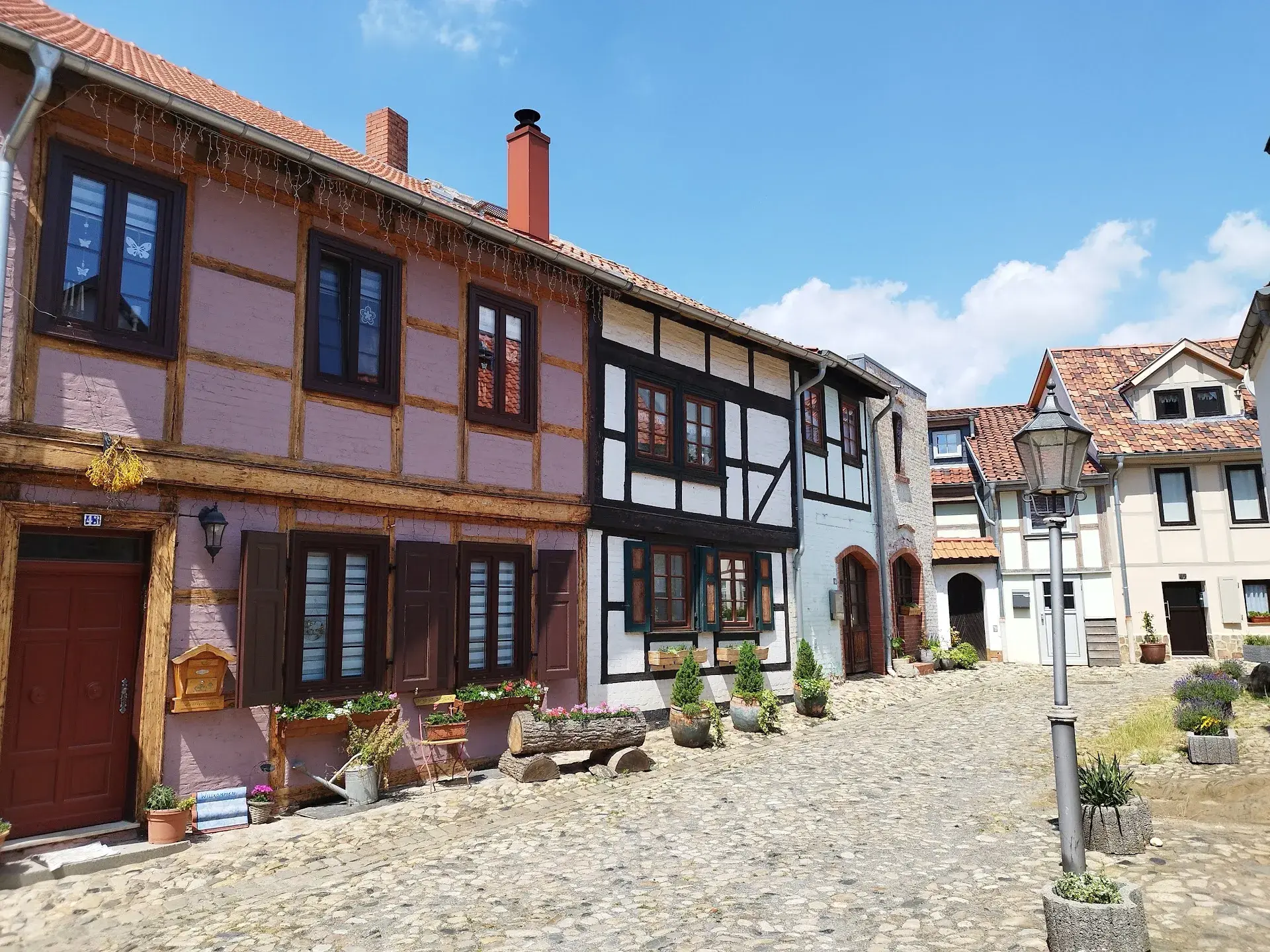
Today, the historic square functions as a vibrant connection point linking the lower old town to the uphill ascent of the Schlossberg. The surrounding historic buildings now host local cafes, restaurants, boutique vacation apartments, and cultural spaces. This combination of medieval lore, striking timber framing, and modern gastronomy makes Finkenherd a distinct encapsulation of Quedlinburg's heritage.
FAQ
Why is the square named Finkenherd?
Finkenherd is named after a local legend claiming that Duke Henry of Saxony was catching finches with bird nets at this spot in 919 AD when he was offered the crown of East Francia. This event earned him the title "Henry the Fowler."
Are the timber houses at Finkenherd from the time of Henry the Fowler?
No, the narrow timber-framed houses standing at Finkenherd 1 through 4 were constructed between 1500 and 1530, which is more than six centuries after the reign of Henry I. They were built on the grounds of a former cemetery.
Where was Henry the Fowler actually offered the crown?
While local legend places the event at Finkenherd in Quedlinburg, historical records show that Henry I was formally elected king by nobles at Fritzlar in May 919. The town of Pöhlde also holds a competing historical claim to the bird-catching legend.