Münzenberg: Quedlinburg's Historic Hilltop Village
Directly across from Quedlinburg's seat of royal power lies a humble neighborhood of half-timbered houses that secretly swallowed an entire 10th-century basilica. The Münzenberg acts as the physical and historical counterpoint to Quedlinburg's Castle Hill. While the Castle Hill represents aristocratic Ottonian authority, the Münzenberg evolved into an autonomous, working-class settlement.
A Working-Class Settlement Over Royal Ruins
The story of the Münzenberg begins in 986 when Abbess Mathilde founded the Benedictine convent of St. Mary on the 153-meter-high hill to honor her brother, Emperor Otto II. The convent was eventually abandoned during the Reformation between 1525 and 1536.
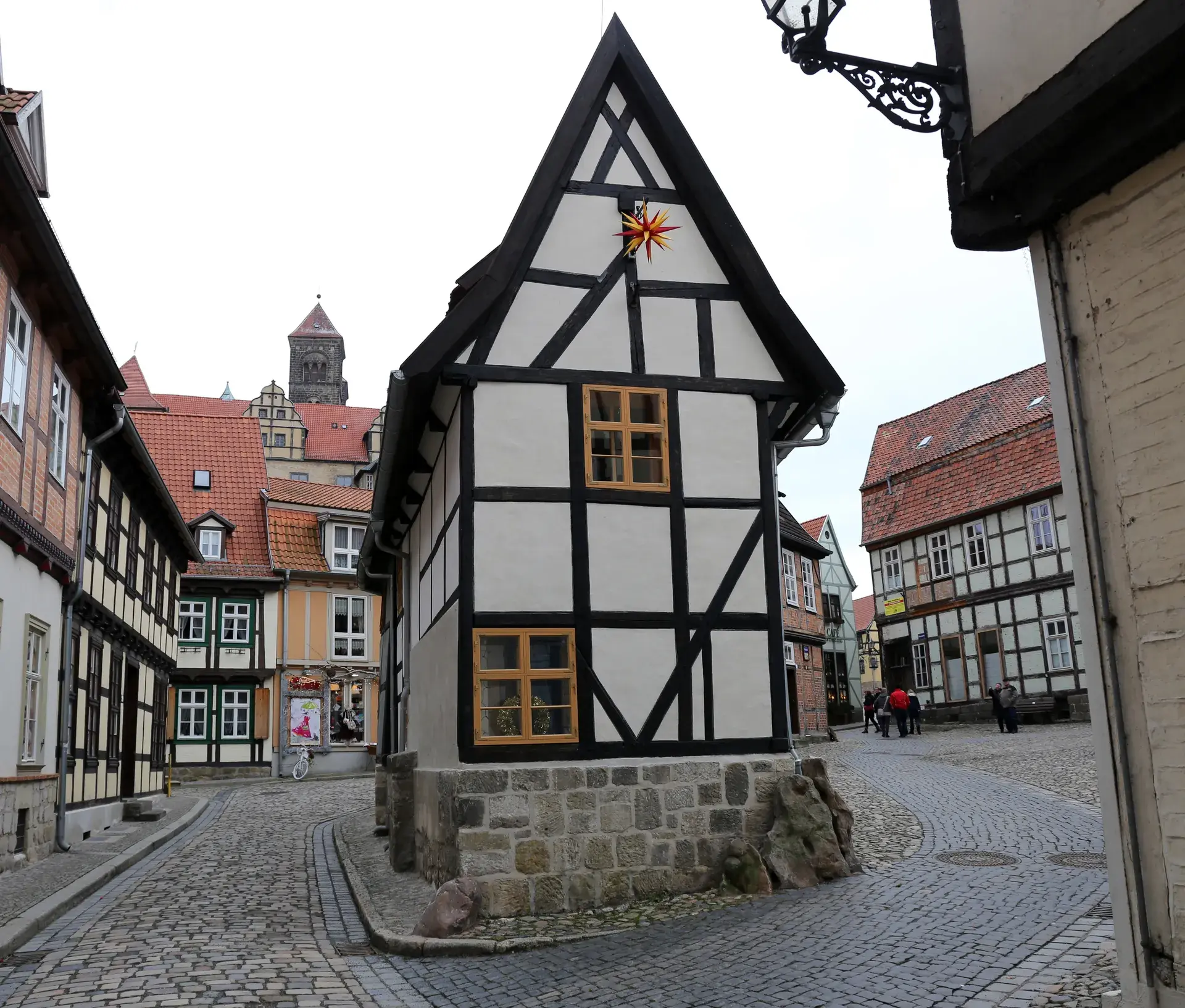
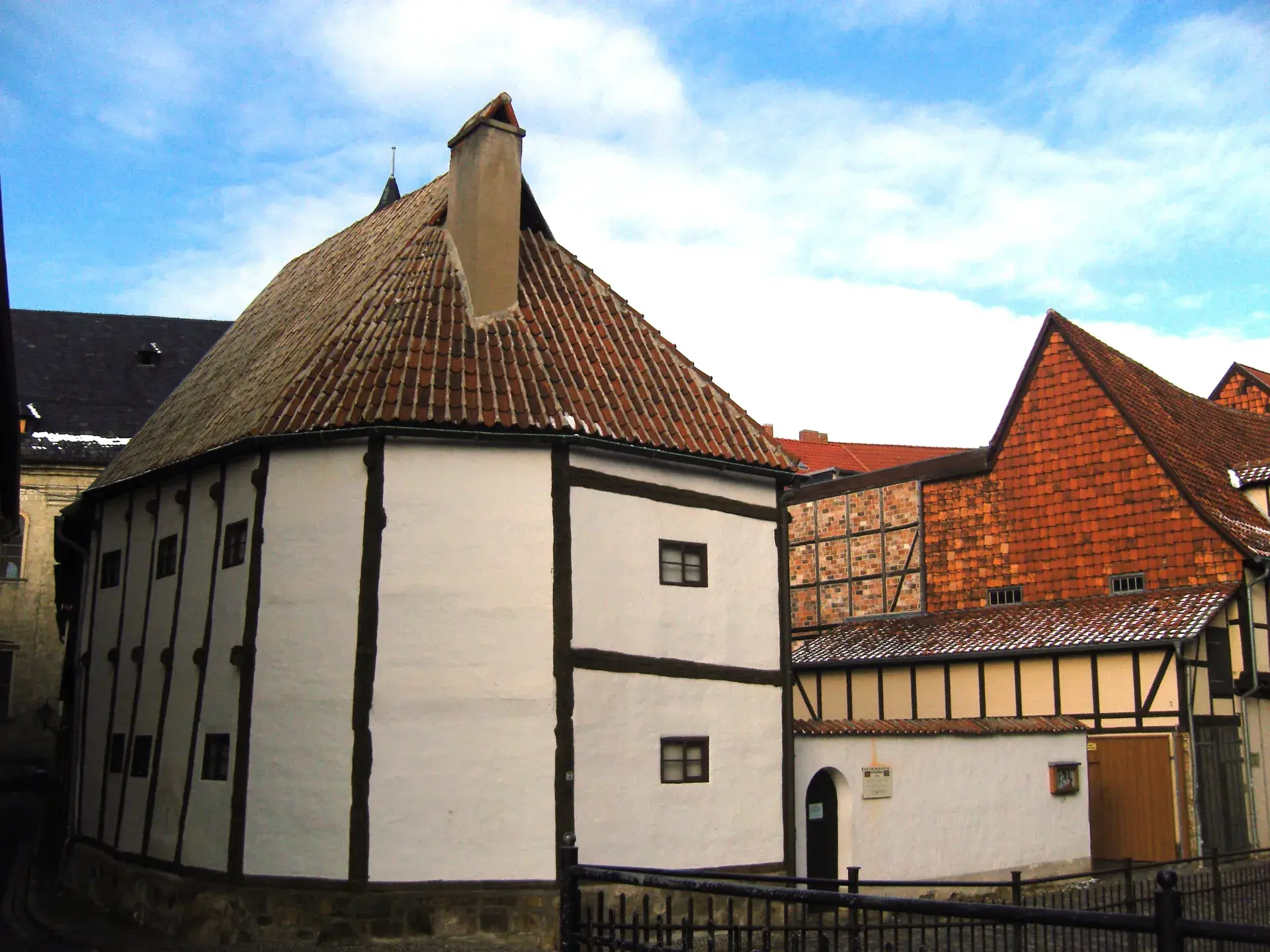
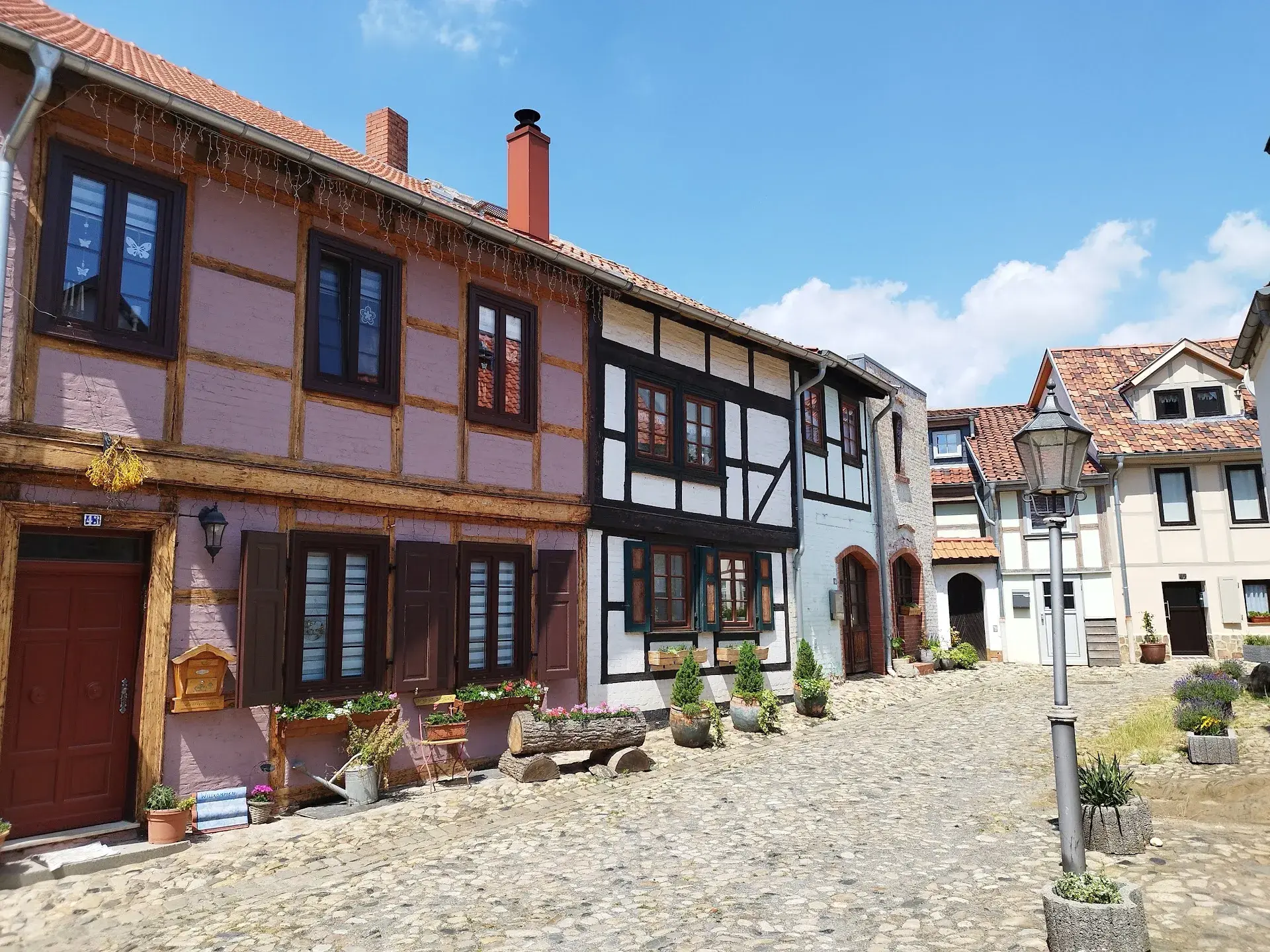
In the late 16th century, Abbess Elisabeth II permitted poorer populations, itinerant craftsmen, and musicians to settle on the hill. The majestic church ruins were partitioned and incorporated into private cottages. Today, the area features approximately 65 modest, two-story half-timbered houses lining tight cobblestone alleys.
The Hidden Ottonian Basilica
For over 400 years, major architectural elements of a monumental 10th-century Ottonian basilica remained completely hidden. Rounded arches, stone columns, and crypts functioned as ordinary cellars, pantries, and living-room walls inside the private homes of the Münzenberg.
In 1994, Professor Siegfried and Dorothea Behrens began purchasing individual properties to systematically uncover and restore the buried architecture. The properties were placed into a trust in 2006, leading to the creation of the Münzenbergmuseum. Fully opened in 2015, the museum now displays the recovered Western and Eastern crypts, nave sections, and archaeological niches.
Sweeping Views and Quiet Alleys
Accessing the Münzenberg requires ascending pedestrian staircases, such as the Schultreppe with its 107 to 108 steps or the 88-step Wassertreppe. The narrow stone staircases lead into miniature half-timbered alleyways where sound is naturally muffled by the close quarters.
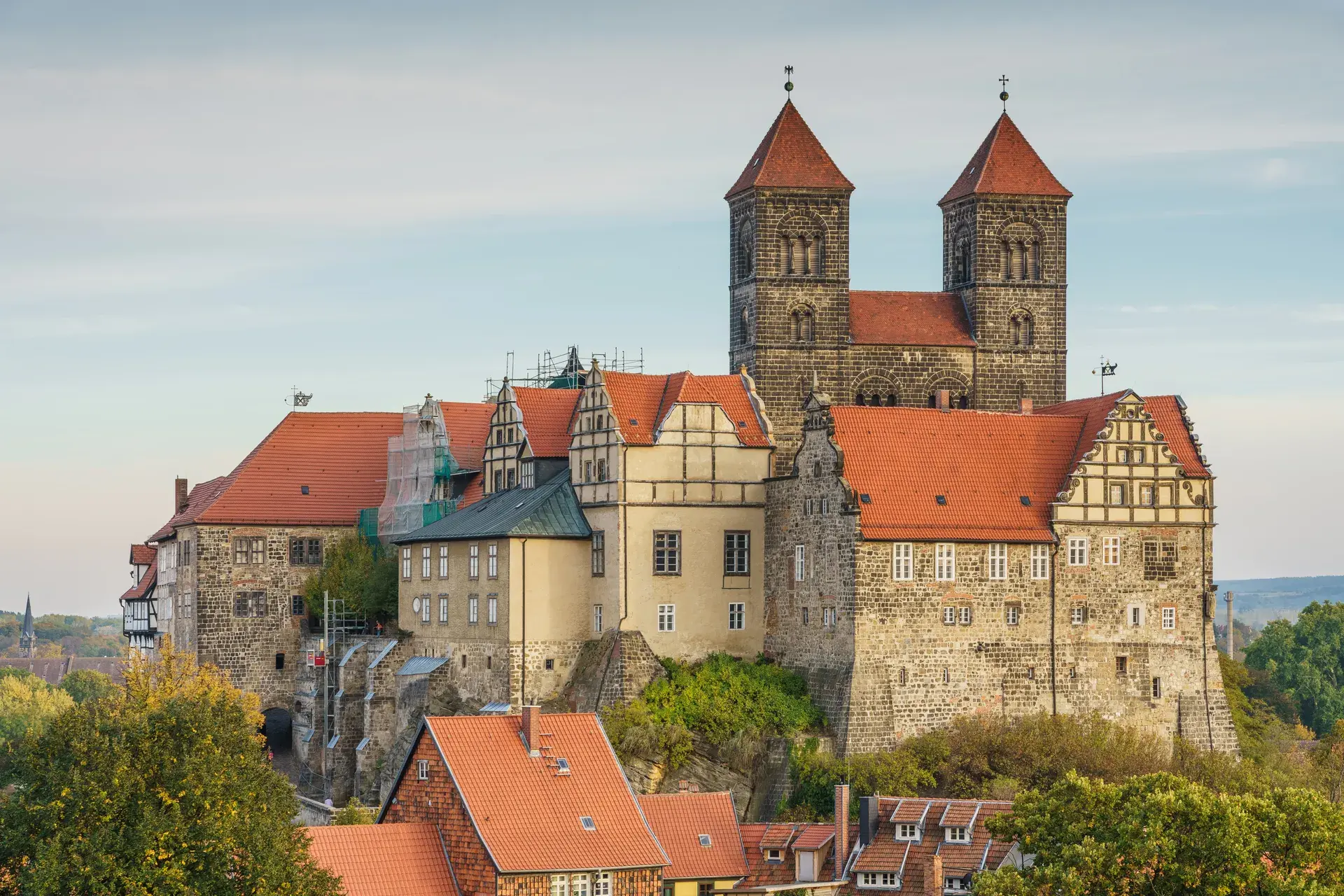
The tight pathways suddenly open to expansive, wind-swept views across the valley. From this elevated vantage point, the UNESCO-listed collegiate church of St. Servatii on the Castle Hill is clearly visible. The hilltop now functions as a quiet residential neighborhood interspersed with vacation rentals.
The Münzenberg Musicians and Local Lore
Historically known as "mons occidentalis" or the western hill around 1000 AD, the name Münzenberg is a corruption of the medieval Latin "mons Sion" (Mount Zion).
The neighborhood was historically famous for the "Münzenberg Musicians," itinerant brass and wind players who traveled the region for hire. Their legacy inspired a bronze fountain on Quedlinburg's main market square.
Local folklore highlights the stark historical contrast between the impoverished hilltop and the wealthy town below. Legend claims that fathers on the Münzenberg would hold their newborns out the window toward the city and declare in the local dialect: "Everything you see is yours, just don't let yourself get caught!"
FAQ
How is the Münzenberg in Quedlinburg accessed?
The hilltop is primarily reached via pedestrian staircases, most notably the Schultreppe, which features 107 to 108 stone steps, and the Wassertreppe, which has 88 steps. There is also a western vehicle lane.
What is the Münzenbergmuseum?
Fully opened in 2015, the Münzenbergmuseum displays the uncovered remains of the 10th-century Ottonian convent church of St. Mary. The ruins, including crypts and nave sections, were hidden inside private residential cottages for over 400 years before being restored.
Who were the Münzenberg Musicians?
The Münzenberg Musicians were itinerant brass and wind players who lived in the settlement and traveled the region for hire. They inspired a bronze fountain that can be seen today in Quedlinburg's main market square.
How did the Münzenberg get its name?
The name is a corruption of the medieval Latin term 'mons Sion' (Mount Zion). Around 1000 AD, the area was simply known as 'mons occidentalis', or the western hill.
Discover Quedlinburg like never before
Dive into Quedlinburg hidden stories and secret spots with Ciceru interactive tours.
Explore tour
Audioguide
Quizzes
Maps
Solo
Couples
Groups & families

© Photo by Al Bar via Google Maps · Google Places