Marktplatz Quedlinburg: Historic Heart of the City
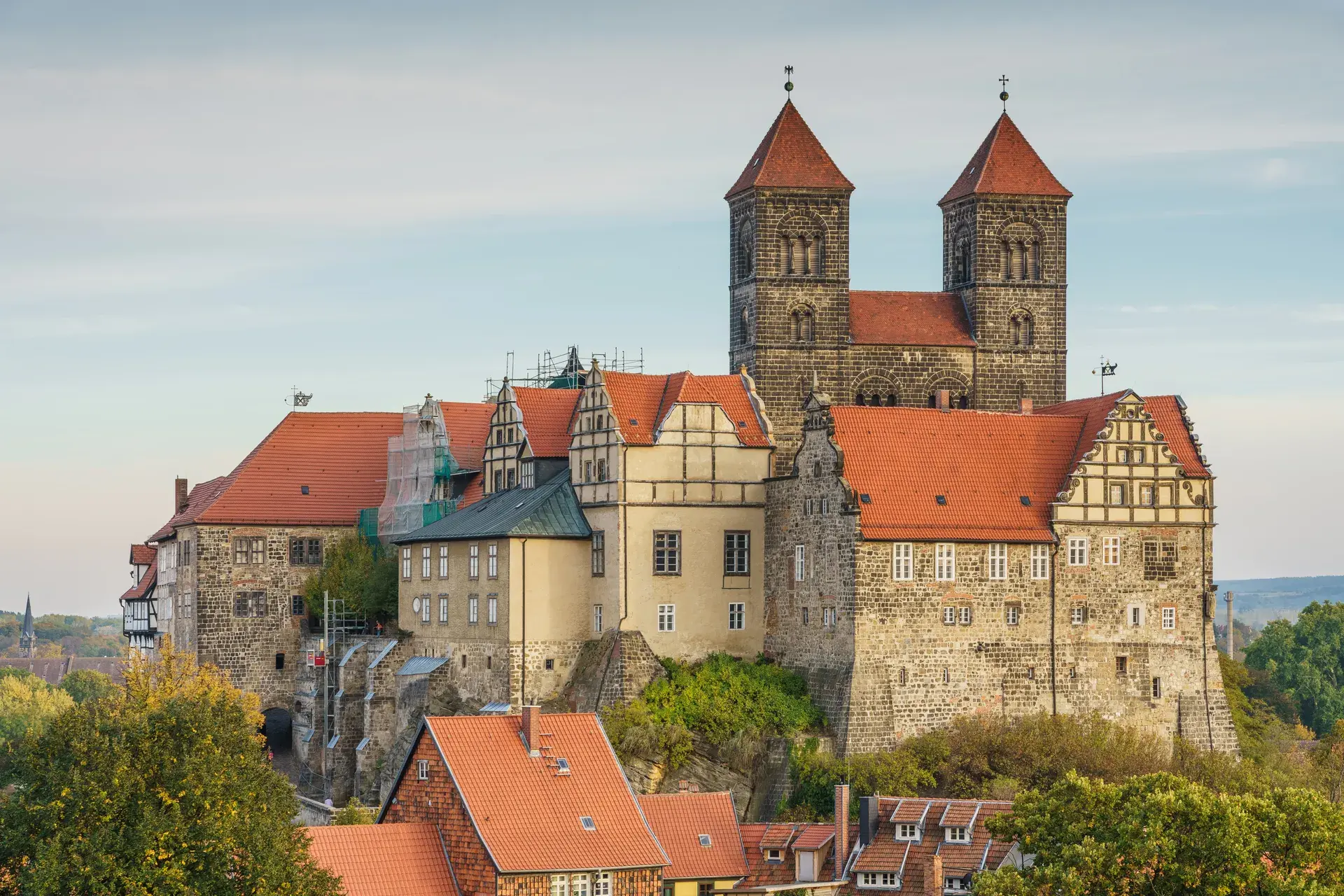
Marktplatz Quedlinburg stands as the vibrant heart of the city, a picturesque plaza surrounded by historic architecture and lively cafes. Laid out around 1150, the market square forms a central feature of Quedlinburg's UNESCO World Heritage area, which preserves over 1,300 timber-framed structures. Historically, it served as the transition point between the secular merchant town and the monastic-imperial precinct atop Castle Hill.
A Legacy of Autonomy and Conflict
The history of the square is defined by the tension between the secular merchants and the ruling Abbesses of the Quedlinburg Imperial Abbey. As the merchant settlement prospered following market privileges granted in 994, the town sought independence. In 1426, Quedlinburg joined the Hanseatic League and erected a sandstone Roland statue as an emblem of civic freedom. This autonomy was broken in 1477 during an armed conflict with Abbess Hedwig of Saxony. The town was forced out of the league, and the Roland statue was smashed to pieces.
For centuries, the shattered remains of the knight were stored in a courtyard. It was not until 1869 that Mayor Gustav Brecht had the pieces reconstructed. Today, the 2.75-meter Quedlinburger Roland stands beside the Town Hall and is recognized as the second-smallest surviving Roland statue. During ground excavations in 2013, archaeologists uncovered the original stone foundation where the free-standing figure stood prior to its destruction.
The Ivy-Clad Town Hall
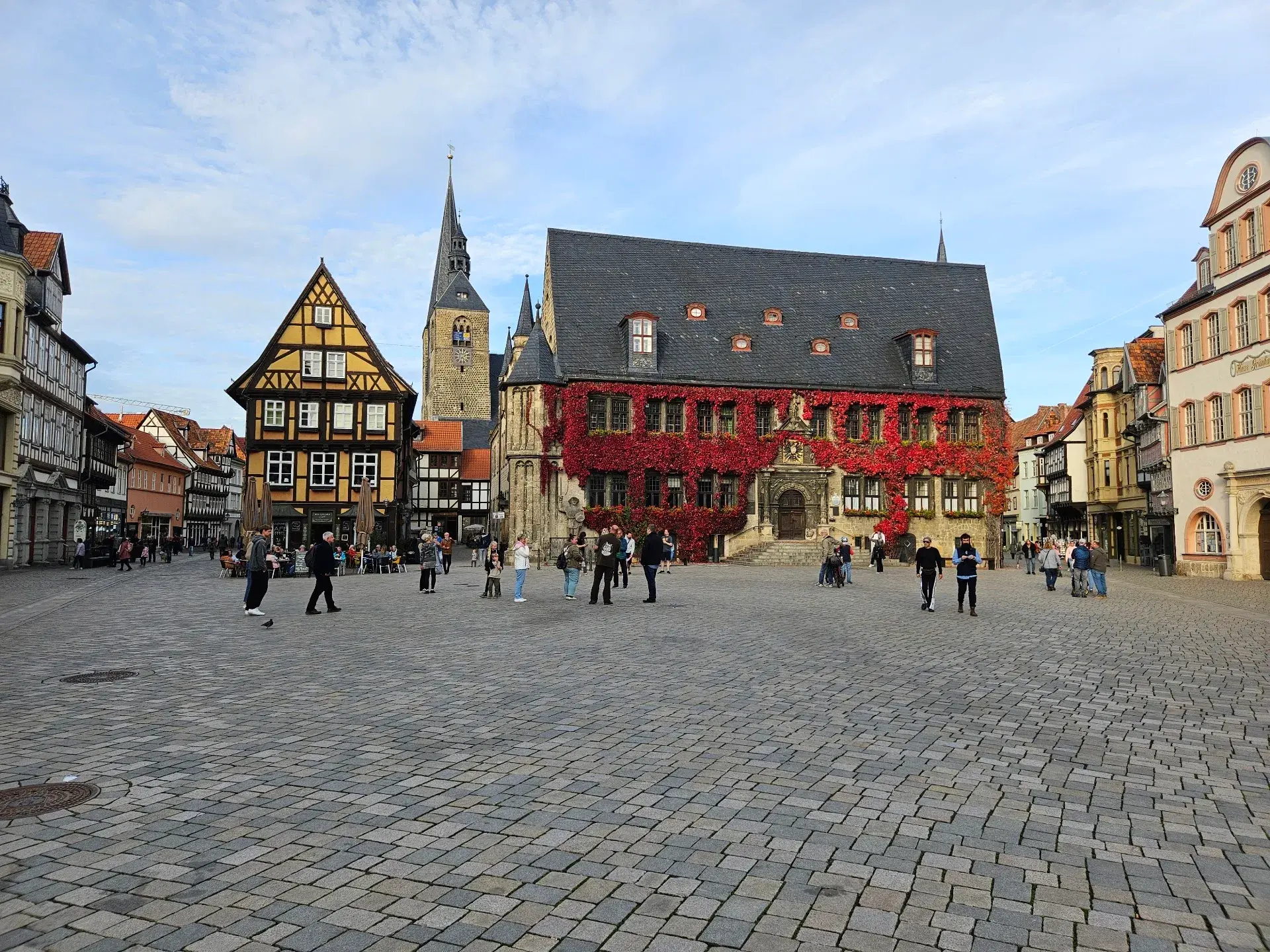
Anchoring the northern edge of the square is the historic Rathaus, or Town Hall, first documented in 1310. The building features early Gothic stone masonry that was later modified during Renaissance renovations between 1616 and 1619, at which time the main portal was shifted to face the market. A defining sensory feature of the square is the thick wild ivy covering the Town Hall's facade, which changes color through the seasons against the aged sandstone masonry.
Local Folklore and Medieval Traditions
The Marktplatz is also home to distinct local legends. Above the Town Hall door and on the municipal coat of arms sits a dog in an open gate. Local folklore names the dog Quedel, claiming his barking thwarted a bandit raid and inspired the town's name.
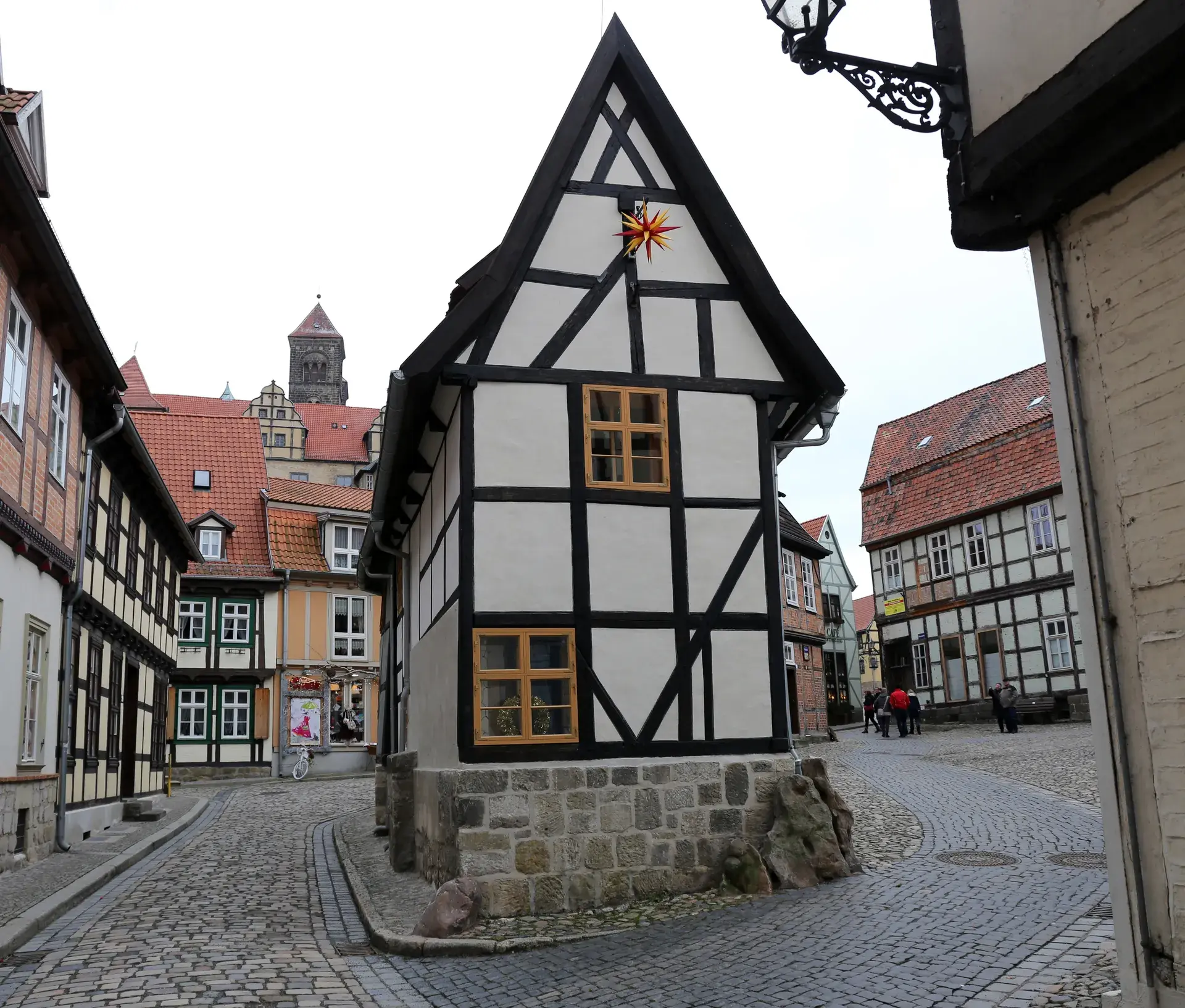
Just off the market area, a small passage connects to the Schuhhof, a historic medieval shoemakers' courtyard. A local tradition suggests that the medieval practice of lowering the courtyard's window shutters is linked to the modern concept of closing time.
Modern Life in the Historic Square
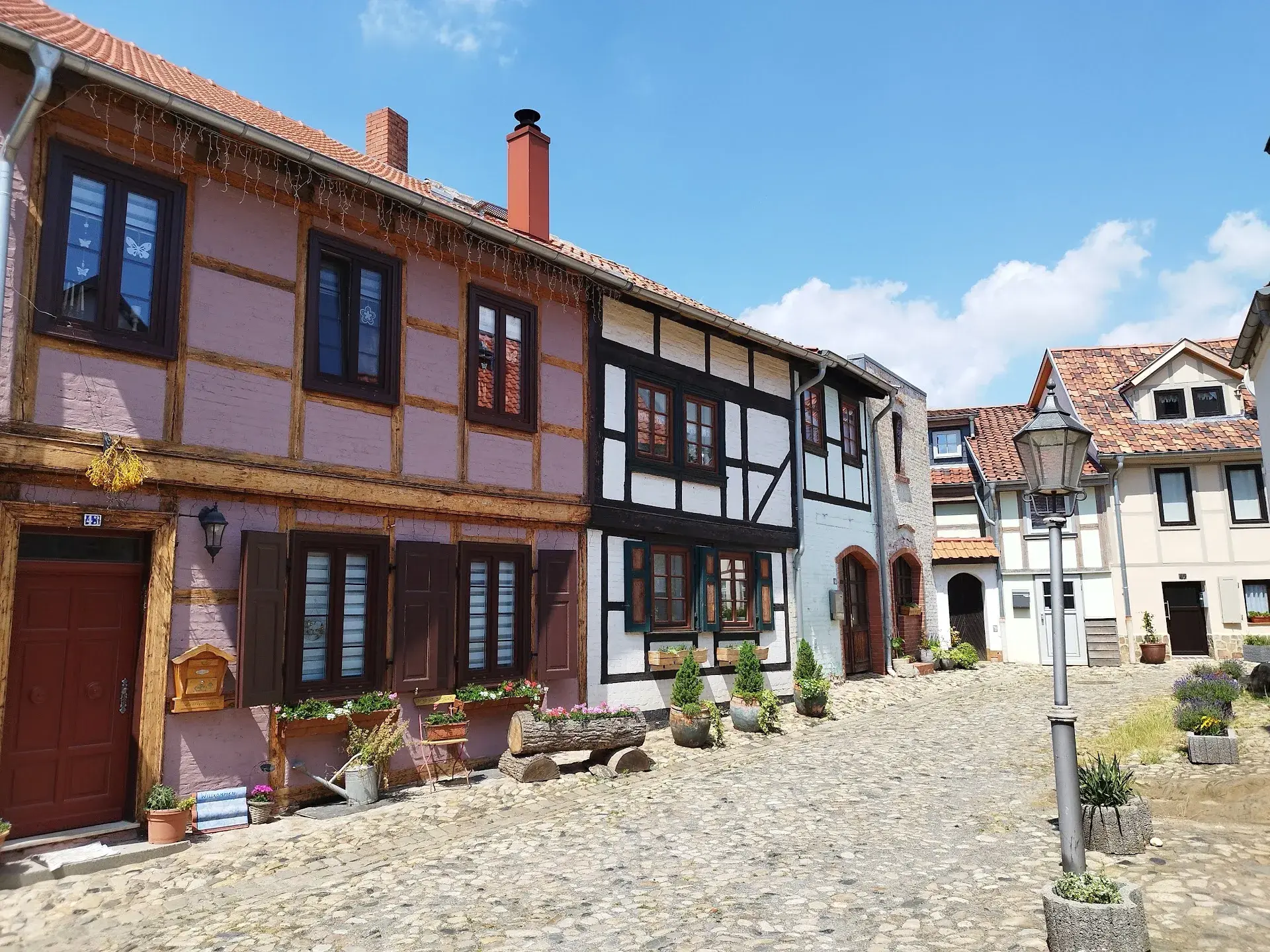
Today, the cobblestone paving of the Marktplatz contrasts with the narrow alleys branching out into the Old Town. The square remains a hub of activity, hosting regular weekly markets, festive events, and an annual Christmas market. While the Town Hall retains its administrative and ceremonial roles, the 16th- to 18th-century timber-framed houses framing the plaza now operate as cafés, restaurants, hotels, and the central Tourist Information center.
FAQ
How old is the Marktplatz in Quedlinburg?
The Marktplatz was laid out around 1150 and has served as the commercial and civic center of Quedlinburg's Old Town for centuries.
Why was the Quedlinburg Roland statue destroyed?
The original statue was smashed in 1477 after an armed conflict with Abbess Hedwig of Saxony. It was reconstructed in 1869 from the surviving pieces.
What is the story behind the dog on Quedlinburg's coat of arms?
Local folklore claims a dog named Quedel barked to warn the town of an approaching bandit raid, inspiring the citizens to name the town in its honor.
Discover Quedlinburg like never before
Dive into Quedlinburg hidden stories and secret spots with Ciceru interactive tours.
Explore tour
Audioguide
Quizzes
Maps
Solo
Couples
Groups & families

© Photo by AnnKa Spie via Google Maps · Google Places