St. Nicholas Church: Quedlinburg's Tallest Landmark
A Landmark of the Neustadt
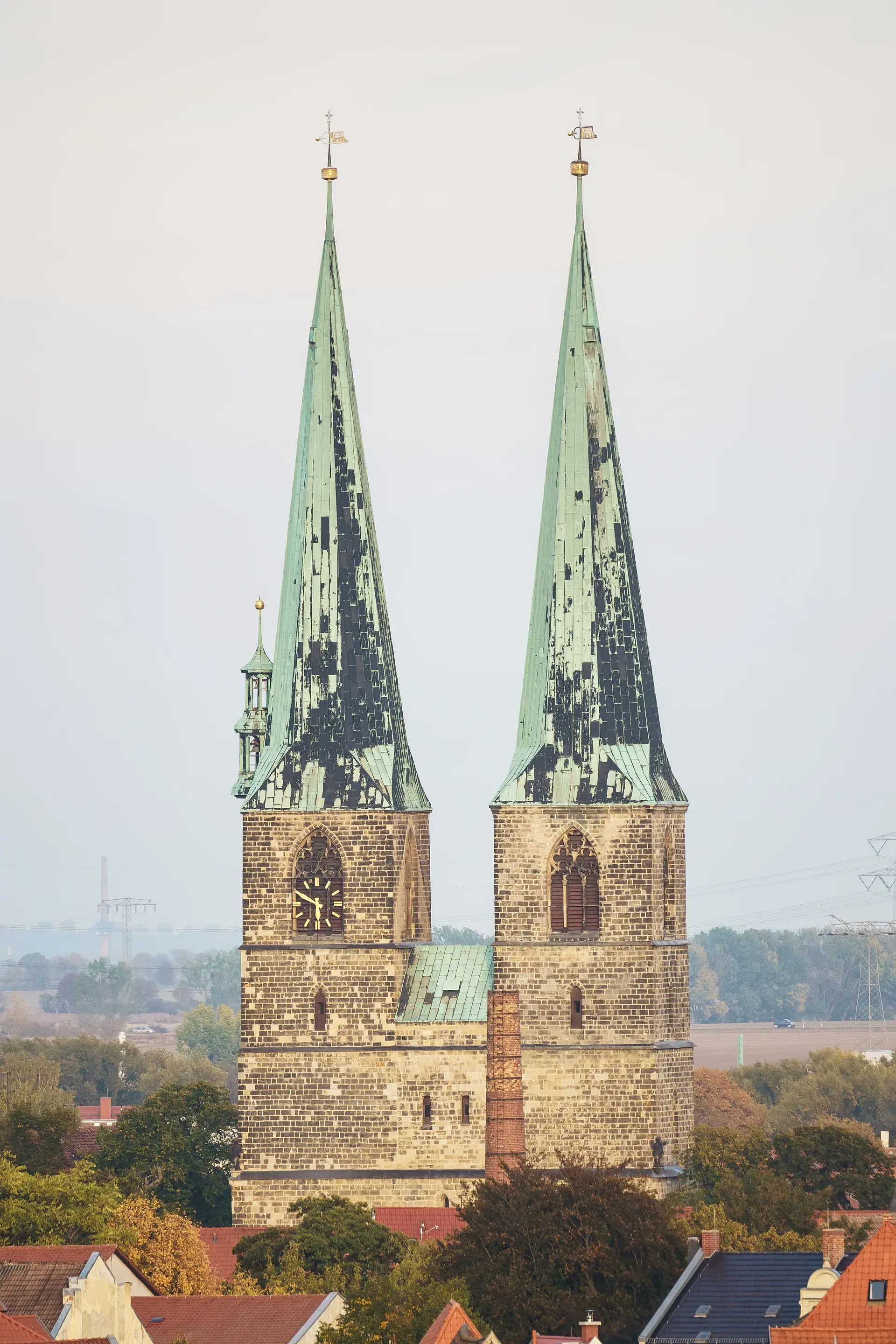
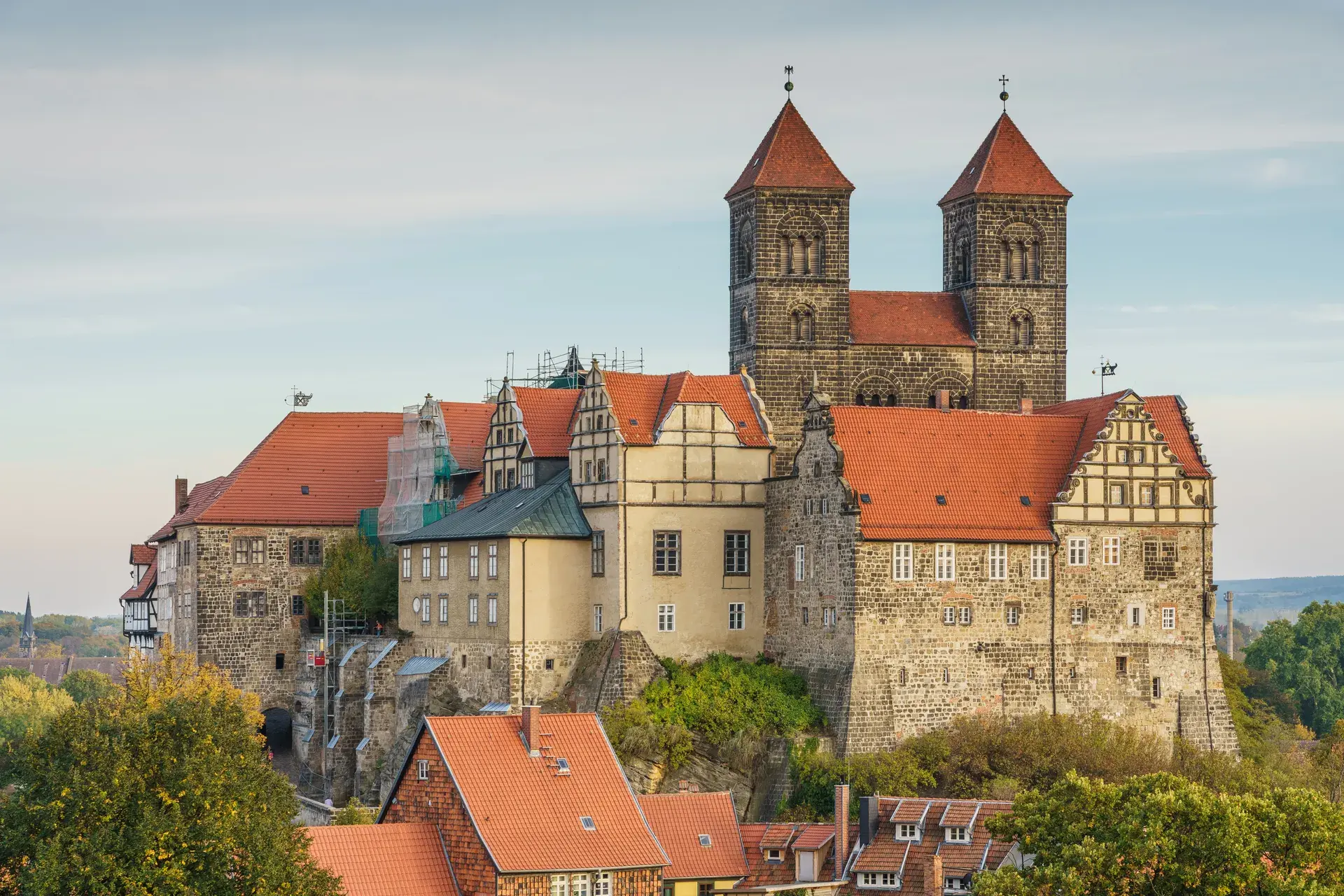
The twin towers and striking Gothic facade of St. Nicholas Church dominate the Neustädter Kirchhof. Rising to a height of 72 meters, the structure stands as the tallest and largest church in Quedlinburg. It provides a distinct architectural counterbalance to the Old Town's Marktkirche St. Benedikti and the Collegiate Church on Castle Hill.
Evolution of the Architecture
Begun around 1200 as a Romanesque basilica and first documented in 1222, the building was transformed into a Gothic three-aisled hall church during the 14th and 15th centuries. Today, it retains its early Gothic western facade. Historical records indicate the massive stone structure rests on an ingenious foundation of timber piles and alder wood blocks driven into the boggy subsoil.
The church has faced and survived numerous structural challenges over the centuries. Significant threats included severe instability during the 1972 Quimburga storm, a smoldering fire in 1996, and cracked vault ribs in 2013. A major structural stabilization project successfully concluded between 2019 and 2021.
Notable Figures and History
St. Nicholas was founded to serve the growing merchant and artisan settlement of the Neustadt during Quedlinburg's 13th-century expansion. The church became Protestant in 1540 following the introduction of the Reformation by Abbess Anna II von Stolberg.
Several prominent figures are associated with the parish. Theologian Johann Arndt served as pastor from 1590 to 1599. Later, Johann Christian Erxleben served as pastor from 1737 to 1759. His wife, Dorothea Christiane Erxleben, achieved historical renown in 1754 by becoming the first woman in Germany to receive a medical doctorate.
Relics and Legends
Daylight illuminates a high-vaulted interior that showcases an ornate 1712 Baroque high altar carved by Jobst Heinrich Lessen and a Baroque pulpit dating to 1731. The south tower houses Quedlinburg's oldest bell, cast in 1333, which is uniquely engraved with fine medieval figurative drawings scratched into the metal.
On the exterior, a distinctive small Baroque turret known as the Saigertürmchen is asymmetrically attached to the north tower's helmet to house the clock-striking mechanism.
The building is also steeped in local lore. Tradition claims the medieval church was financed by a humble shepherd who discovered buried gold. A Baroque stone statue of a shepherd and his dog sits high on the tower exterior to commemorate this legend.
Modern Community Role
Today, St. Nicholas remains an active parish church for the Evangelical Congregation of Quedlinburg. It is uniquely equipped with winter heating, making it the only parish church in the city that can host year-round services comfortably. The church is open for public visiting and serves as a prominent venue for the annual Quedlinburger Musiksommer.
FAQ
Why is there a statue of a shepherd on St. Nicholas Church?
According to local legend, a humble shepherd discovered buried gold and used it to finance the medieval church. A Baroque stone statue of the shepherd and his dog was placed high on the tower exterior to commemorate this tale.
What is the Saigertürmchen?
The Saigertürmchen is an asymmetrical small Baroque turret attached to the north tower's helmet. It was constructed to house the clock-striking mechanism.
Who was Dorothea Christiane Erxleben?
She was the wife of Johann Christian Erxleben, a pastor at St. Nicholas Church from 1737 to 1759. She achieved historical fame by becoming the first woman in Germany to earn a medical doctorate in 1754.
Does St. Nicholas Church still hold regular services?
Yes, it is an active parish church for the Evangelical Congregation of Quedlinburg. It is notably the only parish church in the city fitted with winter heating, allowing for year-round services.