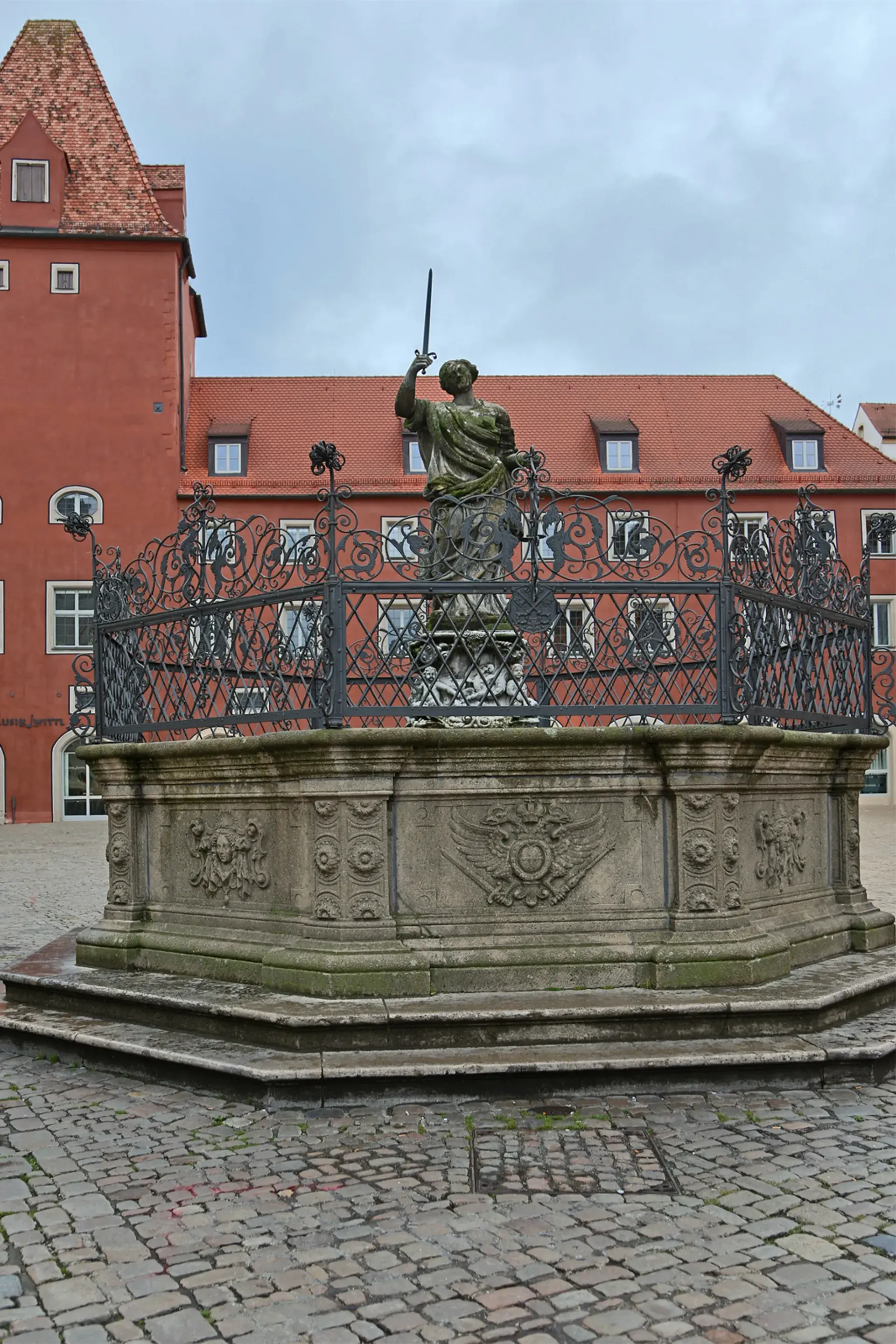
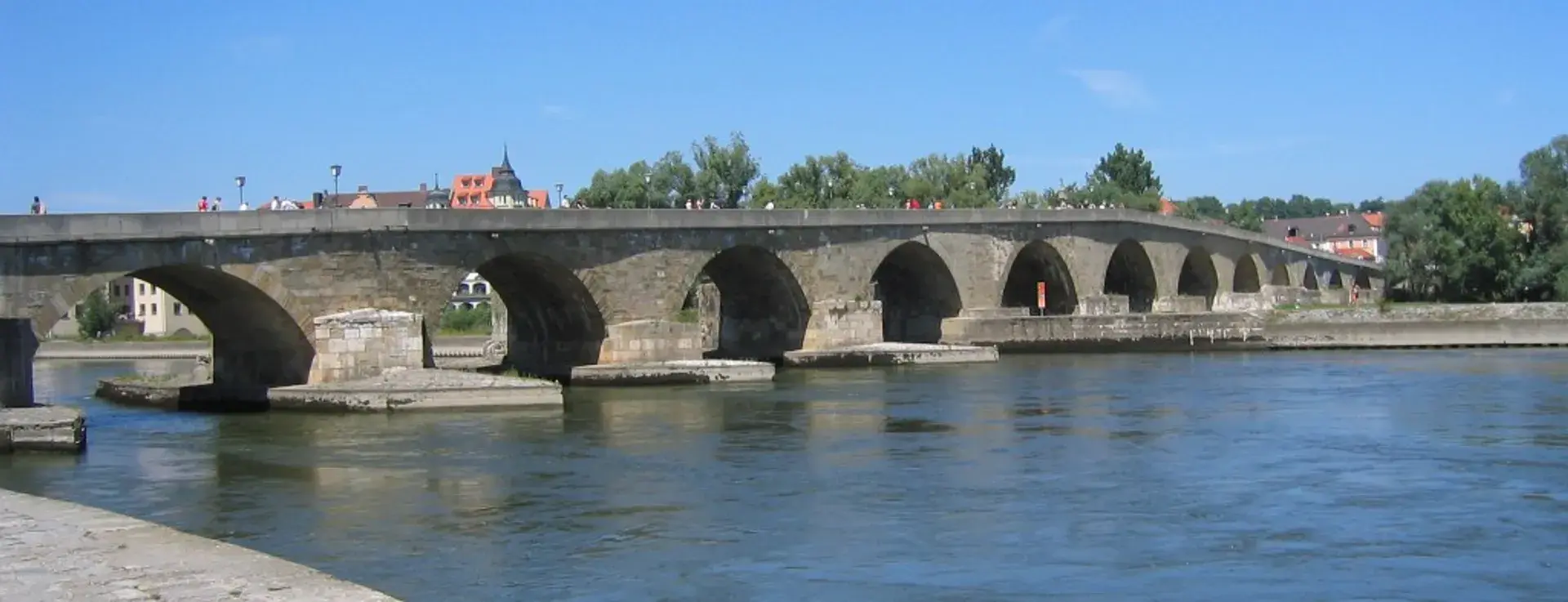
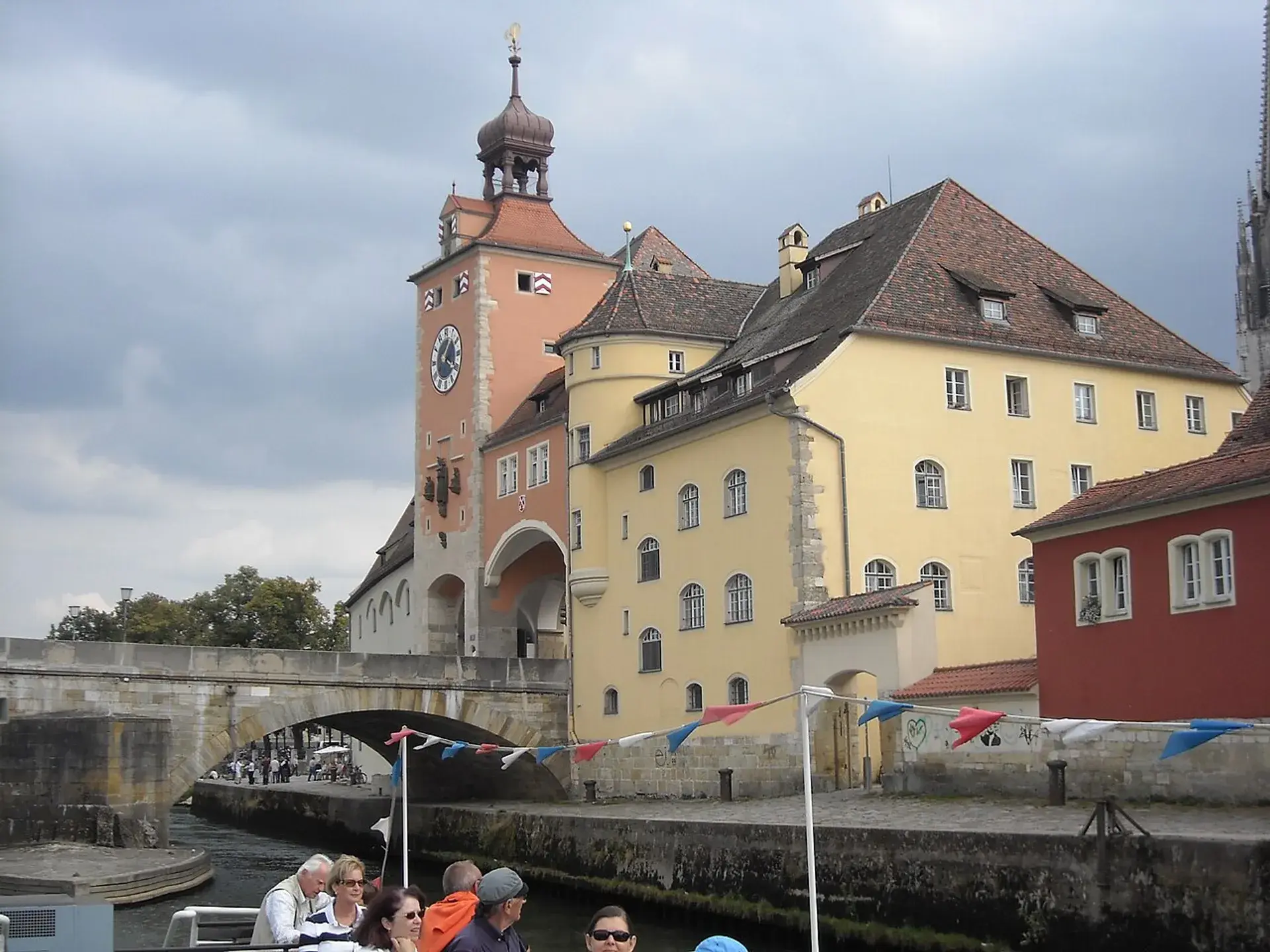
Altes Rathaus Regensburg: Seat of the Imperial Diet
Architectural Evolution of the Town Hall Complex
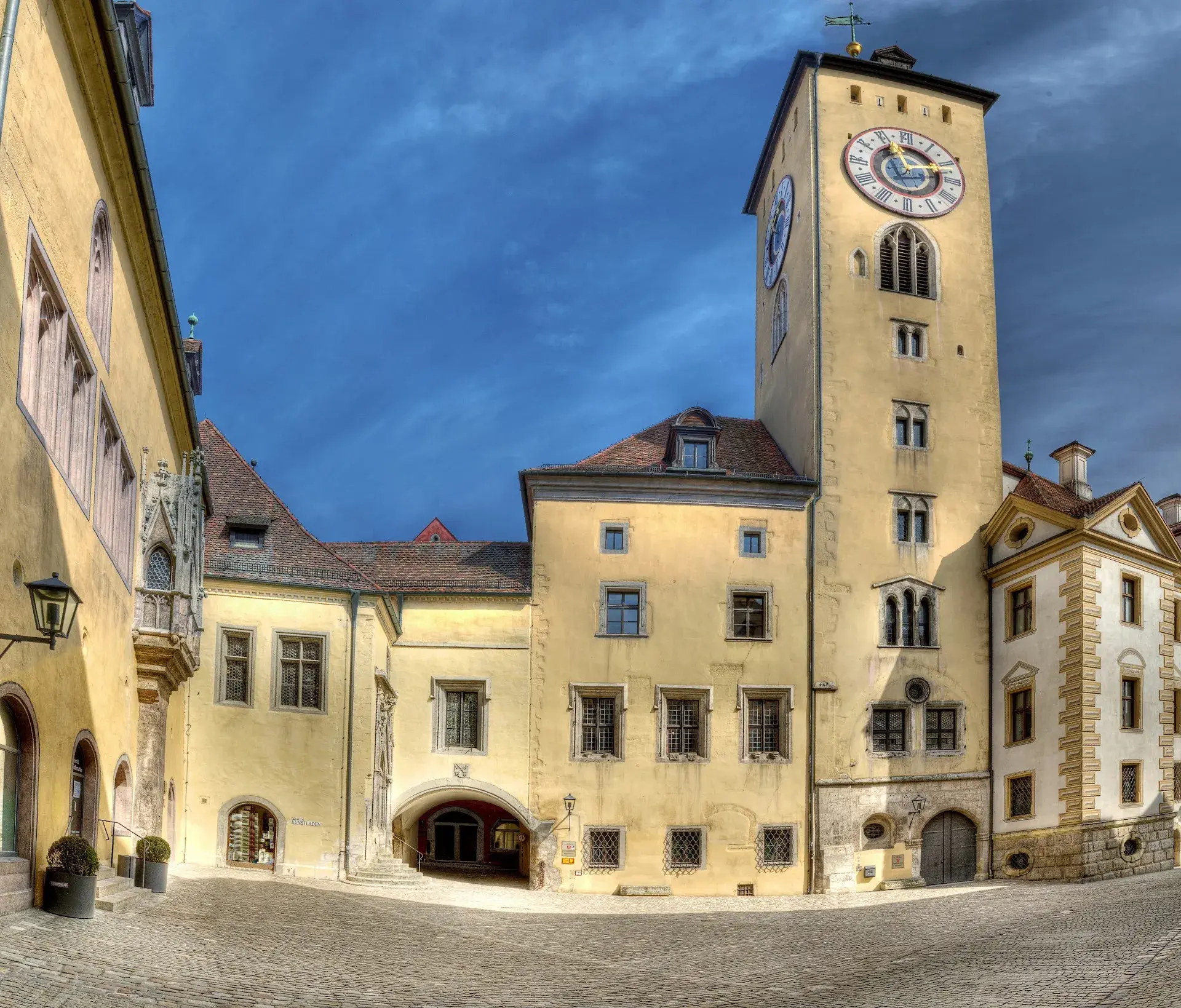
The Altes Rathaus (Old Town Hall) of Regensburg stands prominently between Rathausplatz and Kohlenmarkt in the pedestrian core of the city's Old Town. Bridging the ecclesiastical quarter around St. Peter's Cathedral and the historic commercial hub at the Stone Bridge, the complex served for centuries as a secular, civic, and judicial counterweight to the Prince-Bishops of Regensburg.
The municipal complex developed in distinct construction phases, resulting in a striking tripartite layout. Its oldest section features an eight-storey, 55-meter Romanesque and Gothic council tower (Ratsturm) and adjoining palace wing dating from the mid-13th century. Adjacent to the tower stands the Gothic Reichssaalbau, constructed between 1320 and 1330. A Late Gothic portal gateway is flanked by 15th-century stone guardian sculptures, known traditionally as Schutz und Trutz ("Defense and Defiance"). Following a devastating fire in 1706 that destroyed the medieval Marktturm, the city added an ornate, bright yellow Baroque wing stretching along Kohlenmarkt.
The Perpetual Imperial Diet (1663–1806)
Following Emperor Frederick II's elevation of Regensburg to a Free Imperial City in 1245, the civic council built the town hall as an assertion of civic liberty. Although Imperial Diets (Reichstage) of the Holy Roman Empire were originally mobile assemblies convened at the discretion of the Emperor, Regensburg became their predominant location starting in 1594.
In 1663, an assembly convened in the Reichssaal to address military and financial fallout from the Thirty Years' War. Because territorial arguments and complex diplomatic disputes never formally concluded, the summit never adjourned. The session transformed into the Immerwährender Reichstag (Perpetual Imperial Diet), establishing the building as Europe's first permanent parliament. Because emperors were rarely present in person, imperial commissioners (Prinzipalkommissare) represented the crown alongside resident envoys from across the Electors, Princes, and Imperial Cities. This perpetual assembly turned Regensburg into a permanent diplomatic capital until Emperor Francis II abdicated in August 1806, dissolving the Holy Roman Empire.
Linguistic Origins and Historical Curiosities
The procedural etiquette and furnishings of the Perpetual Diet gave rise to multiple everyday German idioms. The phrase „etwas auf die lange Bank schieben“ ("to put something on the long bench," meaning to postpone indefinitely) refers to the physical wooden benches and archive chests in the council chambers where unresolved administrative cases were set aside. Similarly, „am grünen Tisch entscheiden“ ("to decide at the green table") originates from the green velvet fabric covering the tables of the Electoral College, while „am Katzentisch sitzen“ ("to sit at the cat's table") derived from the auxiliary side tables assigned to lower-tier representatives.
The complex also holds lesser-known chapters of local history. The monumental Reichssaal, which anchored imperial politics for nearly a century and a half, was originally commissioned in the 1320s as a patrician ballroom (Tanzsaal). During the Imperial Diet of 1546, Emperor Charles V met local burgher Barbara Blomberg in the city; their son, Don John of Austria, later commanded the fleet that won the Battle of Lepanto. Centuries later, in June 1942, civic authorities bricked over the portal statues of Schutz und Trutz to protect them from Allied air raids, keeping them concealed until they were uncovered after the war.
Subterranean Justice: The Fragstatt
Beneath the civic and diplomatic halls lies a stark judicial space: the Fragstatt. This preserved medieval basement complex includes a court interrogation chamber, torture room, and detention cells. The survival of its original layout and iron instruments offers a complete look at the penal customs that operated alongside the city council's judicial duties.
Visiting the document Reichstag Museum
The Altes Rathaus remains an active ceremonial venue used for official mayoral functions, municipal receptions, and concerts, while general city governance operates from the Neues Rathaus on Dachauplatz. The ground floor at Rathausplatz 4 houses the official Regensburg Tourist Information center.
The historic upper and subterranean chambers form the document Reichstag museum. Access to the Reichssaal, delegate consultation rooms, and the subterranean Fragstatt is available exclusively through scheduled daily guided tours offered in both German and English.
FAQ
Can the historic interior of the Altes Rathaus be visited without a tour?
No. The Reichssaal, envoy consultation chambers, and basement Fragstatt are accessible exclusively via daily scheduled guided tours conducted in German and English.
Why was the Imperial Diet called 'Perpetual'?
Summoned in 1663 to resolve crises following the Thirty Years' War, the assembly became deadlocked over diplomatic disputes and never formally concluded, remaining in continuous session until the empire dissolved in 1806.
What German idioms originated in the Altes Rathaus?
Expressions such as 'auf die lange Bank schieben' (originating from literal benches where unresolved files were set aside), 'am grünen Tisch entscheiden' (referencing green velvet deliberation tables), and 'am Katzentisch sitzen' trace back to the Perpetual Diet's protocols.
What is the Fragstatt inside the Altes Rathaus?
The Fragstatt is an intact medieval judicial complex located in the basement, featuring an interrogation room, torture chamber, and preserved municipal detention cells.
Discover Regensburg like never before
Dive into Regensburg hidden stories and secret spots with Ciceru interactive tours.
Explore tour
Audioguide
Quizzes
Maps
Solo
Couples
Groups & families

© Photo by Alfred Kerschbaum via Google Maps · Google Places