Salzstadel Regensburg: Historic Danube Salt Warehouse
The Origins of Regensburg's Salt Warehouse
During the Middle Ages and early modern era, salt held immense economic value as "white gold." Alpine rock and brine salt mined in Berchtesgaden, Bad Reichenhall, and Hallein traveled along the Salzach and Inn rivers before being towed up the Danube to Regensburg. From this river hub, merchants redistributed the commodity across Bavaria and Swabia.
Control over this lucrative trade triggered fierce political rivalry. After the Duchy of Bavaria seized the regional salt monopoly for 21 years, the Free Imperial City of Regensburg successfully recovered its trade rights in 1614. To cement its position and outcompete a rival Bavarian salt depot across the river in Bavarian-ruled Stadtamhof, the city council commissioned the construction of the Salzstadel.
Engineering and Architecture on the Danube
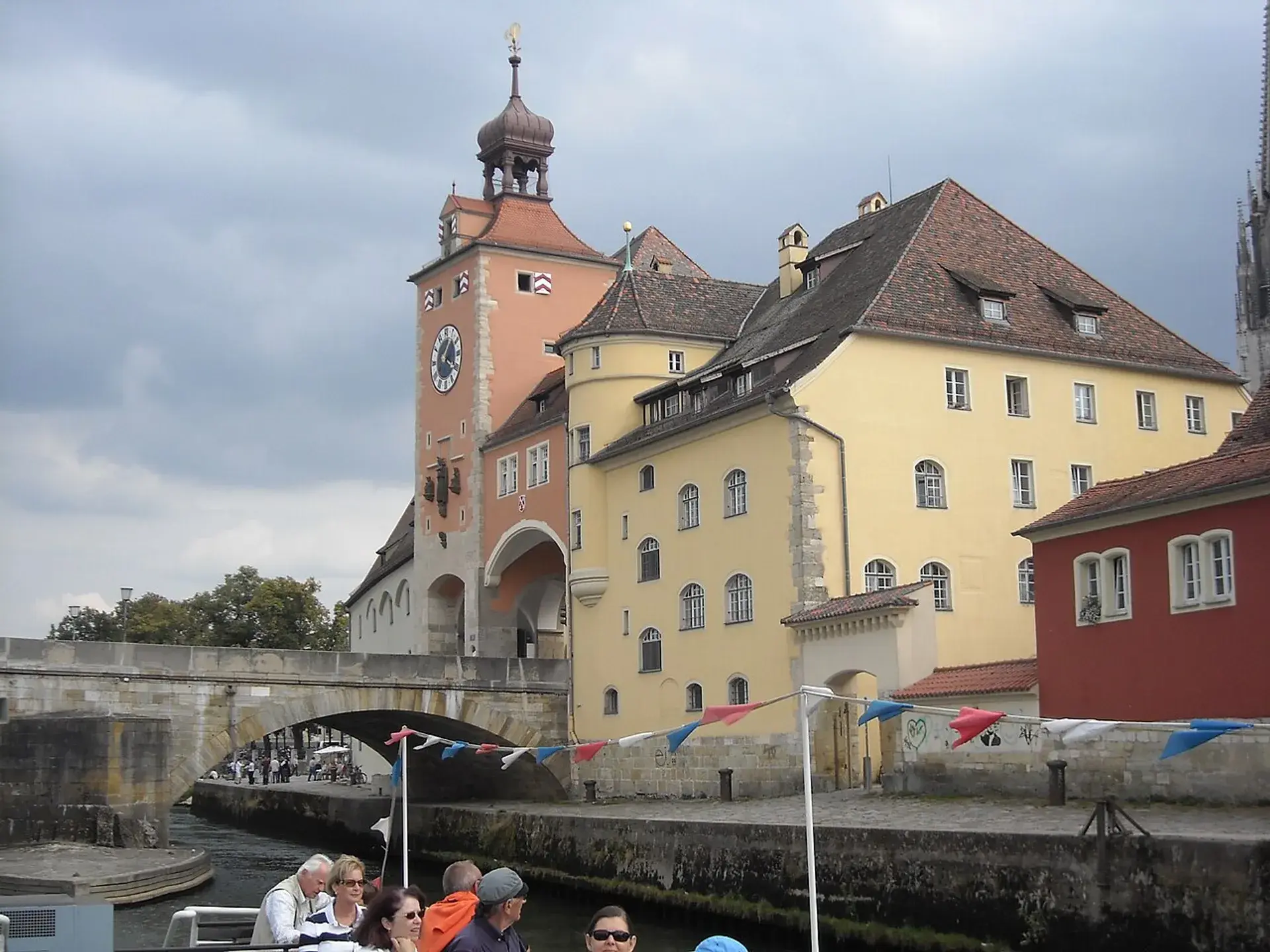
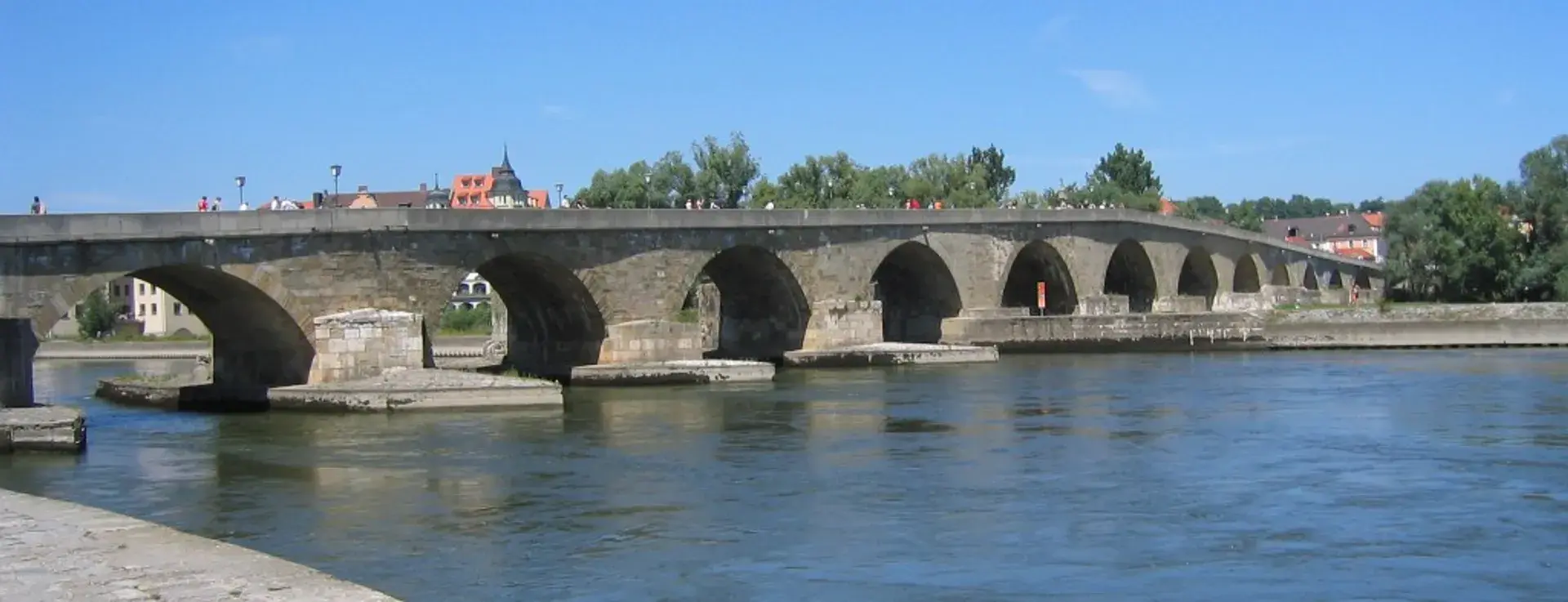
Constructed between 1616 and 1620, the Salzstadel stands immediately east of the southern end of the Stone Bridge (Steinerne Brücke). Because the riverbank ground was soft, builders stabilized the structure by driving deep wooden piles into the earth. To create a secure footing along the riverbank, the city intentionally bricked up and filled in one arch of the 12th-century Stone Bridge.
The warehouse features a trapezoidal footprint with three massive stone masonry storeys. Above the stonework sits a monumental timber roof containing five distinct attic tiers, which were originally serviced by internal winch and rope-pull hoists. The building's launch was not without complications: during its first salt loading in 1619, structural miscalculations caused the timber framing to groan and deform under the crushing weight. Operations were halted until masonry reinforcements were incorporated, delaying the official opening until 1620.
Riverfront Trade and Adjacent Landmarks
The economic contest on the Danube occasionally escalated into open conflict. In 1606, during disputes over river customs, Regensburg stationed a bridge guard named Hanns Heygl on the Stone Bridge armed with an axe. Heygl was instructed to sever the mooring ropes of Bavarian transport vessels attempting to dock without paying municipal tolls.
Directly adjacent to the storehouse stands the Historische Wurstkuchl (Historic Sausage Kitchen), an independent building wedged between the Salzstadel, ancient city wall fragments, and the bridge. While popular lore suggests it served 12th-century bridge builders, documentation shows the current building dates to the 17th century, with charcoal-grilled sausages replacing boiled meats around 1806. Outside, the aroma of pork sausages sizzling over open beechwood charcoal grills regularly drifts between the bridge approach and the warehouse walls, accompanied by the sounds of the swirling Danube currents below.
Modern Transformation and the World Heritage Visitor Centre
Salt storage inside the Salzstadel ceased during the 19th century, leading the city to repurpose the cavernous space. It served as the municipal weights and measures bureau (Eichamt) until 1955 and functioned as a municipal pawn shop (Pfandleihe) until 1988. Between 1989 and 1991, the city completed a comprehensive structural restoration that preserved the historic timber framework while opening the space to the public.
Today, the Salzstadel houses the Regensburg UNESCO World Heritage Visitor Centre (Besucherzentrum Welterbe), providing two floors of permanent and temporary exhibitions with free daily admission. It serves as the official entrance and ticketing route for climbing the adjoining Bridge Tower (Brückturm) and its museum. The ground floor accommodates retail spaces and the Schenke dining hall, operated in partnership with the neighboring Wurstkuchl, while the upper timber attic levels host conferences and cultural performances beneath the centuries-old roof trusses.
FAQ
What is the history of the Salzstadel in Regensburg?
Built between 1616 and 1620, the Salzstadel was commissioned as a municipal storehouse for alpine salt transported along the Danube. It was erected after Regensburg regained its salt monopoly rights in 1614 to outcompete a rival Bavarian depot across the river.
Why was an arch of the Stone Bridge filled in?
Builders intentionally bricked up and filled in one arch of the 12th-century Stone Bridge to secure a stable foundation for the Salzstadel along the soft riverbank.
What is inside the Salzstadel today?
The building houses the Regensburg UNESCO World Heritage Visitor Centre with free exhibitions, serves as the access point to the Bridge Tower museum, features ground-floor retail and dining, and hosts events beneath its upper attic timber trusses.