Goliathhaus Regensburg: History, Fresco & Architecture
A Medieval Patrician Tower on Roman Foundations
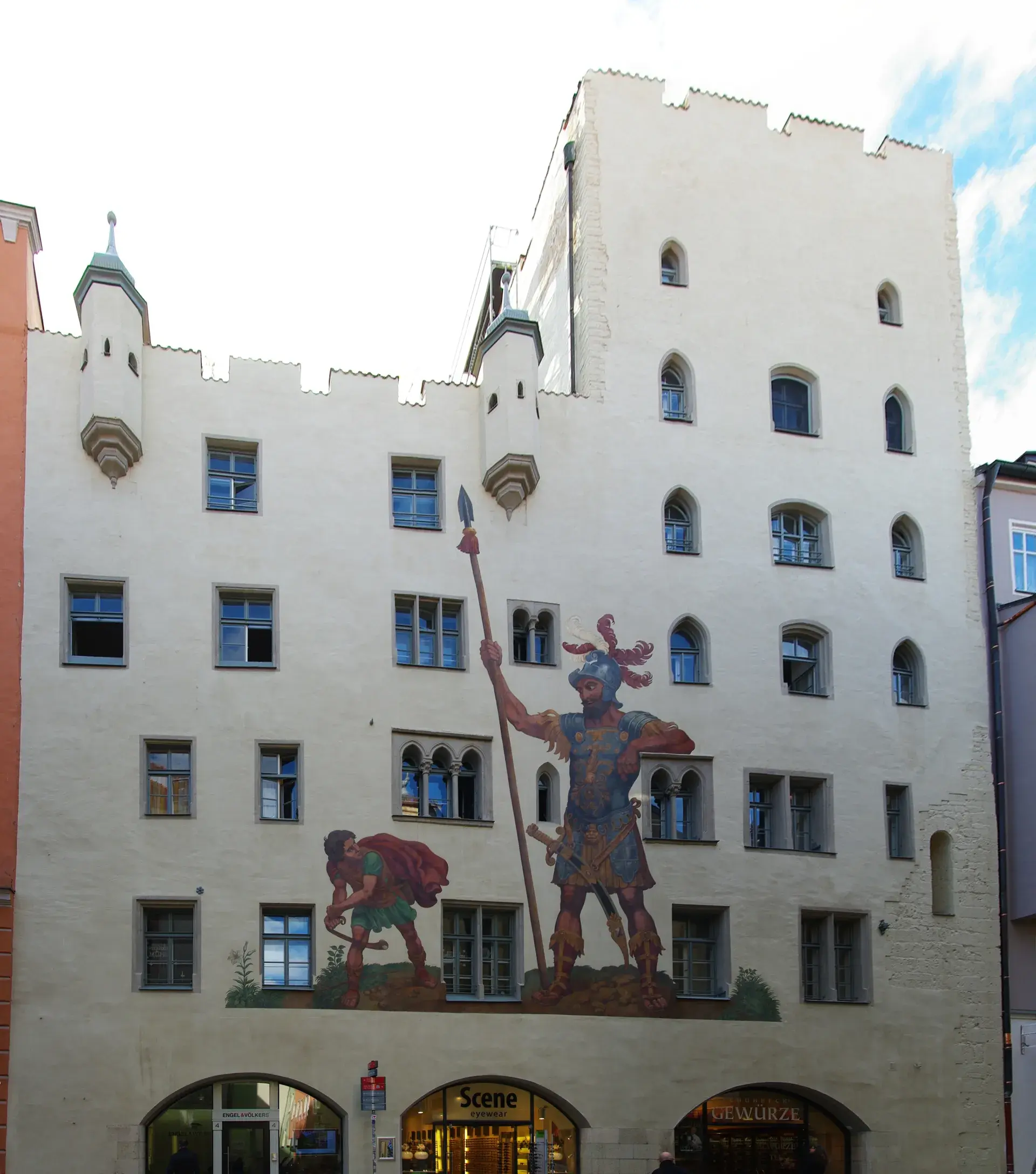
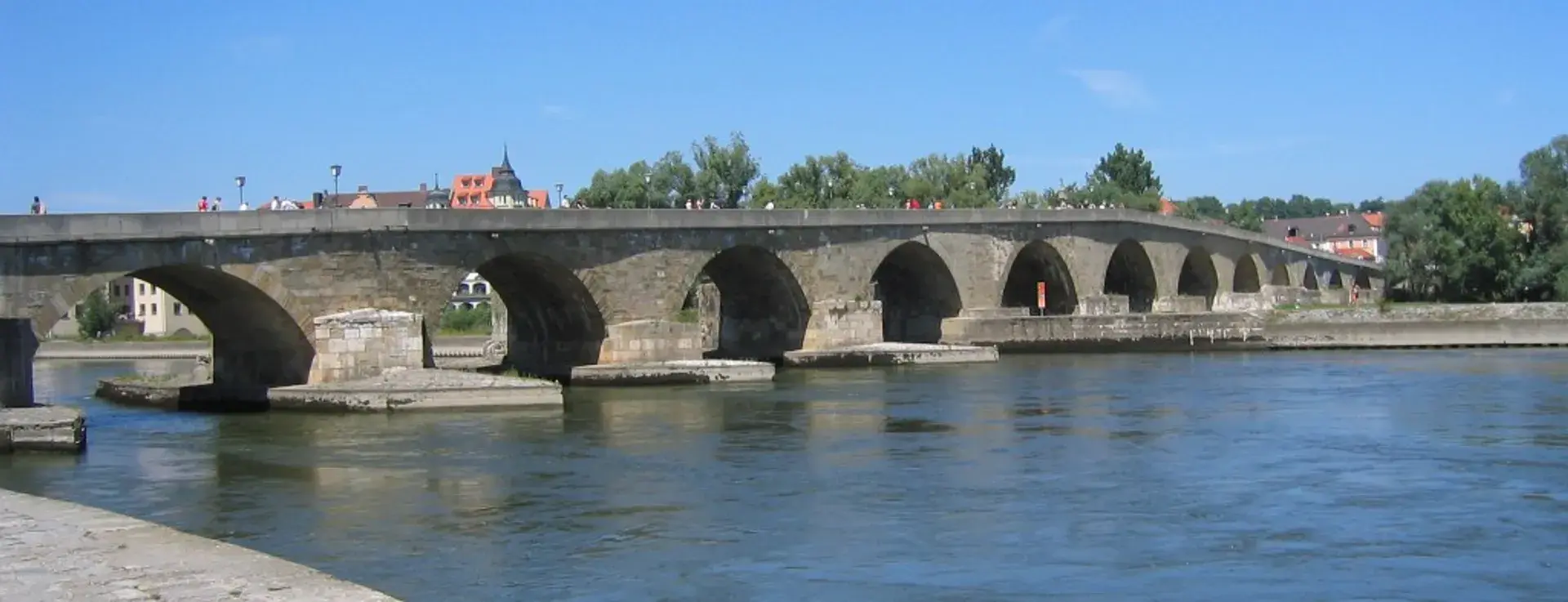
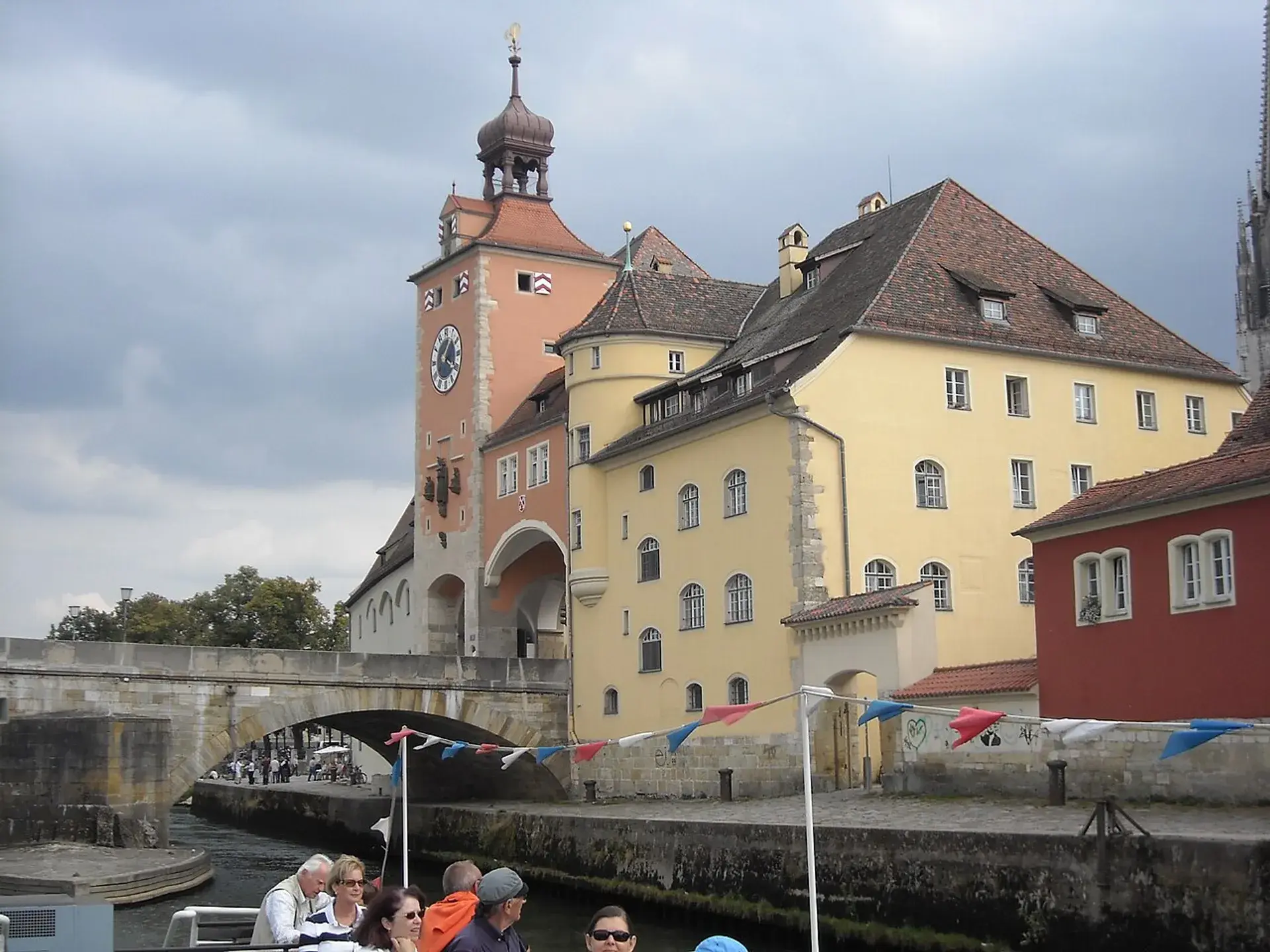
Standing at the intersection of Goliathstraße and Brückstraße, the Goliathhaus anchors the entrance to the Old Town of Regensburg from the 12th-century Stone Bridge. Built between 1220 and 1260, this early Gothic fortified patrician town castle (known as a Hausburg or Geschlechterturm) was erected directly atop the northern defensive wall of the ancient Roman legionary fortress, Castra Regina. Crowned with battlement cresting, the towering stone structure historically served as a vital thoroughfare link between the Danube River crossing, St. Peter's Cathedral, and the Old Town Hall.
Around 1290, the fortified tower was acquired by the prominent Thundorfer merchant family. In medieval Regensburg, wealthy patrician dynasties constructed such imposing towers to project their commercial power, familial status, and civic autonomy within the Free Imperial City.
The Name and the 1573 Visual Pun
While visitors often assume the building was named after its colossal exterior painting, the moniker Goliathhaus actually predates the fresco by several centuries. The name originates from a 12th-century predecessor building on the plot that served as an inn for Goliards—wandering medieval clerics, scholars, and satirical poets who claimed the mythical "Bishop Golias" as their patron.
In 1573, Salzburg artist Melchior Bocksberger capitalized on the ancient name by painting a monumental multi-story fresco of the biblical duel between David and Goliath across the northern facade. Beyond serving as a literal architectural pun, the artwork carried deep civic meaning. The depiction of the underdog David triumphing over the giant Goliath symbolized the Free Imperial City of Regensburg's resolve to defend its political privileges and religious liberties against overreaching imperial and territorial powers.
Quirks of the Fresco: Resting Arms and Caricature Frogs
Over the centuries, weathering necessitated several major restorations of Bocksberger's masterpiece, resulting in intriguing artistic additions. In the 1840s, painter Hans Kranzberger restored the mural and hid a humorous detail in the bottom-right corner. Tucked within the painted blades of grass sits a small green frog. Kranzberger added the amphibian as a covert caricature of Anton von Quentel, a pompous municipal official who routinely rode past the scaffolding in a bright green coat.
Another composition challenge emerged during Franz Rinner's restoration in 1900. Fitting the colossal figure around the building's physical architectural openings proved awkward, so Rinner depicted Goliath with his left arm casually resting atop a genuine stone window ledge, giving the biblical warrior an unexpectedly relaxed posture in the middle of battle.
Post-War Refuge and Contemporary Use
Beyond its medieval and Renaissance legacy, the Goliathhaus complex holds significant modern historical ties. Between 1945 and 1950, Holocaust rescuer Oskar Schindler—who saved more than 1,200 Jews during World War II—lived as a penniless refugee in the adjoining complex on the Watmarkt side. Today, an exterior memorial plaque commemorates his years at the residence.
The Goliathhaus remains an active center of Regensburg's urban life. The historic fortified tower accommodates the Turmtheater Regensburg, an intimate cultural venue hosting readings and plays. The property also features offices, private apartments, ground-floor commercial storefronts, and the rooftop restaurant Storstad.
FAQ
Why is the building called Goliathhaus?
The name predates the fresco. It stems from a 12th-century predecessor building that operated as a hostel for Goliards—itinerant medieval scholars and satirists named after the mythical Bishop Golias. The 1573 fresco was later commissioned as a visual pun on the existing name.
Who painted the David and Goliath fresco on the facade?
The monumental mural was originally painted around 1573 by Salzburg artist Melchior Bocksberger. Major restorations were later completed by Hans Kranzberger in the 1840s and Franz Rinner in 1900.
What is the story behind the small frog painted on the wall?
During the 1840s restoration, artist Hans Kranzberger added a small green frog into the painted grass near the lower-right corner. It was a caricature of Anton von Quentel, a municipal official who frequently rode past the site wearing a bright green coat.
What was Oskar Schindler's connection to the Goliathhaus?
Oskar Schindler lived in the adjoining complex on the Watmarkt side as a refugee from 1945 to 1950 after the end of World War II. A commemorative plaque on the exterior marks his residence.