St. Peter Cathedral: Regensburg's Gothic Masterpiece
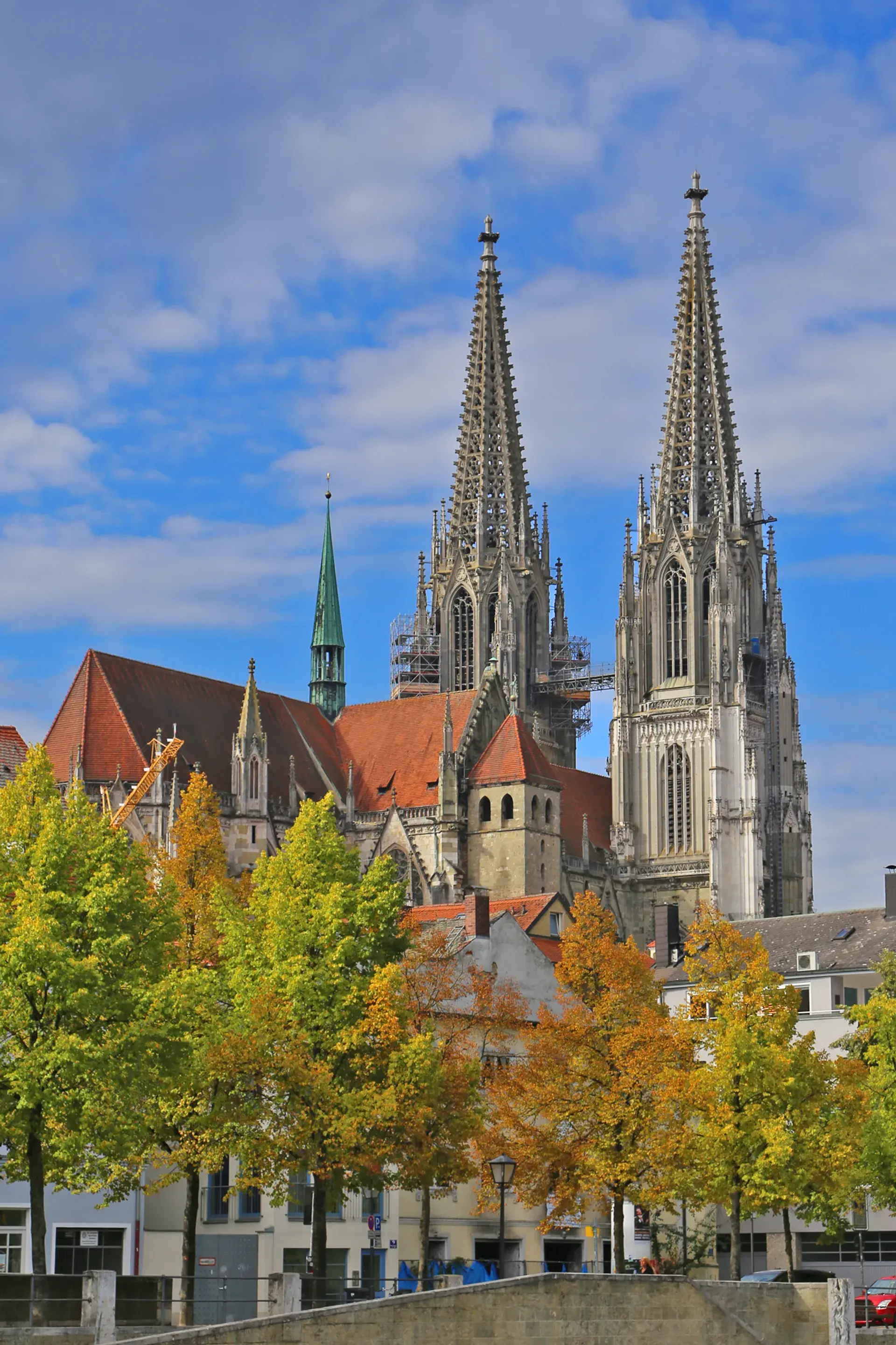
St. Peter Cathedral (Dom St. Peter) stands on Domplatz in the historic heart of Regensburg, Bavaria. As the episcopal seat of the Catholic Diocese of Regensburg, the cathedral serves as the primary architectural and spiritual anchor of the UNESCO World Heritage site Old Town of Regensburg with Stadtamhof. Widely recognized as Bavaria's foremost example of French-influenced Gothic architecture, the building is defined by twin neo-Gothic openwork spires rising to approximately 105 meters.
Six Centuries of Building History
A church dedicated to St. Peter has existed on or near the site since at least 788 AD, eventually followed by an Ottonian-Romanesque basilica. After a city fire destroyed the earlier complex in 1273, construction on the present Gothic cathedral commenced in 1275–1276. By 1320, the three choirs were functional, and work proceeded across the nave, transept, and western portal throughout the 14th and 15th centuries.
Economic stagnation and the Protestant Reformation brought construction to a halt around 1520. For more than three centuries, the western towers remained unfinished stumps. In the 17th century, a Baroque cupola was added over the crossing, alongside other period updates. Between 1828 and 1841, King Ludwig I of Bavaria commissioned a sweeping regothicization that dismantled the Baroque cupola and interior additions in favor of a unified medieval aesthetic. Supported by Ludwig I and King Maximilian II, the towers and openwork spires were finally built between 1859 and 1869. The structural completion of the gables in 1872 brought nearly six centuries of cathedral construction to a close.
Medieval Stained Glass and Artworks
The interior of St. Peter Cathedral preserves an exceptional collection of medieval art. Deep ruby red, sapphire blue, and amber tones filter through 39 original medieval stained-glass windows containing more than 1,100 panels, created largely between 1310 and 1450. These historic panels illuminate the pale limestone piers and soaring rib-vaulted nave.
Among the cathedral’s stone monuments is the Annunciation group, carved around 1280 by the sculptor known as the Erminold Master. In contrast to the solemn religious sculpture common to the Romanesque era, the stone angel Gabriel is depicted with an unmistakable, cheerful smile directed toward Mary. The sanctuary also features a monumental silver high altar, crafted by Augsburg silversmiths in stages between roughly 1675/1695 and 1785.
Architectural Marvels and Curiosities
Unlike traditional church pipe organs positioned on loft platforms or galleries, the cathedral’s main instrument defies standard convention. Built in 2009 by Rieger Orgelbau, the 37-metric-ton organ hangs suspended against the northern clerestory wall by four heavy steel cables. Organists access the suspended console via a freestanding glass elevator.
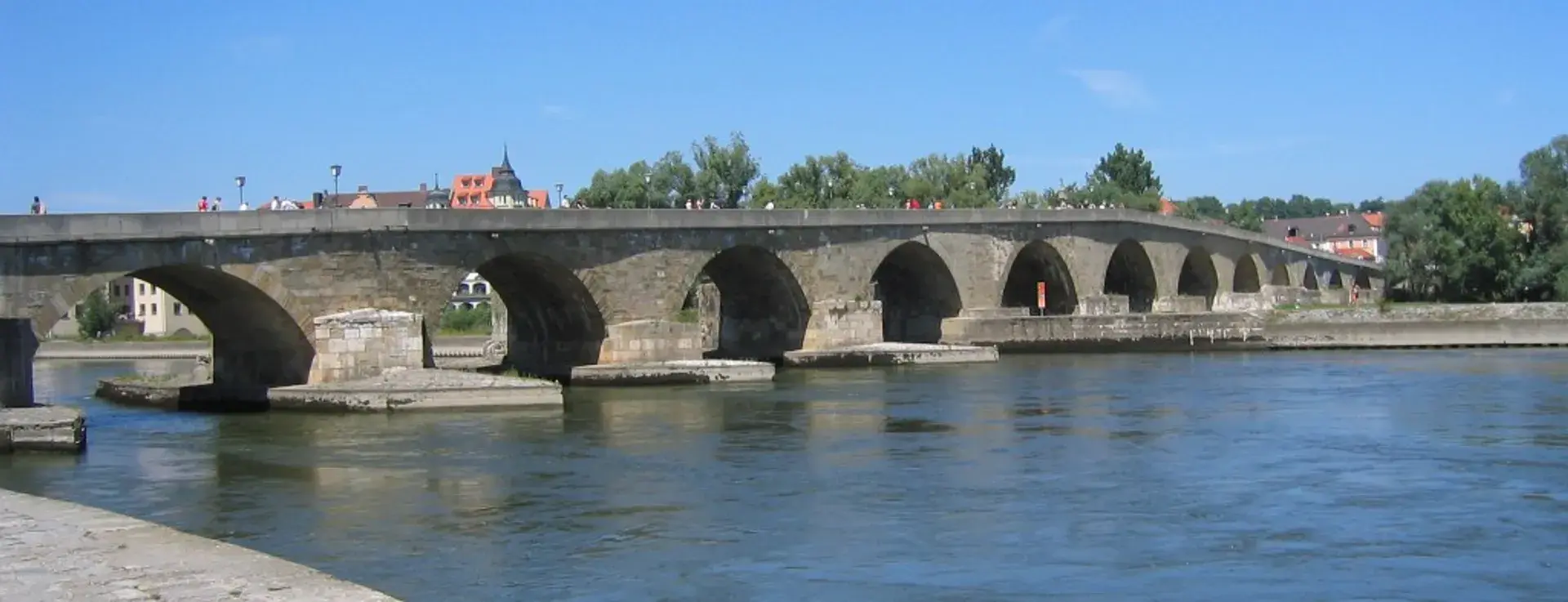
The cathedral grounds also preserve older structural relics and folk traditions. On the north side stands the Romanesque Eselsturm (Donkey Tower), retained from the earlier basilica. Rather than housing draft animals, the tower historically housed an Esel (donkey), a medieval hoisting crane used to raise stones to upper levels. Near an entrance portal, two weathered stone grotesques are traditionally identified by local folklore as the Devil and his grandmother, said to have turned to stone after lingering past dawn to spy on the stonemasons. A popular legend also claims a race took place between the builders of the cathedral and the nearby Stone Bridge, though the bridge was actually finished in the 12th century, more than a century before Gothic work on St. Peter began.
Choral Traditions and Ongoing Care
St. Peter remains an active center of worship, conducting daily Masses, noon meditations, and regular organ concerts. It is the permanent home of the Regensburger Domspatzen, an acclaimed boys' and men's choir with origins dating back to Bishop Wolfgang in 975 AD. The choir sings regularly during term-time Sunday services.
Outside of liturgical hours, the cathedral is open daily to independent visitors, while guided tours are arranged through the nearby DOMPLATZ 5 visitor center. Continuous maintenance and structural masonry work are managed directly by the Staatliche Dombauhütte Regensburg, an on-site state workshop formally re-established in 1923.
FAQ
Why did construction of St. Peter Cathedral take nearly 600 years?
After construction began in 1275–1276, economic decline and the Reformation halted work around 1520, leaving the towers unfinished for over 300 years. King Ludwig I and King Maximilian II funded the completion of the spires and gables between 1859 and 1872.
What makes the Rieger organ inside St. Peter Cathedral unusual?
Weighing 37 metric tons, the organ does not rest on a gallery floor. Instead, it hangs suspended against the northern nave wall by four steel cables and is accessible only by a freestanding glass elevator.
What is the historical significance of the Regensburger Domspatzen?
The Regensburger Domspatzen is a world-renowned boys' and men's choir whose institutional roots date back to 975 AD. They regularly provide liturgical music for Sunday services in the cathedral during the academic term.
How did the cathedral's Donkey Tower (Eselsturm) get its name?
The name refers to a historical mechanical hoisting machine, known colloquially as an 'Esel' (donkey), which was housed inside the tower to lift heavy stone masonry during construction.