Brömserburg: Rüdesheim's Historic Water Castle
A Lowland Castle on the Rhine
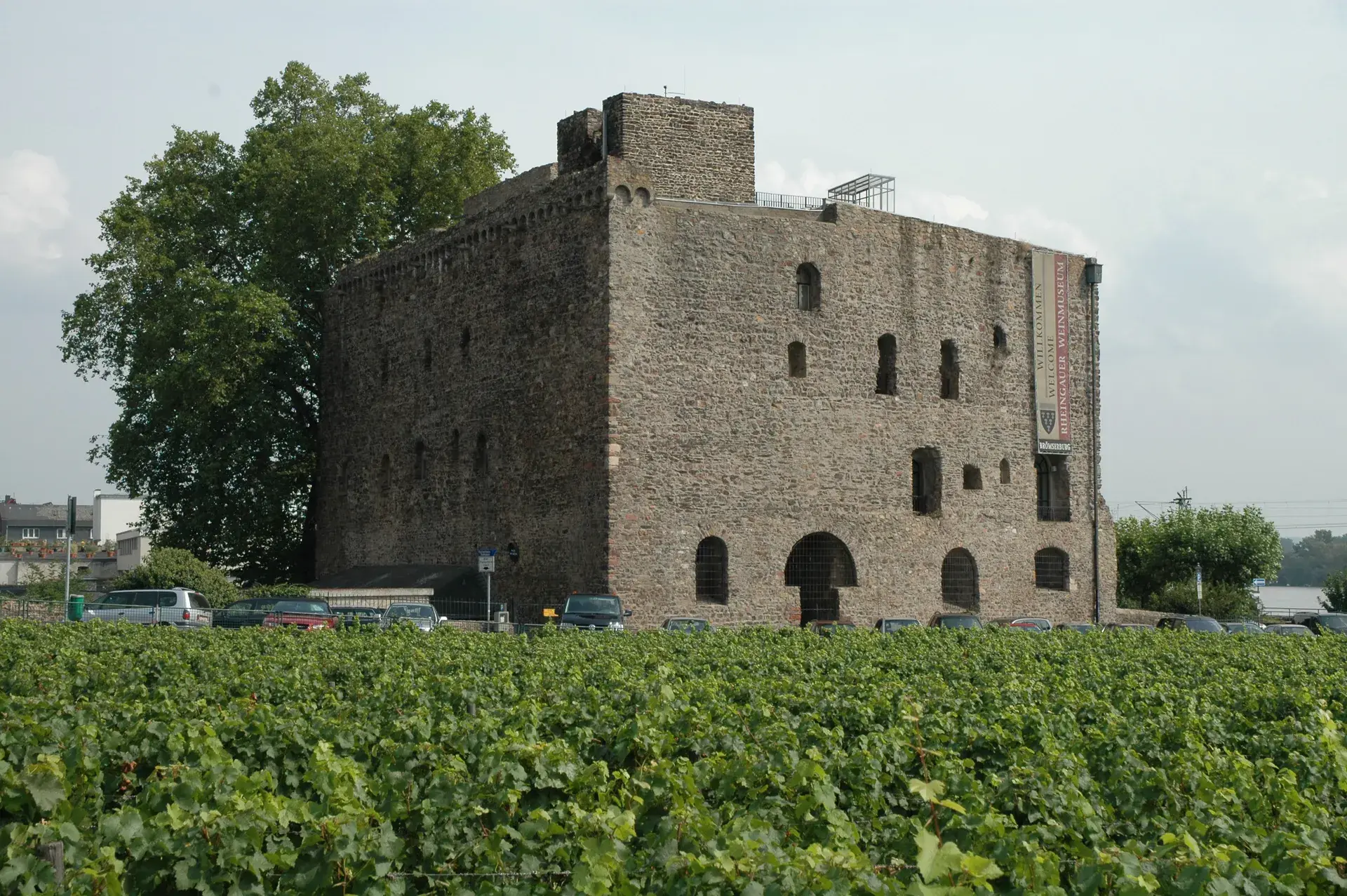
Brömserburg, also known as the Niederburg, occupies a distinct place in the Upper Middle Rhine Valley UNESCO World Heritage site. Unlike the vast majority of Middle Rhine fortresses that sit atop steep slate crags, Brömserburg was constructed directly at the water's edge as a lowland castle (Niederungsburg). Before modern railway and road embankments altered the riverbank, the waters of the Rhine washed directly against its southern outer wall.
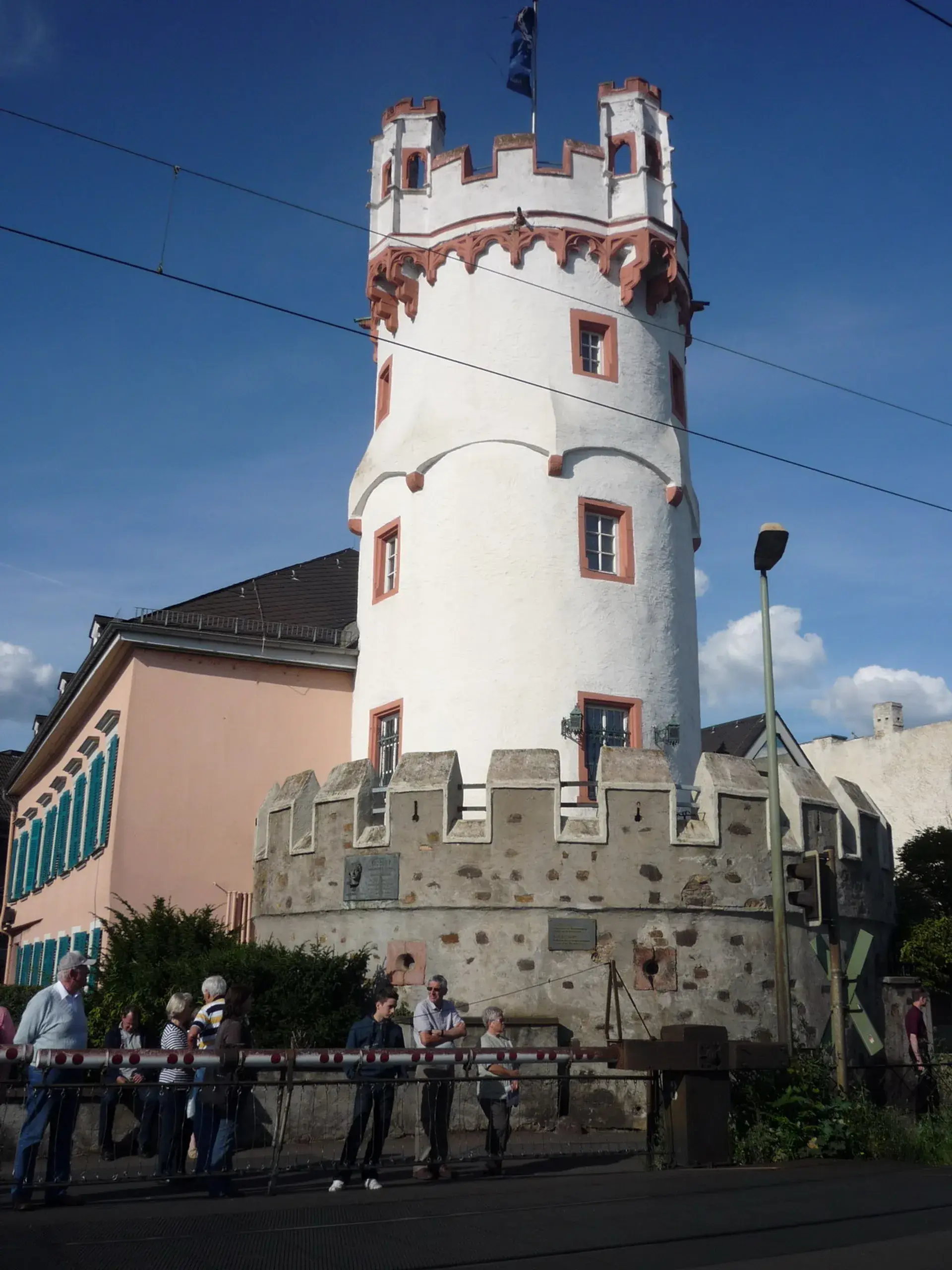
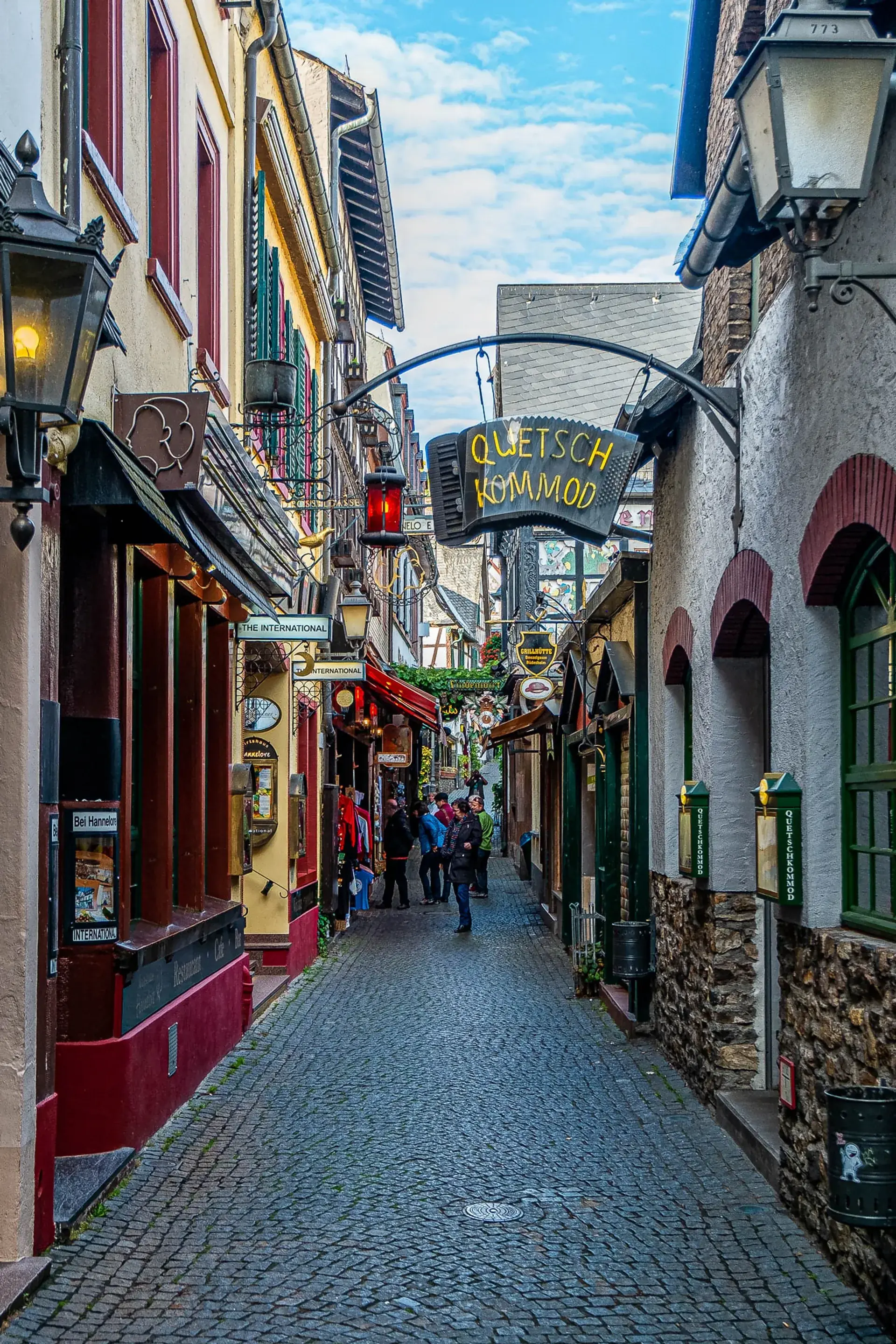
Positioned along the Rheinstraße riverfront promenade in Rüdesheim am Rhein, the fortress stands near the historic market square and the famous Drosselgasse. Together with the nearby Boosenburg tower, Brömserburg forms an architectural gateway to the historic town center for visitors arriving along the river plain.
Medieval Architecture and Rare Stone Vaulting
Scientific dating indicates that the earliest medieval fabric of the quadrangular stone fortress originated between 1044 and 1216, followed by a major construction campaign between 1186 and 1190. While popular local theories previously claimed the site stood on the remains of a fourth-century Roman fort, archaeological investigations have yielded no evidence to substantiate this.
The fortress displays massive defensive engineering, defined by weathered grey-and-tan masonry and exterior curtain walls exceeding two meters in thickness. At its core stands a central bergfried, which originally reached an estimated 35 meters in height and was reconstructed to 27 meters during the 20th century. One of the castle's most remarkable architectural feats is found within its interior wings, which are completely vaulted in stone across up to four storeys—an exceptionally rare structural characteristic among Rhine fortifications.
Centuries of Conflict and Transformation
Held by the Archbishops of Mainz from the 10th to the early 19th century, the castle functioned as an administrative center, residence, and fortified outpost guarding the strategic Rhine crossing to Bingen. In the 13th century, members of the noble Brömser family served as castellans (Burgherren). While popular folklore long suggested that the family inhabited the fortress until the lineage died out in 1668, archival records indicate that their primary domestic residence was actually the nearby Brömserhof.
During the Thirty Years' War in 1640, French forces commanded by Duke Henri II of Orléans-Longueville blew up the southeastern corner of the castle, destroying the donjon and the upper levels of the bergfried. A horizontal mine gallery drilled into the base of the keep by French sappers remains visible today, having never been detonated.
In the early 19th century, the ruined stronghold was purchased by the Counts of Ingelheim, who began converting it into a romantic country residence after 1811. The site remained privately inhabited until 1937, after which the town of Rüdesheim acquired it in 1941. Beginning in 1950, the stronghold housed the Rheingau Wine Museum, exhibiting historical presses, viticultural tools, and antique drinking vessels.
The Legend of Gisela Brömser
Beyond its military history, Brömserburg is tied to Rhine Romantic folklore. According to legend, Crusader Hans Brömser was captured during an expedition to the Holy Land and vowed that, should he be freed, he would dedicate his daughter Gisela to a convent. Popularized by 18th- and 19th-century literature, the story recounts that Gisela was already in love with a local knight and chose to drown herself in the Rhine rather than submit to the forced religious vow.
Current Use and Restoration
The interior of Brömserburg and its historic wine museum are closed for comprehensive architectural restoration and exhibition redesign. The complex is maintained under a long-term hereditary lease (Erbpacht) managed by the Förderverein Rheingauer Weinmuseum & Kulturdenkmal Brömserburg e.V.
While interior works continue, the castle courtyard and shaded grounds operate seasonally on weekends. Functioning as an open-air wine garden, the space hosts music performances and private gatherings against a backdrop of towering medieval walls and passing river barges.
FAQ
Why is Brömserburg structurally unique along the Rhine?
Unlike most Rhine fortresses that sit atop steep cliffs, Brömserburg was built directly at the water's edge as a lowland castle. In addition, its interior wings feature stone vaulting across up to four storeys, a rare structural engineering feat for the region.
Can the interior of Brömserburg be visited?
The interior rooms and the traditional Rheingau Wine Museum are closed for architectural restoration and redesign. However, the castle courtyard and garden operate seasonally on weekends as an open-air wine garden and event space.
Did the noble Brömser family live inside the fortress?
Although family members served as castellans for the Archbishops of Mainz in the 13th century, archival records show their primary domestic residence was the nearby Brömserhof rather than this defensive complex.
What visible evidence remains of the 1640 siege?
At the base of the central keep, visitors can still see a horizontal mine gallery carved by French sappers in 1640 that was never detonated.