Sankt Jakobus Kirche: Rüdesheim's Historic Landmark
A Landmark on Rüdesheim's Marktplatz
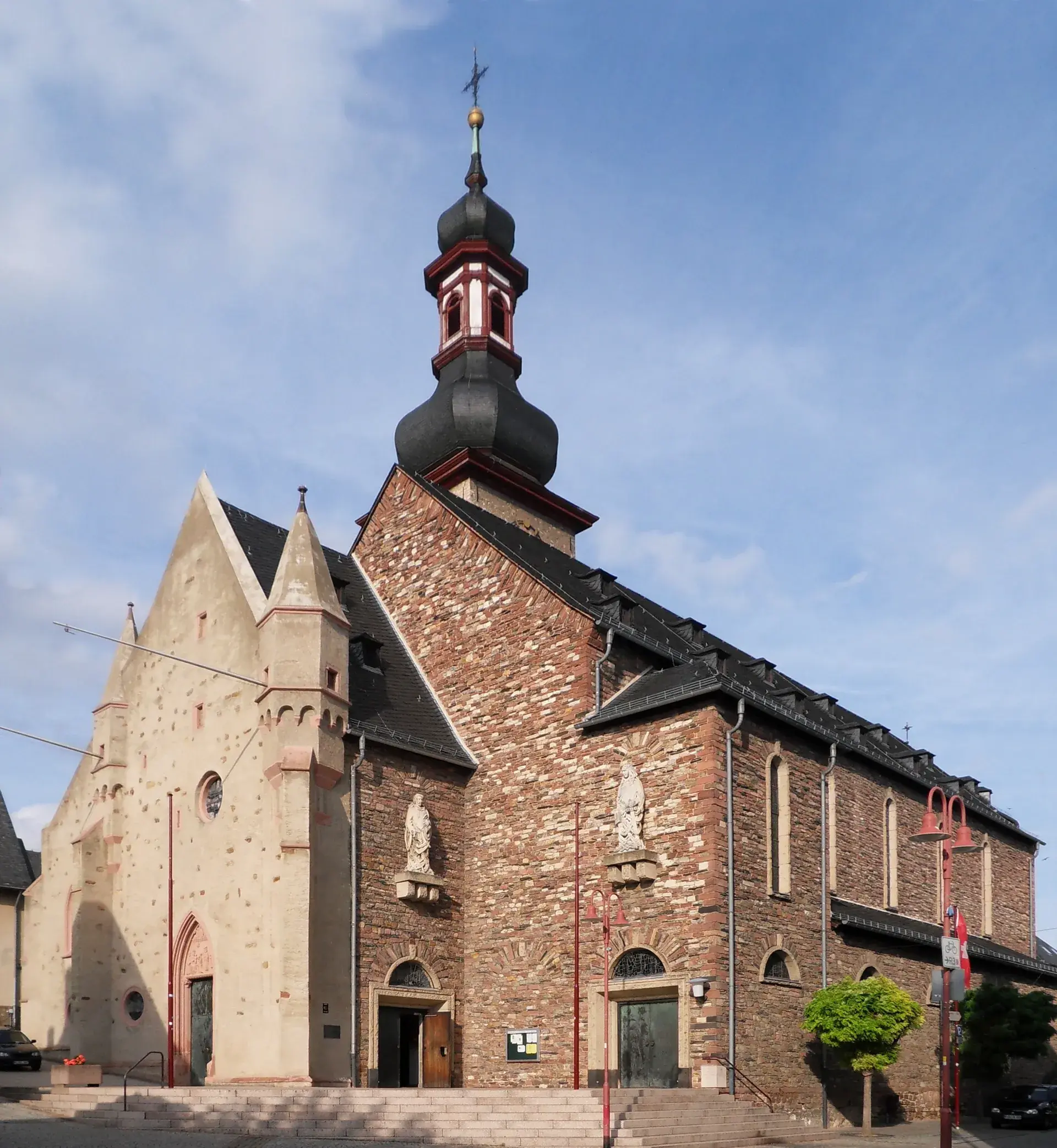
Sankt Jakobus is an active Catholic filial church located on the eastern side of the Marktplatz in Rüdesheim am Rhein. As a protected cultural monument within the Upper Middle Rhine Valley UNESCO World Heritage area, the church anchors the central market square and marks the threshold between the town's riverfront alleys, the celebrated Drosselgasse, and the residential Old Town. With a silhouette that incorporates medieval stone and a Baroque crest, the structure serves as a key visual reference point when viewed from the terraced vineyard hills above the Rhine.
Crusader Origins and Medieval Expansion
Local tradition traces the foundation of the church to the 12th century, stemming from a vow made by Knight Engelhard Brömser of Rüdesheim. Captured during the Third Crusade (1189–1192), Brömser pledged to erect a church upon his safe liberation.
Around 1400, Johann Brömser endowed an expanded Gothic aisleless church. In 1489, builders vaulted the structure and added the northern side aisle. During this medieval era, the church also served a practical civic role by integrating directly into Rüdesheim's defensive fortification network.
Architectural Evolution and Reconstruction
The exterior of Sankt Jakobus exhibits an intricate architectural chronology. The base of the church tower dates to Romanesque construction from the 10th to 12th centuries. In 1766, the tower received a distinctive Baroque curved hood.
On November 25, 1944, an air raid devastated the building, burning out its historic interior. However, the medieval western facade with its octagonal flanking turrets, the Gothic north aisle, and the sturdy tower structure withstood the bombing. Between 1946 and 1956, architect Johannes Traut and Pastor Valentin Duchscherer oversaw the church's reconstruction, employing unplastered Rhenish quarry stone for the exterior walls. The church was reconsecrated in 1955, and the restoration of the Baroque tower spire was completed in 1959.
Notable Curiosities and Sacred Art
Sankt Jakobus preserves several unique artistic and historical treasures:
- The Crusader Weather Vane: Rather than a traditional cross, the apex of the church tower is topped with a weather vane bearing a crescent moon and star, installed to commemorate Knight Engelhard Brömser's wartime captivity in the East.
- The West Portal Tympanum: A Gothic stone relief dating to around 1400 crowns the western entrance, depicting the Veil of Veronica held by angels above a scene of the Adoration of the Magi.
- The Gnadenkapelle: Situated in the lowest level of the north tower, the Chapel of Grace features two Romanesque stone columns from the 10th or 11th century with cushion capitals. These frame a devotional image relocated from Kloster Nothgottes in 1813.
- The Church Organ: The instrument contains horizontal reed pipes known as Trompeta Real, an Iberian style of projecting pipework rarely found in German churches.
- Brömser Dynasty Epitaphs: The surviving Gothic north aisle displays historic figural tombstones and memorials belonging to members of the local Brömser noble family.
Community Role and Visiting Sankt Jakobus
Today, Sankt Jakobus operates as a filial church within the Pfarrei Heilig Kreuz Rheingau. The building is open daily from 8:00 AM to 5:00 PM for quiet reflection and personal visits. In addition to regular Catholic worship services, the space frequently accommodates musical recitals and organ concerts, while its nine-bell carillon chimes across the open Marktplatz.
FAQ
Why does the church tower have a crescent moon and star on its weather vane?
The weather vane displays a crescent moon and star instead of a cross to commemorate Knight Engelhard Brömser's captivity during the Third Crusade and his subsequent safe return.
What architectural elements survived World War II?
The medieval western facade with its octagonal flanking turrets, the 15th-century Gothic north aisle, and the sturdy stone tower survived the 1944 air raid.
What are the visiting hours for Sankt Jakobus Kirche?
The church is open daily to visitors from 8:00 AM to 5:00 PM for quiet reflection.