Drosselgasse Rüdesheim: Historic Wine Lane Guide
The Historic Pathway of Rüdesheim am Rhein
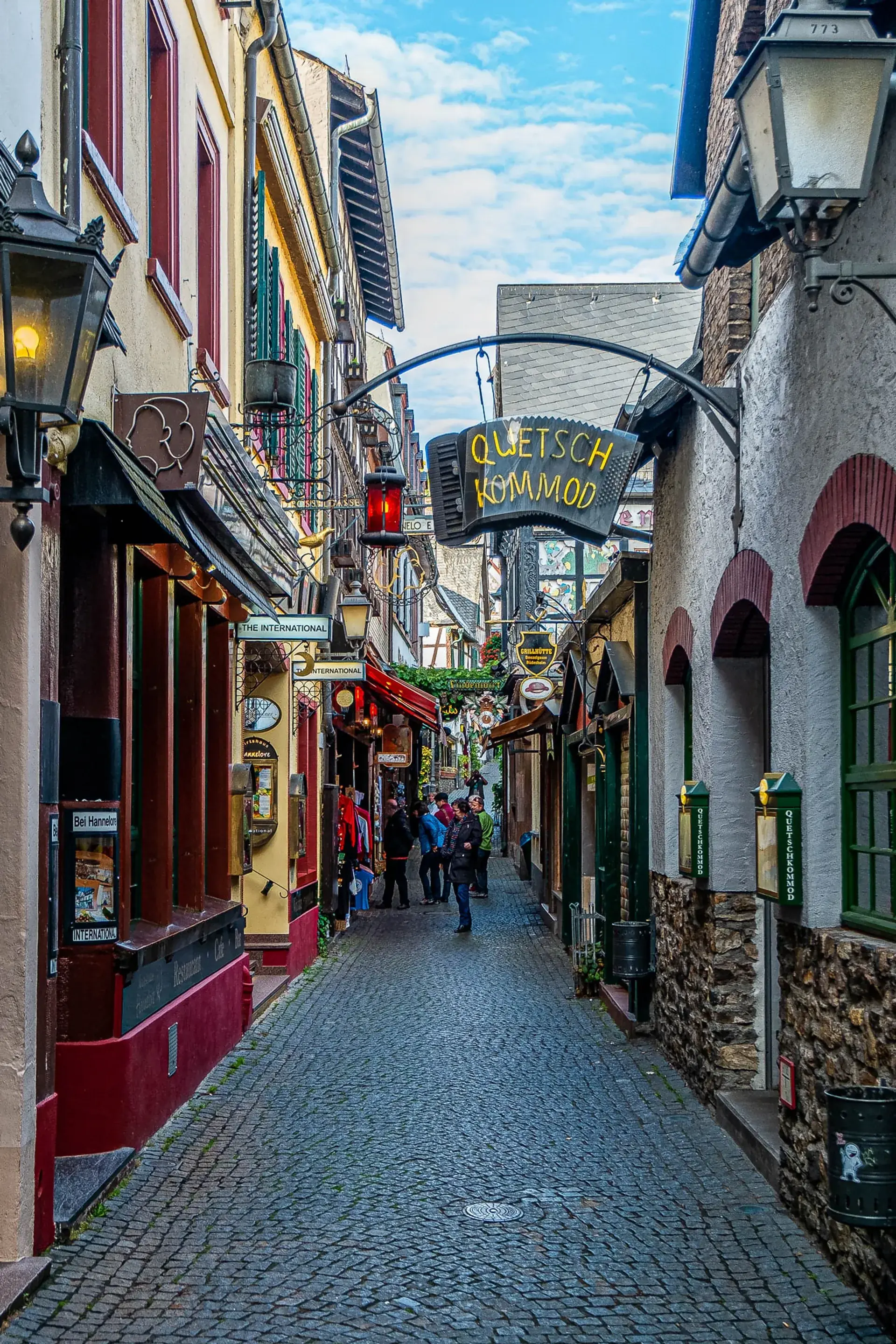
Drosselgasse is a narrow, cobblestone pedestrian alley situated in the Old Town of Rüdesheim am Rhein, Germany, within the Upper Middle Rhine Valley UNESCO World Heritage site. Measuring roughly 144 meters in length and two to three meters in width, it is one of six narrow lanes positioned perpendicular to the Rhine. The thoroughfare links the riverside promenade (Rheinstraße) with Oberstraße, drawing an estimated three million visitors each year.
From Boatmen's Quarter to Wine Center
First recorded in the 15th century, the alley originally developed as a residential area for Rhine skippers and boatmen. Because crews moored their vessels along the riverbank and carried gear such as oars, ropes, sails, and tools into their homes by hand, the properties were designed with narrow interior corridors and rear courtyards rather than wide carriage passages.
During the 18th and 19th centuries, the alley shifted into a hub for the regional wine trade. Vintners' cellars and seasonal wine taverns emerged along the passage, anchored by the opening of the Drosselhof tavern in 1727. Administrative offices, including the Ducal Nassau treasury and Prussian local administration, also operated nearby.
Following an 1883 fire and the completion of the Niederwald Monument that same year, tourism accelerated rapidly. Establishments actively competed for patrons; during the late 19th century, Drosselhof innkeeper Johannes Müller offered free meals and drinks to Bingen Technical College students on Sundays on the condition that their singing would lure arriving tourists inside. Promotion surged further in 1887 with Otto Hausmann’s drinking song "Zu Rüdesheim in der Drosselgass'", which was later broadcast on early German radio networks.
Wartime Loss and Postwar Rebuilding
The lane was incorporated into state-run Kraft durch Freude tourism circuits during the 1930s. On March 10, 1933, local authorities banned jazz instruments—including saxophones, drums, and cymbals—in favor of traditional German folk music in the taverns.
Heavy destruction arrived during World War II when Allied bombing leveled most of the alley's buildings on November 25, 1944. During the 1950s, the entire street was rebuilt in a romanticized historicist style. While the exposed half-timbered facades and steeply pitched roofs appear medieval, virtually all structures standing along the lane today date to this mid-20th-century reconstruction.
Tavern Culture and Acoustic Traditions
Drosselgasse functions daily from morning to midnight as an entertainment hub packed with Rheingau wine taverns, open-air courtyard gardens, restaurants, and souvenir shops. From spring through the annual Christmas market in December, venues host daily live music including brass bands, folk musicians, and dance ensembles. The narrow alley walls act as an acoustic funnel, concentrating the overlapping sounds of brass melodies, accordions, singing, and clinking glassware.
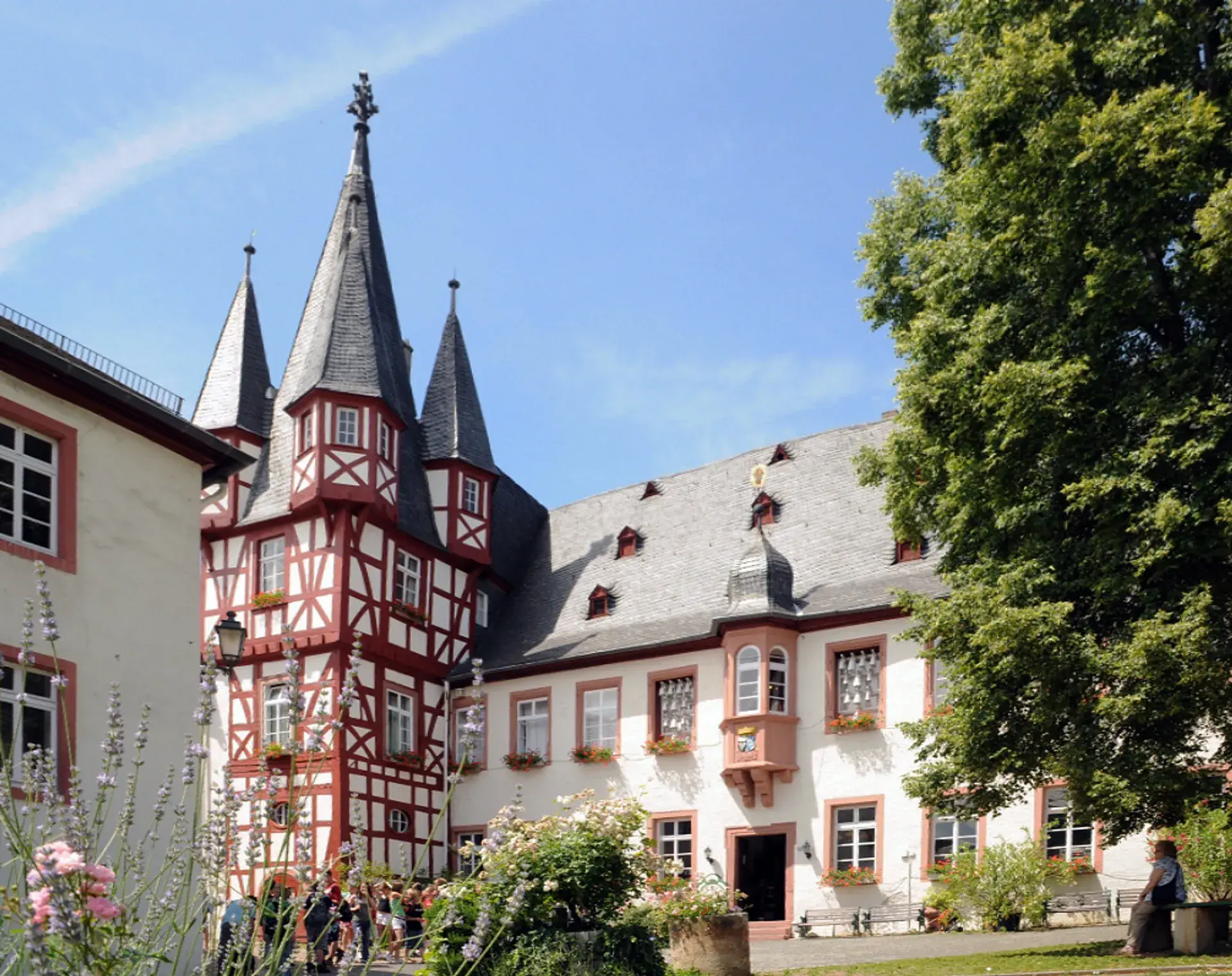
At Breuer's Rüdesheimer Schloss, a tower carillon chimes the "Lorelei" melody every hour, accompanied by rotating carved wooden figures representing four 20th-century Rheingau wine vintages. Throughout the street, shopkeepers and tavern hosts greet patrons with "Gude!", the traditional informal greeting of Hesse and the Rheingau. At its northern end, the lane guides pedestrian traffic directly onto Oberstraße, connecting river arrivals to landmarks such as the Brömserhof estate and the valley station for the Niederwald cable car.
FAQ
Why is Drosselgasse so narrow?
The alley was established in the 15th century for Rhine boatmen who transported gear such as oars, ropes, and sails by hand. Because wagons were not required to haul equipment, the properties were built with narrow corridors and courtyards rather than broad passages.
Are the half-timbered buildings on Drosselgasse original medieval structures?
No. Virtually all buildings along Drosselgasse are reconstructions built during the 1950s in a romanticized historicist style after Allied bombing destroyed the street on November 25, 1944.
What song does the carillon on Drosselgasse play?
The carillon at Breuer's Rüdesheimer Schloss plays the melody of the 'Lorelei' hourly, accompanied by rotating wooden figures depicting four 20th-century Rheingau wine vintages.
Discover Rudesheim-am-rhein like never before
Dive into Rudesheim-am-rhein hidden stories and secret spots with Ciceru interactive tours.
Explore tour
Audioguide
Quizzes
Maps
Solo
Couples
Groups & families

© Photo by Gereon Schroeder via Google Maps · Google Places