Schwerin Castle: The Fairytale Island Palace
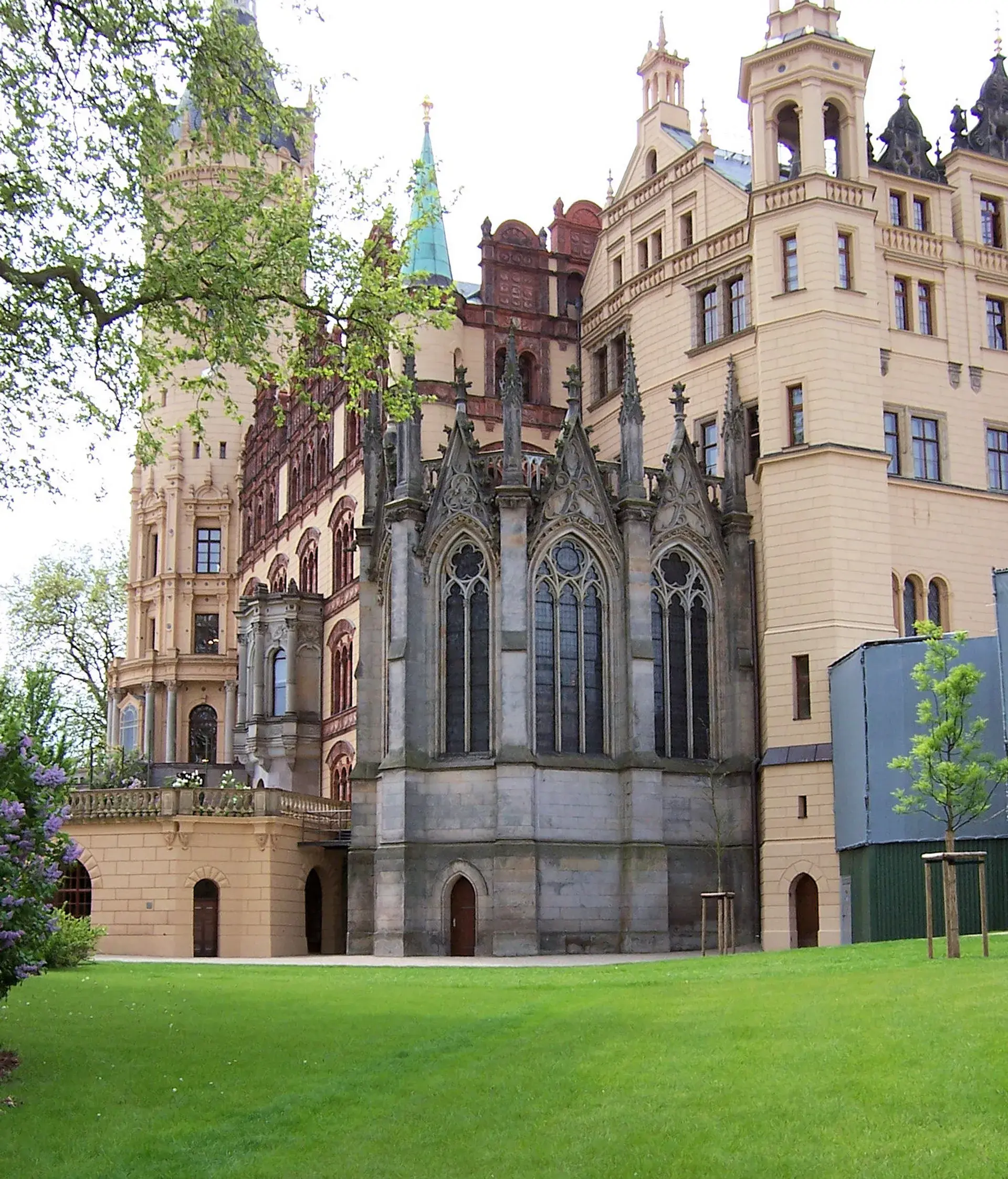
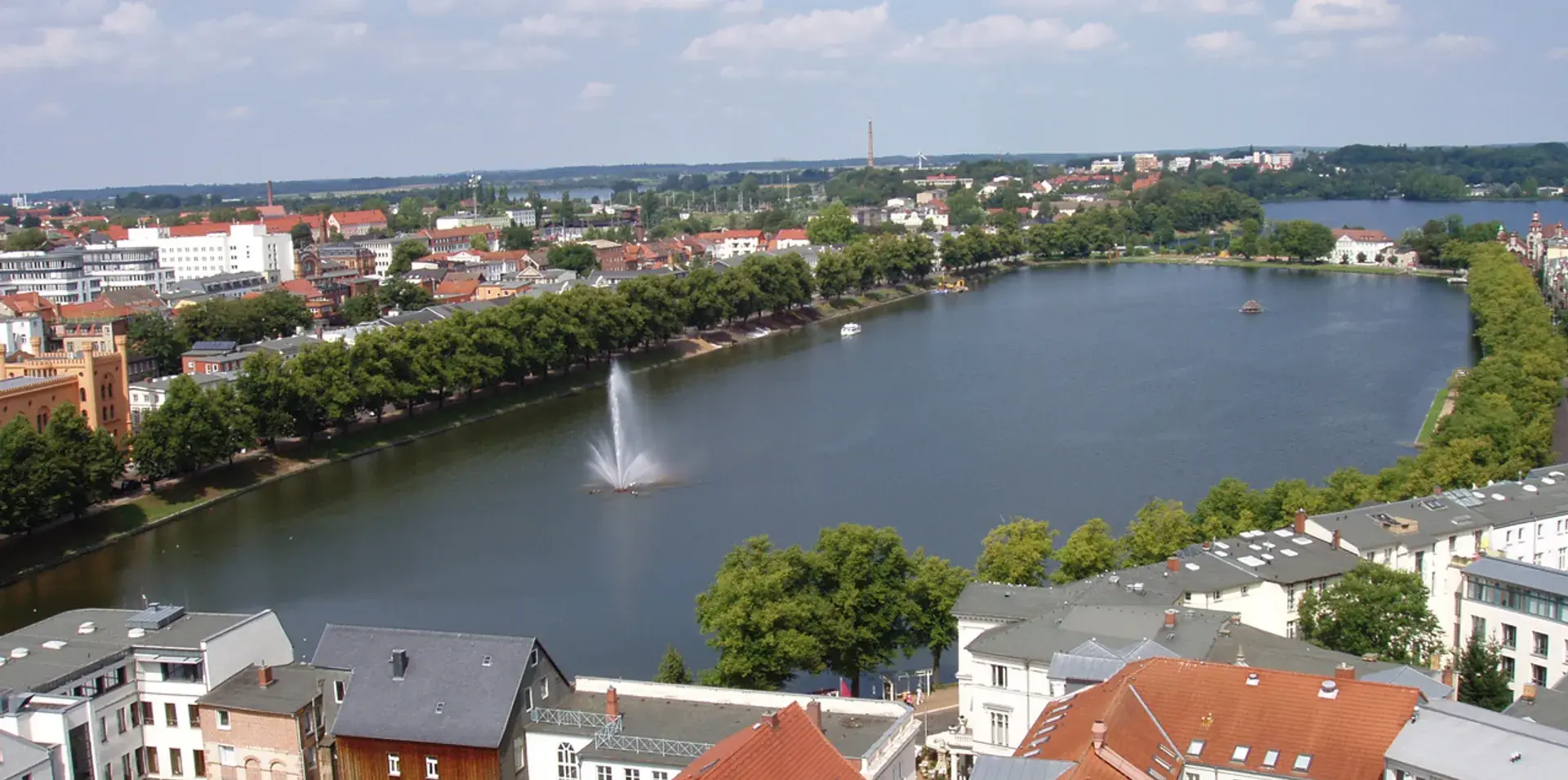
Schwerin Castle, often referred to as the "Neuschwanstein of the North," is an island fortress that has anchored its region for over a thousand years. As the defining landmark of the city, the castle sits directly between the historic Old Town and the vast Mecklenburg lake network. The fairytale Neo-Renaissance architecture of this magnificent castle rises dramatically from its own island, surrounded by Lake Schwerin and the Burgsee.
A Millennium of Power
The castle island has maintained political and administrative authority over the region virtually uninterrupted for over a millennium. This continuous seat of power has transitioned seamlessly from Slavic princes to Grand Dukes, and ultimately to a modern democratic parliament.
The island's history as a seat of rule dates back to at least the 10th century, with a Slavic Obotrite timber stronghold recorded in 965. In 1160, Henry the Lion captured the site. By 1358, the Christianized House of Mecklenburg made the island their dynastic capital. During the 16th century, Duke Johann Albrecht I converted the defensive works into a Renaissance residence and added the region's first newly constructed Protestant church.
Romantic Historicism and Architecture
The castle's current appearance is a masterpiece of Romantic Historicism, famously inspired by French Loire Valley châteaux like Château de Chambord. Between 1845 and 1857, Grand Duke Friedrich Franz II commissioned a massive reconstruction to reflect dynastic prestige. The project was directed by leading architects of the era, including Georg Adolf Demmler and Friedrich August Stüler.
The exterior features a striking silhouette of turrets and spires, crowned by a gilded dome and a golden statue of the Slavic prince Niklot. Despite its grandeur, the complex has faced significant historical upheaval. A fire in December 1913 destroyed about a third of the castle, including the Golden Hall. Following the 1918 German Revolution, the Grand Duke abdicated, and during the GDR era, the building functioned as a regional teacher training college.
Modern Role and UNESCO Status
In July 2024, Schwerin Castle was inscribed on the UNESCO World Heritage List as the centerpiece of the Schwerin Residence Ensemble. Today, the island successfully balances historical preservation with modern civic functions.
Since late 1990, the castle has served as the official seat of the state parliament of Mecklenburg-Vorpommern. The complex also houses the Schlossmuseum, which displays restored grand-ducal living quarters, ceremonial apartments, and the ornate Throne Room. The surrounding grounds, including the Castle Garden (Burggarten) and the Orangerie cafe, remain accessible to the public.
The Legend of Petermännchen
According to local folklore, the castle is inhabited by a benevolent household spirit known as "Petermännchen" (Little Peterman). The spirit is said to carry a lantern and a heavy set of keys, watching over the castle by playing harmless pranks to wake sleeping guards and punishing thieves. An 1856 sandstone statue of the sprite, created by sculptor Heinrich Petters, stands in the inner courtyard as a tribute to this enduring legend.
FAQ
Why is Schwerin Castle famous?
Often called the "Neuschwanstein of the North," Schwerin Castle is famous for its fairytale Romantic Historicism architecture, its picturesque island setting on Lake Schwerin, and its status as a UNESCO World Heritage site.
Is Schwerin Castle open to the public?
Yes, the public can visit the Schlossmuseum to see the restored ceremonial apartments and Throne Room. The surrounding Castle Garden (Burggarten) and Orangerie cafe are also open to visitors.
Who is the ghost of Schwerin Castle?
Local folklore claims the castle is inhabited by Petermännchen, a benevolent household spirit carrying a lantern and keys. He is known for playing harmless pranks to wake sleeping guards.
Gallery