Schwerin Cathedral: History & Mecklenburg's Tallest Tower
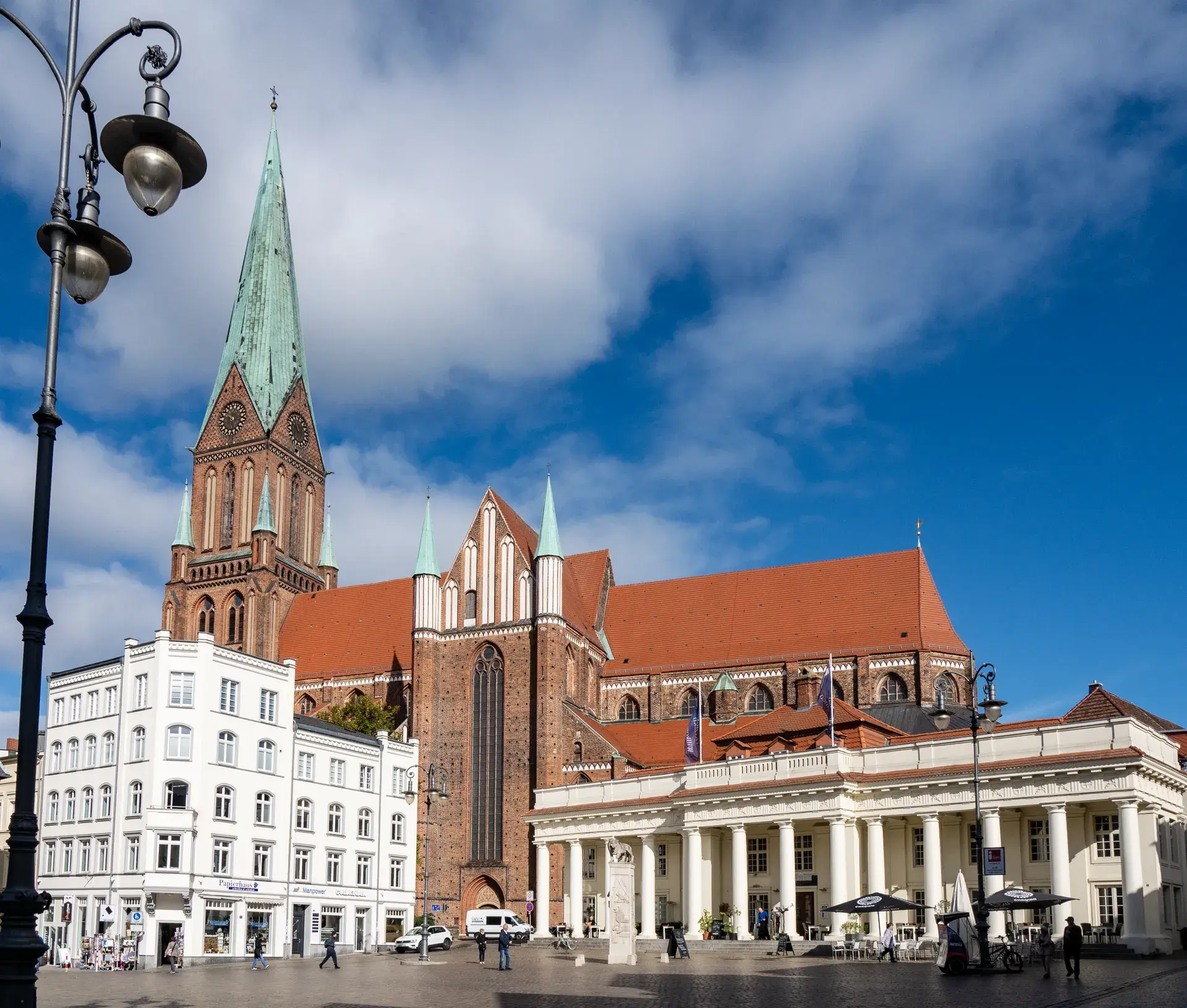
The defining silhouette of Schwerin's skyline is actually a late 19th-century addition, built exactly 50 centimeters taller than its closest rival. St.-Marien-Dom zu Schwerin, or Schwerin Cathedral, stands as the oldest surviving building in the city and the only true cathedral in Mecklenburg-Vorpommern.
A Pilgrimage and Architectural Evolution
Founded by Henry the Lion in 1171–1172, the original Romanesque stone structure was consecrated in 1248. The building's transformation into a sprawling North German Brick Gothic basilica began after 1222, when Count Henry of Schwerin brought back a reliquary believed to contain a drop of the Holy Blood from the Fifth Crusade. The resulting influx of pilgrims directly financed a massive Gothic expansion between 1270 and 1416, completing the nave, transepts, and chapels.
During the Reformation, the building was converted into an Evangelical Lutheran cathedral. Its ambulatory chapels became the primary burial vaults for the ducal House of Mecklenburg, serving as the final resting place for figures like Grand Duke Friedrich Franz II.
The Towering Rivalry
For centuries, the cathedral lacked a high spire. Between 1889 and 1893, master builder Georg Daniel designed and constructed the Neo-Gothic west tower to replace a modest earlier structure. Reaching a height of 117.5 meters, it was deliberately engineered to surpass St. Peter's Church in Rostock by exactly half a meter, officially securing its status as Mecklenburg's tallest church spire.
Inside the Cathedral
Measuring approximately 105 meters in length, the interior features whitewashed Gothic vaults spanning 26.5 to 29 meters high, framed by painted arches with red and turquoise linework. The space creates a striking timeline of art, contrasting a 1325 bronze baptismal font and a 1420 triumphal cross with modern deep-blue stained glass windows created by contemporary artist Günther Uecker.
Musical Heritage and Panoramic Views
The cathedral houses the largest preserved organ built by master organ builder Friedrich Ladegast. Installed in 1871, the instrument features four manuals, 84 registers, and 5,100 pewter pipes that produce deep, resonant tones during regular classical music recitals.
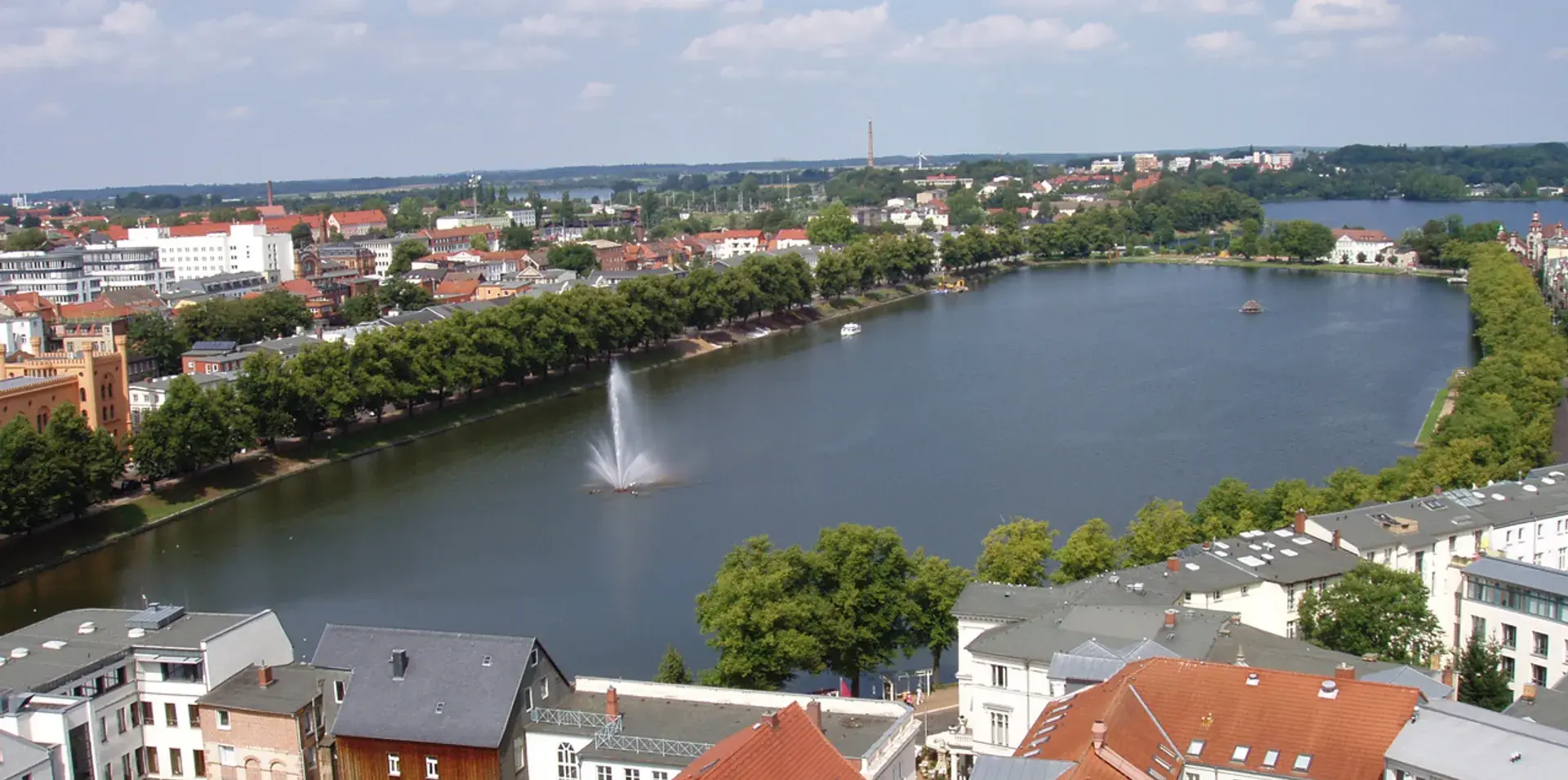
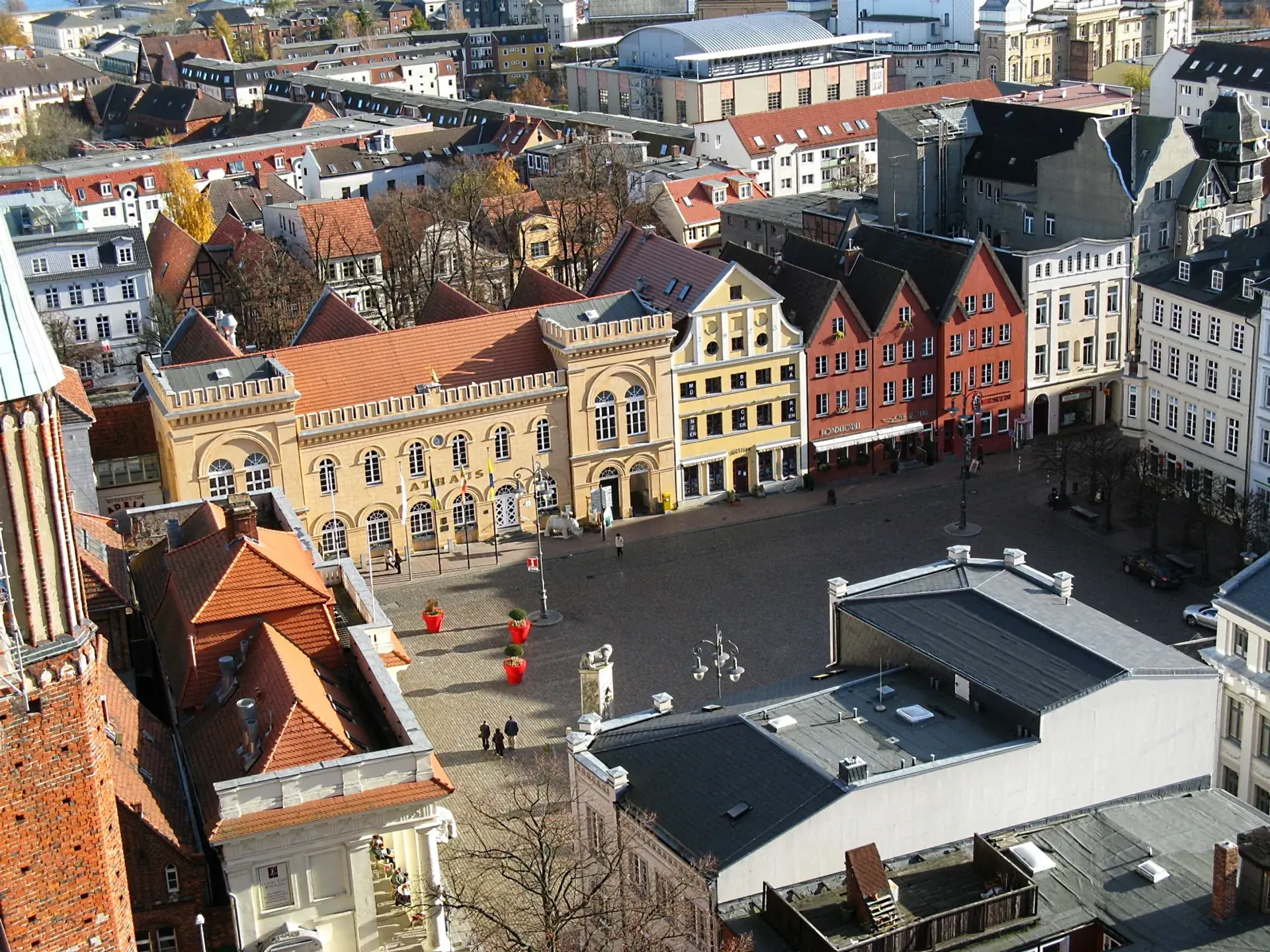
Rising directly behind the historic Market Square, the cathedral acts as a spiritual counterweight to the secular power of Schwerin Castle and anchors the 2024 UNESCO World Heritage Schwerin Residence Ensemble. Visitors can climb a 220-step staircase inside the west tower, passing five historical bells—the oldest cast in 1363—to reach an open gallery offering 360-degree views of the castle, Old Town roofs, Lake Schwerin, and the Pfaffenteich.
FAQ
How tall is the Schwerin Cathedral tower?
The west tower is 117.5 meters tall, making it the highest church tower in the state of Mecklenburg-Vorpommern. It was deliberately built 50 centimeters taller than St. Peter's Church in Rostock.
What is the architectural style of Schwerin Cathedral?
The main basilica was built in the North German Brick Gothic style between 1270 and 1416, while the west tower is a late 19th-century Neo-Gothic addition.
Why was the cathedral expanded in the 13th century?
The massive Gothic expansion was financed by an influx of pilgrims visiting a reliquary believed to contain the Holy Blood, which Count Henry of Schwerin brought back in 1222.
Can visitors climb the tower at Schwerin Cathedral?
Yes, visitors can climb a 220-step staircase inside the west tower to reach a viewing platform that offers panoramic views of Schwerin Castle, the Old Town, and surrounding lakes.