Heidentürmchen: Speyer's Medieval Tower
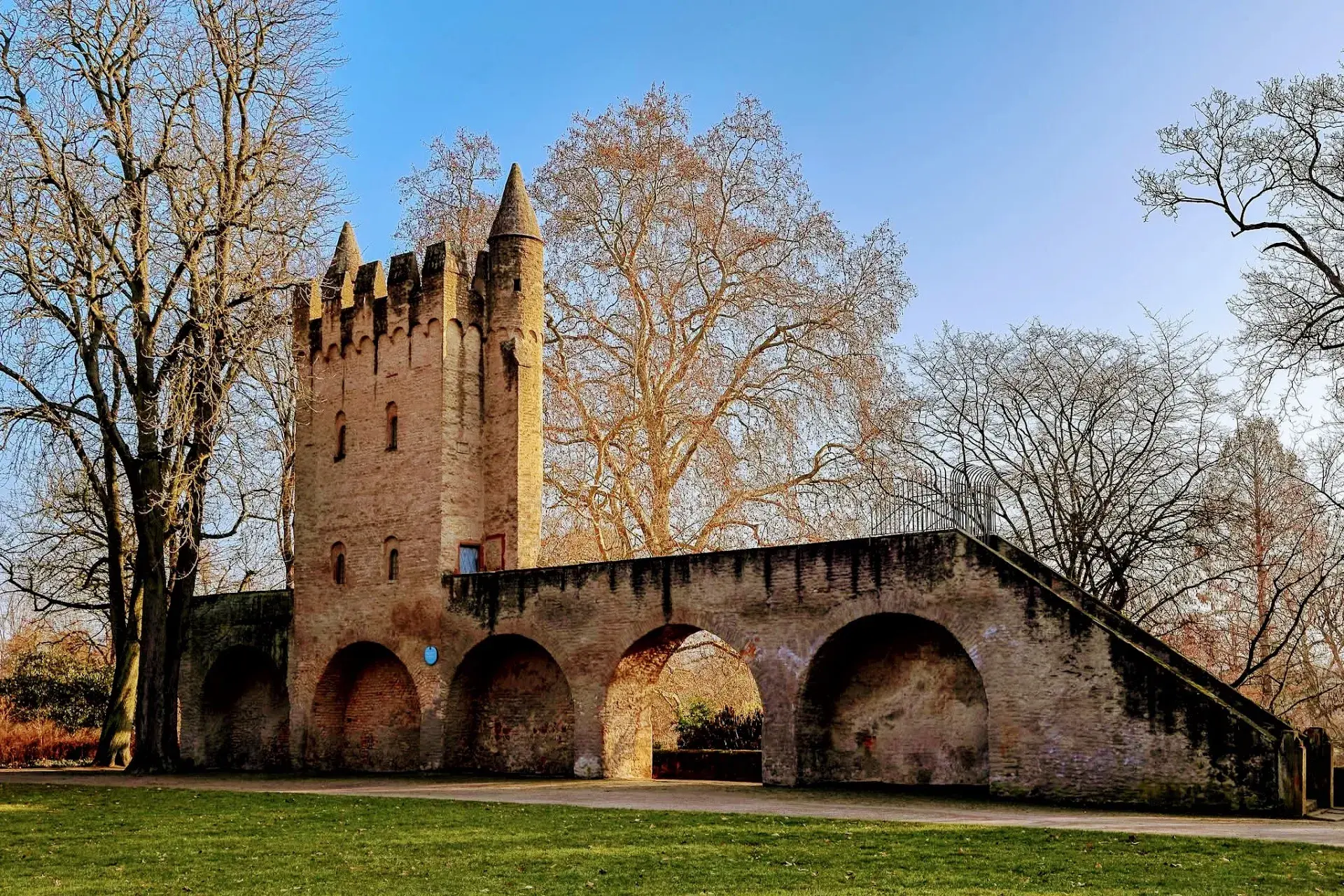
A lone, two-story sentinel stands as one of the last remnants of a vanished 68-tower defensive ring in Speyer. Known as the Heidentürmchen, this medieval defensive tower is located in the Domgarten, just east of the monumental Speyer Cathedral. Built circa 1280 to 1281, the structure is a rare survivor of the city's original inner fortifications.
Guardian of the Cathedral Terrace
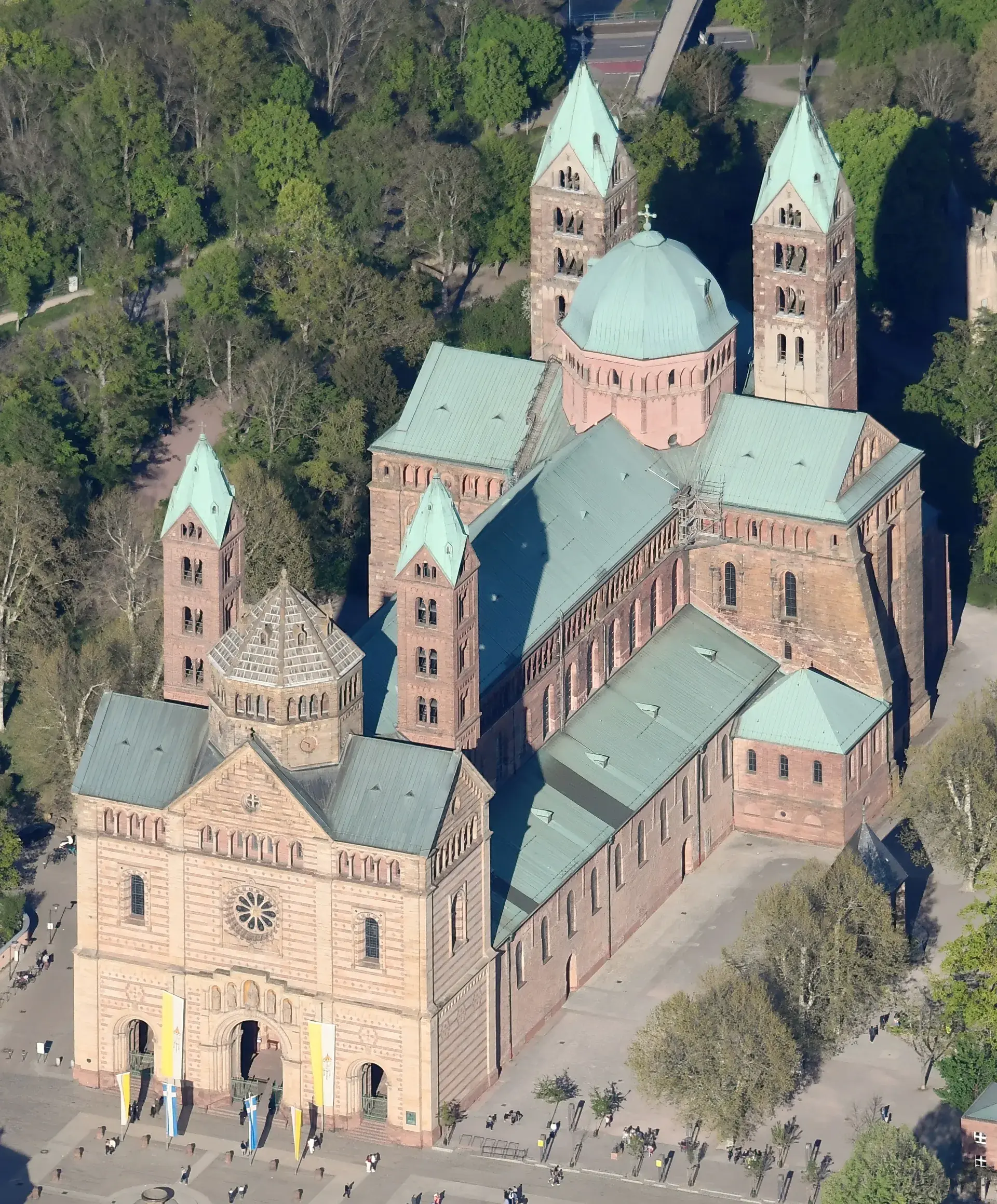
Constructed to protect the eastern flank of the city, the Heidentürmchen guarded the elevated cathedral terrace against military threats emerging from the Rhine floodplains. The tower fell within the cathedral immunity precinct. Over the centuries, Speyer's defensive walls were largely destroyed, particularly during the 1689 Nine Years' War and systematic demolitions in the 19th century. While the city's historic ring once comprised 21 inner towers and up to 68 fortification towers overall, the Heidentürmchen survived intact alongside the western city gate, the Altpörtel.
Architecture and Setting
The two-story structure is built from regional quarry sandstone. It is characterized by conical tiled roofs, a central narrow wall section, and two flanking circular stair turrets. Today, the warm, yellowish-tan texture of the weathered sandstone contrasts with the manicured lawns and mature trees of the Cathedral Gardens. The quiet park environment offers direct sightlines up to the eastern apse and towers of the Romanesque Speyer Cathedral.
Folklore and the "Heathen" Name
Despite assumptions that the Heidentürmchen was a prison for heretics or built from pagan Roman stones, historians trace the title to the Middle High German term "Heide." This translates to an unsettled heath or marshland, referring to the uncultivated, swampy Rhine floodplain that existed directly below the tower prior to 19th-century river corrections. Local folklore offers a more colorful origin, claiming the tower was once the home of prehistoric giant "heathens," including a giant named Olps.
A Second Life in the Park
Following the establishment of the public Domgarten, the tower found a brief second life. Beginning in 1843, it temporarily served as a lapidary storehouse for local archaeological finds when the nearby Antikenhalle ran out of storage space. Today, the Heidentürmchen is a protected cultural monument. It stands freely in the publicly accessible park, allowing the exterior to be viewed year-round, though the interior remains closed to the general public.
FAQ
Why is it called the Heidentürmchen?
Despite local legends of giants or pagans, the name comes from the Middle High German word "Heide" (unsettled heath), referring to the swampy Rhine floodplain that once sat below the tower before 19th-century river corrections.
Can visitors go inside the Heidentürmchen?
The exterior is accessible year-round in the publicly open Domgarten, but the interior remains closed to the general public.
How old is the Heidentürmchen?
The tower was built in the late 13th century, circa 1280 to 1281, as part of Speyer's original medieval defensive fortifications.
Discover Speyer like never before
Dive into Speyer hidden stories and secret spots with Ciceru interactive tours.
Explore tour
Audioguide
Quizzes
Maps
Solo
Couples
Groups & families

© Photo by jdossanS via Google Maps · Google Places