Speyer Cathedral: The World's Largest Romanesque Church
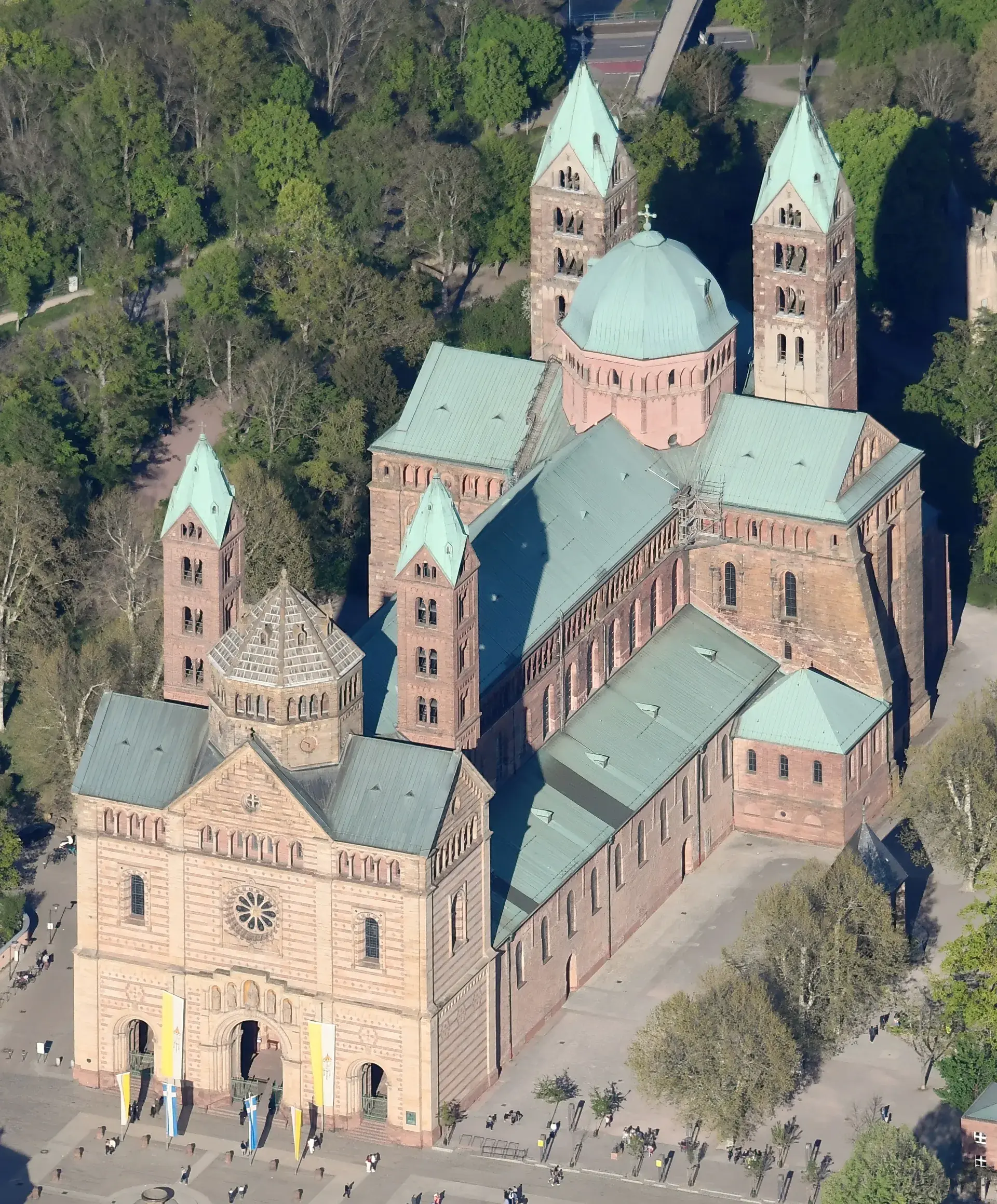
Step inside a colossal medieval monument built for an audience of one: the Pope. When Holy Roman Emperor Conrad II founded Speyerer Dom around 1025–1030, the town of Speyer was a modest settlement of only about 500 inhabitants. The cathedral's immense scale was a deliberate display of imperial dominance directed at the Papacy, far exceeding any practical needs of the local population. Today, officially named the Imperial Cathedral Basilica of the Assumption and St. Stephen, it holds the distinction of being the largest surviving Romanesque church in the world.
A Monument of Imperial Power
Located on a raised plateau near the Rhine, the basilica spans 134 meters in length. The central nave reaches a height of 33 meters, crowned by full groin vaulting that was added during an expansion known as 'Speyer II' between 1082 and 1106 under Emperor Henry IV. Four towering spires exceed 71 meters in height. Inside, the monumental, unadorned stone walls produce a cavernous acoustic echo, emphasizing pure geometric volume over ornate decoration.
Europe's Largest Romanesque Crypt
Beneath the choir and transept lies the largest preserved Romanesque columned hall crypt in Europe. The vaulted spaces feature rhythmic two-tone striping created by alternating yellow and rust-red sandstone ashlar blocks. This subterranean level houses the imperial vault, serving as the final resting place for eight medieval German emperors and kings, four empresses, and over forty bishops.
Centuries of Conflict and Preservation
The cathedral suffered catastrophic damage in 1689 when French troops torched the building during the War of the Palatinate Succession. An early triumph of European monument preservation occurred between 1772 and 1778 when the Romanesque nave was meticulously reconstructed. Following further desecration and looting during the French Revolutionary wars, King Ludwig I of Bavaria spearheaded a mid-19th-century restoration.
Civic Traditions and Ongoing Worship
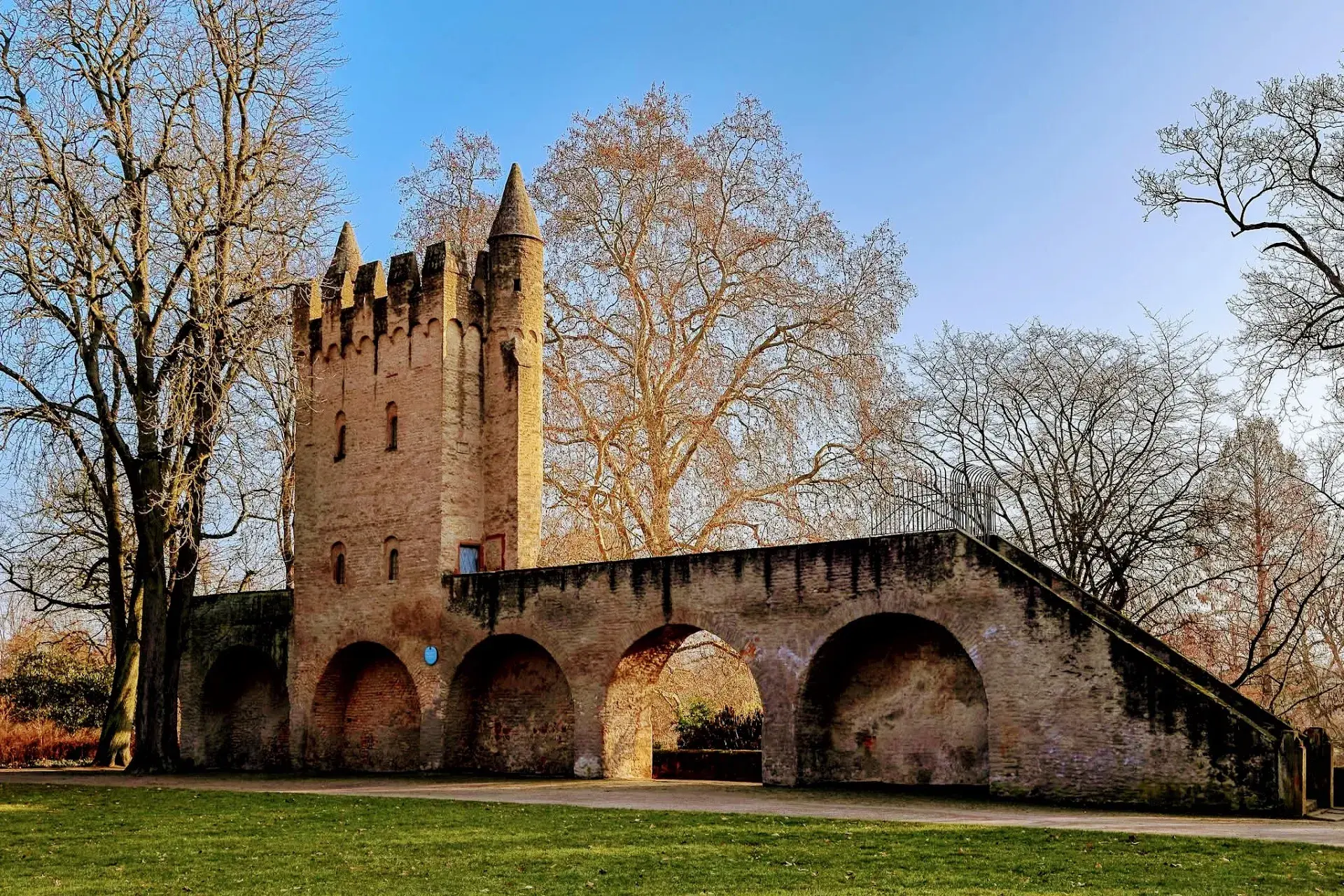
Inscribed as a UNESCO World Heritage Site in 1981, the cathedral remains the active seat of the Catholic Bishop of the Diocese of Speyer. It hosts daily masses and regular organ concerts. The site anchors the eastern end of Speyer's historic core, acting as the starting point of the Maximilianstraße, which runs straight to the medieval Altpörtel city gate.
Just outside the main portal sits the Domnapf (Cathedral Bowl), a large sandstone basin that historically marked the legal boundary between civic and episcopal jurisdictions. By tradition, whenever a new bishop was installed, this bowl was filled with free wine for the city's citizens. Another piece of local lore records that in 1146, St. Bernard of Clairvaux prayed before the cathedral's Virgin Mary statue, adding the final invocations to the famous hymn Salve Regina.
The building is open daily for visitors to explore the Romanesque crypt and imperial tombs. Guests can also visit the Kaisersaal to view restored 19th-century frescoes and climb 214 steps to a 60-meter viewing platform on the southwest tower.
FAQ
Why is Speyer Cathedral so large?
Founded around 1025–1030 by Holy Roman Emperor Conrad II, the cathedral's immense scale was intended as a deliberate display of imperial power directed at the Papacy. At the time, Speyer had only about 500 inhabitants, meaning the building's size far exceeded local, practical needs.
Who is buried in Speyer Cathedral?
The cathedral features an imperial burial vault located in its massive Romanesque crypt. It houses the remains of eight medieval German emperors and kings, four empresses, and over 40 bishops.
What is the Domnapf outside the cathedral?
The Domnapf, or Cathedral Bowl, is a large sandstone basin located outside the main portal. It historically marked the boundary between civic and episcopal jurisdiction. Tradition dictates that whenever a new bishop was installed, it was filled with free wine for the citizens of Speyer.
Can visitors climb the towers at Speyer Cathedral?
Yes, the cathedral is open daily to visitors. From the Kaisersaal, guests can climb 214 steps to access a 60-meter viewing platform located on the southwest tower.