Rathaus Speyer: The Historic Late Baroque Town Hall
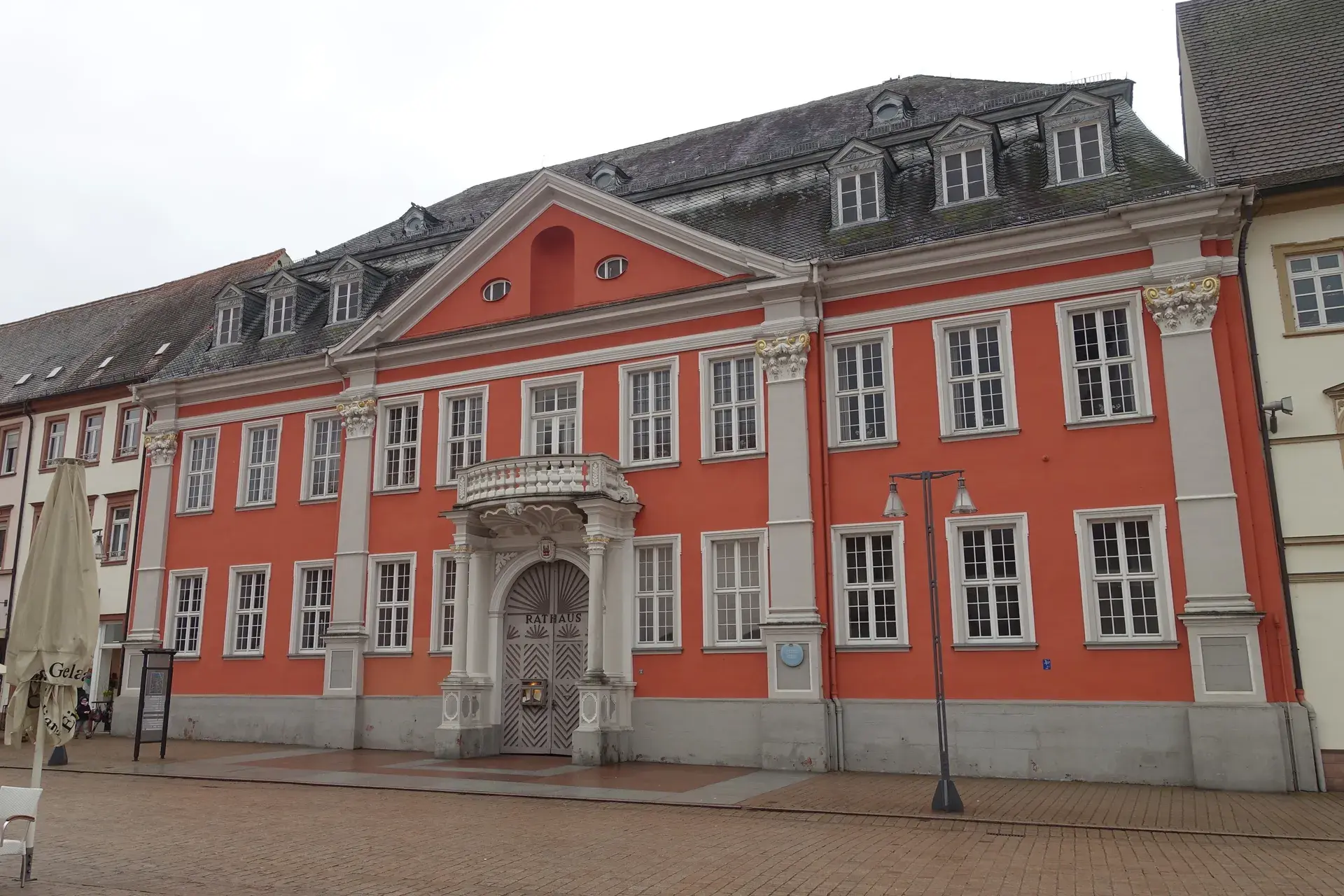
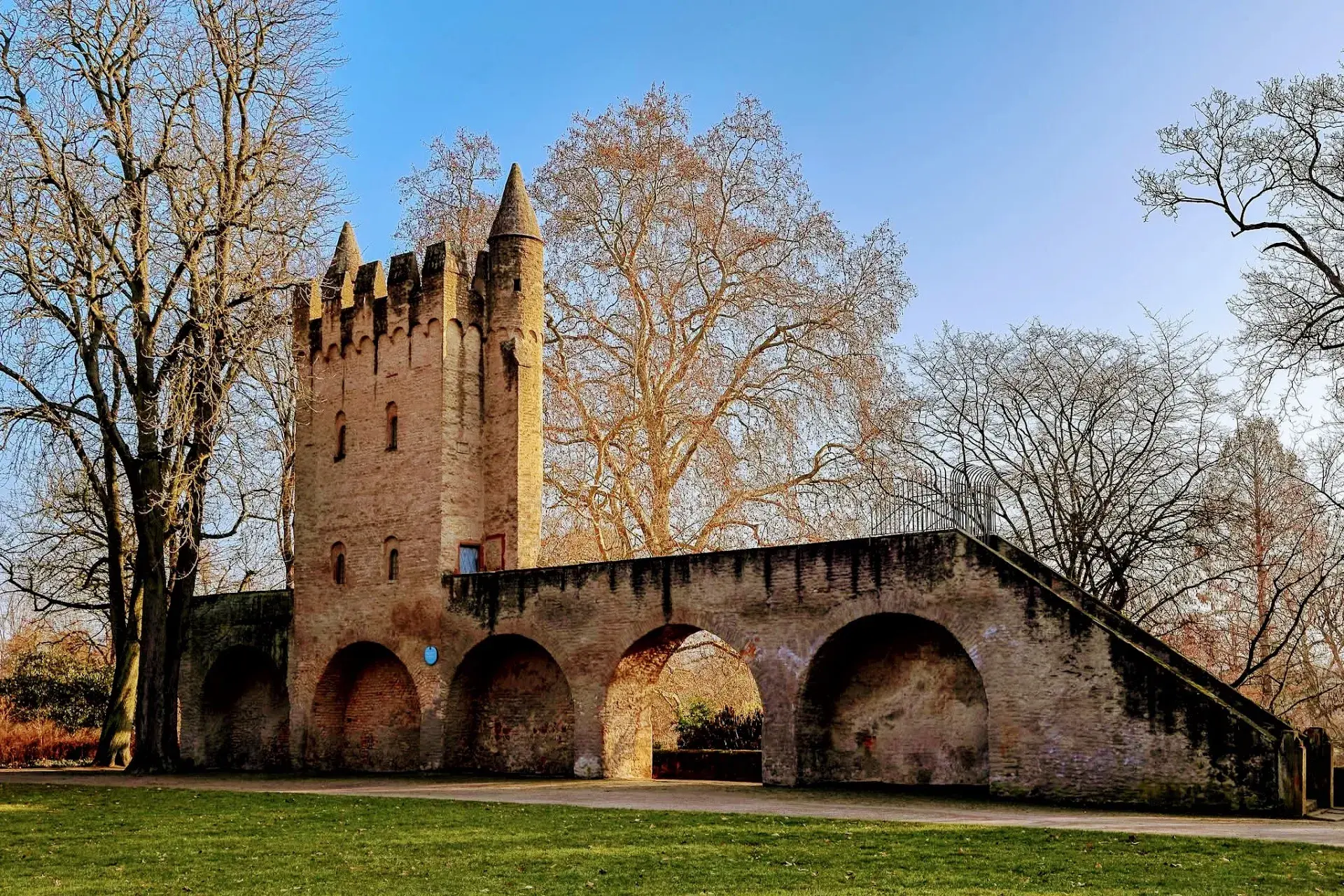
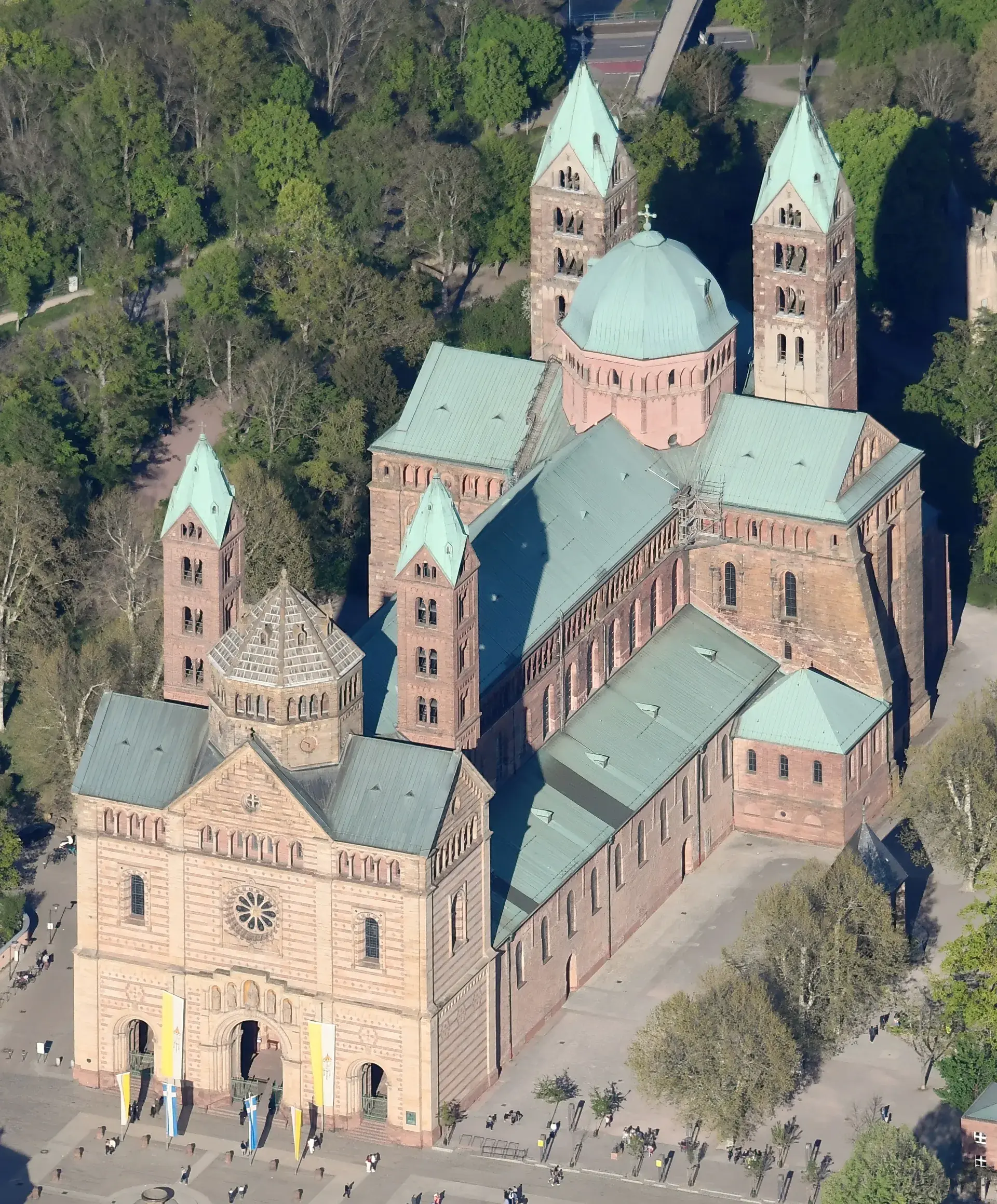
Look up at the historic facade of Rathaus Speyer along Maximilianstraße, serving as the city's civic heart. Positioned along the primary east-west pedestrian axis that connects Speyer Cathedral with the Altpörtel city gate tower, this secular focal point anchors the center of Speyer.
Rebuilding a Free Imperial City
During its era as an influential Free Imperial City, Speyer was governed by its burghers and guilds. The site of the current Rathaus originally housed a 15th-century municipal chancellery and the Old Department Store. In 1689, French troops burned and destroyed vast sections of Speyer during the Nine Years' War, reducing the medieval administrative center to ruins.
As part of the city's post-war reconstruction campaign, the new town hall became one of the first major representative secular buildings to be rebuilt. The foundation stone was laid on August 31, 1712, in a unique ceremony utilizing silver trowels and hammers. The building was later inaugurated on January 6, 1726, to host its first official council session.
Late Baroque Architecture
Designed by Electoral Palatinate court architect Johann Adam Breunig and Esslingen master builder Johann Jakob Böhrel, the two-storey structure is a prime example of Late Baroque design. It is topped by a high mansard hip roof.
The facade features warm red-and-gray painted plasterwork divided by four pilasters. A central projection is crowned with a triangular pediment. Below, a round-arched central gateway with two-winged wooden doors is flanked by columns. These columns support a curved balcony positioned over a shell-like console.
The Historic Archive and Wedding Hall
For centuries, the ground floor housed the municipal archive. Established in 1726, it was recognized as the oldest municipal archive in the Palatinate. By 1995, the collection had expanded to roughly 1,500 shelf meters and was relocated to the former State Library building.
Following the relocation, the vacated space was transformed into a civil wedding registry hall in 1998. The interior retains its original Baroque wood panelling and features column-supported wrapping galleries. These upper levels are accessed by dual spiral staircases complete with ornately carved balustrades.
Modern Civic and Cultural Functions
Today, the building continues its long-standing role as the meeting location for the Speyer City Council. The Historischer Ratssaal hosts official municipal receptions for political and cultural guests, as well as chamber music concerts and lectures.
The ground-floor portal also serves a practical public function as a pedestrian thoroughfare leading to the Historischer Stadtsaal and the Kulturhof Flachsgasse arts quarter at the rear. Interestingly, Speyer operates with two town halls to manage city affairs. While this historic building hosts ceremonies and council meetings, daily municipal administration takes place at the Stadthaus, a 1902 Neo-Baroque complex located further down Maximilianstraße.
FAQ
When was Rathaus Speyer built?
The foundation stone for the current Late Baroque building was laid on August 31, 1712, using silver trowels and hammers. It was officially inaugurated on January 6, 1726.
Is Rathaus Speyer a Renaissance building?
No, the current Rathaus Speyer is exclusively a Late Baroque building. It was constructed to replace the earlier 15th-century medieval and Renaissance administrative center that was destroyed in 1689.
What is the ground floor of Rathaus Speyer used for today?
The ground floor, which originally housed the oldest municipal archive in the Palatinate, was transformed into a civil wedding registry hall in 1998. The central portal also serves as a public passageway to the Kulturhof Flachsgasse arts quarter.