The Judenhof: Speyer's Medieval Jewish Courtyard
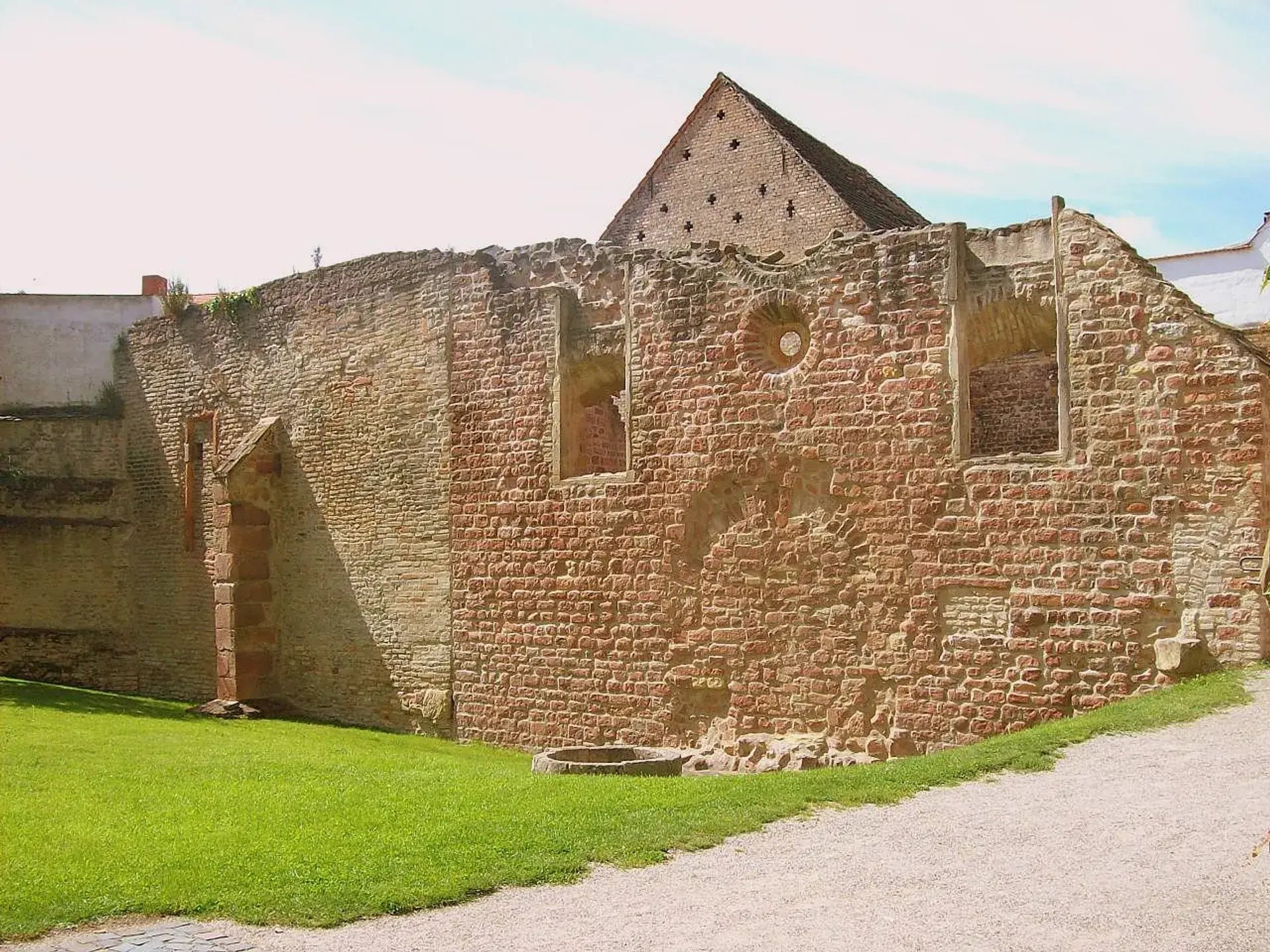
A quiet historic stone enclave, the Judenhof preserves remnants of Speyer's medieval Jewish community. Located along Kleine Pfaffengasse, this open-air archaeological monument stands as a vital historical counterweight to the city's imperial and episcopal monuments. In 2021, the site was inscribed as part of the transnational UNESCO World Heritage Site "ShUM Sites of Speyer, Worms, and Mainz," recognizing its fundamental role as a cradle of European Ashkenazi Jewish culture.
A Center of Ashkenazi Scholarship
Following a groundbreaking charter from Bishop Rüdiger Huzmann in 1084, Jewish families settled in Speyer. The bishop granted the community autonomy and protection with the intent to stimulate regional trade, a status reconfirmed by Holy Roman Emperor Henry IV in 1090. During the 12th and 13th centuries, Speyer formed the powerful ShUM alliance—a medieval Hebrew acronym for Schpira (Speyer), Warmaisa (Worms), and Magenza (Mainz). The courtyard hosted renowned rabbinical scholars known as the "Wise Men of Speyer," whose legal rulings and traditions profoundly shaped Ashkenazi Judaism across Europe.
Architectural Marvels
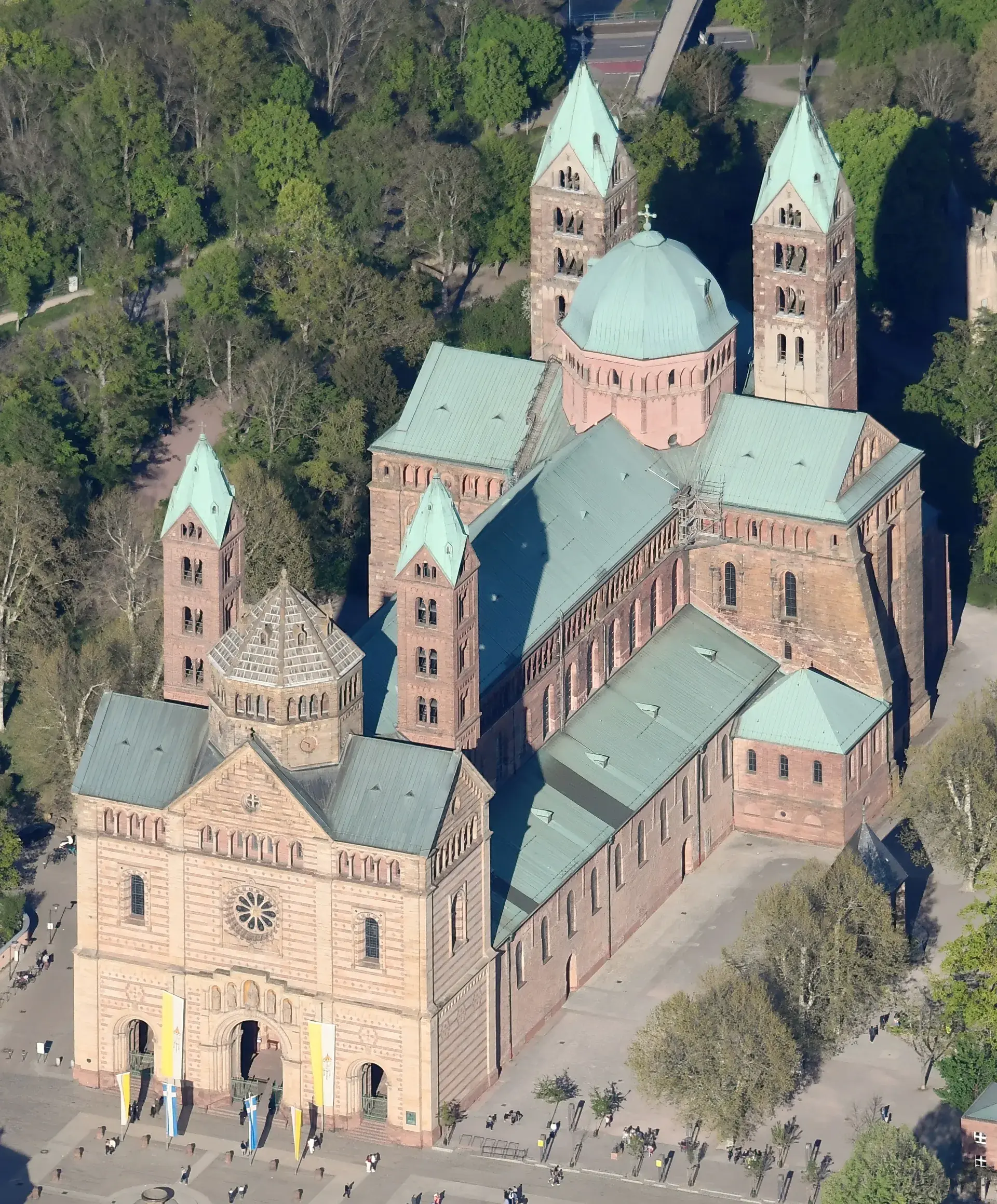
The Judenhof features the ruined walls of a Romanesque synagogue consecrated in 1104, an adjoining 13th-century women's prayer hall, and the archaeological foundations of a 14th-century yeshiva. Stone elements and Romanesque masonry in the Judenhof closely mirror the stonework of the nearby Imperial Cathedral, strongly suggesting that masons from the cathedral workshop contributed to the construction. Within the ruins, narrow, funnel-shaped acoustic slit openings pierce the stone partition wall, an ingenious design that allowed the cantor's voice to carry from the main prayer hall into the women's annex.
The Subterranean Mikveh
Perhaps the most significant surviving structure is the intact underground ritual bath, or mikveh. Constructed in the early 12th century, it is the oldest surviving monumental ritual bath of its kind north of the Alps. A steep, enclosed barrel-vaulted stone stairway descends roughly ten meters below street level into a cold, silent, groin-vaulted Romanesque bathing chamber, where the bottom basin remains filled with natural groundwater.
Centuries of Turbulence
Despite the bishop's direct intervention saving the community during the First Crusade in 1096, Speyer's Jewish population suffered devastating pogroms in 1196 and during the Black Death in 1349. Following early 16th-century expulsions, the synagogue fell out of religious use and was repurposed by the city as an arsenal in 1529. Headstones from the city's Jewish cemetery were looted and reused as municipal building materials for steps and bridge supports. The surrounding residential quarter was later burned to the ground during the 1689 War of the Palatine Succession.
Museum SchPIRA
Today, the site operates as a protected heritage monument managed in coordination with the local historical society. The entrance to the Judenhof runs through the Museum SchPIRA, which opened in 2010. The museum exhibitions display excavated architectural fragments, recovered medieval cemetery gravestones, and a fascinating 14th-century coin hoard known as the Treasure of Lingenfeld.
FAQ
What does the acronym ShUM stand for?
ShUM is a medieval Hebrew acronym representing the first letters of three key Rhine cities: Schpira (Speyer), Warmaisa (Worms), and Magenza (Mainz).
How old is the mikveh in the Speyer Judenhof?
The monumental mikveh was constructed in the early 12th century and is recognized as the oldest surviving ritual bath of its kind north of the Alps.
Why does the architecture of the Judenhof resemble Speyer Cathedral?
Stone architectural elements and Romanesque masonry in the Judenhof closely mirror those of the Imperial Cathedral, indicating that masons from the cathedral workshop likely helped construct both the synagogue and the mikveh.
What can be seen inside the Museum SchPIRA?
The Museum SchPIRA features excavated architectural fragments, medieval cemetery gravestones that were once looted for municipal building materials, and a 14th-century coin hoard known as the Treasure of Lingenfeld.