Kron-Lastadie: Stralsund's Historic Harbor Terrace
From Swedish bastion to Prussian cannon shed, a single timber structure tracks Stralsund's dramatic shift from a heavily armed fortress to a welcoming modern harbor. The Kron-Lastadie serves as the physical and historical transition point where Stralsund’s UNESCO-listed medieval core meets the 19th-century port expansions of the harbor island.
A Legacy of Port Defense
During Swedish rule between 1648 and 1815, Stralsund operated as a heavily fortified garrison city. The water's edge at this site was fortified as the Kronlastadiebastion to defend the harbor. The site's name reflects this history: "Lastadie" is a historic Low German Hanseatic term for a loading wharf or shipyard, while the prefix "Kron-" references the Swedish Crown.
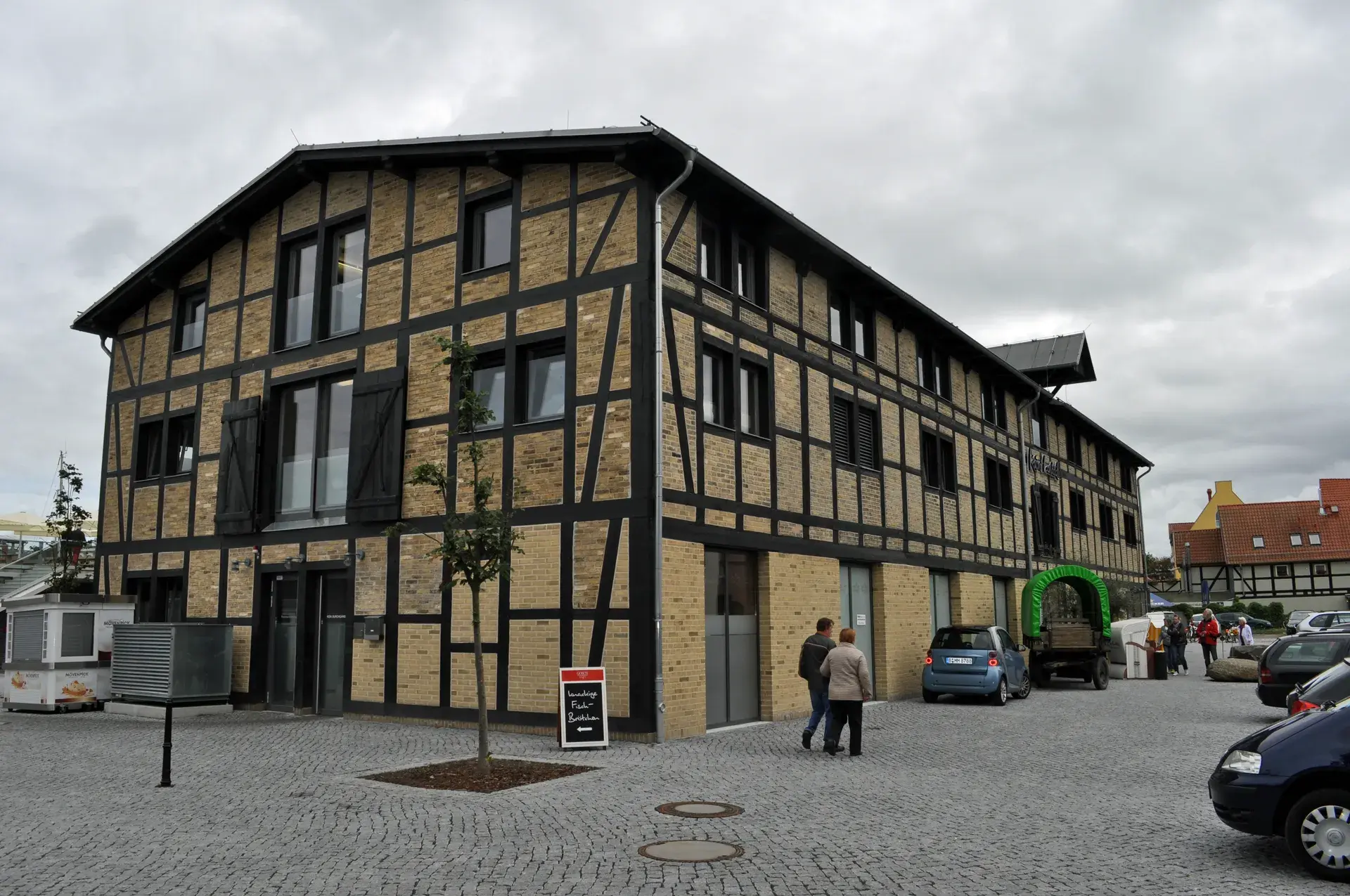
In 1815, Prussia took control of Western Pomerania and established a naval depot at the location. Between 1864 and 1865, the Prussian military constructed a half-timbered building, known as a Kanonenwagenschuppen, to store artillery wagons and gun carriages for the expanding garrison.
Adaptation and Survival
When Stralsund lost its official fortress status in the late 19th century, the city's earthen defensive ramparts were leveled. Despite the demolition of the surrounding fortifications, the distinctive half-timbered building survived. Its preservation was due entirely to its structural adaptability, transitioning directly from storing heavy military artillery to housing commercial grain sacks as a Getreidespeicher (grain storehouse).
The Modern Stadtbalkon
Following decades of industrial harbor decline, the site underwent a major redevelopment between 2009 and 2011. The historic 1865 timber frame was integrated into a new waterfront complex designed by architects Gnadler, Meyn, and Woitassek. The modern architecture was specifically shaped to mimic the footprint of the former 17th-century Swedish bastion.
Today, the Kron-Lastadie operates as a vibrant leisure destination located between the street Am Fischmarkt and the Querkanal waterway, featuring craft beer venues, cafes, and restaurants. The visual contrast of dark, exposed 19th-century timber set against modern glass and quay architecture creates a striking harbor scene. The complex is crowned by the Stadtbalkon (City Balcony), an accessible roof terrace offering panoramic views over the old harbor basin, the Ozeaneum, and moored tall ships, all accompanied by the sound of rigging lines clinking against boat masts across the adjacent waterway.
FAQ
What does the name Kron-Lastadie mean?
"Lastadie" is a historic Low German Hanseatic word that translates to a loading wharf or shipyard. The prefix "Kron-" refers to the Swedish Crown, which originally built a defensive bastion on the site in the 17th century.
What was the Kron-Lastadie originally used for?
The preserved half-timbered building was constructed by Prussia in 1864–1865 as a cannon carriage shed (Kanonenwagenschuppen) to store artillery wagons for the city's military garrison.
What can visitors see from the Stadtbalkon today?
The accessible Stadtbalkon roof terrace provides panoramic views of Stralsund's old harbor basin, the Querkanal waterway, moored tall ships, and the neighboring Ozeaneum on the harbor island.