St. Nikolaikirche: Stralsund's Oldest Parish Church
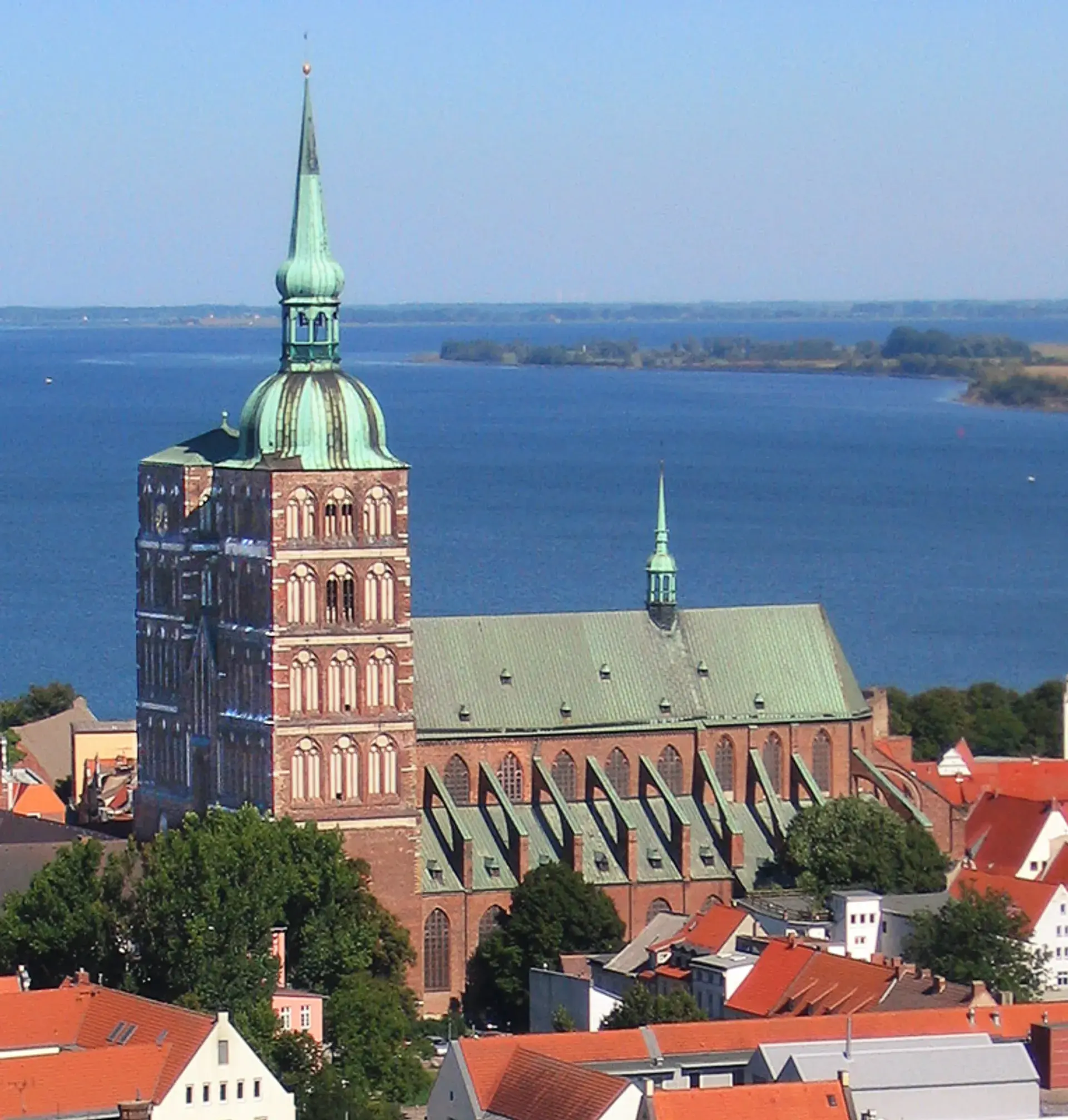
The ancient brick exterior and twin-towered profile of Stralsund's oldest parish church can be admired right from the square. St. Nikolaikirche (St. Nicholas Church) anchors the Alter Markt (Old Market Square) directly next to the Gothic Town Hall. As part of the UNESCO World Heritage Site encompassing the historic centers of Stralsund and Wismar, this structure remains a testament to medieval mercantile wealth and religious devotion.
A Hub of Hanseatic Power
Dedicated to St. Nicholas of Myra, the patron saint of seafarers and merchants, the church was built and financed under the direct administration of the city council. It functioned as the "Ratskirche" or council's church. Rather than serving purely as a place of worship, it acted as a civic and political nerve center.
The building regularly hosted city council sessions, diplomatic receptions, and the announcement of municipal laws. It even housed the city archives and council scribes. The historic covered arcade known as the 'Buttergang' still connects the council hall and Old Market directly to the church's western portal, physically symbolizing the intertwined power of church and state in Hanseatic Stralsund.
Striking Architecture and Medieval Polychromy
Construction began around 1234, and by the 14th century, the building was expanded into an 87-meter-long Brick Gothic basilica modeled after St. Mary's in Lübeck. The church's distinct skyline is the result of a devastating 1662 fire that destroyed its original Gothic spires. Today, the south tower features a 103-meter Baroque dome added in 1667, while the north tower retains an emergency pyramid roof.
Inside, the church breaks away from the stark, whitewashed aesthetic common to many Protestant brick churches. The interior features visually striking, restored medieval-style polychromy, showcasing vibrant vault patterns, colorful frescoes, and painted sculpted figures.
The Astronomical Clock and Surviving Altars
The interior once held 56 individual altars commissioned by guilds and wealthy families. Though many were destroyed during the iconoclasm of 1525, significant pieces remain, including trade guild altars funded by the Bergenfahrer and Novgorodfahrer merchants, a tailors' guild altar, and an altar dedicated to St. Olaf. The northern ambulatory also houses a late 13th-century stucco figure of Anna Selbdritt, one of the oldest surviving monumental large sculptures of its type in the Baltic region.
Positioned behind the high altar is a monumental astronomical astrolabe clock crafted in 1394 by Nikolaus Lilienfeld. It holds the distinction of being the oldest mechanical clock in the world that still retains its original gearing wheels. The clock's casing also features the oldest surviving self-portrait of a clockmaker in the German-speaking world.
Modern Use and Musical Heritage
Operating as an Evangelical Lutheran church since 1524, St. Nikolaikirche remains an active parish today. It is open daily for tourist visits, personal prayer, and guided tours, with a conservation fee required for general entry. Beyond its religious and historical significance, the church serves as a cultural venue, regularly hosting classical and sacred concerts, organ recitals, and music festivals throughout the year.
FAQ
When was St. Nikolaikirche in Stralsund built?
Construction of St. Nikolaikirche began around 1234, and the high altar was consecrated in 1279. It was later expanded into a large Brick Gothic basilica in the 14th century.
What is special about the clock inside St. Nikolaikirche?
The church houses a 1394 astronomical astrolabe clock crafted by Nikolaus Lilienfeld. It is the world's oldest mechanical clock that still retains its original gearing wheels, and its casing features the oldest self-portrait of a clockmaker in the German-speaking world.
Why are the two towers of the church different?
A fire in 1662 destroyed the church's original Gothic spires. The south tower was subsequently rebuilt with a 103-meter Baroque dome in 1667, while the north tower was given a temporary pyramid roof that remains in place today.
Can tourists visit St. Nikolaikirche?
Yes, the church is open daily for tourist visits and guided tours, though a conservation fee applies for general tourist entry. It also holds regular church services and concerts.