St. Mary's Church Stralsund: Former World's Tallest
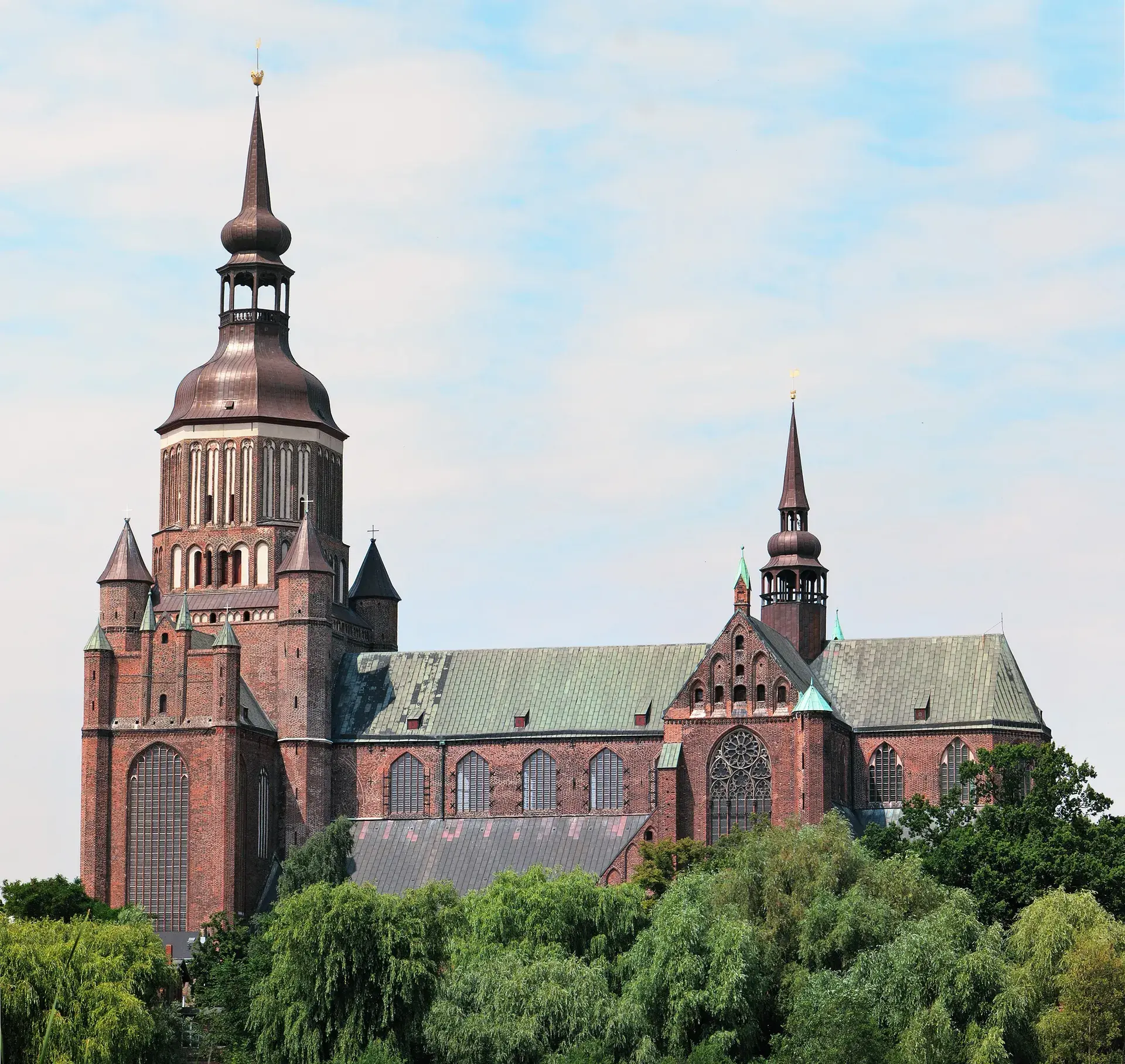
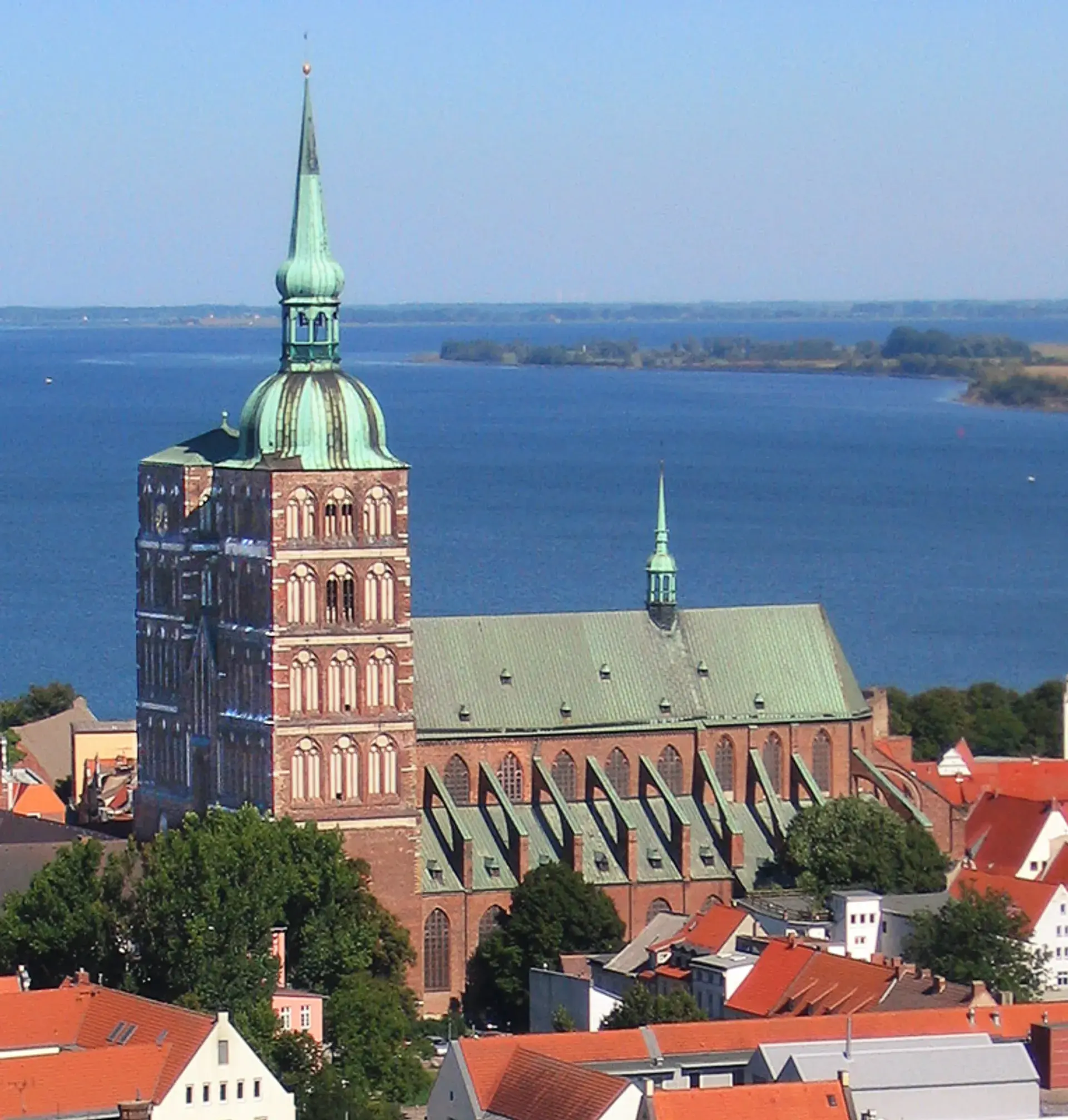
For nearly a century, the tallest building on Earth stood not in Rome or Paris, but in Stralsund. St. Mary's Church (St.-Marien-Kirche) features towering 14th-century red-brick architecture and a massive bell tower. Located on the Neuer Markt, it remains an architectural marvel of the Hanseatic League and a cornerstone of the city's UNESCO World Heritage designation.
A Masterpiece of Brick Gothic Architecture
Measuring roughly 96 meters long and 41 meters wide, St. Mary's Church ranks among the largest Brick Gothic churches in the Hanseatic Baltic region. The central nave reaches nearly 33 meters high, creating a vast, cavernous interior. The structure's imposing westwork, built from 1416 onwards, consists of two side halls, a colossal central tower, and four flanking polygonal stair turrets.
The Tower That Outgrew the World
First documented in 1298, the church underwent a massive reconstruction between 1384 and 1478 after an initial tower collapse in 1382. Its ambitions continued to grow, even after a severe storm destroyed the steeple in 1495. Between 1549 and 1647, the church's soaring Gothic spire reached approximately 151 meters, officially making it the tallest structure in the world. This record-holding height ended in 1647 when a lightning strike triggered a massive fire, destroying the spire. The current 104-meter Baroque lantern tower and dome replaced it in 1708.
Historical Turbulence
Beyond structural collapses and fires, St. Mary's Church endured significant periods of unrest. Between 1807 and 1810, French occupying forces requisitioned the church. The monumental religious space was used as a military barracks and a hay magazine, an occupation that destroyed much of the building's historic interior furnishings.
The 1659 Stellwagen Organ
Positioned high on the west wall, the intricate 20-meter-high gilded Baroque wooden organ case creates a striking contrast against the massive brick vaulted spaces. Built by Friedrich Stellwagen between 1655 and 1659, the construction was so massive that the builder set up his workshop directly inside the church's tower halls.
The organ case is adorned with celestial motifs like the sun, moon, and stars, as well as a statue of King David playing a harp surrounded by musical angels. One angel bears the Stellwagen family coat of arms, which appropriately depicts a carriage frame ("Stellwagen" in German). When the 17th-century pipes sound, the building's long reverberation times deliver a clear, overtone-rich acoustic.
Modern Role and Panoramic Views
Today, St. Mary's functions as an active Lutheran parish church. It also serves as a renowned concert venue, frequently hosting organ recitals and the annual Friedrich Stellwagen Organ Festival. The church remains a prominent viewing platform in Stralsund. An ascent of 366 steps up the 104-meter tower rewards climbers with panoramic views across the city skyline, the Strelasund strait, and the nearby island of Rügen.
FAQ
Why is St. Mary's Church in Stralsund historically significant?
Between 1549 and 1647, St. Mary's Church was the tallest building in the world. Its original Gothic spire reached approximately 151 meters before being destroyed by a lightning-triggered fire.
Can visitors climb the tower at St. Mary's Church?
Yes, the 104-meter Baroque lantern tower serves as a viewing platform. Climbing the 366 steps provides panoramic views of Stralsund, the Strelasund strait, and the island of Rügen.
What happened to the church during the French occupation?
From 1807 to 1810, French occupying forces used the church as a military barracks and hay magazine. This requisition resulted in the destruction of much of the historic interior furnishings.