Historische Altstadt: Wernigerode's Historic Center
The Historic Spine of Wernigerode
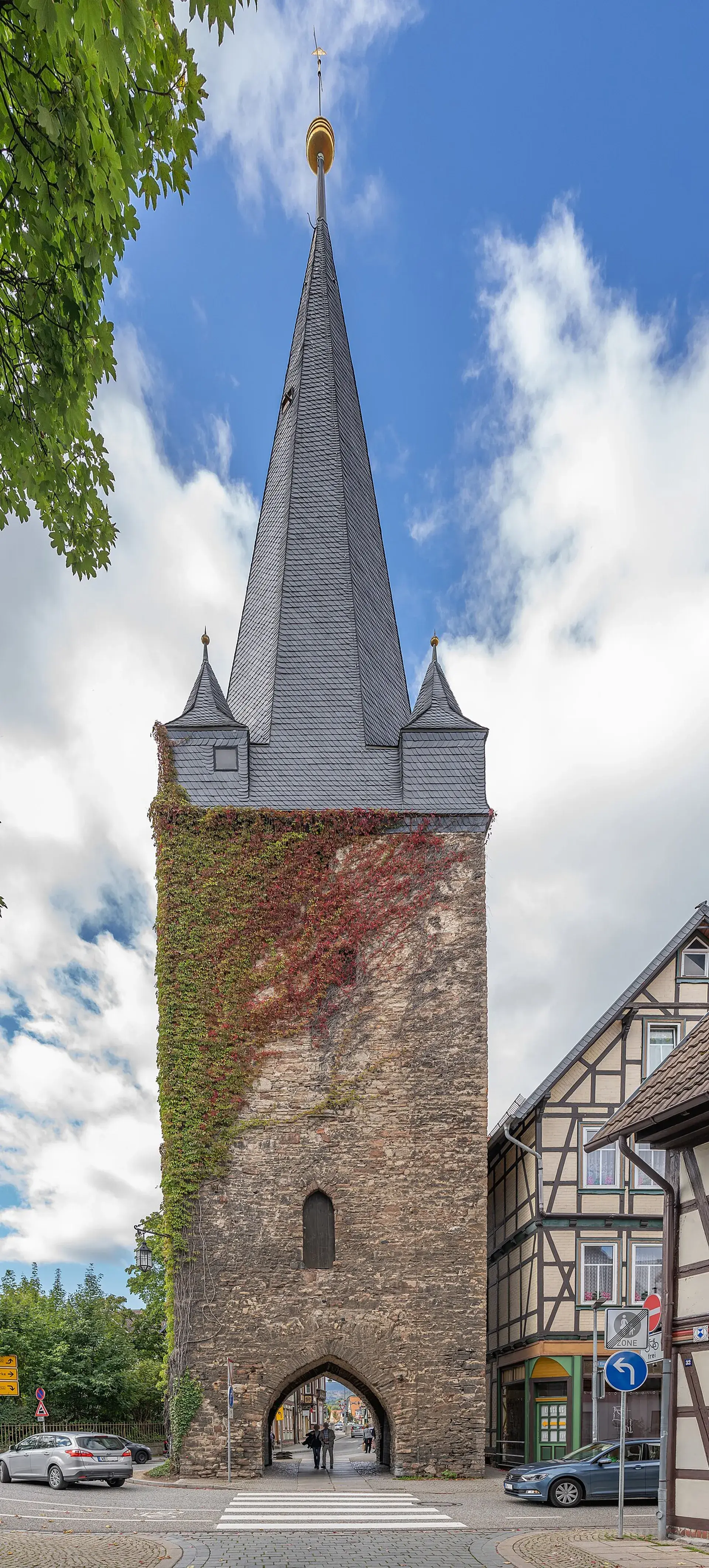
Breite Straße forms the primary pedestrian spine and historic east-west thoroughfare through Wernigerode's Historische Altstadt. First documented in 1399, the street historically linked the eastern city gate, known as the Rimbecker Tor (demolished in 1843), across the former Neustadt to the civic core at the Marktplatz and Rathaus. Today, it remains the principal walking route connecting outer transit arrival points and parking areas directly to the central square.
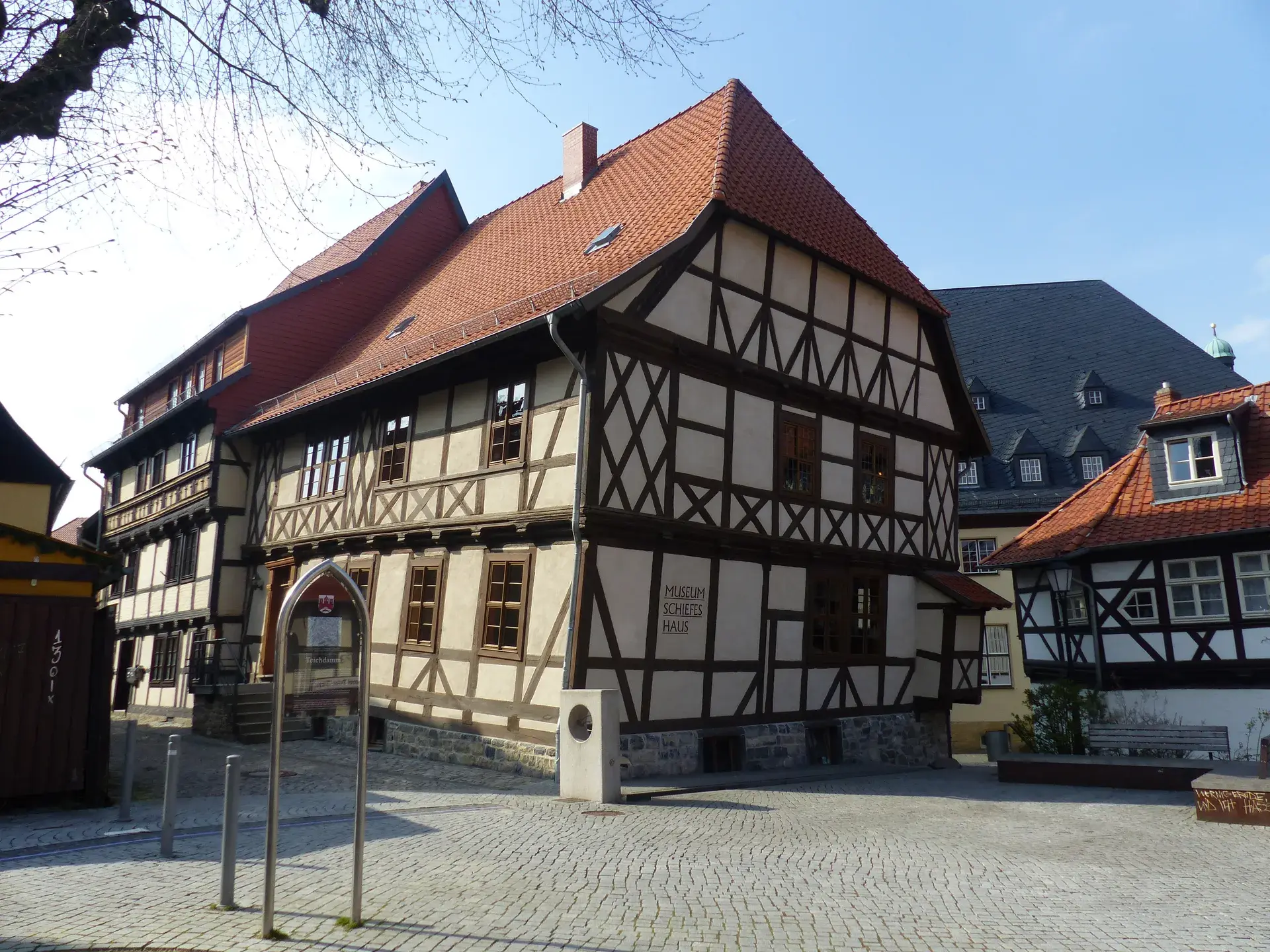
The streetscape is defined by a dense concentration of multi-storey half-timbered houses (Fachwerkhäuser) spanning the 16th to the 19th centuries. These structures exemplify Lower Saxon timber framing (niedersächsischer Fachwerkbau), characterized by cantilevered upper floors (Vorkragungen), intricate beam heads, and polychrome finishes in deep ochres, oxblood reds, and dark wood stains. This concentration of colorful, expressive framework inspired author Hermann Löns to refer to Wernigerode as "Die bunte Stadt am Harz" (the colorful town on the Harz).
Merchant Wealth and Carved Facades
Following the Thirty Years' War, an economic recovery spurred local merchants to construct ambitious residences displaying their status through complex woodcarvings. Rather than relying on simple painted embellishments, craftsmen carved allegorical, mythological, and biblical reliefs directly into the timber framing, alongside projecting grotesques and scrolled brackets.
Among the most elaborate examples is Krummelsches Haus at Breite Straße 72. Erected in 1674 by the grain merchant Henricus Krummel, its facade is almost entirely clad in wooden relief carvings. The allegorical medallions across the exterior were adapted from copperplate engravings by the Flemish Renaissance artist Adriaen Collaert. Beneath the window sills, the projecting ends of horizontal ceiling joists (Balkenköpfe) are carved into snarling apotropaic masks (Fratzen), intended in regional tradition to ward off evil spirits and misfortune.
Krummelsches Haus also preserves an accidental detail left by its 17th-century woodcarver: the carved allegorical panels representing Africa and the Americas were mistakenly swapped relative to their accompanying painted inscription labels, a quirk visible on the facade to this day.
Notable Historic Structures
Several other landmark residences along Breite Straße highlight the evolution of local timber carpentry:
- Café Wien (Breite Straße 4): Built in 1583, this timber structure features transitional Late Gothic and Renaissance styling, making it one of the oldest buildings along the thoroughfare. It has functioned continuously as a cafe and confectionery since 1897.
- Haus Preysser (Breite Straße 71): Commissioned in 1696 for the soap maker and chandler Johann Preysser, this house features a late Mannerist portal flanked by carved cherubs and two turban-wearing male portrait heads looking outward toward the street.
- Krellsche Schmiede (Breite Straße 95): Completed in 1678 by master smith Michael Krell, the facade bears a carved horse-head emblem signifying the historic trade practiced on the site.
Reconstruction and Modern Use
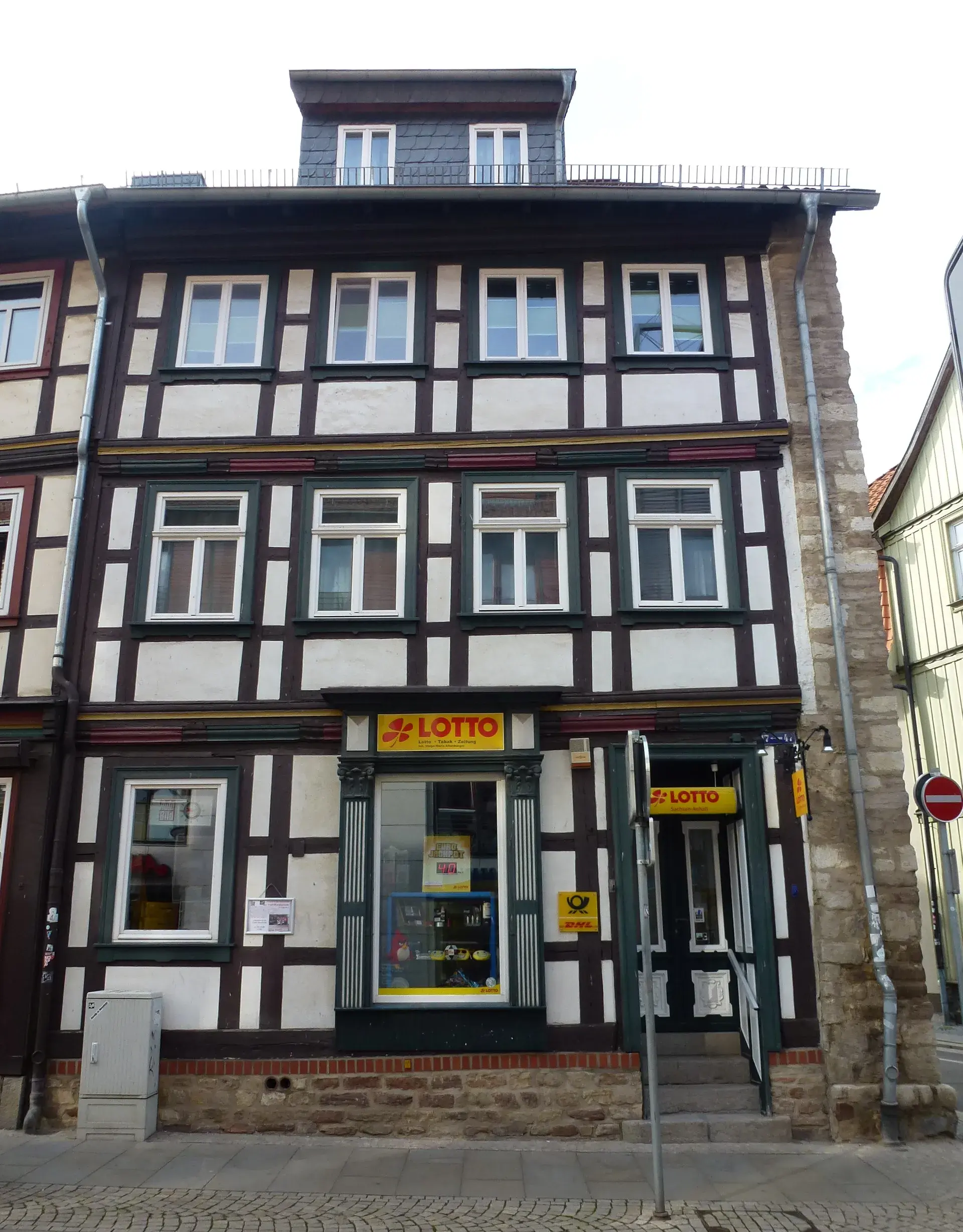
Devastating town fires in 1751 and 1851 destroyed several sections of the eastern streetscape. The subsequent 19th-century rebuilding efforts, such as the structure at Breite Straße 19, marked an architectural shift away from heavily carved ornamentation toward simpler, utilitarian timber frames with exposed brick infill (Ausfachung).
Today, Breite Straße functions as Wernigerode's designated pedestrian commercial zone (Fußgängerzone). Its historic ground floors are fully integrated into daily civic life, accommodating bakeries, retail shops, cafes, and dining establishments, including an active restaurant inside Krummelsches Haus.
FAQ
Why is Wernigerode nicknamed 'Die bunte Stadt am Harz'?
The nickname was coined by writer Hermann Löns in reference to the vivid Lower Saxon timber-framed buildings that line streets such as Breite Straße, which feature contrasting infill panels and timbers stained in ochre, oxblood red, and dark tones.
What mistake is visible on the facade of Krummelsches Haus?
During the construction of Krummelsches Haus in 1674, the woodcarver accidentally transposed the carved relief panels representing Africa and the Americas relative to their painted identifying text labels.
What is the history of Café Wien on Breite Straße?
Located at Breite Straße 4, the building dates to 1583 and features transitional Late Gothic and Renaissance timber framing. It is one of the oldest structures on the street and has operated continuously as a cafe and confectionery since 1897.
Gallery