St.-Sylvestri-Kirche Wernigerode: History & Sights
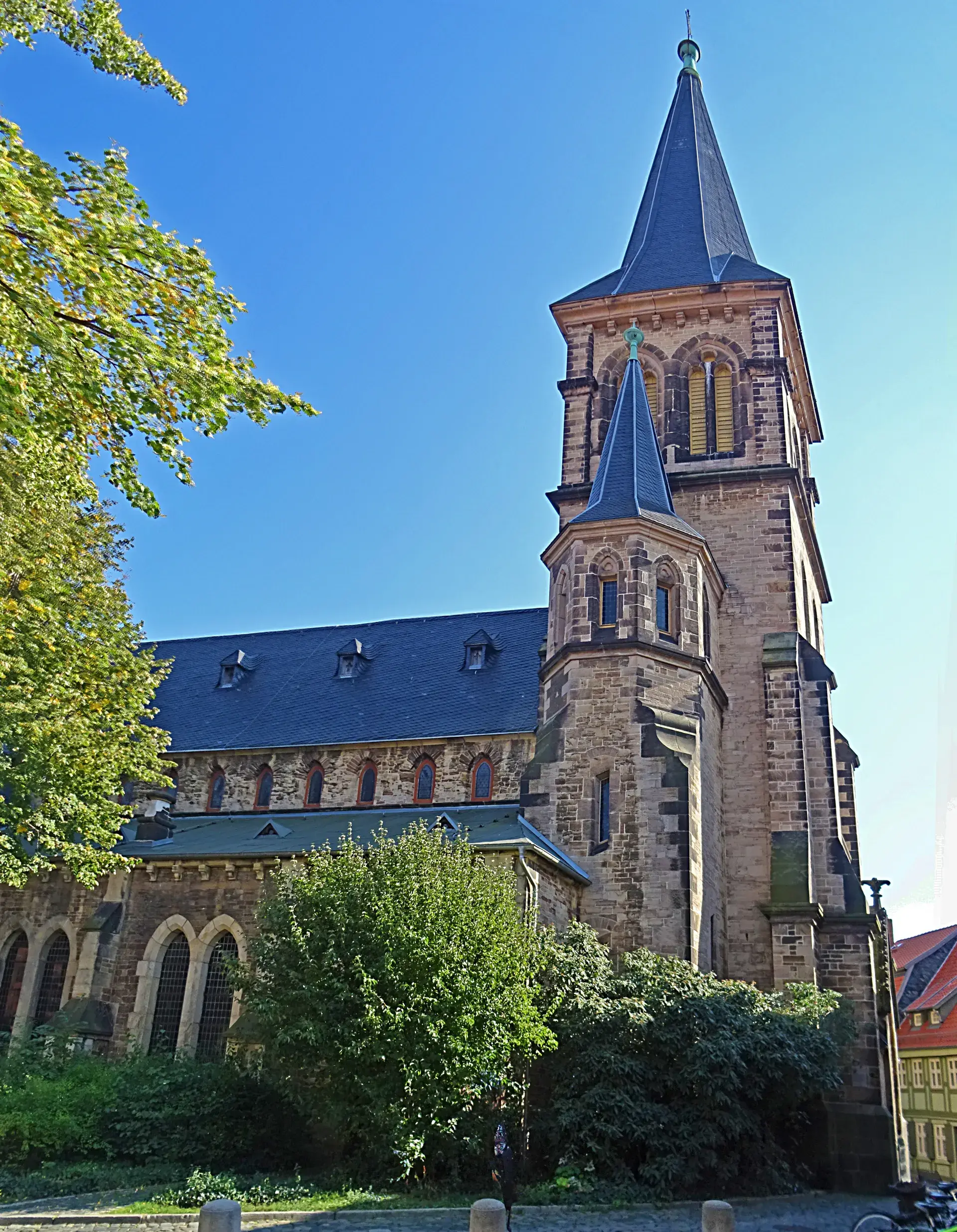
St.-Sylvestri-Kirche stands on the elevated, cobblestone Oberpfarrkirchhof square on the Klint hill, directly behind the historic Town Hall of Wernigerode. The three-aisled basilica forms the centerpiece of the city's oldest quarter, marking the original bedrock rise where the town was first established before expanding around the market square.
The Settlement Nucleus of Wernigerode
Local tradition traces the earliest Christian foundation on the Klint to a ninth-century missionary chapel established by Benedictine monks of Corvey Abbey under Abbot Warin I. By approximately 1100, builders erected a cross-shaped Romanesque stone basilica on the site. Key elements of this early medieval church endure today, including the stone pillars that support the nave.
In 1265, the local ruling counts elevated the parish into a collegiate foundation. During this period, the choir was lengthened to accommodate stalls for the canons, Gothic clerestory windows were installed, and the church was rededicated from St. George to Pope Sylvester I.
Architectural Evolution and the West Tower
St.-Sylvestri-Kirche combines Romanesque, Gothic, and nineteenth-century architectural elements. The medieval church originally featured two octagonal towers. In 1727, these structures were replaced by a single Baroque lantern tower. That tower was demolished in 1869, making way for a comprehensive reconstruction between 1880 and 1886 that added the present Neo-Gothic west tower.
During this late nineteenth-century renovation, workers re-installed a flat wooden ceiling designed to mirror the medieval interior. This ceiling structure lends the nave clear and resonant acoustics, making the space well suited for organ and choral performances.
Interior Treasures and the Sealed Vault
The church preserves an array of significant religious art and artifacts. The focal point of the interior is a late Gothic carved winged altarpiece produced in Brussels around 1480, accompanied by a wooden crucifix dating to approximately 1300. The belfry houses historic, functioning bells cast in 1297 and 1500 that survived both the Protestant Reformation and subsequent structural overhauls.
Beneath the extended choir lies the historical burial vault of the Counts of Wernigerode. During the major rebuilding campaign from 1880 to 1886, the entrance to the crypt was entirely bricked up and remains sealed.
The Oberpfarrkirchhof Square and Modern Parish Life
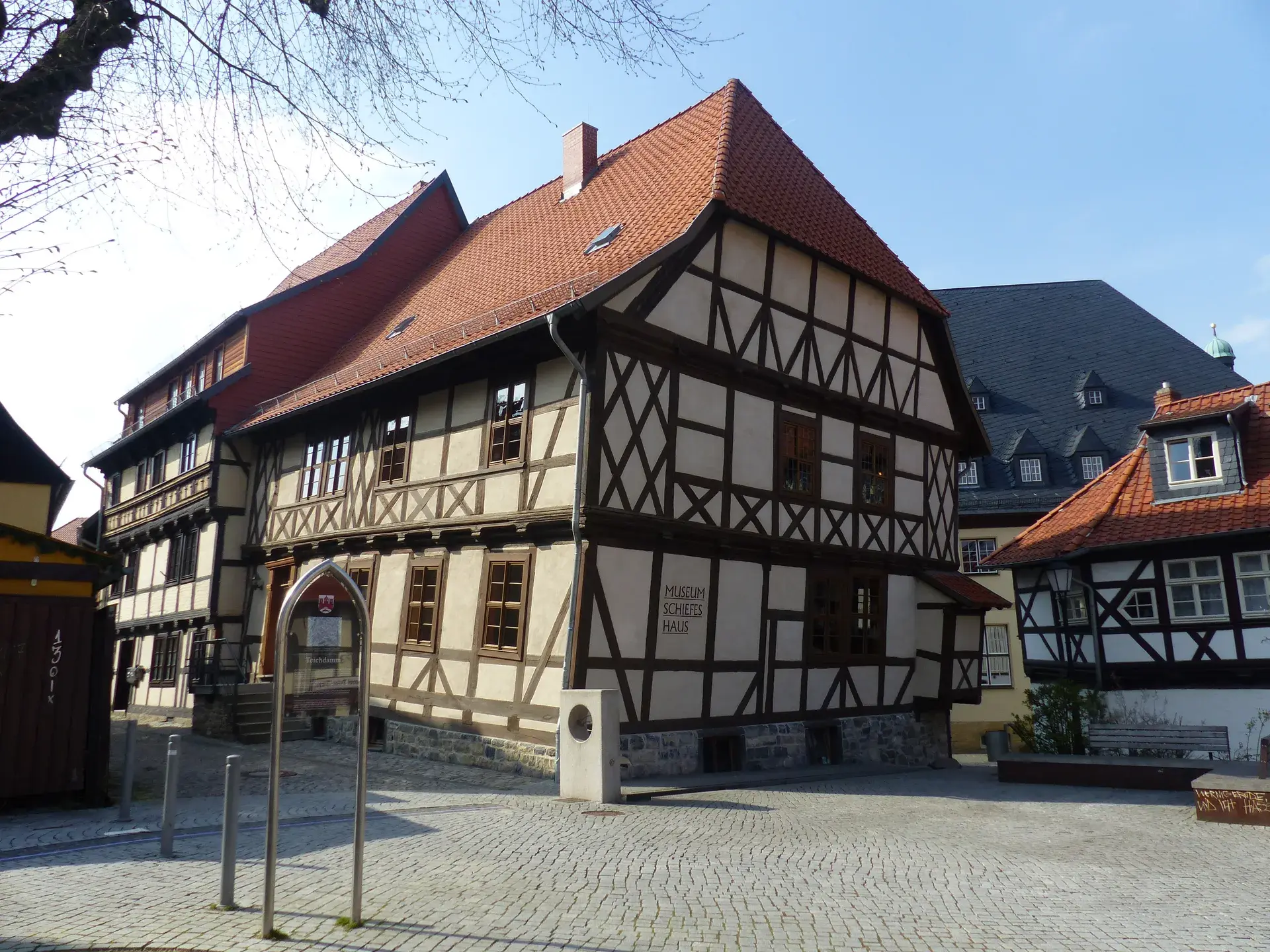
The churchyard square, the Oberpfarrkirchhof, provides a secluded setting framed by preserved historic buildings. Directly facing the church portals stands Haus Gadenstedt, constructed in 1582 over medieval stone cellars. The timber-framed building features historic exterior sliding wooden shutters designed to safeguard its antique leaded bottle-glass windows.
Today, St.-Sylvestri-Kirche functions as an active house of worship within the Neue Evangelische Kirchengemeinde Wernigerode, hosting regular Sunday services, weddings, and concerts. The building is open to visitors on weekday afternoons from Easter through autumn with volunteer docents on hand. During the winter Christmas market period, it operates as the illuminated "Lichterkirche" (Church of Lights).
FAQ
When is St.-Sylvestri-Kirche open to visitors?
The church is open seasonally on weekday afternoons from Easter through autumn, staffed by volunteer docents. During the winter Christmas market season, it opens as the illuminated "Lichterkirche."
What happened to the burial vault of the Counts of Wernigerode?
The crypt beneath the choir, which contains the historical burial sites of the Counts of Wernigerode, was completely bricked shut during the 1880–1886 reconstruction and remains sealed today.
What are the oldest surviving artifacts in St.-Sylvestri-Kirche?
The interior houses a wooden crucifix from around 1300 and an imported Brussels winged altarpiece from around 1480. In the belfry, original functioning bells date to 1297 and 1500.