Marktplatz Wernigerode and the Historic Rathaus
The Architectural Anchor of Wernigerode
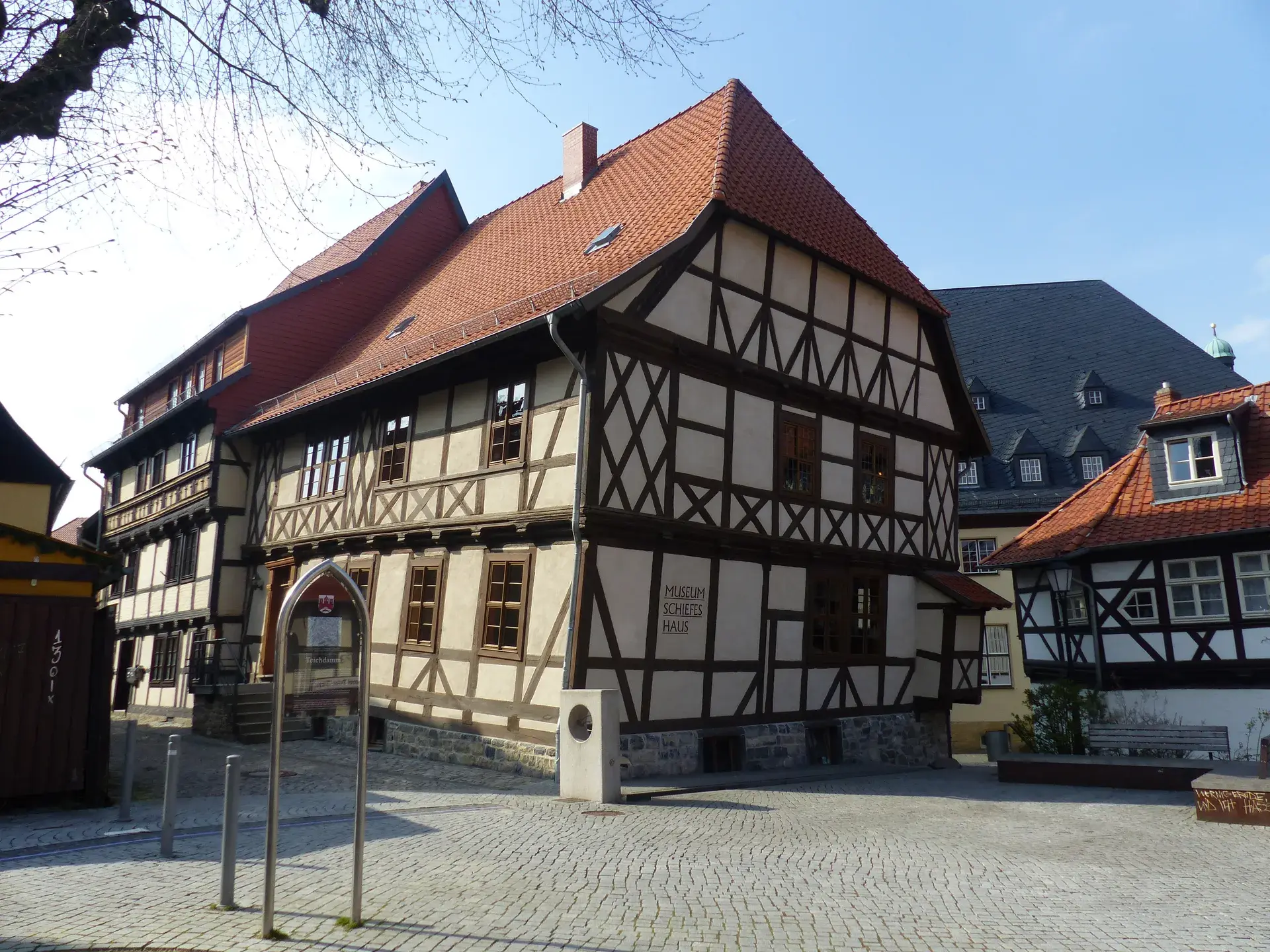
Marktplatz forms the civic and historic core of Wernigerode. Positioned along the pedestrian route connecting medieval commercial lanes such as Breite Straße with the path leading up to Wernigerode Castle, the square is recognized for its preserved half-timbered heritage and active public life. Dominating the southern perimeter at Marktplatz 1 stands the Rathaus, a municipal landmark known for its twin towers, elaborate timber framing, and long transition from a medieval entertainment venue to the city's seat of government.
From Aristocratic Playhouse to Civic Seat
The site of the town hall has supported civic gatherings for centuries, with records dating back to 1277 mentioning an earlier structure used as a playhouse and court venue. Around 1420, Count Heinrich of Wernigerode erected a new count's playhouse (Spelhus) over a vaulted wine cellar. In 1427, the count gifted the building to the local citizenry and municipal council to host theatrical stagings, festivals, Carnival performances, judicial proceedings, and trade.
For more than a century, the building operated primarily as a public tavern and entertainment barn rather than a civic administration center. That role changed dramatically after a catastrophic fire destroyed Wernigerode's original town hall in 1528. In need of a replacement, the municipal council integrated the surviving Spelhus with the adjoining 15th-century weighing house (Ratswaage) between 1539 and 1544, transforming the entertainment hall into the official Rathaus.
Timber-Framed Architecture and Facade Art
Much of the Rathaus's silhouette dates to a major late-Gothic reconstruction completed between 1494 and 1498 by master carpenters Andreas Sprengel and Thomas Hilleborch. The building combines a solid stone ground level with an overhanging timber-framed upper story. Flanking the facade are two slender, polygonal bay towers resting on freestanding posts, each capped with a steep, pointed spire. A central hipped roof stretches between the towers above an exterior double staircase that provides access to the main portal.
The facade features 54 expressive wooden figures carved into the beam heads and corbels (Knaggen). These carvings maintain a clear vertical division: the lower tier displays religious saints, whereas the corbels directly beneath the roofline depict secular revelers, including jesters, drunkards, minstrels, and Morris dancers flanking a May Queen. Above the portal, an inscription added during later restorations offers a pragmatic civic proverb: "Einer acht’s – der andere belacht’s – der dritte verlacht’s – was macht’s?" ("One respects it, another laughs at it, a third mocks it—what does it matter?"). Later restorations in the 1870s, 1906–1908, and 1936–1939 helped preserve and complement these historic details.
The Wohltäterbrunnen
Directly opposite the Rathaus in the center of Marktplatz stands the Wohltäterbrunnen (Benefactors' Fountain). Produced in 1848 at the nearby Ilsenburg iron foundry, this neo-Gothic cast-iron fountain displays heraldic emblems honoring benefactors who contributed to the city.
In 1991, the fountain received a bronze memorial plaque commemorating Colonel Gustav Petri. In April 1945, Petri refused military orders to defend Wernigerode against approaching Allied units, an act of defiance that spared the historic city center from artillery bombardment and wartime destruction.
Modern Administrative and Public Function
The Rathaus continues to serve as the administrative base of the municipality and houses the offices of the Lord Mayor. Following substantial renovation projects begun in 2022, the city council reconvened in the restored banquet hall (Festsaal) in autumn 2025. The building also remains an active wedding location, with civil ceremonies scheduled to resume in the Ratssaal and the Ratswaage in summer 2026, while the historic vaulted cellar continues to welcome patrons as the Ratskeller restaurant.
FAQ
What was the Wernigerode Rathaus used for before it became a town hall?
Before becoming the town hall following a city fire in 1528, the building was a count's playhouse (Spelhus) atop a wine cellar, built around 1420 and used for public entertainment, Carnival dances, court proceedings, and drinking.
What do the wooden carvings on the Rathaus facade depict?
The 54 carved wooden figures feature a division between the sacred and the profane: religious saints appear on the lower corbels, while jesters, drunkards, minstrels, and Morris dancers are carved beneath the upper roofline.
What is the historical significance of the Wohltäterbrunnen on Marktplatz?
Cast in 1848 at the Ilsenburg foundry, this neo-Gothic fountain honors civic benefactors and bears a 1991 plaque remembering Colonel Gustav Petri, who prevented the bombardment and destruction of the historic town center in April 1945.