Alte Mainbrücke Würzburg: History & Statues
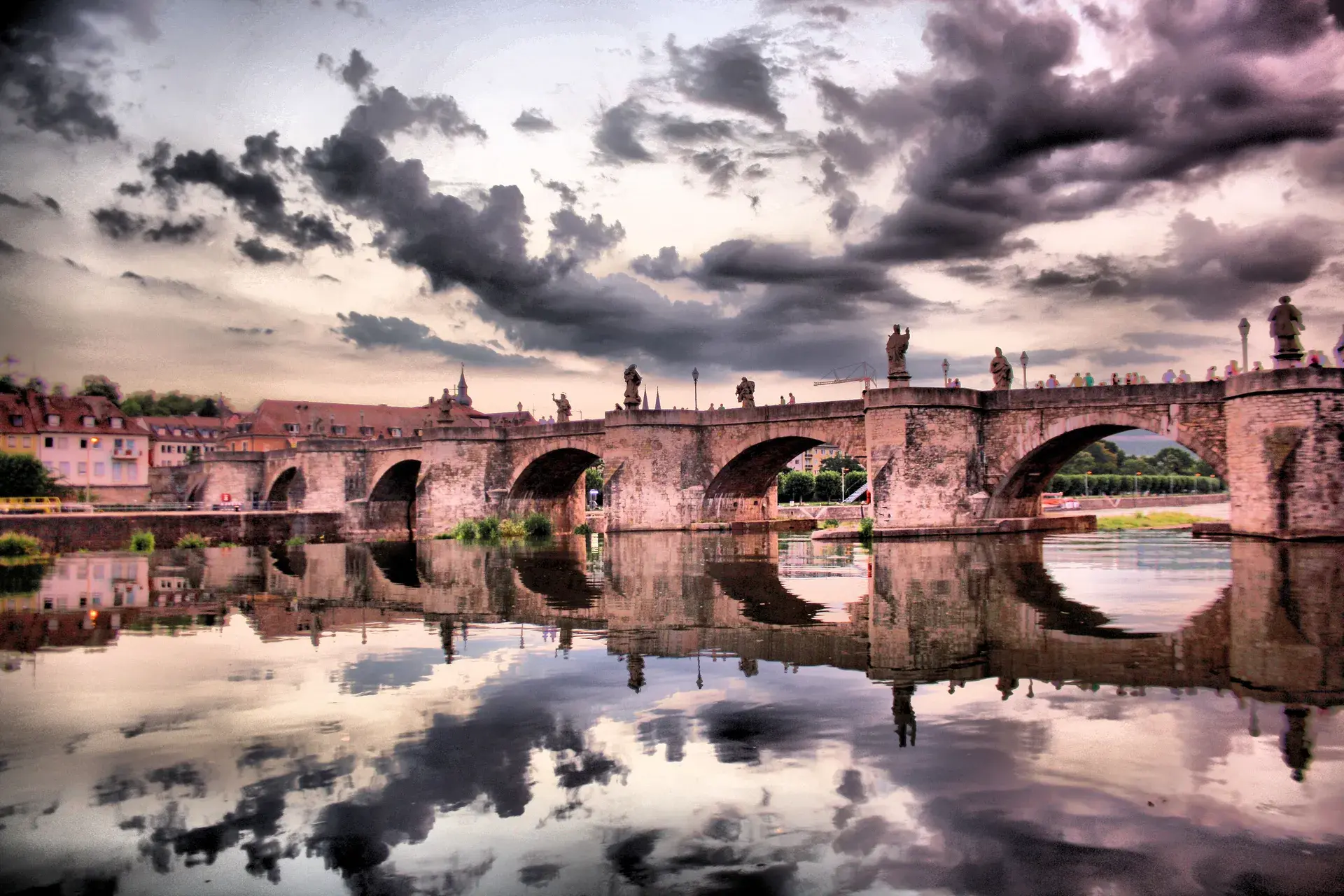
The Alte Mainbrücke, or Old Main Bridge, stands as a tangible link to Würzburg's princely past. Constructed between 1473 and 1543, this Gothic structure served as the crucial conduit between the city's old town and the Marienberg Fortress, the formidable seat of the region's Prince-Bishops. Today, it remains a bustling social hub that frames the narrative of Würzburg's development under powerful ecclesiastical rulers.
A Medieval Marvel
The current bridge replaced an earlier Romanesque stone crossing believed to have been built around 1133 AD. Construction on the Gothic replacement was spurred by Bishop Johann II von Brunn, with Prince-Bishop Rudolf II von Scherenberg formally initiating the work in 1476. While the stone pillars were finished by 1488, the completion of the arches extended until 1703. For centuries, the Alte Mainbrücke was Würzburg's sole river crossing, handling all pedestrian and horse-drawn carriage traffic over the Main River until a second bridge was built in 1886.
The Baroque Gallery of Power
Between 1720 and 1730, twelve monumental Baroque statues were added to the bridge's balustrades, each standing approximately 4.5 meters high. Commissioned by Prince-Bishops Christoph Franz von Hutten and Friedrich Carl von Schönborn, these statues illustrate the fusion of piety and political authority. They feature saints and historical figures central to the region's Christianization and governance, such as Saint Kilian, King Pepin the Short, and Emperor Charlemagne. The figures were originally designed in 1725 by court painter Clemens Lünenschloß and sculpted by Johann Sebastian Becker and Claude Curé. Curiously, Prince-Bishop Friedrich Carl von Schönborn specifically requested different saints for the north side of the bridge, altering the original design.
Wartime Survival and Pragmatism
The Alte Mainbrücke endured various wars, floods, and sieges throughout its history, but a major turning point occurred in 1945 during the final days of World War II. The retreating German army attempted to blow up the bridge, but faulty explosives resulted in only partial damage. Shortly after, American troops removed the original 18th-century statue of King Pepin the Short and deliberately threw it into the Main River to create space for an anti-aircraft gun. The bridge was subsequently restored, preserving its historical appearance despite this stark moment of wartime pragmatism.
Modern-Day Brückenschoppen
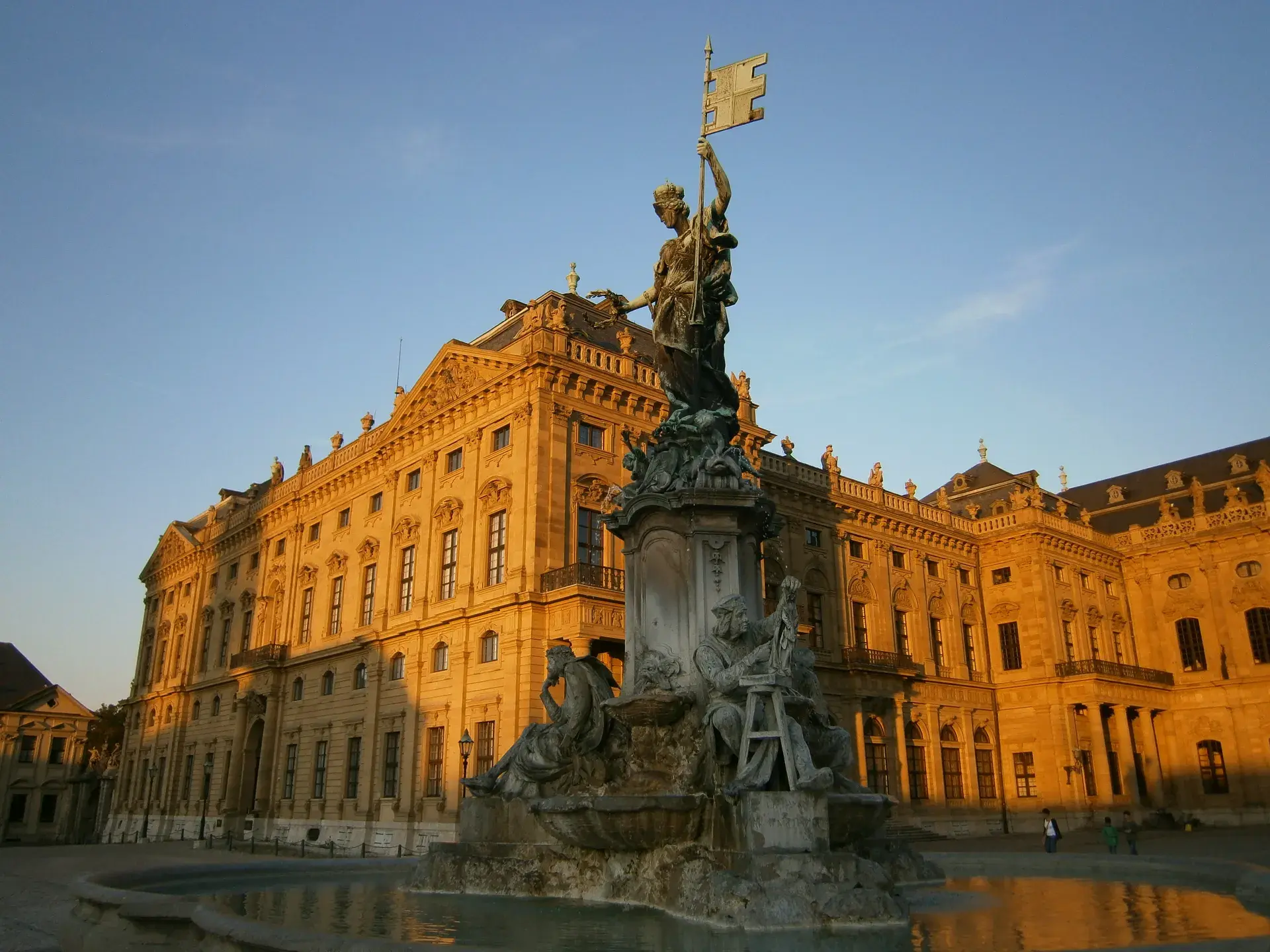
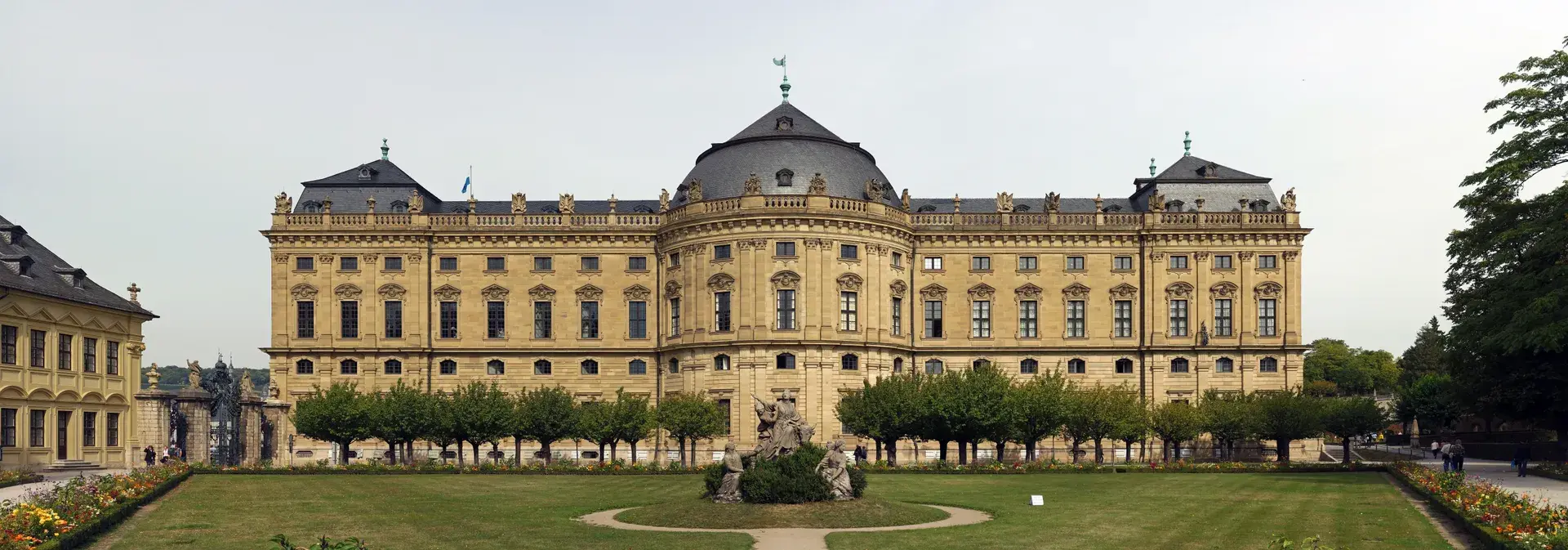
Now exclusively reserved for pedestrians and cyclists, the Alte Mainbrücke is a vibrant meeting point known for its sweeping views of the Würzburg skyline. The bridge looks out over the Marienberg Fortress, the Würzburg Residence, the Käppele pilgrimage church, and the Würzburg Cathedral. A popular local tradition known as "Brückenschoppen" takes place here, where crowds gather to enjoy glasses of Franconian wine purchased from vendors directly on the bridge. The structure also hosts city festivals and open-air concerts, including the annual procession on Saint Kilian's Day.
FAQ
When was the Alte Mainbrücke built?
The current Gothic bridge was constructed between 1473 and 1543, although the completion of its arches extended until 1703. It replaced an earlier Romanesque bridge from around 1133 AD.
Who are the statues on the Alte Mainbrücke?
The bridge features twelve Baroque statues added between 1720 and 1730. They depict key religious and historical figures central to Würzburg's history, including Saint Kilian, Emperor Charlemagne, and King Pepin the Short.
Was the Alte Mainbrücke damaged in World War II?
Yes, it suffered partial damage in 1945 when retreating German forces used faulty explosives in an attempt to destroy it. Additionally, American troops threw the original statue of King Pepin the Short into the river to make room for an anti-aircraft gun.
What is Brückenschoppen?
Brückenschoppen is a popular local tradition where people gather on the Alte Mainbrücke to socialize and drink local Franconian wine purchased from vendors located directly on the bridge.