Frankoniabrunnen: Würzburg's Monumental Franconia Fountain
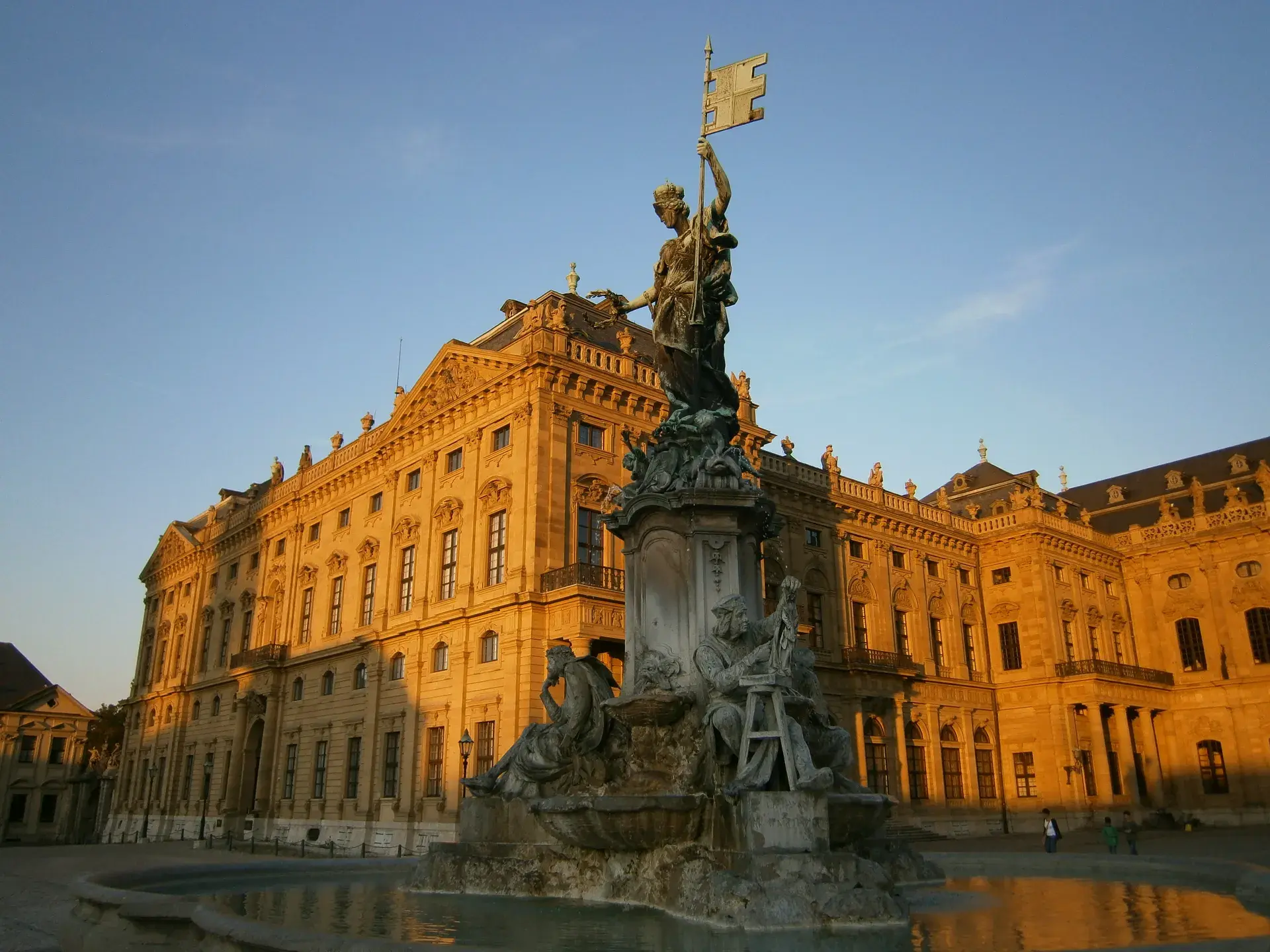
The Frankoniabrunnen, a grand monument prominently placed before the Würzburg Residence, owes its existence to Prince Regent Luitpold's surprising refusal of a direct personal tribute. Choosing instead to honor Franconia and its historical figures, this decision forever linked the region's rule with artistic genius. Today, the Neo-Baroque fountain visually marks Würzburg's historical evolution and remains a popular cultural landmark.
Origins and Royal Humility
In 1891, the city of Würzburg decided to commission a monument to celebrate the 70th birthday of Prince Regent Luitpold of Bavaria. Luitpold, who was born in the Würzburg Residence in 1821, governed Bavaria for decades due to the incapacitation of his relatives. Despite his position of power, he declined a prominent personal effigy. He requested that the fountain instead honor Franconian identity and regional heroes.
Consequently, his own likeness was relegated to a simple medallion on the base of the fountain. Funding for the project was gathered from private donations, the city of Würzburg, and the district of Lower Franconia and Aschaffenburg. The fountain was officially inaugurated on June 3, 1894, amid a festive public atmosphere. As a gesture of gratitude, Luitpold later endowed the Kiliansbrunnen at Würzburg's main train station in 1895.
Architectural Design and Monumental Scale
The Frankoniabrunnen stands at an impressive height of eight meters from its base to the apex of its central statue. Its expansive, trefoil-shaped basin measures 10 meters in diameter and is formed by three interconnecting arcs. The structure was built on the former site of a wrought-iron courtyard gate, which had been demolished in 1821 after Würzburg joined the Kingdom of Bavaria.
The monument's Neo-Baroque design was a collaborative effort by renowned artists and craftsmen. The architectural framework was conceived by Gabriel von Seidl, while the bronze sculptures were crafted by Ferdinand von Miller. Stone figure bases and shell-shaped basins were created by H. J. Metzger, and the masonry work, including the large fountain basin, was executed by Baumeister Hofmann.
Allegorical and Historical Figures
The central allegorical statue represents Frankonia, the embodiment of the Franconian region. She is depicted wearing armor and a ducal crown, holding the 'Rennfähnlein'—a tournament banner that is also featured in Würzburg's official city flag.
Surrounding Frankonia are three statues celebrating the region's rich artistic and literary heritage. Walther von der Vogelweide represents medieval literature; the celebrated minnesinger is believed to be buried in Würzburg. Matthias Grünewald, an influential painter hailing from Aschaffenburg, and Tilman Riemenschneider, a prolific sculptor responsible for numerous altars throughout Würzburg, complete the trio of cultural icons.
A UNESCO World Heritage Landmark
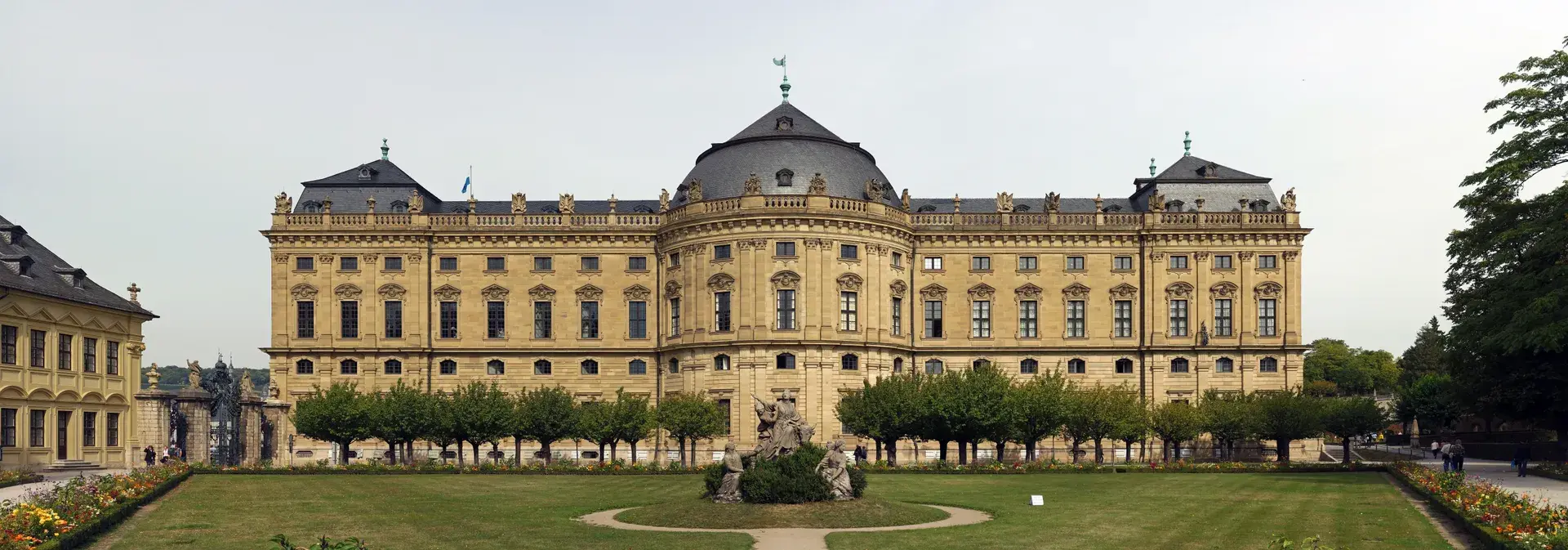
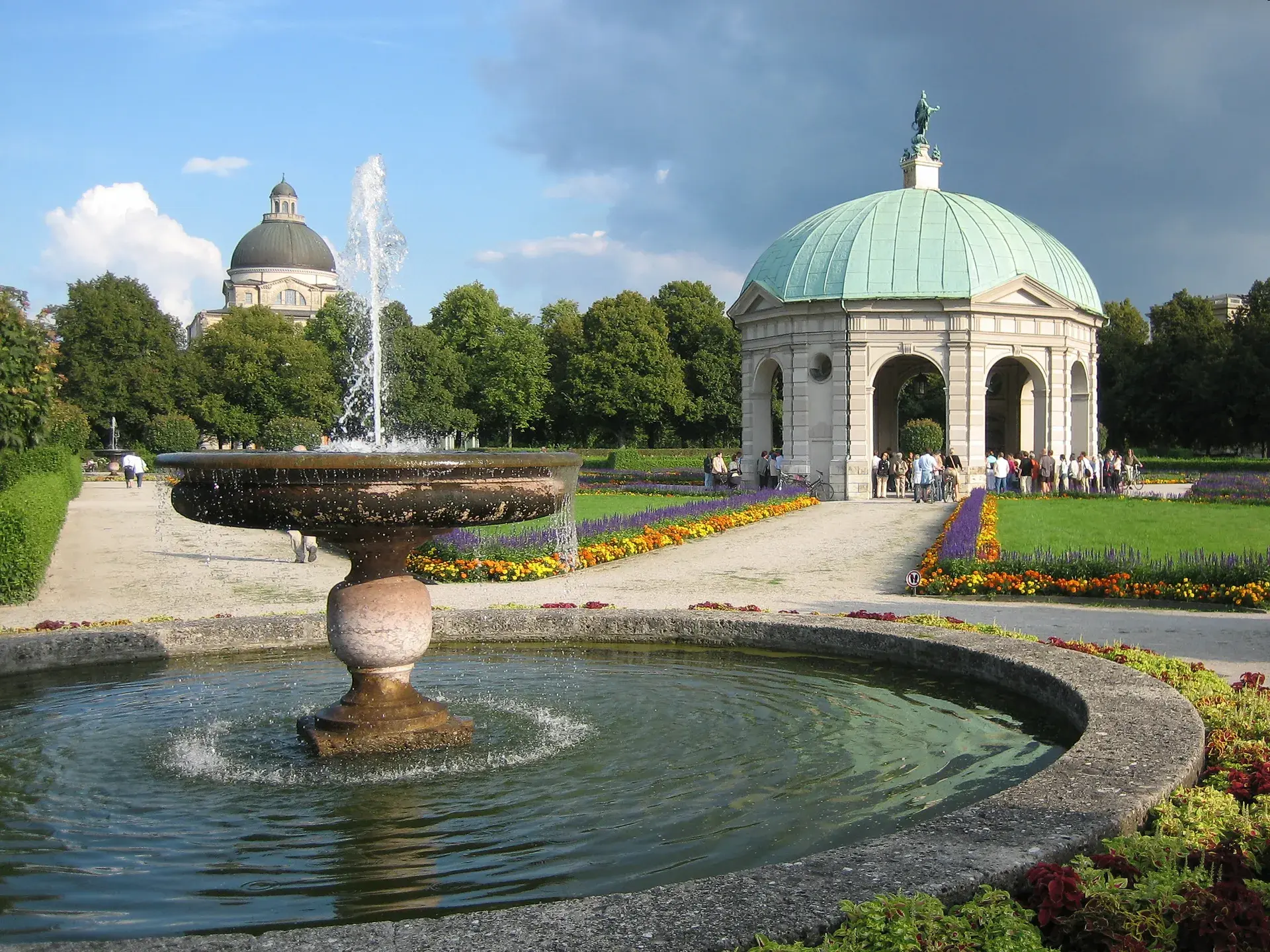
In 1981, the Frankoniabrunnen was designated as a UNESCO World Heritage Site, recognized alongside the Würzburg Residence, its forecourt, and the Court Garden. Between May 2019 and Spring 2021, the monument underwent an extensive restoration process, which took longer than initially planned due to severe calcification issues.
Today, the fountain is freely accessible to the public and remains open around the clock. It serves as a prominent meeting point for both locals and tourists exploring the historic grounds of the Würzburg Residence.
FAQ
Who designed the Frankoniabrunnen in Würzburg?
The Neo-Baroque architectural design was conceived by Gabriel von Seidl. The bronze sculptures were crafted by Ferdinand von Miller, while the stone figure bases were created by H. J. Metzger and the masonry work was executed by Baumeister Hofmann.
Why was the Frankoniabrunnen built?
The fountain was commissioned in 1891 to celebrate the 70th birthday of Prince Regent Luitpold of Bavaria. However, Luitpold declined a personal statue, requesting instead that the monument honor Franconia and its historical regional heroes.
Who are the statues on the Frankoniabrunnen?
The central statue is Frankonia, the allegorical representation of the Franconia region. She is surrounded by three influential cultural figures: medieval minnesinger Walther von der Vogelweide, painter Matthias Grünewald, and sculptor Tilman Riemenschneider.
Is the Frankoniabrunnen open to the public?
Yes, the fountain is freely accessible around the clock. Located in front of the Würzburg Residence, it serves as a popular 24/7 meeting point for locals and tourists.