The Würzburg Residence: Baroque Opulence & History
A Schönborn Family Obsession
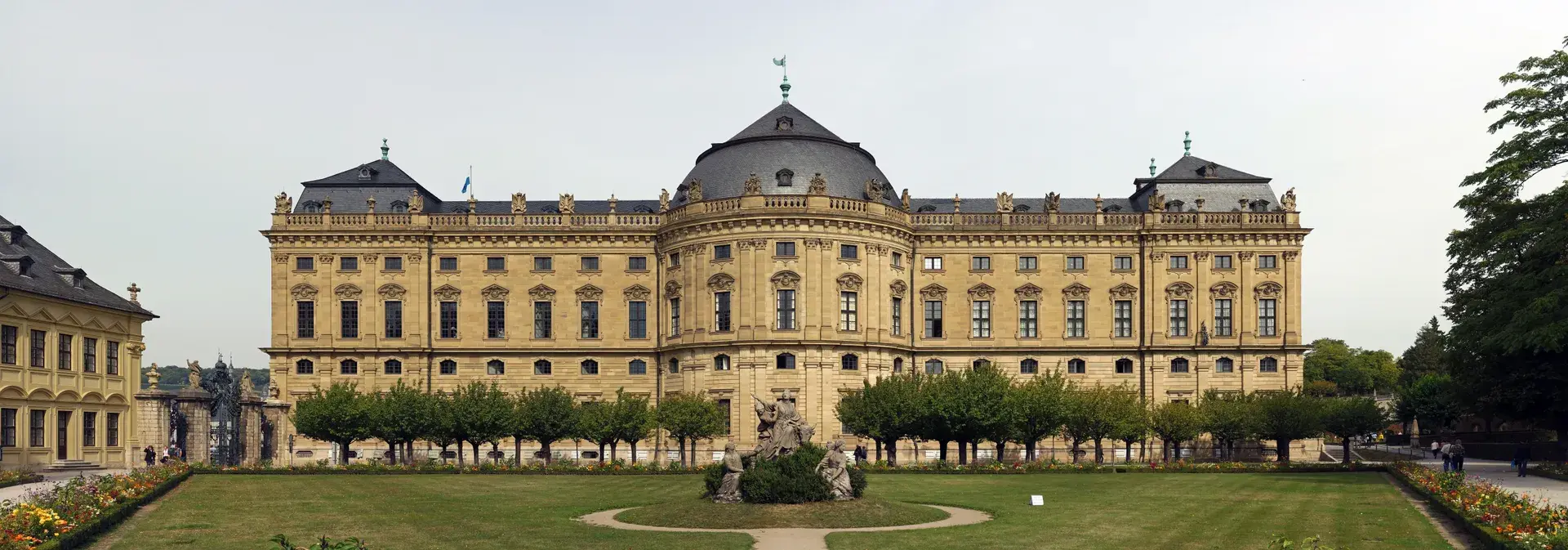
Before the early 18th century, the Prince-Bishops of Würzburg ruled from the medieval Marienberg Fortress high above the city. Seeking a palace to rival Versailles and Schönbrunn, Prince-Bishop Johann Philipp Franz von Schönborn initiated the construction of the Würzburg Residence in 1720. Funded by a massive fortune won in a court case, the project became a family obsession driven by a passionate zeal for construction known as the "Bauwurm" (building bug).
The palace was a monumental undertaking that cost approximately 1.5 million florins—a staggering sum during an era when a single florin equated to a week's wages for a day laborer. Following Johann Philipp Franz's death, his brother Friedrich Carl von Schönborn advanced the construction significantly, leveraging his influence as Imperial Vice-Chancellor in Vienna to attract top European talent.
Architectural Marvels and Artistic Masterpieces
The principal architect, Balthasar Neumann, was initially young and unknown but quickly proved his genius. He designed the palace's famed grand staircase featuring an unsupported vaulted ceiling. Neumann collaborated with renowned European architects like Johann Lukas von Hildebrandt, Maximilian von Welsch, Robert de Cotte, and Germain Boffrand. The resulting synthesis of French château, Viennese Baroque, and Northern Italian styles is often referred to as Würzburg Rococo.
The interiors are equally breathtaking, adorned with opulent stucco work by Antonio Giuseppe Bossi. Above Neumann's grand staircase, Venetian painter Giovanni Battista Tiepolo created the "Allegory of the Planets and Continents." This masterpiece remains recognized as the world's largest contiguous ceiling fresco.
Napoleon's Largest Parsonage
Following its secularization in 1802 and 1803, the Residence witnessed significant historical events. Napoleon Bonaparte stayed at the palace three times between 1806 and 1813. He reportedly dubbed the sprawling estate the "largest parsonage in Europe." Within its walls on October 2, 1806, Napoleon signed the declaration of war against Prussia.
Destruction and Miraculous Survival
The Würzburg Residence faced its darkest hour on March 16, 1945, during World War II. A devastating British air raid burned out the palace almost completely and destroyed 90 percent of Würzburg's old town. Miraculously, the central block—including the Vestibule, Garden Hall, Staircase, White Hall, and Imperial Hall—survived the inferno. Neumann's robust stone vaults withstood the collapse of the burning attic, saving the palace's core and Tiepolo's irreplaceable frescoes.
A meticulous, decades-long reconstruction followed the war, concluding around 1987. Today, the pristine interiors show almost no signs of their near-total destruction.
The Residence Today
In 1981, the Würzburg Residence was inscribed as a UNESCO World Heritage Site. Today, it functions primarily as a museum managed by the Bavarian Administration of State-Owned Palaces, Gardens and Lakes. Visitors can explore approximately 42 of its 340 rooms, which house parts of the University of Würzburg, the Martin-von-Wagner-Museum, and the Staatsgalerie Würzburg's collection of Venetian art.
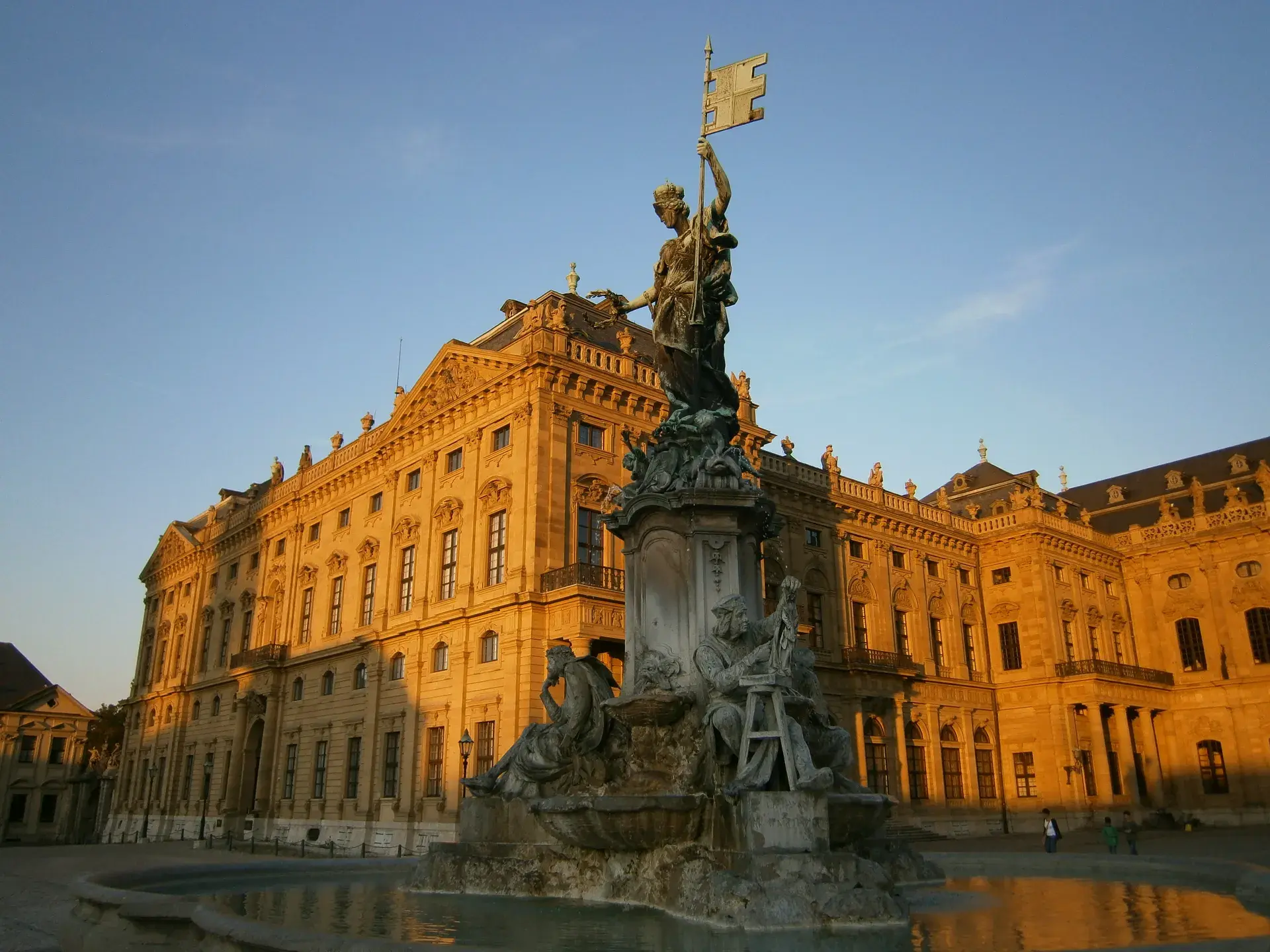
The grounds also feature the beautifully restored Court Gardens and the Residence Square. Here stands the Franconia Fountain, unveiled in 1894 to honor Prince Regent Luitpold, who was born in the Residence in 1821.
FAQ
Why is the Würzburg Residence a UNESCO World Heritage Site?
Inscribed in 1981, it is recognized as a "synthesis of the arts" and a unique artistic realization of the Baroque era, blending French, Viennese, and Northern Italian architectural influences.
Did the Würzburg Residence survive World War II?
The palace was severely damaged in a 1945 air raid that destroyed 90 percent of the old town. However, its central block, including the grand staircase, miraculously survived due to architect Balthasar Neumann's robust stone vaults.
Who painted the ceiling fresco in the Würzburg Residence?
Venetian painter Giovanni Battista Tiepolo painted the "Allegory of the Planets and Continents" above the grand staircase, which is the world's largest contiguous ceiling fresco.
How much did the Würzburg Residence cost to build?
The total construction cost amounted to approximately 1.5 million florins. At the time, a single florin represented a week's wages for a day laborer.