Falkenhaus: Würzburg's Reborn Rococo Masterpiece
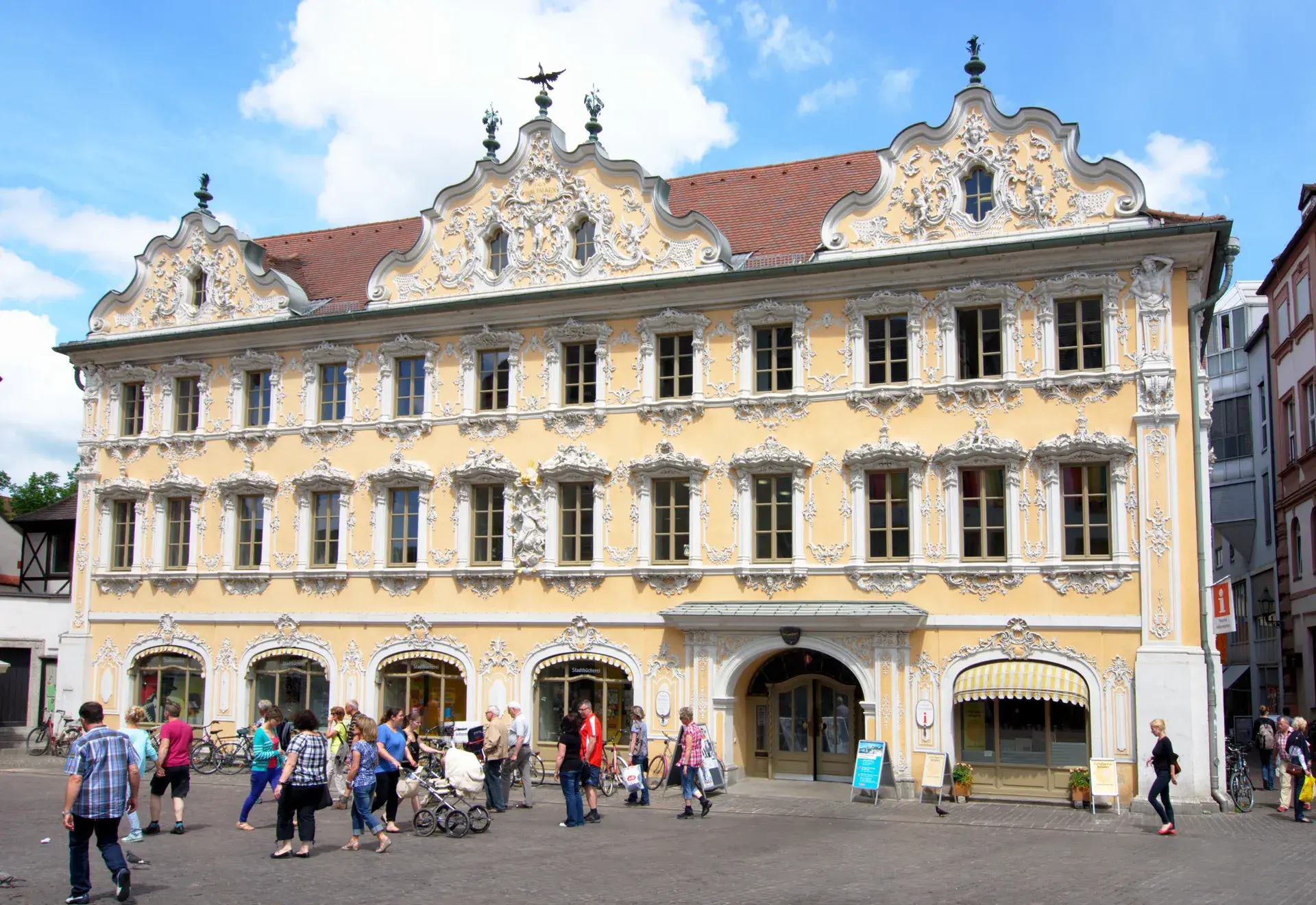
The extravagant Rococo facade of this former inn is a glittering testament to the prosperity and artistic flourishing Würzburg enjoyed under the lavish spending of the Prince-Bishops.
From Priest's Residence to Popular Inn
The site of the Falkenhaus originally served as a residence for the local cathedral priest between 1338 and 1406. By 1629, the property had evolved into an inn known as the "Hof zur Burgpfarre." In 1735, innkeeper Franz Thomas Meißner acquired the building and renamed it "Zum Falken," laying the groundwork for its future prominence in Würzburg's commercial and social scene.
A Masterpiece of Rococo Artistry
The building's defining feature is its renowned Rococo facade, commissioned in 1751 by Meißner's widow, Barbara Meißner. Wandering stucco artists from Upper Bavaria crafted the elaborate exterior, which features three gables and intricate stucco decorations. This architectural upgrade transformed the Falkenhaus into a stunning visual centerpiece. Throughout the 19th century, the three-story building functioned as Würzburg's only public venue for concerts and dances.
Destruction and Meticulous Reconstruction
The city of Würzburg purchased the Falkenhaus in 1939 for 145,000 Reichsmark. Tragically, the building was entirely consumed by fire and heavily damaged during a devastating World War II bombing raid on March 16, 1945. Parts of its iconic facade collapsed completely.
The structure's meticulous reconstruction took place in the early 1950s. Supported by Würzburg government architect Rudolf Schlick, the municipal building authority recreated the Rococo exterior exclusively from old photographs, as no original architectural plans had survived. Interestingly, later discussions nearly saw the historic facade reduced to a mere "decorative screen" for a modern department store, though it ultimately remained a fully restored monument.
The Falkenhaus Today
Today, the Falkenhaus operates as a vibrant civic hub in the heart of Würzburg. Since 1952, its modernized interior has housed the Tourist Information center, a cultural ticket service, and the central City Library. Located on the bustling Marktplatz right next to the Marienkapelle, it remains an integral part of daily life. The building also features a tranquil inner courtyard complete with fountains and seating, offering a quiet space amid the city's historical core.
FAQ
When was the Falkenhaus facade built?
The iconic Rococo facade was commissioned in 1751 by Barbara Meißner and crafted by wandering Upper Bavarian stucco artists.
Was the Falkenhaus destroyed during World War II?
Yes, the Falkenhaus was completely destroyed by fire during a bombing raid on March 16, 1945. Its exterior was meticulously reconstructed in the early 1950s using only old photographs.
What is the Falkenhaus used for today?
Since 1952, the modernized interior of the Falkenhaus has housed the Würzburg Tourist Information center, a cultural ticket service, and the central City Library.