Würzburg Cathedral: History & Guide
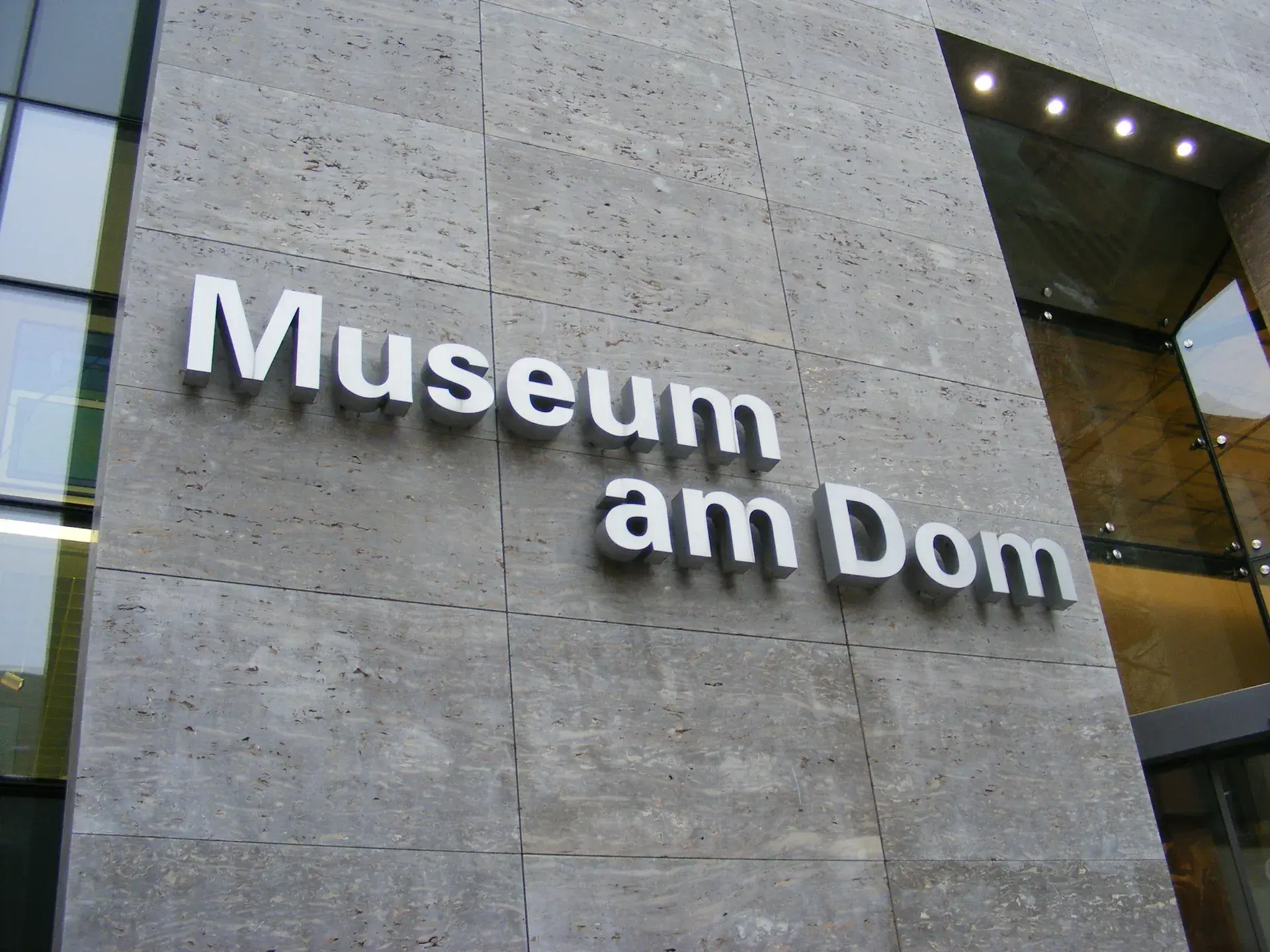
The Würzburg Cathedral's post-World War II reconstruction deliberately removed Baroque elements from its central nave to emphasize a Romanesque aesthetic, creating a controversial blend with the surviving opulent Baroque stucco in other parts of the interior. As the main episcopal church, this cathedral was the spiritual heart of the Prince-Bishopric for centuries and holds the tombs of many of its powerful leaders.\n\n## A Layered Architectural History\n\nConstruction of the present cathedral began in 1040 under Bishop Bruno and was completed in 1075 by his successor, Bishop Adalbero. Finally consecrated in 1187, it stretches 103 meters in length, making it the fourth-largest Romanesque church building in Germany. Over the centuries, the structure evolved to incorporate Gothic additions and extensive Baroque renovations. Notable expansions include intricate stucco work by Pietro Magno between 1701 and 1704, and the lavish Schönborn Chapel, designed by master Baroque architect Balthasar Neumann between 1721 and 1734.\n\n## Power of the Prince-Bishops\n\nThe diocese of Würzburg was established in 743 by Saint Boniface. By 1168, the bishops gained secular ruling power in Franconia, transforming them into powerful Prince-Bishops. Würzburg Cathedral served as their traditional burial place for hundreds of years. Renowned German sculptor Tilman Riemenschneider created monumental effigies for Prince-Bishops Rudolf II von Scherenberg and Lorenz von Bibra within the church. For centuries, a peculiar burial tradition dictated that some Prince-Bishops had their hearts buried at Ebrach Abbey, their entrails at the Marienkirche, and their bodies in the cathedral. This practice was eventually broken by Prince-Bishop Julius Echter von Mespelbrunn, a zealous Counter-Reformer.\n\n## Destruction and Re-Romanisation\n\nOn March 16, 1945, Würzburg Cathedral was severely damaged by bombings, leading to the collapse of large portions of the building in the winter of 1946. During the reconstruction efforts, which concluded in 1967, architects made the controversial decision to partially re-Romanise the central nave. By stripping away some of the later Baroque elements, they created a stark architectural contrast with the surviving opulent Baroque features preserved in other sections of the cathedral.\n\n## Relics, Treasures, and Traditions\n\nThe cathedral holds deep religious significance, housing the skulls of Saint Kilian and his companions within the High Altar. The western section, dating back to the 12th century, contains an old well, the tomb of Conrad of Querfurt, and a mysterious bearded face believed to be Carolingian or Merovingian in origin. Another enduring fixture is the Lobdeburg Bell. Cast in 1257, it is one of Germany's oldest bells and tolls every Friday at 3 PM to commemorate the crucifixion of Jesus Christ. Today, the cathedral remains an active place of worship and a cultural center, adjoined by the Museum am Dom, which displays over 770 historical artifacts.
FAQ
Is there an admission fee for Würzburg Cathedral?
Admission to the main interior of Würzburg Cathedral is generally free, though adjacent sites like the Museum am Dom may require a ticket.
Who is buried at Würzburg Cathedral?
The cathedral is the traditional resting place of the Würzburg Prince-Bishops, featuring monumental tombs carved by famous sculptor Tilman Riemenschneider.
What happened to Würzburg Cathedral in WWII?
The cathedral was heavily damaged by bombings in 1945. It was rebuilt by 1967, during which architects controversially removed some Baroque elements to restore a Romanesque aesthetic.