Hofgarten East Gate: Würzburg's Baroque Masterpiece
Peer through these gates for a glimpse of the Prince-Bishops' private world, a meticulously designed Baroque garden meant for leisurely strolls and demonstrating mastery over nature itself. Visitors would never guess that this lavish Baroque garden, a symbol of princely power, was open to the public but strictly off-limits to soldiers and students.
A Grand Baroque Design
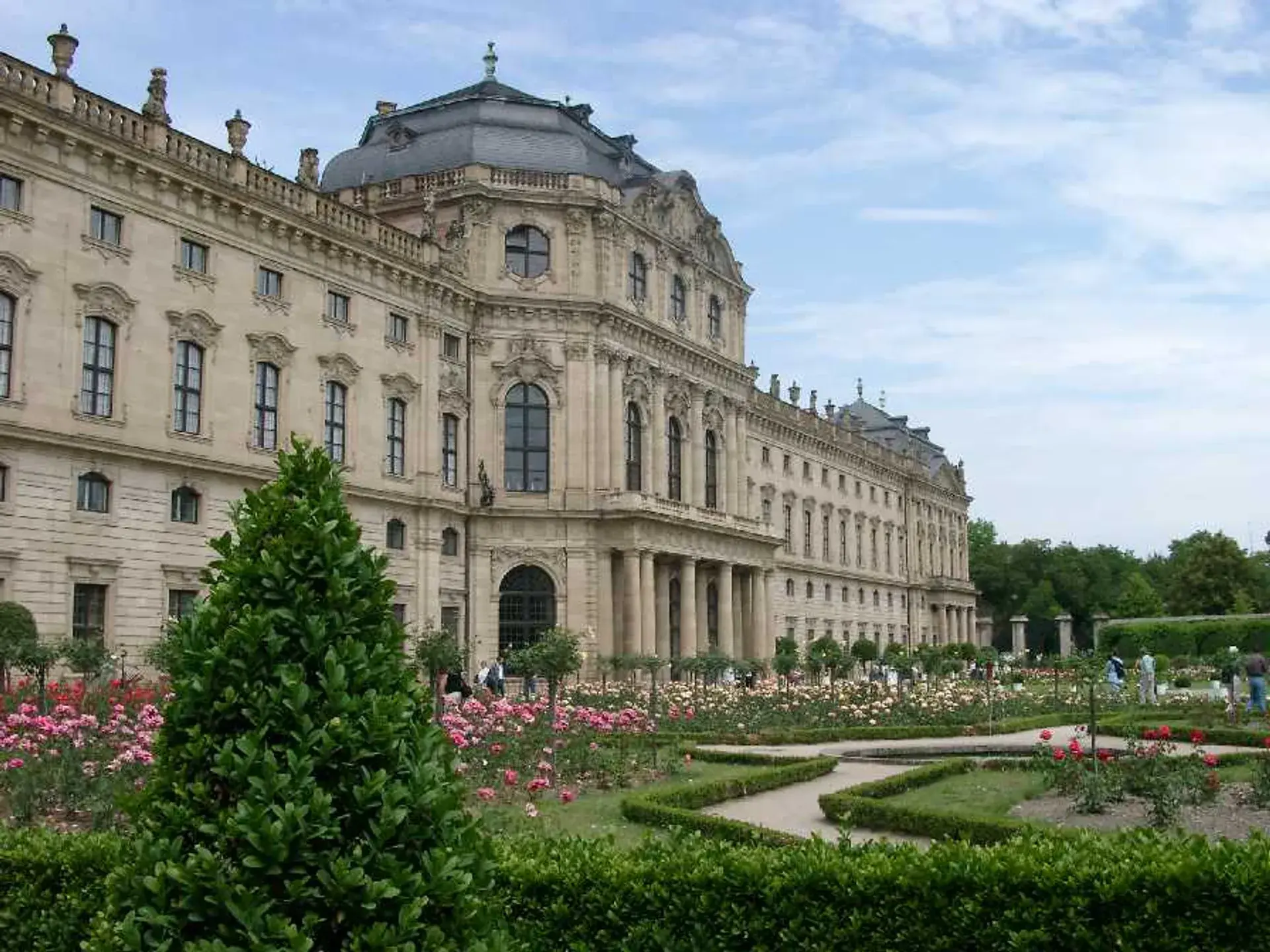
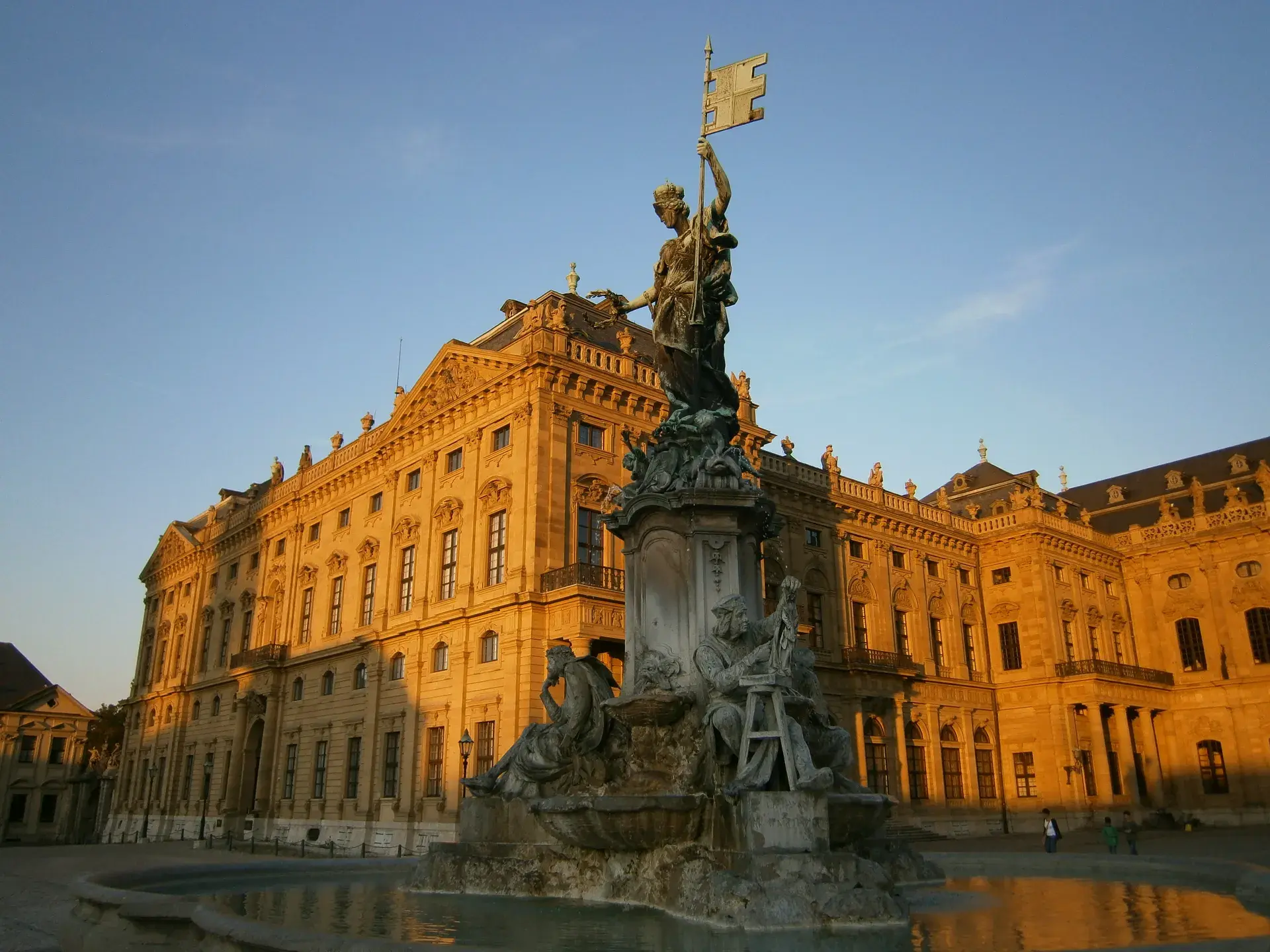
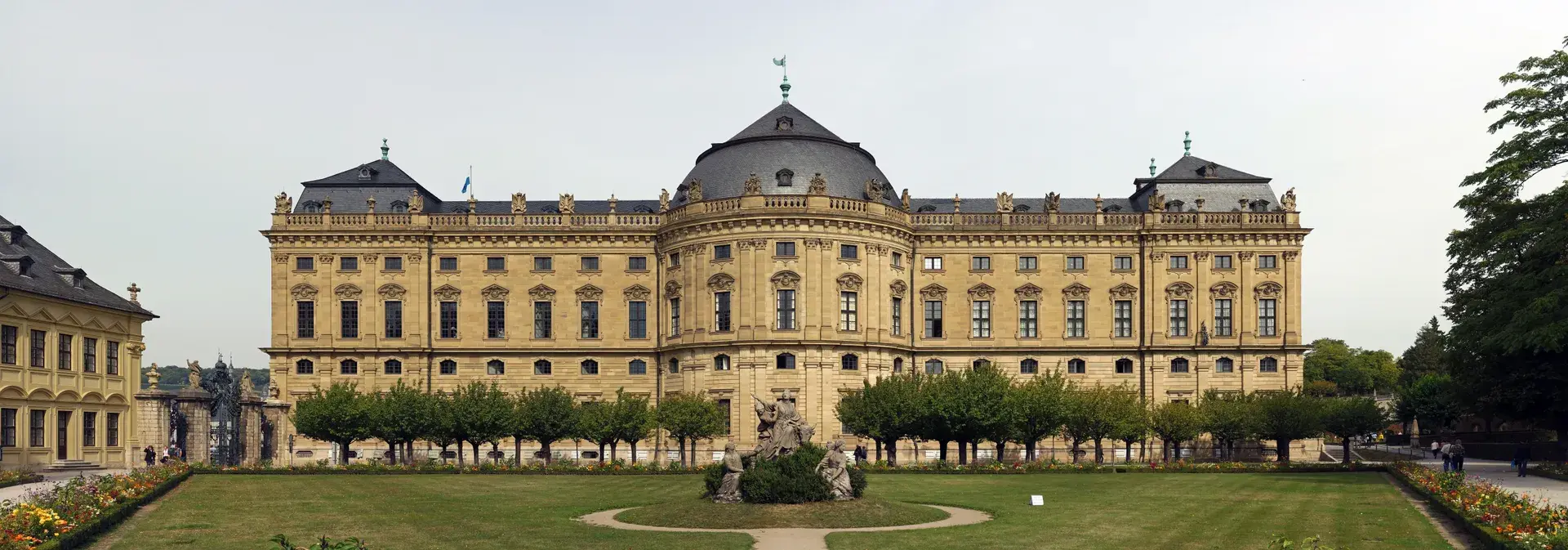
The Hofgarten, or Court Garden, was developed as a complementary extension to the Würzburg Residence, a monumental palace commissioned in 1720 by Prince-Bishop Johann Philipp Franz von Schönborn. While the palace architecture progressed rapidly, the definitive Baroque garden layout was not fully realized until Johann Prokop Mayer became court gardener in 1770. Mayer laid out the East Garden in precise geometric forms characteristic of the era. The challenging terrain, which rose steeply toward the city's Baroque bastions, was ingeniously incorporated into the landscape by principal architect Balthasar Neumann. Curiously, the original plans for the East Garden featured a grand cascade leading up to the bastion, but this elaborate water feature was never constructed.
The King of Blacksmiths
Access to the eastern side of the Hofgarten is granted through the magnificent 'Hofgartentor am Gesandtenbau'. This elaborate wrought-iron gate was crafted between 1748 and 1774 by Georg and Anton Oegg. Johann Georg Oegg, known colloquially during the Rococo era as the "King of Blacksmiths" (König der Schmiede), produced exquisite metalwork that served as a fittingly grand threshold into the Prince-Bishops' domain.
From Private Retreat to Public Oasis
In a highly progressive move for 1776, Prince-Bishop Adam Friedrich von Seinsheim opened the approximately nine-hectare Hofgarten to the public. However, the fear of unruly behavior meant that soldiers and university students were explicitly forbidden from entering the grounds. In the 19th century, parts of the garden were adapted into an English landscape style before being eventually restored to their original Baroque geometry. Following severe damage during the March 1945 bombing raids of World War II, the gardens underwent extensive reconstruction.
A Modern Heritage Site
Today, the Hofgarten is a beloved green oasis for Würzburg residents and international visitors alike. It forms a crucial part of the Würzburg Residence complex, which has held UNESCO World Heritage status since 1981 as an extraordinary Baroque total work of art. The garden paths are dog-friendly and accessible for strollers. Visitors can explore the reconstructed kitchen garden below the Orangery, which still cultivates traditional fruit and berry varieties, all while enjoying the majestic backdrop of the historic palace.
FAQ
Who designed the wrought-iron Hofgarten East Gate?
The elaborate gates were crafted between 1748 and 1774 by Georg and Anton Oegg. Johann Georg Oegg was famously known during the Rococo era as the 'King of Blacksmiths'.
When did the Hofgarten open to the public?
Prince-Bishop Adam Friedrich von Seinsheim opened the garden to the public in 1776. However, soldiers and students were initially banned from entering due to concerns they would break the garden's rules.
Is the Hofgarten free to visit?
Yes, admission to the Hofgarten is free. It is a public park that is dog-friendly and features stroller-accessible paths.