Marienkapelle: Würzburg's Grand Gothic Chapel
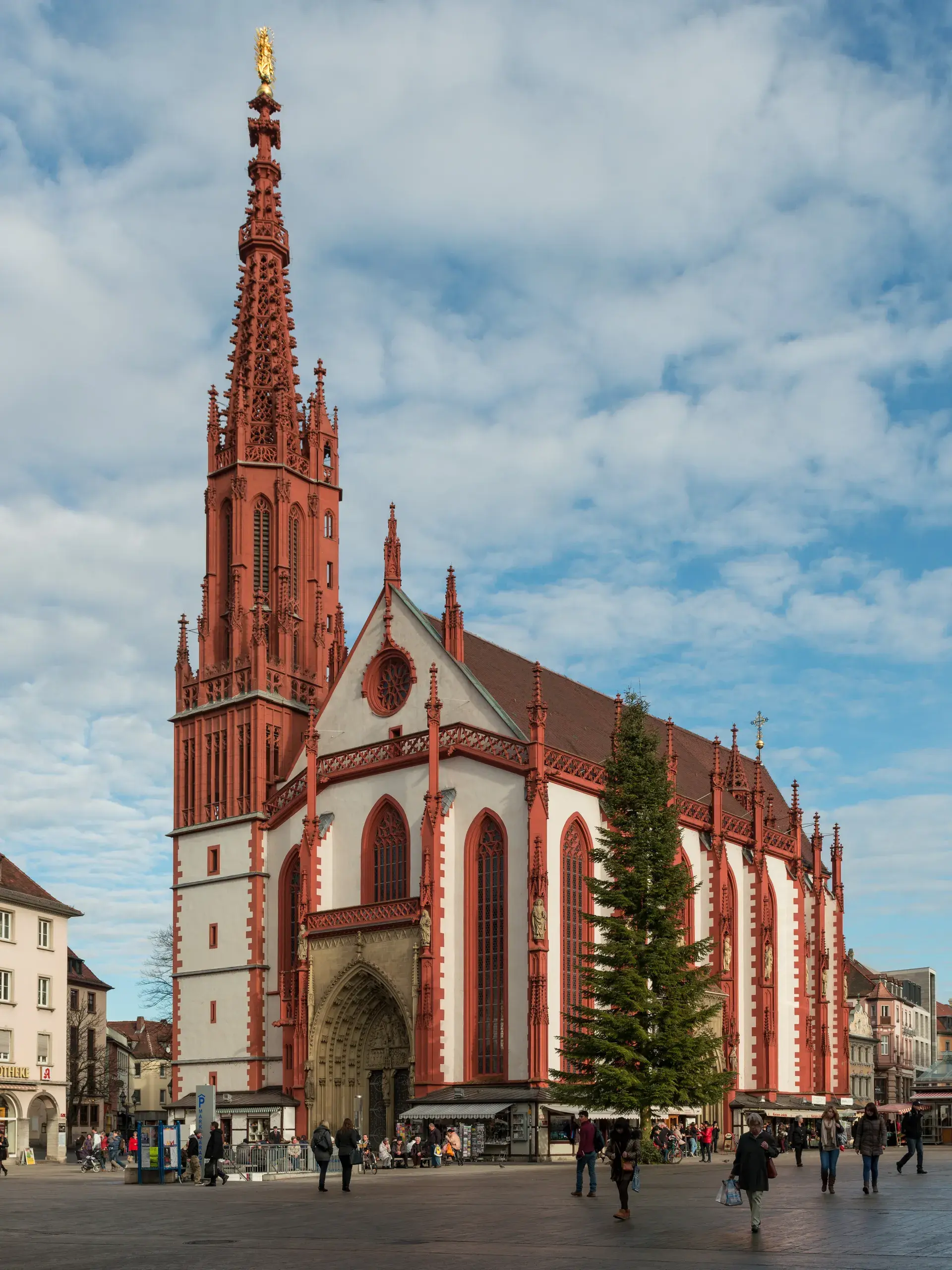
Located at the Unterer Markt in Würzburg, Germany, the Marienkapelle (Chapel of St. Mary) is an imposing Gothic structure with a complex history. Funded by the citizens, this grand edifice stands in deliberate contrast to the bishop's own places of worship. Despite its size and grandeur, the Marienkapelle holds the legal status of a chapel rather than a parish church. The Würzburg Prince-Bishops intentionally withheld parish rights from the building, a clear symbol of the persistent tension between the aspiring citizenry and the entrenched ecclesiastical authorities.
Origins and Civic Independence
The origins of the Marienkapelle are tied to a dark chapter in Würzburg's past. The chapel stands on the site of a former synagogue that was destroyed during a pogrom on April 21, 1349, amidst the Black Death epidemic. Following the tragedy, an initial wooden chapel was erected. In 1377, under Bishop Gerhard von Schwarzburg, the transition to a permanent stone structure began. Notably, the construction was initiated and funded by local merchants and citizens rather than the ecclesiastical hierarchy or Rome. This effort functioned as a deliberate act of civic engagement and a subtle statement of rebellion against the princely rule shaping the rest of the city. By the mid-16th century, the city council adopted the Marienkapelle for formal occasions, favoring it over the town hall's own chapel.
Architectural Highlights and Artistry
The Marienkapelle features significant artistic and architectural details. The western portal, known as the Goldene Pforte, was crafted after 1430. Its tympanum depicts the Last Judgment and controversially includes finely robed clergy and their elite supporters among those condemned to hell, serving as a subtle critique by the burghers who commissioned the artwork.
The chapel is also deeply associated with the celebrated Late Gothic sculptor Tilman Riemenschneider. In 1493, Riemenschneider created the iconic 'Adam and Eve' figures for the southern portal, as well as the tomb of Konrad von Schaumburg. Today, copies of the 'Adam and Eve' sculptures adorn the exterior, while the originals reside in the Mainfränkisches Museum. Additionally, the esteemed 18th-century Baroque architect Balthasar Neumann is buried within the chapel in what was originally an unmarked grave from 1753; a bronze memorial plaque was added in the 1950s to commemorate him.
The Tower and Surviving Traditions
Construction of the chapel was largely completed, along with its tower, by 1480. Soaring 72 meters above the market square, the tower is crowned by a colossal gilded double Madonna statue from the early 18th century. Weighing approximately 1,200 kilograms and standing 5.75 meters tall, the massive sculpture uniquely functions as a weather vane.
Like much of Würzburg, the Marienkapelle sustained heavy damage during a bombing raid in March 1945, which destroyed its wooden interior by fire. The structure underwent significant rebuilding from 1948 to 1961 and was re-consecrated in 1962, followed by a major renovation between 1996 and 2003. Today, it operates as an active Roman Catholic church administered by the united parishes of the Würzburg Cathedral and Kollegiatstift Neumünster. Uniquely, the exterior still houses 'Kramläden' or 'swallow shops' built directly into the chapel's walls. This tradition dates back to 1437 to provide income for the building and continues today, hosting local businesses, including the smallest café in Würzburg.
FAQ
Why is the Marienkapelle considered a chapel and not a church?
Despite its imposing size, the Marienkapelle legally remains a chapel because the Würzburg Prince-Bishops intentionally withheld parish rights from the structure. This was due to it being built and funded independently by the city's citizens.
Who is buried inside the Marienkapelle?
The renowned 18th-century Baroque architect Balthasar Neumann is buried within the Marienkapelle. He was laid to rest in an unmarked grave in 1753, but a bronze memorial plaque was added in the 1950s.
What is the large statue on top of the Marienkapelle tower?
The tower is crowned by a gilded double Madonna statue from the early 18th century. It stands 5.75 meters tall, weighs approximately 1,200 kilograms, and also functions as a working weather vane.
What are the 'swallow shops' at the Marienkapelle?
The 'Kramläden' or 'swallow shops' are small storefronts built directly into the exterior walls of the chapel. This architectural tradition dates back to 1437 to generate income for the chapel, and they still operate today.