Würzburg Cathedral: History & Guide to Dom St. Kilian
This is the spiritual throne of the Prince-Bishops, the ancient cathedral from which their divine right to rule the city and its surroundings emanated. Officially known as Dom St. Kilian, Würzburg Cathedral is a Roman Catholic church dedicated to the patron saint of Franconia. As the fourth-largest Romanesque church in Germany, measuring 103 meters in length, the building stands as a masterpiece of the Salian architectural period.
A Legacy of Prince-Bishops and Martyrs
The history of the cathedral is intertwined with Saint Kilian, an Irish missionary martyred around 686-689 by Geilana, the wife of Duke Gozbert, after Kilian declared their marriage invalid. Construction on the current structure began in 1040 under Bishop Bruno and was completed in 1075 by his successor, Bishop Adalbero. For centuries following the establishment of the Prince-Bishopric in 1168, the cathedral served as the ecclesiastical seat and burial place for Würzburg's powerful clerical rulers.
Renowned sculptor Tilman Riemenschneider created monumental effigies for two such rulers. Prince-Bishop Rudolf II von Scherenberg, who outwitted political opponents to live until 95, is memorialized alongside his coat of arms featuring scissors—a pun on his name. Similarly, Prince-Bishop Lorenz von Bibra is depicted with a beaver crest, reflecting his original surname, 'von Bieber.' The cathedral also features the Schönborn Chapel, designed by master builder Balthasar Neumann between 1721 and 1734, which houses the tombs of the influential Schönborn family of Prince-Bishops.
Destruction and Complex Reconstruction
The cathedral suffered extensive damage during the March 16, 1945 bombing of Würzburg, leading to the collapse of its nave in the winter of 1946. The subsequent reconstruction, completed in 1967, involved deliberate architectural choices. Most notably, the Neo-Romanesque west façade, complete with a rose window and tripartite gallery, was intentionally covered with a plain pumice stone wall. Architects sought to enforce a re-Romanisation of the building, a subjective historical revision that remained until renovations in 2006 finally uncovered the pre-war features.
Treasures, Crypts, and Traditions
Beneath the main altar, a double crypt preserves the skulls of Saint Kilian and his companions, Colman and Totnan. These relics are annually paraded through the streets on St. Kilian's Day, July 9. The western part of this crypt holds an old well and a bearded face sculpture, widely considered the oldest piece of art in the cathedral with potential Carolingian or Merovingian origins.
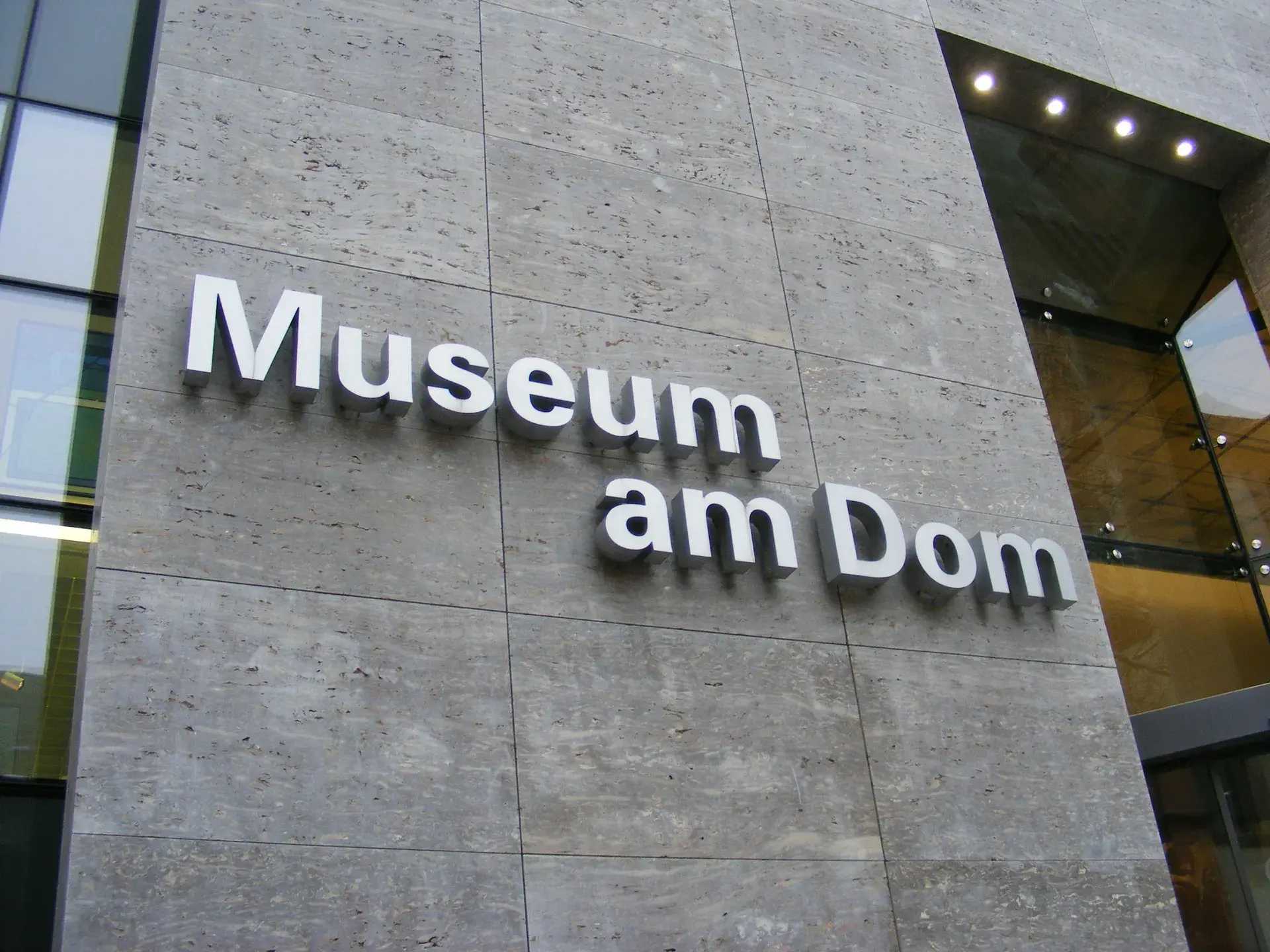
Above ground, the cathedral maintains a vibrant cultural and spiritual life. Free to enter, it hosts Sunday mass at 10:30 AM and maintains Cathedral Music choirs involving over 500 participants. A solemn sensory tradition continues every Friday at 3 PM, when the Lobdeburg Bell—cast in 1257 and one of Germany's oldest—tolls to remember the sacrifice of Jesus Christ. Visitors can further explore the site's rich history in the Cathedral Treasury and the adjacent Museum am Dom, which together display nearly a thousand artifacts spanning a millennium.
FAQ
When was Würzburg Cathedral built?
Construction of the current cathedral began in 1040 under Bishop Bruno and was completed in 1075 by Bishop Adalbero, replacing an earlier 8th-century structure.
What is the Lobdeburg Bell?
Cast in 1257, the Lobdeburg Bell is one of Germany's oldest bells. It tolls every Friday at 3 PM at Würzburg Cathedral in remembrance of Jesus Christ's sacrifice.
Can visitors see the relics of Saint Kilian?
Yes, the skulls of Saint Kilian and his companions are preserved in a crypt beneath the main altar. They are also paraded through the streets annually on July 9.
What is the oldest piece of art in the cathedral?
The oldest piece of art is a bearded face sculpture located in the western part of the double crypt, believed to have Carolingian or even Merovingian origins.