Mandraki Harbour, Rhodes: History & The Colossus Myth
The harbour of Rhodes is a gateway to a layered history, where ancient legends, medieval fortifications, and modern leisure converge. Central to this story is Mandraki Port, a site that has been a focal point for trade, defense, and culture for millennia. While many imagine the legendary Colossus of Rhodes straddling the port's entrance, historical evidence points to a different reality for this ancient wonder.
Ancient Origins and the Colossus
Mandraki Port’s history stretches back to ancient Hellenistic times when it served as a vital military and commercial harbor. Its most famous association is with the Colossus of Rhodes, one of the Seven Wonders of the Ancient World. This monumental bronze statue of the sun god Helios was erected around 280 BCE to commemorate the island's victory over a siege in 305 BCE. Standing approximately 33 meters (108 feet) high, it was a powerful symbol of Rhodian strength and unity.
Contrary to popular artistic depictions, modern historical consensus suggests the Colossus did not straddle the harbor with ships sailing between its legs. Instead, it likely stood on a promontory on one side of the entrance or perhaps further inland. The statue's reign was brief; it collapsed during an earthquake around 226 BCE, and following advice from the Oracle of Delphi, the Rhodians did not rebuild it.
The Era of the Knights
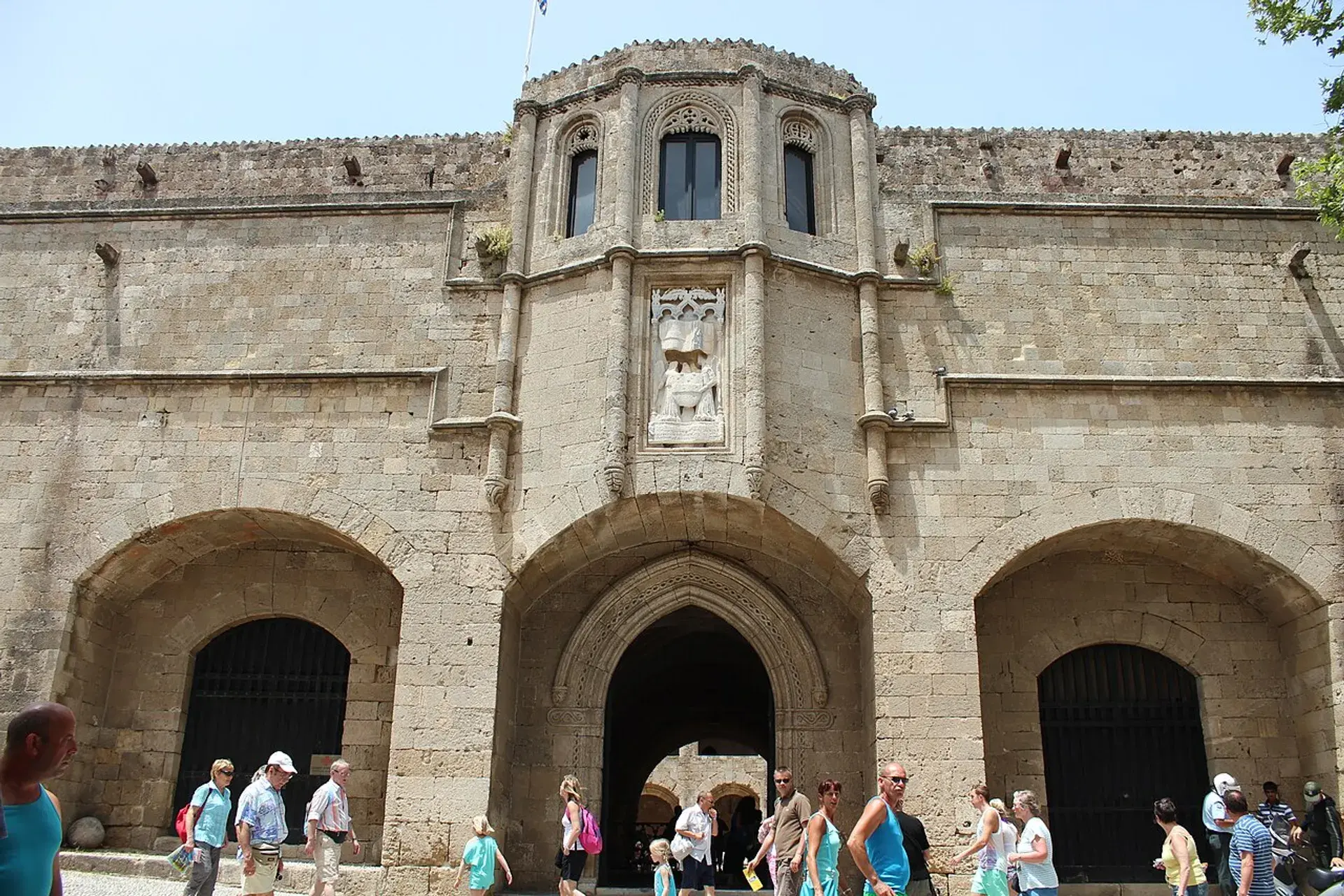
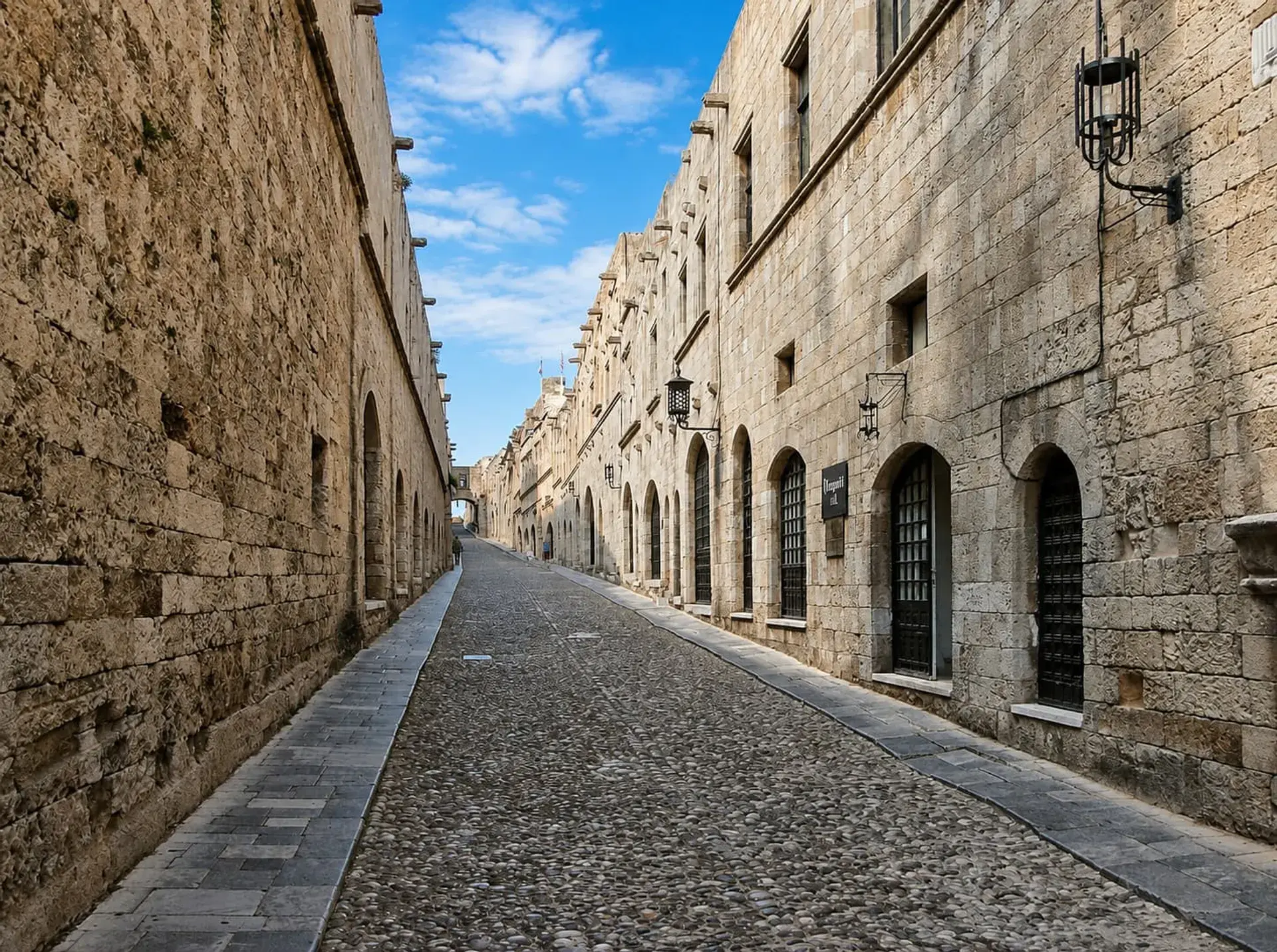
From 1309 to 1522, the Knights of St. John transformed Mandraki into a formidable naval base. They heavily fortified the harbor, and their defensive engineering is still visible today. The Knights constructed the 15th-century Fort of St. Nicholas, which now functions as a lighthouse, at the end of the pier. They also built the three iconic medieval windmills that line the harbor wall, dating to the 14th or 15th century.
To secure the port from enemy ships, the Knights employed advanced defensive tactics, including stretching massive chains across the harbor entrance to block unauthorized access and protect their fleet.
Italian Influence and Modern Landmarks
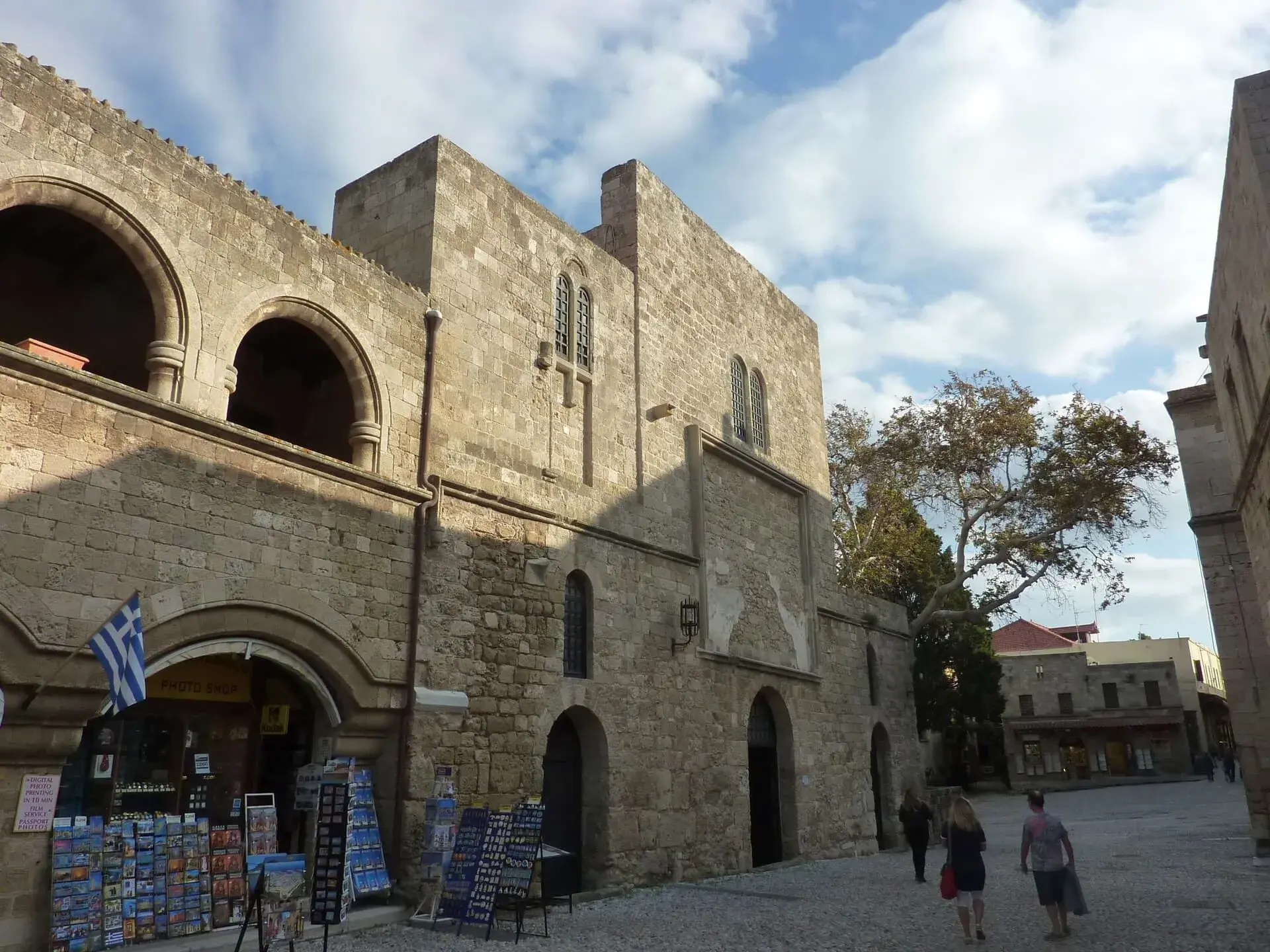
During the Italian occupation from 1912 to 1943, the area around the harbor underwent significant architectural changes. Buildings in the Art Deco and Rationalist styles were constructed along the waterfront, including the Church of the Annunciation, built in 1925. This period added another distinct architectural layer to the city's landscape.
Today, the entrance to Mandraki Harbour is famously marked by two bronze statues: a stag named Elafos and a doe named Elafina. These symbols of the island stand atop columns that date back to the Venetian era. The deer's connection to Rhodes is ancient, with the island being called "Elafousa" (deer island) in the 6th century BC.
The Harbour Today: A Dual Purpose
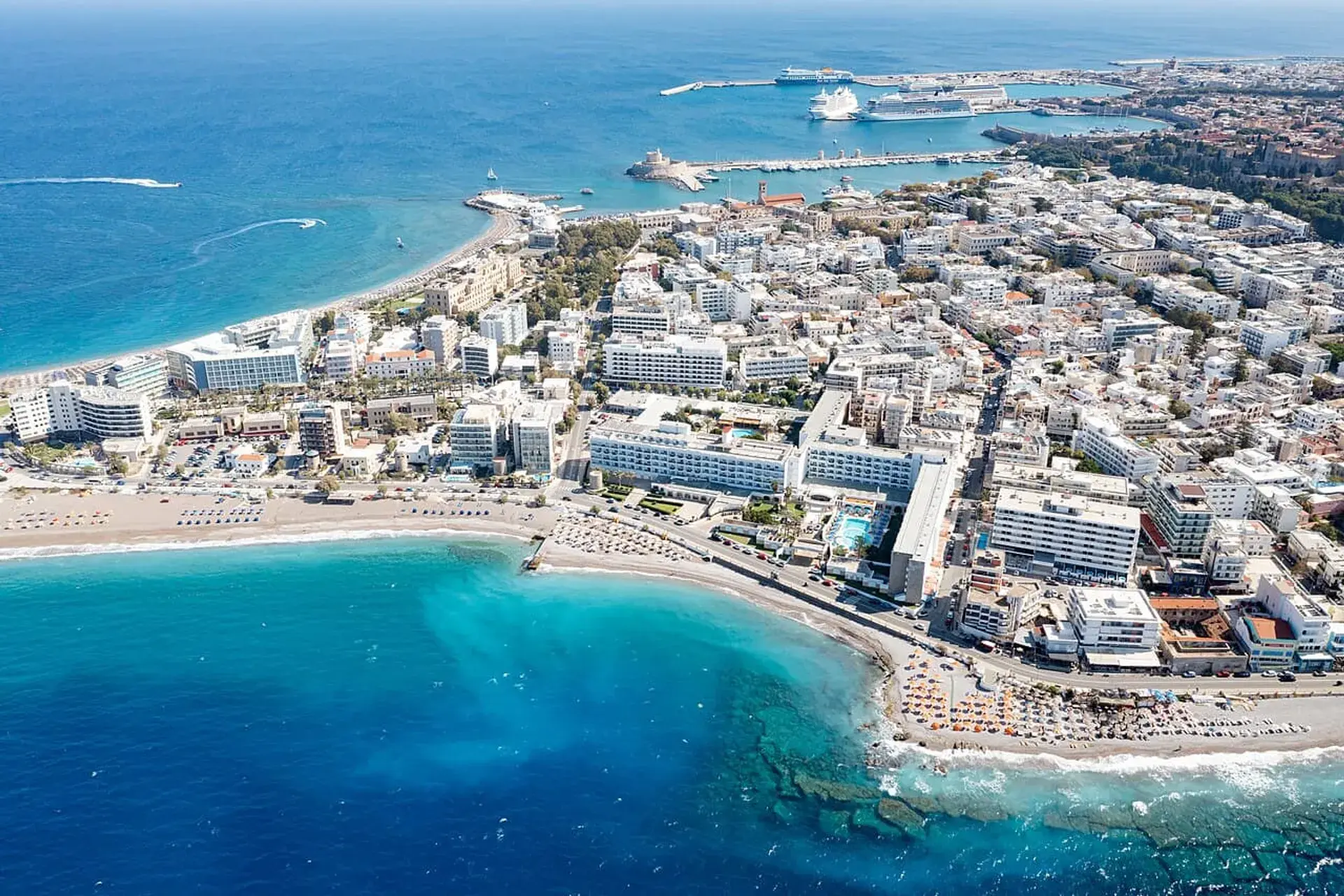
Rhodes City features two main harbors with distinct functions. Mandraki Port is now a recreational and tourist hub. Its waters are filled with small boats, yachts, and excursion vessels offering trips to nearby islands like Symi. The waterfront promenade is a bustling area lined with cafes and restaurants, offering views of the historic landmarks.
Nearby, the Rhodes Commercial Harbour, or Akandia Port, serves as the island's primary functional port. This industrial hub handles large passenger ferries connecting Rhodes to mainland Greece and other islands, as well as cruise ships and cargo vessels. It is a working port with intense activity, particularly during early morning ferry arrivals.
FAQ
Did the Colossus of Rhodes really straddle the harbor entrance?
No. Contrary to popular belief, modern historical consensus suggests the Colossus of Rhodes stood on one side of the harbor entrance, not with its legs straddling it for ships to sail through.
What are the deer statues at the entrance of Mandraki Harbour?
The bronze statues of a stag (Elafos) and a doe (Elafina) mark the harbor entrance. They are modern symbols of the island, which was known as "Elafousa" (deer island) as far back as the 6th century BC.
Who built the windmills and fort at Mandraki Harbour?
The three medieval windmills and the Fort of St. Nicholas (now a lighthouse) were built by the Knights of St. John during their rule of Rhodes from 1309 to 1522 CE.
What is the difference between Mandraki Port and Akandia Port?
Mandraki Port is the historic harbor, now primarily a recreational hub for yachts and tourist excursions. Akandia Port is the island's main commercial port, handling large ferries, cruise ships, and cargo vessels.