The Marine Gate: Rhodes' Medieval Sea Entrance
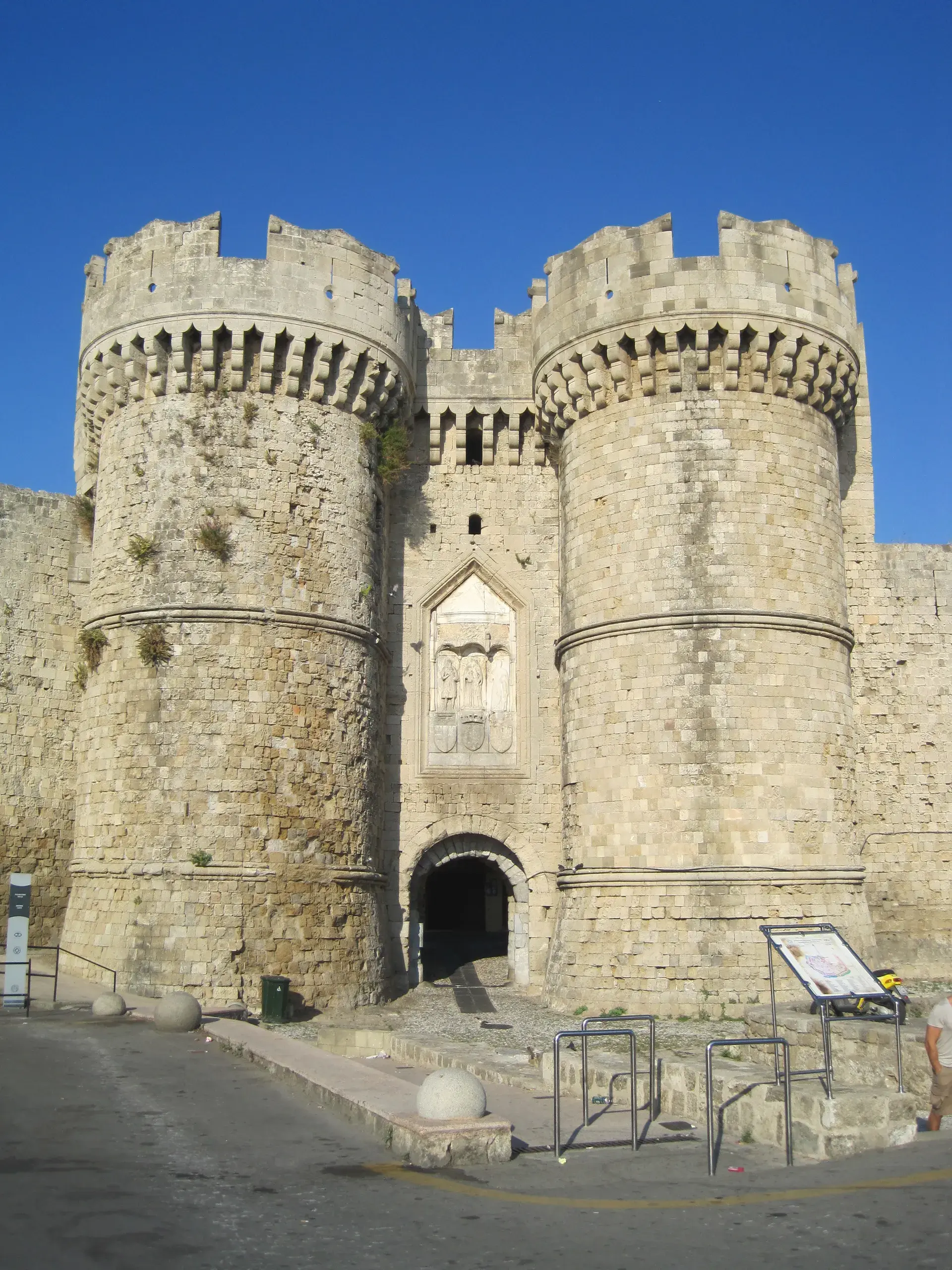
The Marine Gate, also known as Porta Marina or Thalassini Pyli, stands as a formidable entrance to the UNESCO World Heritage-listed Old Town of Rhodes. Constructed in 1478, this gate was the primary access point from the harbor, designed to create a powerful first impression for sea arrivals while also strengthening the city's fortifications against naval attacks.
Construction and Architecture
Built by the Knights Hospitaller (Order of St. John), the gate's construction was overseen by Grand Master Pierre d'Aubusson, an expert in fortifications. Its design, characteristic of late medieval military architecture, features two imposing defensive towers and robust construction with Gothic-style embellishments. The structure was deliberately modeled on the Gate of Villeneuve-lès-Avignon in France, which had been built about two centuries earlier. The Knights applied their extensive experience in fortress construction, drawing inspiration from renowned defensive systems like the Theodosian Walls of Constantinople.
A History of Sieges and Commerce
The Marine Gate was central to the bustling trade and maritime activity of Rhodes, serving as the main commercial gateway. It witnessed centuries of civic activities, invasions, and trade. The gate stood as a formidable bastion, notably surviving the Siege of Rhodes in 1522. After the Ottoman conquest, its direct military significance waned, but it remained a vital access point for daily life and commerce. The structure endured further challenges, sustaining damage to its North tower during Allied bombings in World War II, which was subsequently restored by the Greek administration in 1951.
Symbolic Details and Design
Despite its imposing appearance, the Marine Gate's role was more symbolic and ceremonial than purely defensive. The extremely limited space between the waterfront and the city walls made it difficult for an invading army to launch a significant attack from that side. The gate is richly decorated with sculpted reliefs. The exterior features depictions of the Virgin holding Christ, Saint John the Baptist, and Saint Peter, alongside the coats of arms of France, the Order of Saint John, and the House of d'Aubusson. The interior displays an effigy of an angel with the Order's heraldic emblems. Grand Master d'Aubusson also positioned a sculpture of an apostle, likely Saint Paul, to welcome crews and oversee plague inspections conducted beneath the arch.
The Marine Gate Today
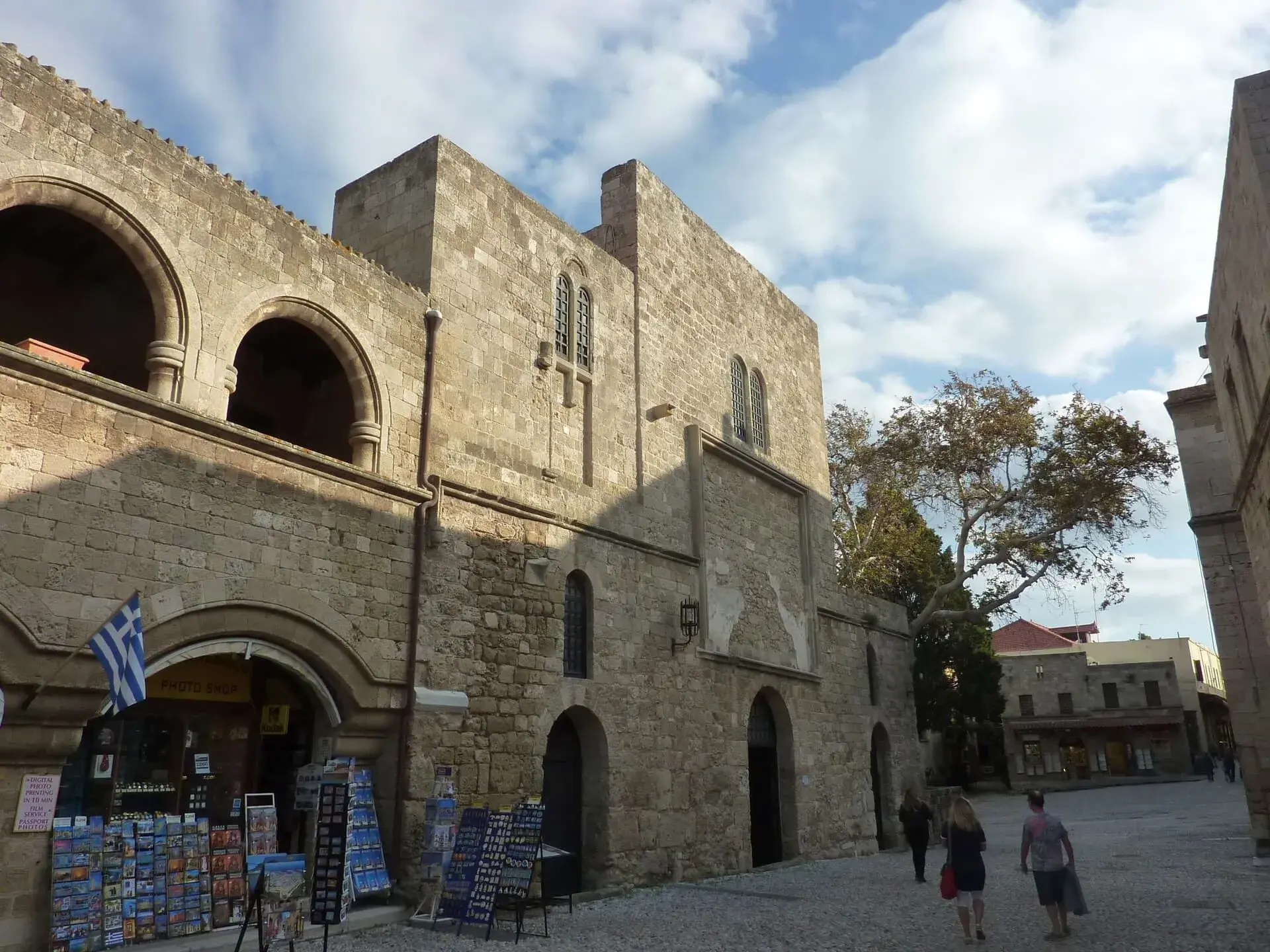
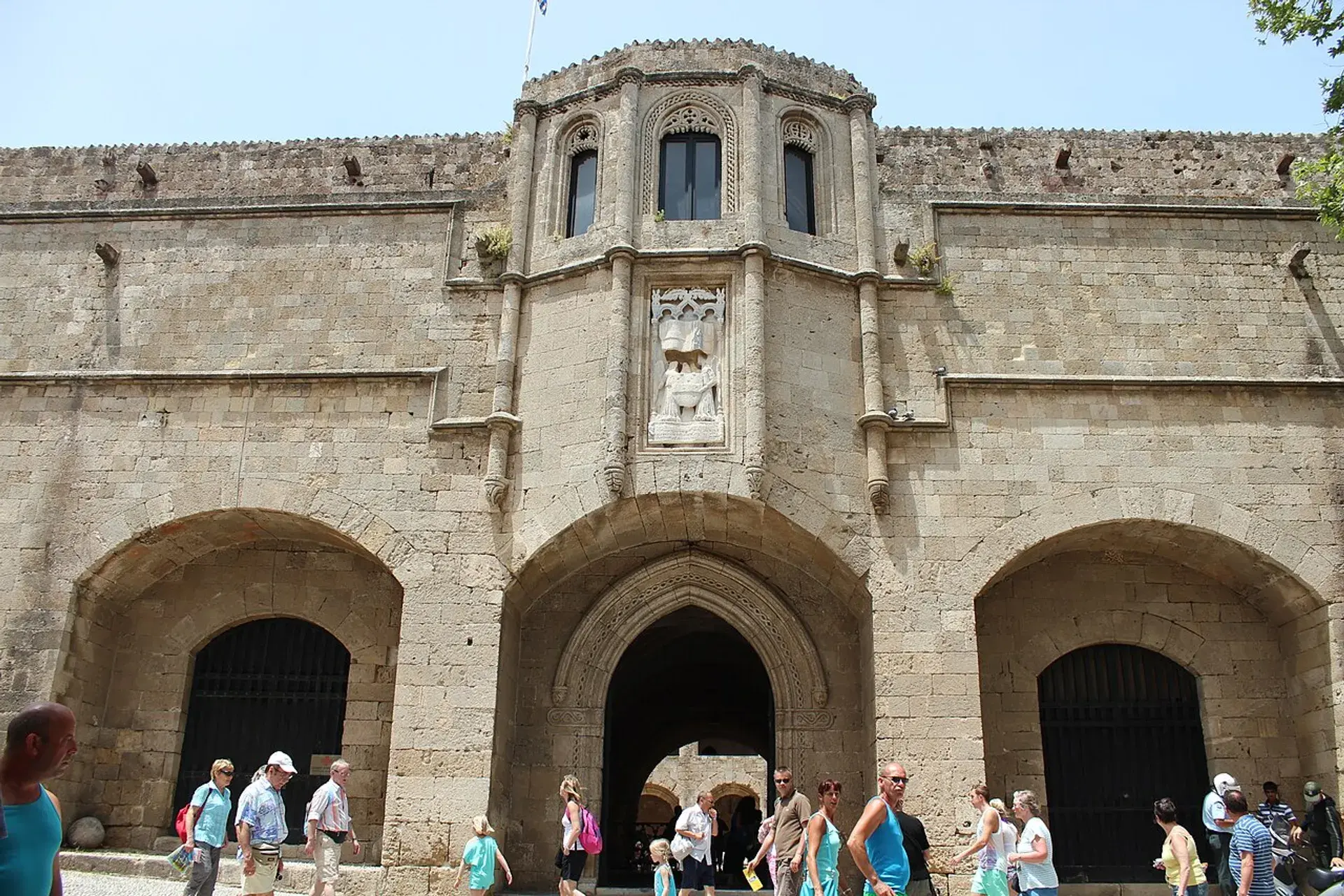
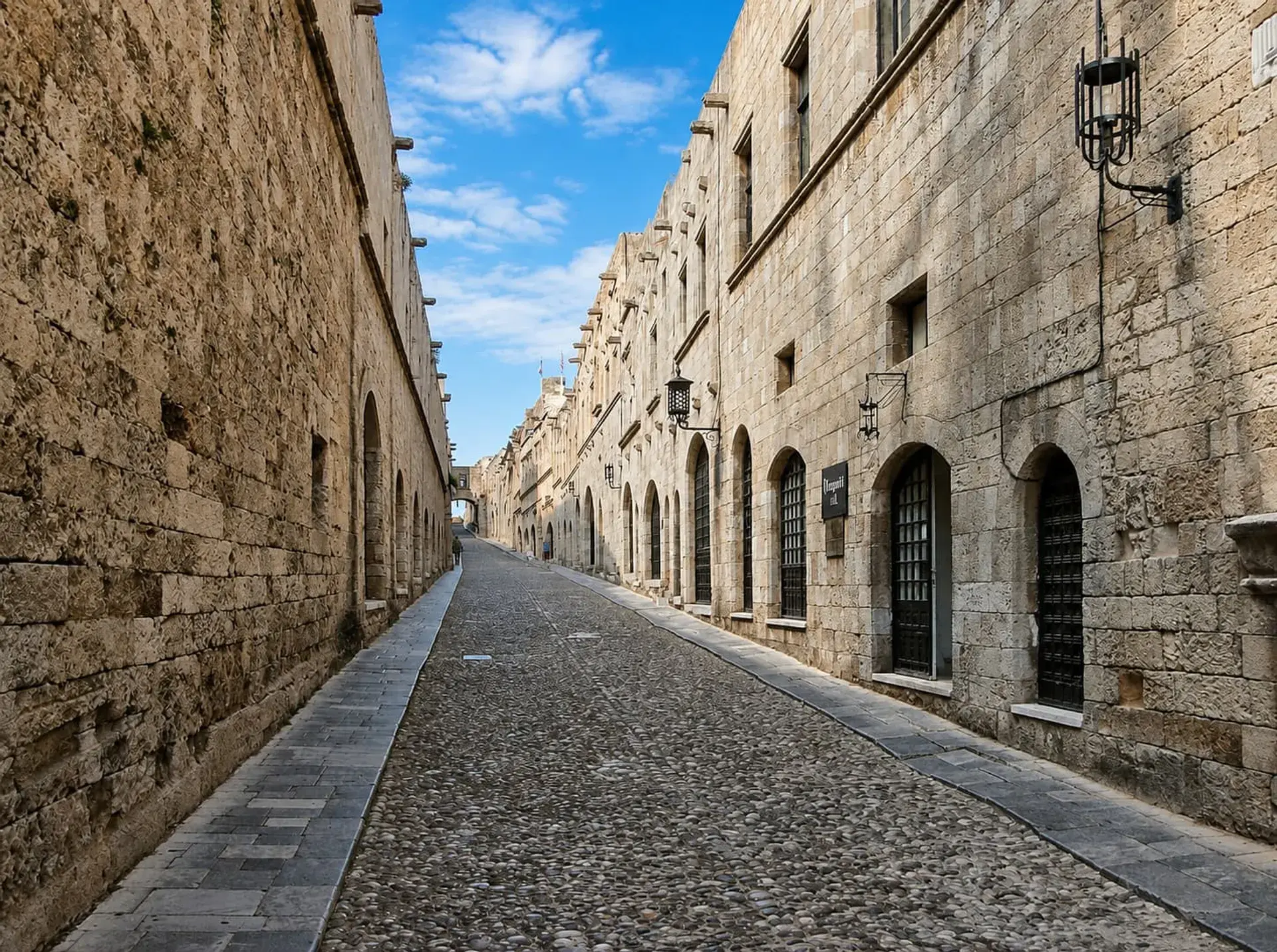
Today, the Marine Gate remains a significant historical landmark and a major entry point for visitors exploring the Old Town of Rhodes. As part of a living settlement with permanent residents, shops, and restaurants, the gate is continuously open. It serves as a portal connecting the city's vibrant present with its storied medieval past, underscoring Rhodes' historical importance as a strategic maritime power.
FAQ
When was the Marine Gate in Rhodes built?
The Marine Gate was constructed in 1478 by the Knights Hospitaller under the command of Grand Master Pierre d'Aubusson.
What is the significance of the Marine Gate?
It was the primary sea entrance to the Old Town of Rhodes, serving as a crucial commercial gateway and a key component of the city's extensive fortifications, which are now a UNESCO World Heritage site.
Is the Marine Gate open to the public?
Yes, the Marine Gate is continuously open. It serves as a main entrance for locals and tourists into the inhabited Old Town of Rhodes, which contains residences, shops, and restaurants.
Why is the Marine Gate considered more ceremonial than defensive?
Although it has imposing defensive towers, the narrow space between the waterfront and the walls made it difficult for an army to launch a large-scale attack from the sea. Therefore, its function was more symbolic and ceremonial, creating a grand entrance for sea arrivals.