Palace of the Grand Master: Rhodes' Rebuilt History
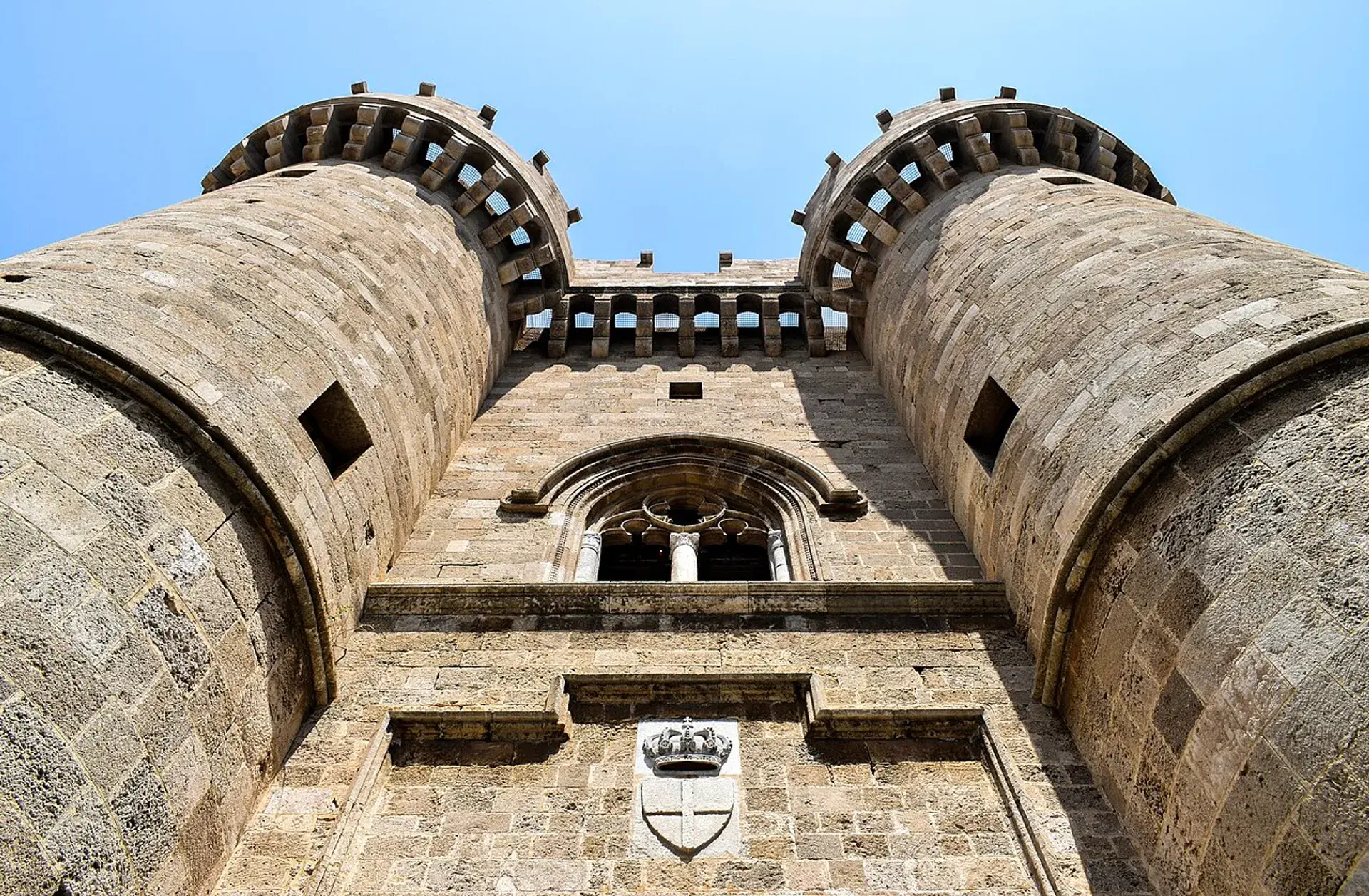
The imposing Palace of the Grand Master in Rhodes presents a grand medieval facade, yet its appearance is one of history's great surprises. The structure seen today is not an authentic fortress of the Knights, but largely a 20th-century reconstruction with a complex, politically charged past, once intended as a holiday home for Italian dictator Benito Mussolini.
From Byzantine Citadel to Knights' Stronghold
The palace's story begins on the foundations of a 7th-century Byzantine citadel. Some studies suggest this strategic location may have been the site of an ancient temple to the sun god Helios, and possibly even the legendary Colossus of Rhodes. In 1309, after the Knights Hospitaller (also known as the Knights of St. John) captured Rhodes, they transformed the fortress into their administrative headquarters and the residence of their Grand Master.
Throughout the 14th century, particularly under Grand Master Hélion de Villeneuve, the palace was significantly expanded in the Gothic style. It became a formidable stronghold and the center of the Knights' sovereign state, from which they ruled for over two centuries. Following a successful defense against an Ottoman siege in 1480, Grand Master Pierre d'Aubusson commissioned further Gothic enhancements.
Sieges, Destruction, and Ottoman Rule
The Knights' dominion over Rhodes ended in 1522. After a grueling six-month siege, the forces of Sultan Suleiman the Magnificent conquered the island, forcing the Knights' expulsion. Under subsequent Ottoman rule, the palace lost its prominence, serving variously as an office building, a prison, and an ammunition depot.
A catastrophic event in 1856 sealed the original palace's fate. A lightning strike ignited gunpowder stored in the adjacent Church of Saint John, causing a massive explosion that destroyed most of the building. Only the ground floor and parts of the entrance towers remained intact.
A 20th-Century Reconstruction
During the Italian occupation of the Dodecanese islands, the palace was extensively rebuilt between 1937 and 1940. Directed by architects like Vittorio Mesturino and Armando Bernabiti, this project was not a historically accurate restoration. Instead, it created a pseudo-medieval structure intended as an imperial symbol of power.
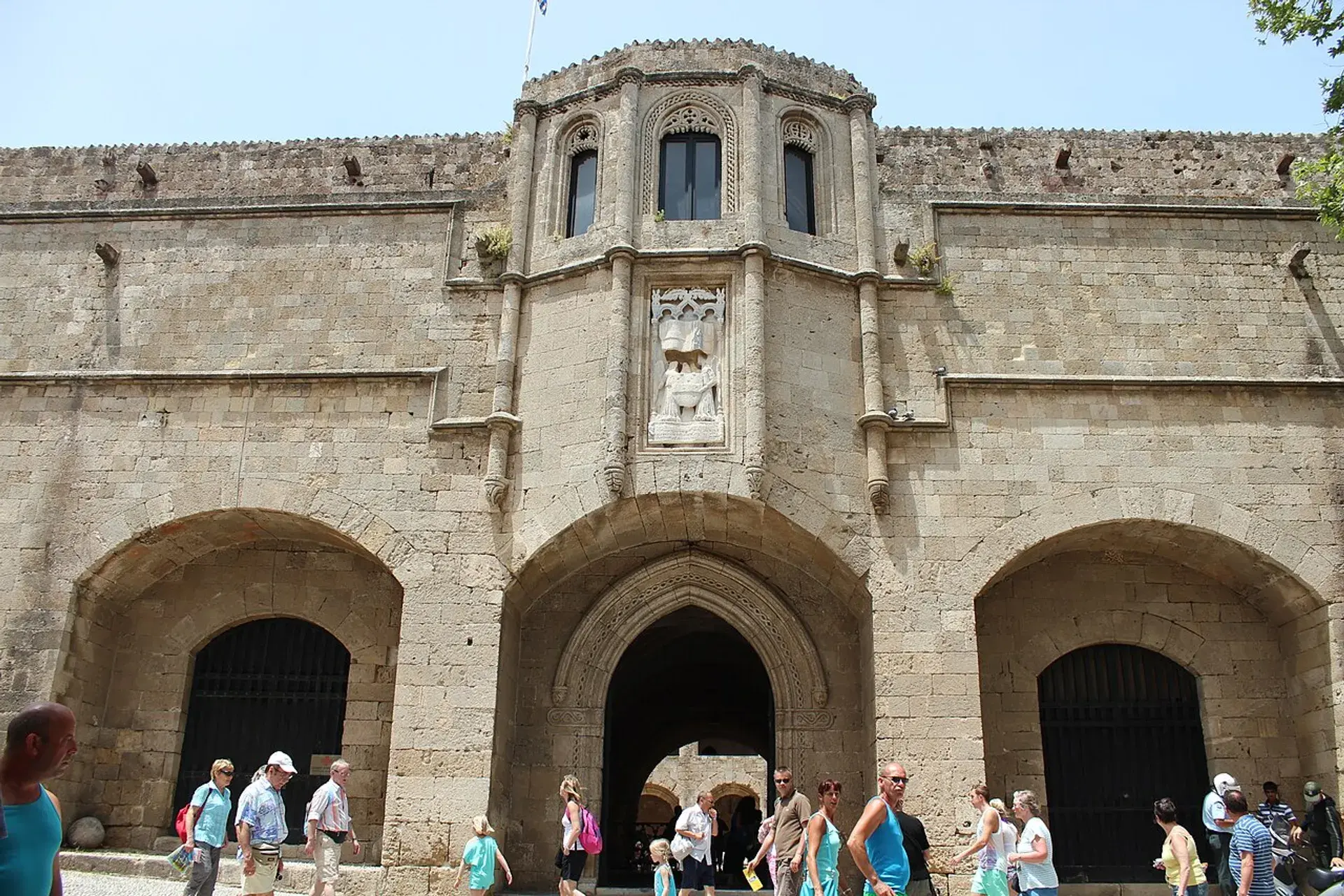
The reconstructed palace was designed to be a holiday residence for Italy's King Victor Emmanuel III and Benito Mussolini, whose name can still be found on a plaque near the entrance. To adorn the lavish new interiors, many elaborate mosaic floors were brought from other Italian-occupied islands, primarily from buildings on Kos.
The Palace Today: A Museum and Cultural Hub
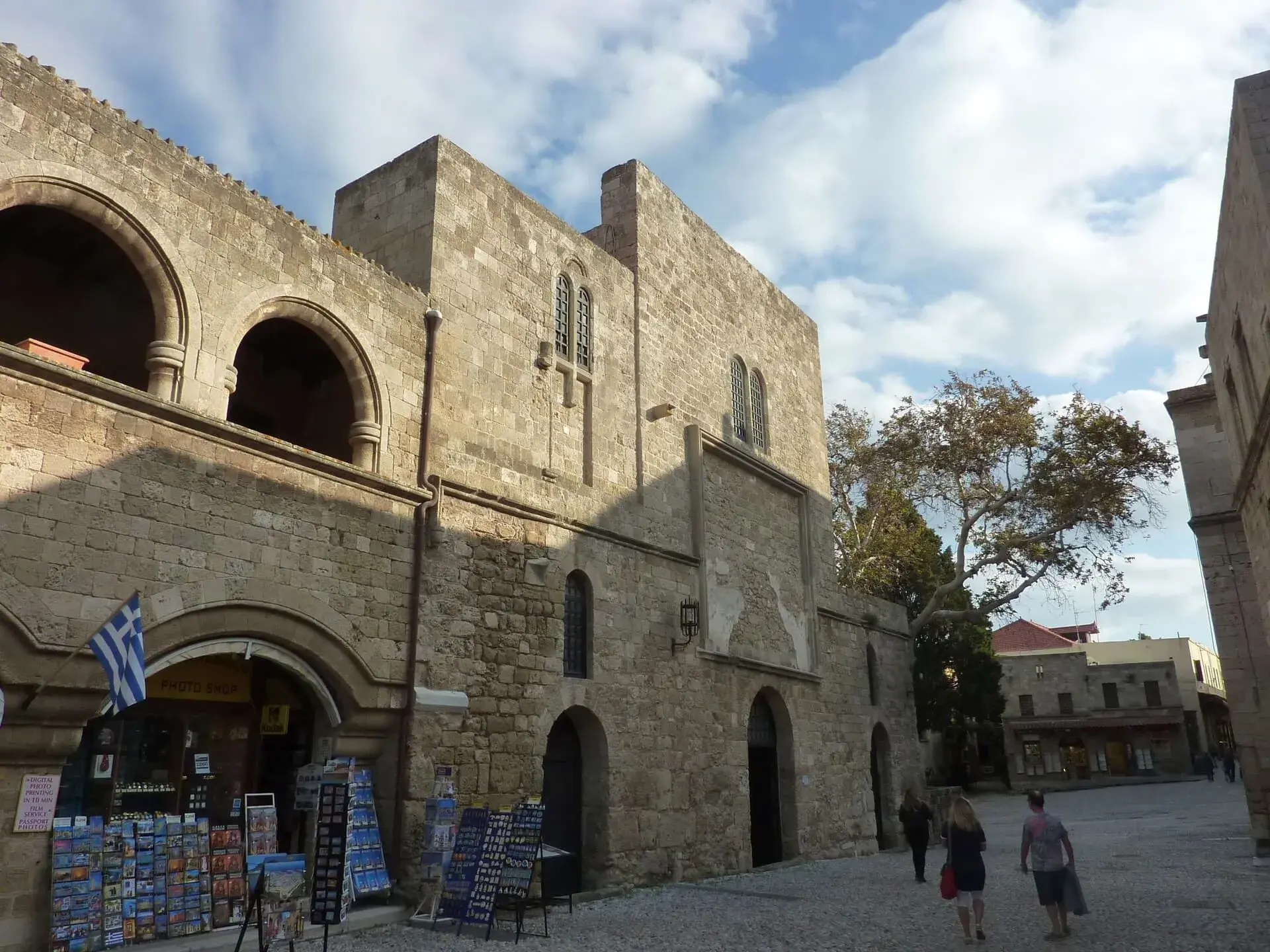
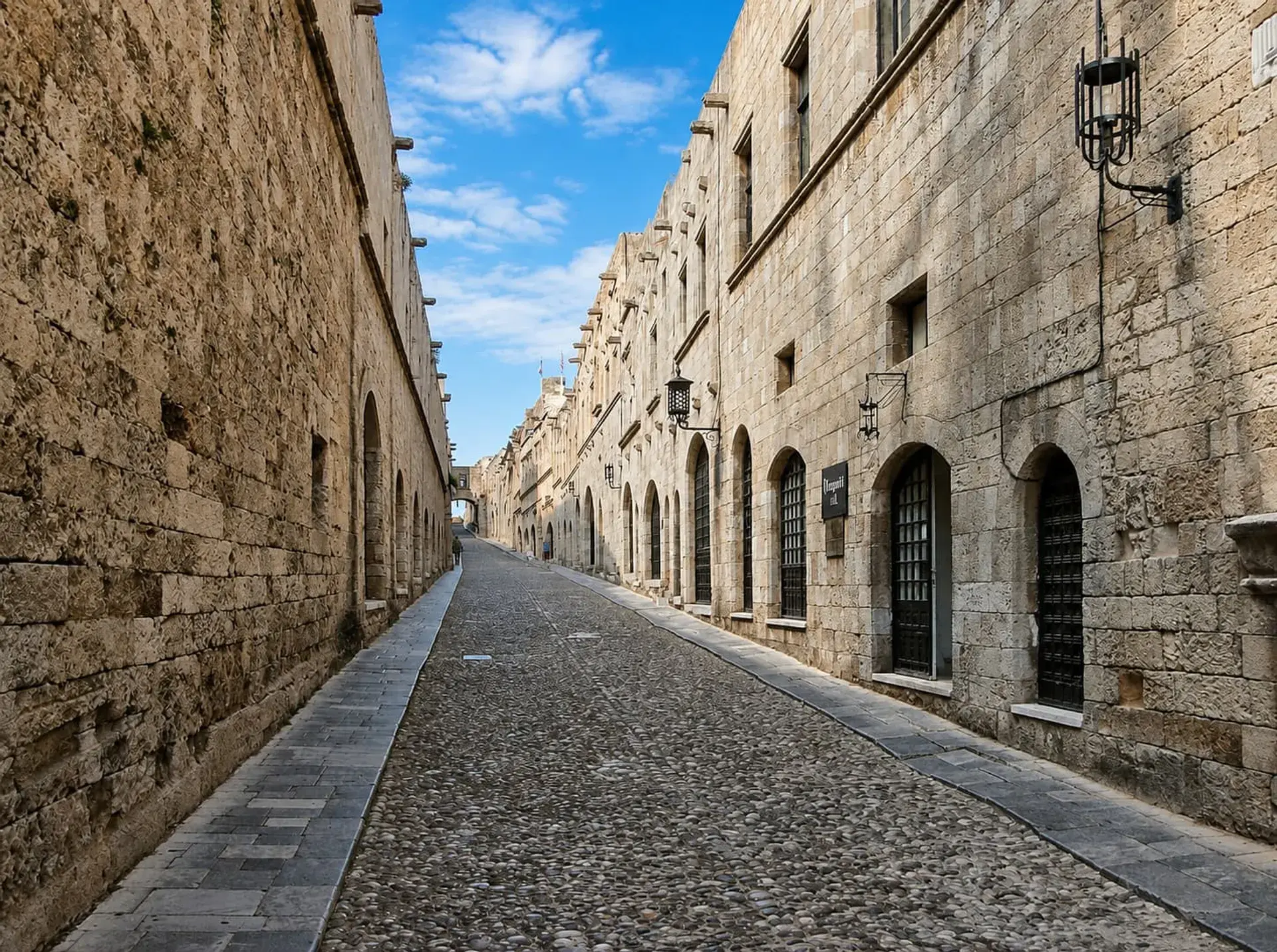
After Rhodes was annexed by Greece in 1948, the palace was converted into a public museum. Today, it stands as the most significant monument in the Medieval City of Rhodes, a UNESCO World Heritage site. Of its 158 rooms, 24 are accessible to the public.
The ground floor hosts two permanent exhibitions: one detailing the history of ancient Rhodes and another covering the period from early Christianity to the Turkish conquest of 1522. The first floor allows visitors to explore the grandly restored halls, such as the Grand Council Room and the Dining Room, as well as the private apartments of the Grand Master. The palace also serves as a vibrant cultural venue for concerts, art exhibitions, and official ceremonies.
FAQ
Is the Palace of the Grand Master the original medieval building?
No, the palace seen today is mostly a 20th-century reconstruction. The original structure was largely destroyed by a gunpowder explosion in 1856. The current building was constructed by the Italians between 1937 and 1940 in a pseudo-medieval style.
What is inside the Palace of the Grand Master?
The palace functions as a museum. The ground floor holds exhibitions on ancient and medieval Rhodes. The first floor features restored grand halls, the Grand Master's apartments, and elaborate mosaic floors, many of which were imported from the island of Kos during the Italian reconstruction.
Why was the Palace of the Grand Master rebuilt in the 20th century?
During the Italian occupation of Rhodes, the palace was rebuilt between 1937 and 1940 to serve as a symbol of Italian power and as a holiday residence for Italy's King Victor Emmanuel III and Benito Mussolini.
Was the Colossus of Rhodes located at the palace?
While not confirmed, some studies suggest the palace site, which was originally a Byzantine citadel, may have been the location of an ancient temple to the sun god Helios and potentially the site of the Colossus of Rhodes.