Arch of Galerius: Thessaloniki's Roman Marble Gateway
An imperial Roman gateway built for a victorious emperor lost most of its pillars over the centuries, yet it remains the ultimate meeting spot in modern Thessaloniki. Commissioned between 298 and 305 AD, the Arch of Galerius celebrates the Roman Emperor's military triumph over the Sassanid Persians and the capture of their capital, Ctesiphon.
A Triumphal Architectural Intersection
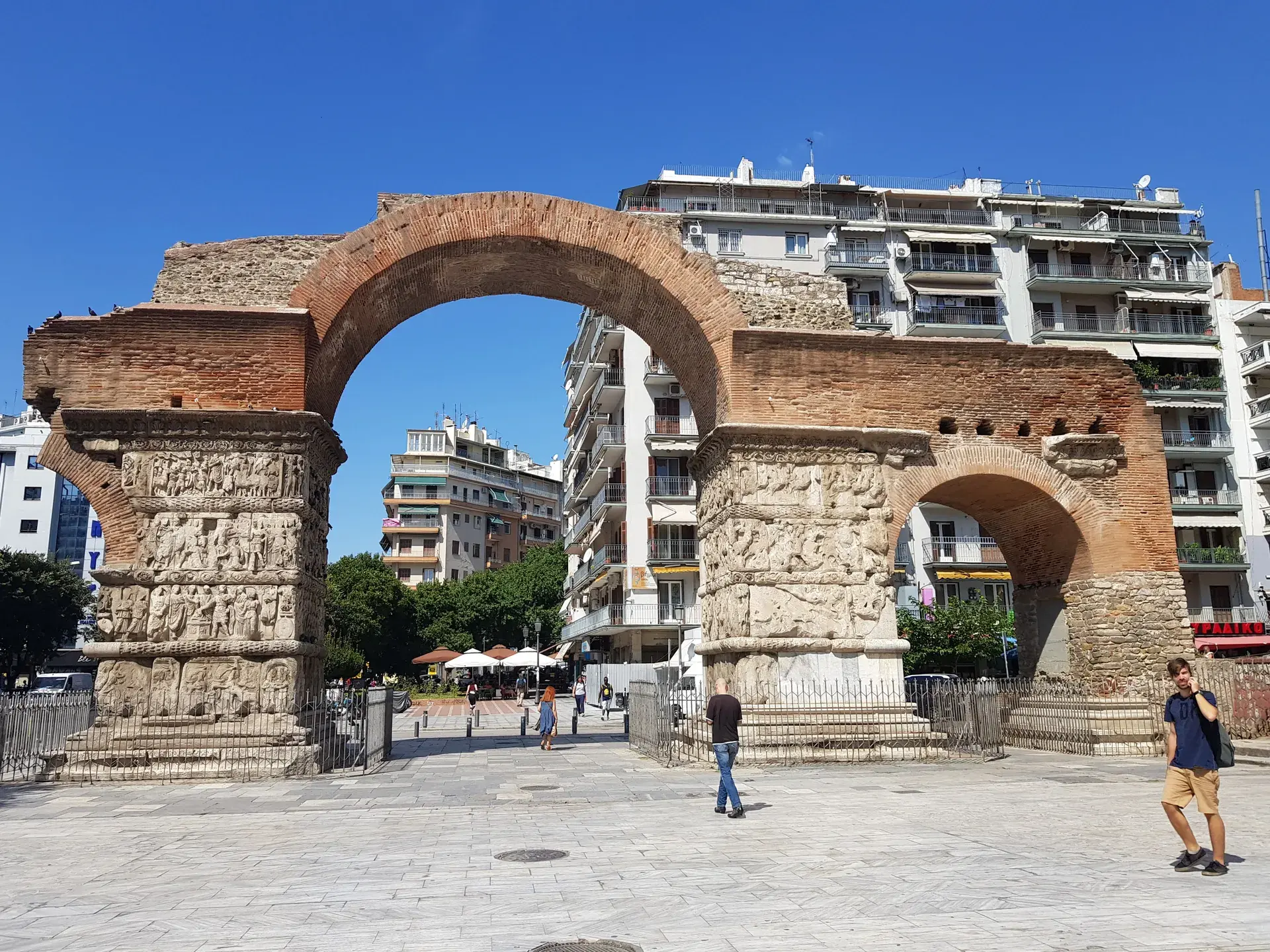
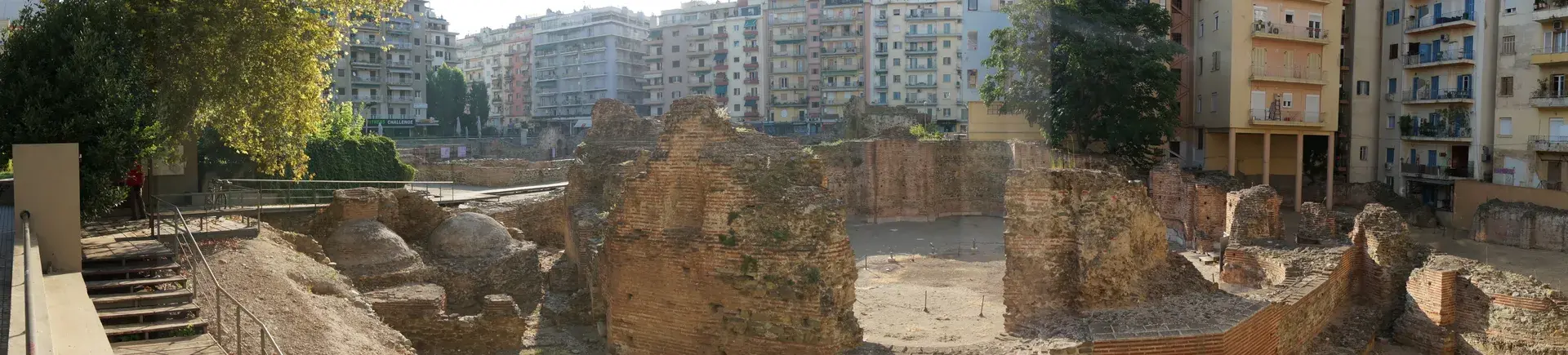
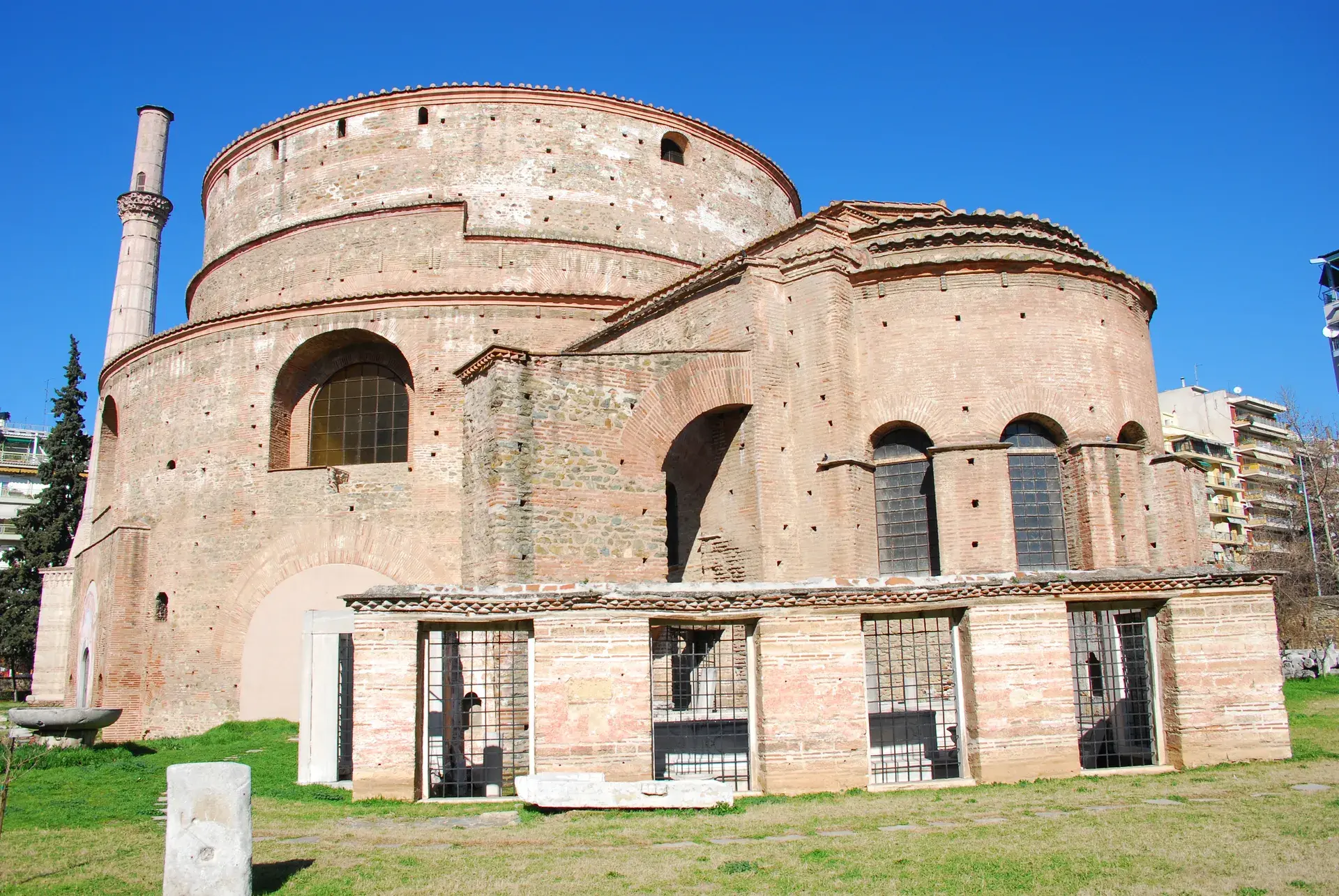
Originally designed as an eight-pillared octopylon gateway forming a triple archway, the monument served as a massive structural junction within Galerius's imperial palace complex. The central arch spanned the Via Egnatia, the main east-west Roman thoroughfare. It also functioned as a ceremonial processional road, connecting the Galerian Palace to the south with the Rotunda 100 meters to the north.
Over time, five of the eight original piers were destroyed. Today, the footprint of the lost eastern pillars is indicated by distinct paving stones set into the modern Egnatia Street sidewalk. The remaining monument presents a stark textural contrast between its exposed dark red brick and rubble masonry core and its smooth, surviving white marble relief slabs.
Surviving Marble Reliefs
Mounted on the inner pillars, the intricate marble panels detail historic imperial victories. A surprising feature of these carvings is the inclusion of exotic war animals, such as camels and war elephants, which were rarely seen on standard Roman triumphal monuments in Western Europe.
Because the surviving marble panels depict battle scenes without explicitly naming Emperor Galerius, historical knowledge of who built the arch and why was lost to locals for centuries.
The Heart of Modern Thessaloniki
Today, the Arch of Galerius stands directly along an urban sidewalk at the junction of Egnatia and Dimitrios Gounari Streets. It is maintained as a free-access outdoor historical monument, enclosed only by a low perimeter fence to protect the ancient marble carvings.
Added to the UNESCO World Heritage List in 1988, the monument borders the Aristotle University of Thessaloniki. Known locally as "Kamara," it anchors the city's vibrant student culture and holds the title of Thessaloniki's most iconic public gathering spot.
FAQ
Why was the Arch of Galerius built?
It was commissioned around 298-305 AD to celebrate Roman Emperor Galerius's military victory over the Sassanid Persians and the capture of their capital, Ctesiphon.
How many pillars does the Arch of Galerius have?
The arch originally featured eight pillars forming a triple archway. Today, only three pillars survive, two of which retain their original carved marble reliefs.
What do the marble reliefs on the Arch of Galerius depict?
The surviving white marble slabs feature detailed battle scenes from the emperor's campaigns. They notably include exotic war animals like camels and war elephants, which were unusual for Western European Roman monuments.
What is the Arch of Galerius used for today?
Known locally as "Kamara," the arch stands as a free-access outdoor historical monument. Because it borders the local university, it serves as Thessaloniki's most popular daily meeting spot for students, residents, and visitors.