The Rotonda: Ancient Roman Landmark
A Monumental Roman Landmark
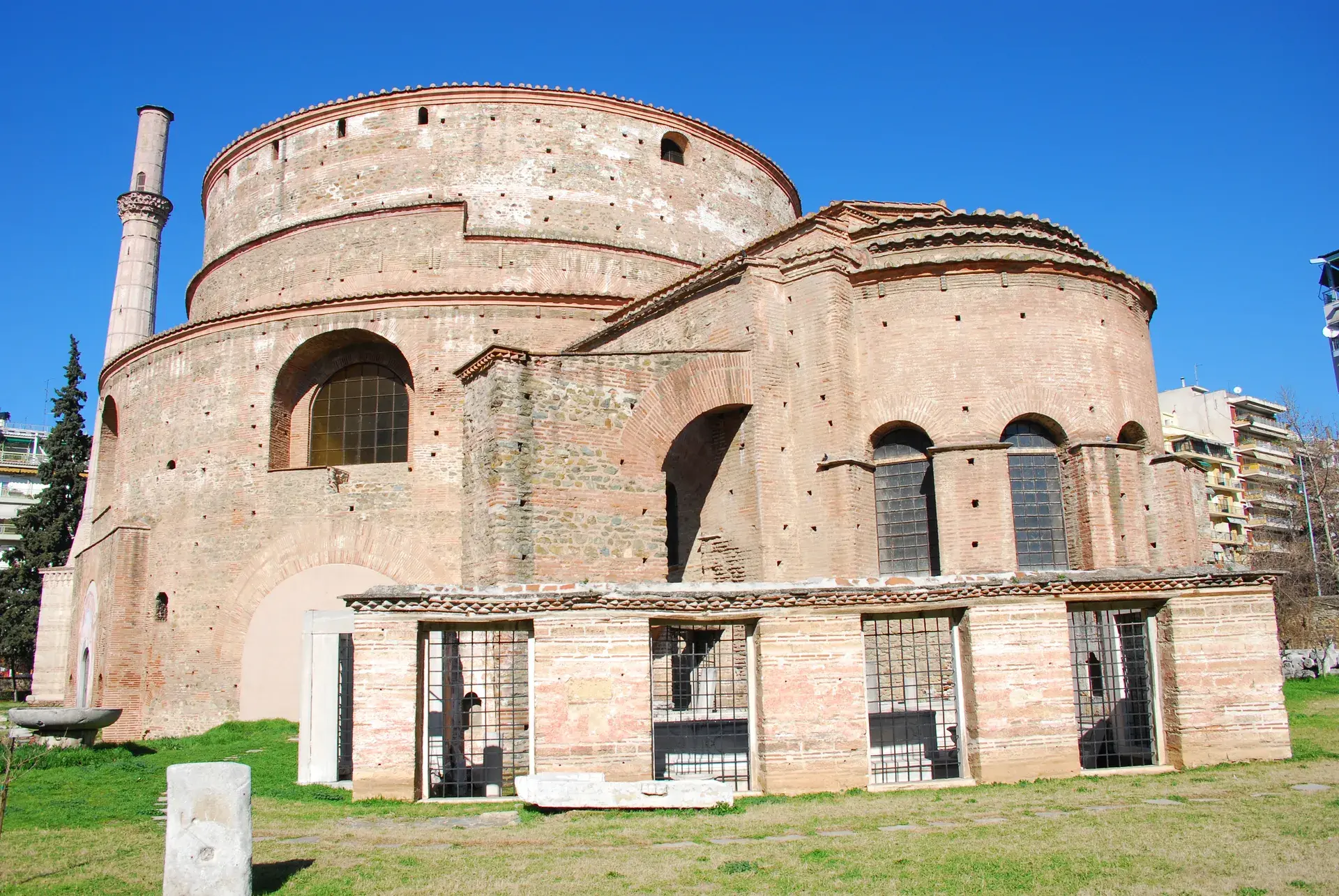
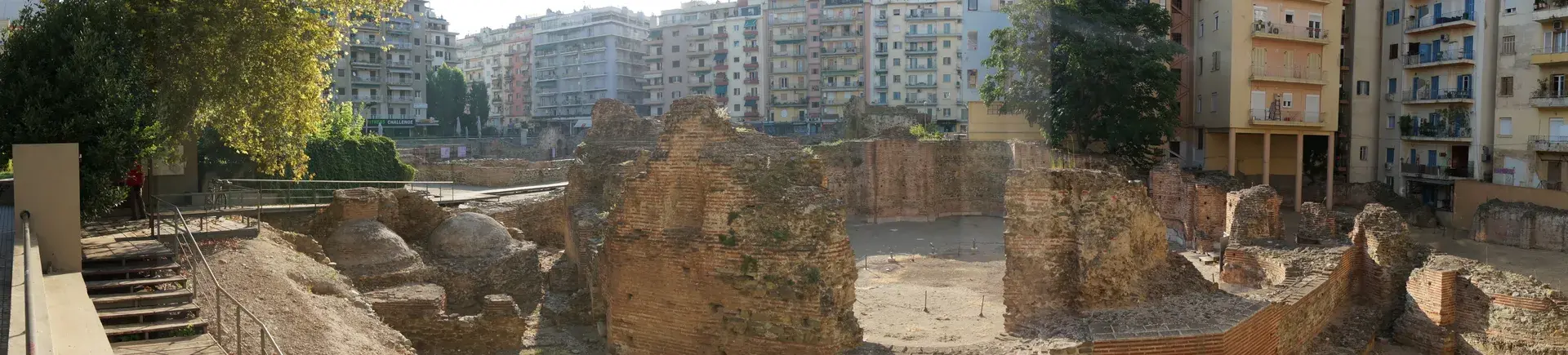
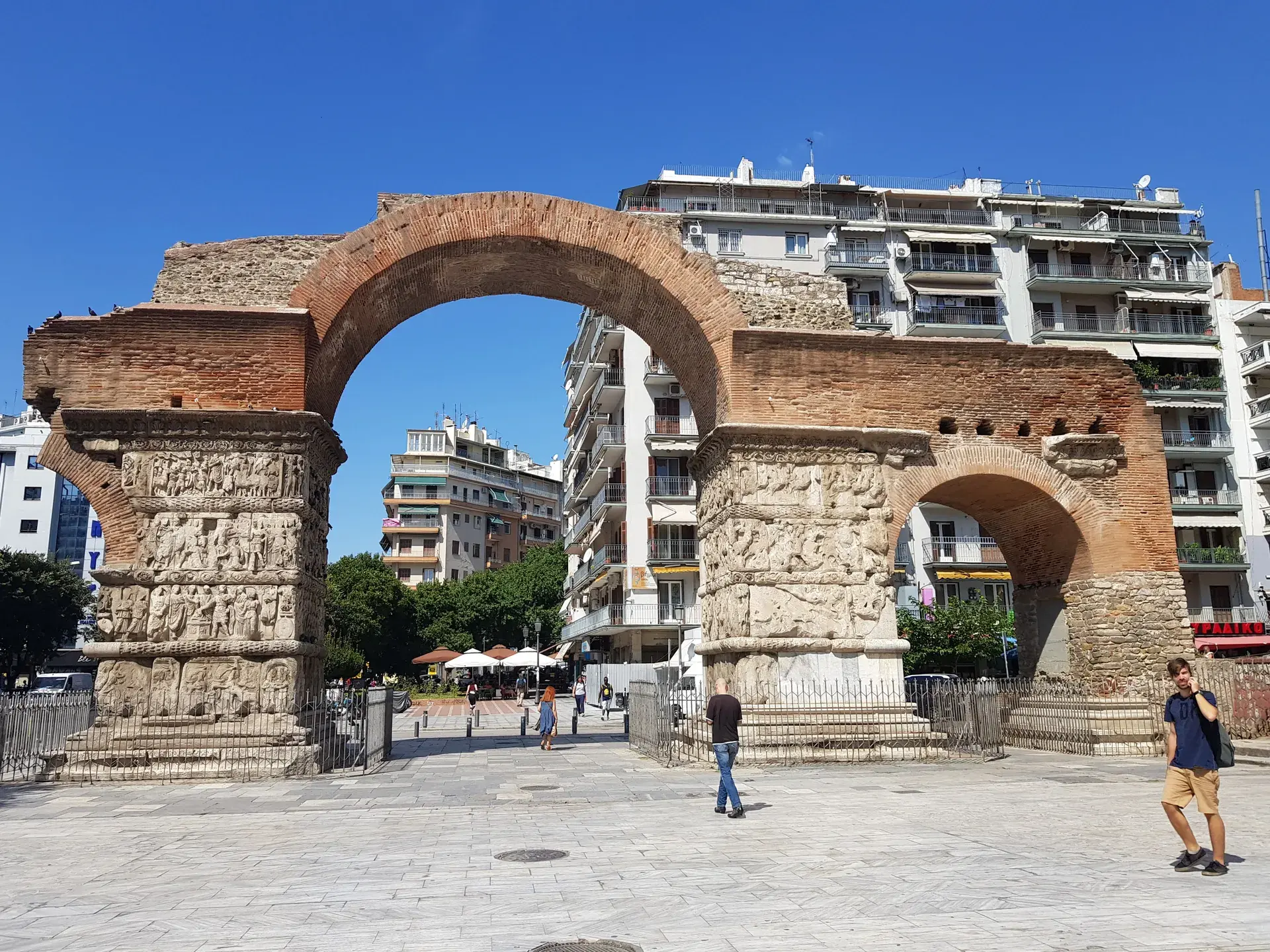
The massive circular stone walls of the Rotonda belong to an ancient Roman landmark dating back to the early 300s. Built around 306 AD under Roman Tetrarch Emperor Galerius, the imposing structure features brick walls over six meters thick, a 24.5-meter interior diameter, and a dome that reaches nearly 30 meters high. It originally functioned as a key component of an imperial urban axis that connected to the Arch of Galerius and the Galerian Palace complex. Today, it stands as a celebrated UNESCO World Heritage Site.
A History of Transformations
Historians continue to debate the original purpose of the building. While long identified as a planned mausoleum for Emperor Galerius, he died in 311 AD and was buried elsewhere. Alternative theories suggest it was designed as a pagan temple dedicated to Zeus or the Kabeiroi cults.
By the late fourth century AD, the structure was converted into a Christian church. During this period, an apse was added to the building, and the interior dome was adorned with gold-ground mosaics depicting saints, martyrs, and elaborate architecture. The vast circular hall presents a striking visual contrast between the heavy exterior Roman brickwork and these glowing remnants of early Christian mosaics overhead.
In 1590, under the administration of Ottoman Sultan Murad III, the building was transformed into a mosque. During this era, a tall minaret and an ablution fountain were added. When Thessaloniki was incorporated into the Greek state in 1912, the site was reconsecrated as a Christian church, though the Ottoman minaret was carefully preserved.
Architectural Survivals and Curiosities
The exterior garden offers an immediate visual synthesis of Thessaloniki's layered history. The minaret standing next to the building is the only fully intact Ottoman minaret surviving in the city, as most others were dismantled after 1912.
The name of the structure is a relatively modern invention. The building was not called the Rotonda in antiquity; rather, this descriptive name was popularized by Western European travelers during the eighteenth and nineteenth centuries due to its circular geometry. The surrounding outdoor grounds further reflect the area's diverse past, containing scattered marble architectural fragments and historical gravestones that represent Jewish, Armenian, Ottoman, and Christian communities.
Modern Function
Operating as an open archaeological site, museum, and monument under the Hellenic Ministry of Culture, the Rotonda is open daily to ticketed visitors, with the exception of Tuesdays. It occasionally hosts Greek Orthodox liturgical services, as well as cultural events like exhibitions and concerts. The landmark remains anchored along its historic Roman processional route, connecting Egnatia Street, the Arch of Galerius, and the Galerian Palace ruins down toward the seafront.
FAQ
What was the Rotonda originally used for?
The original purpose of the Rotonda is disputed among historians. It was either designed as a planned mausoleum for Emperor Galerius or as a pagan temple dedicated to Zeus or the Kabeiroi cults.
What are the operating hours for the Rotonda?
The Rotonda is open to ticketed visitors daily from 08:00 to 20:00, but it is closed on Tuesdays.
Why does the Rotonda have a minaret?
In 1590, the building was converted into a mosque during Ottoman rule, which resulted in the addition of a tall minaret. It is the only fully intact Ottoman minaret surviving in Thessaloniki today.