Palace of Galerius: Roman Ruins in Thessaloniki
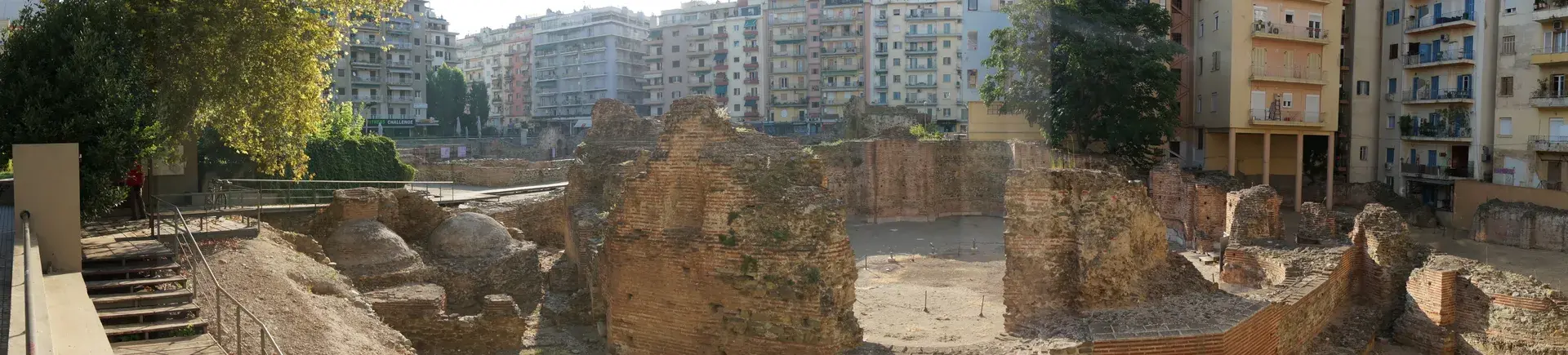
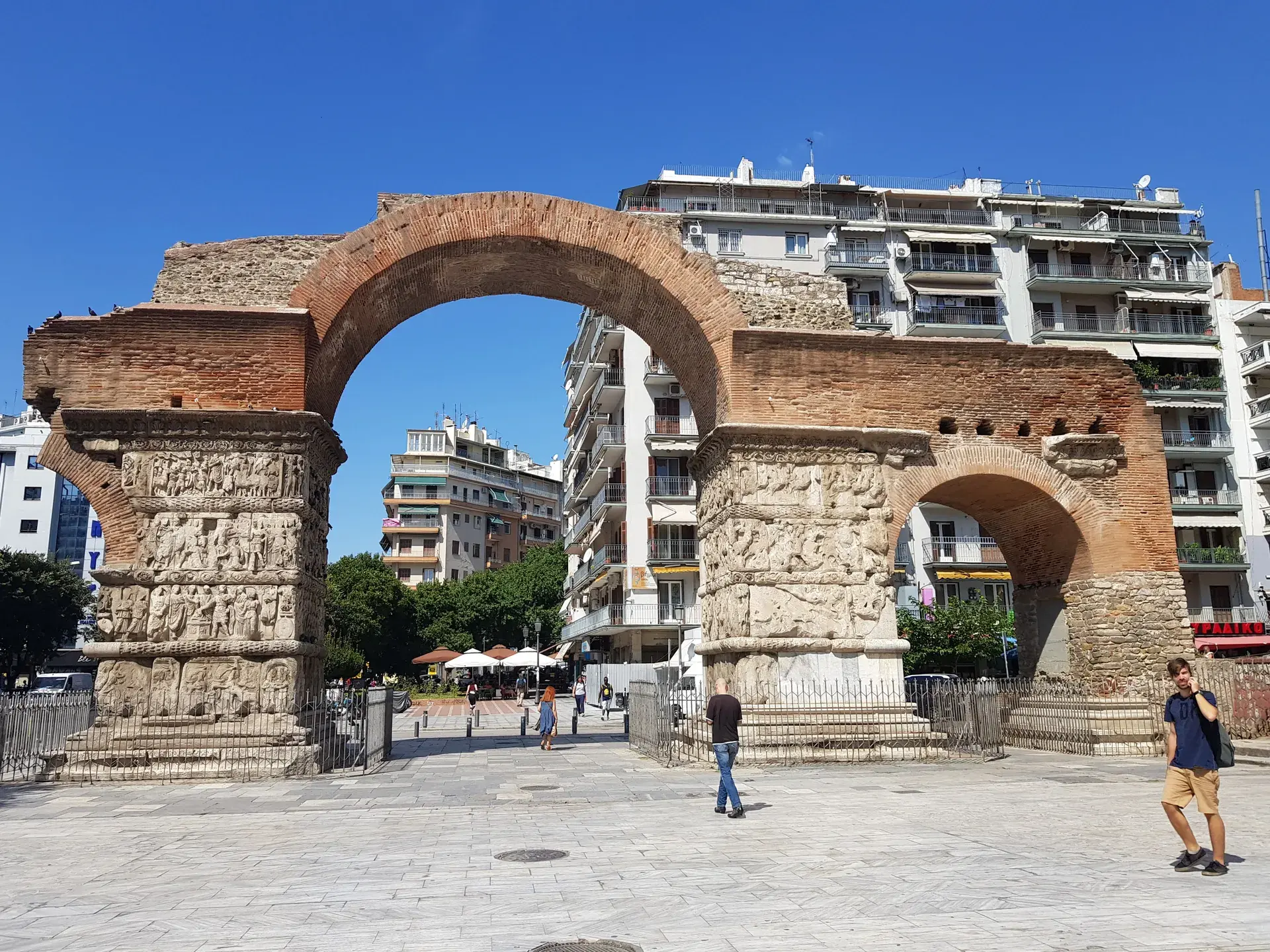
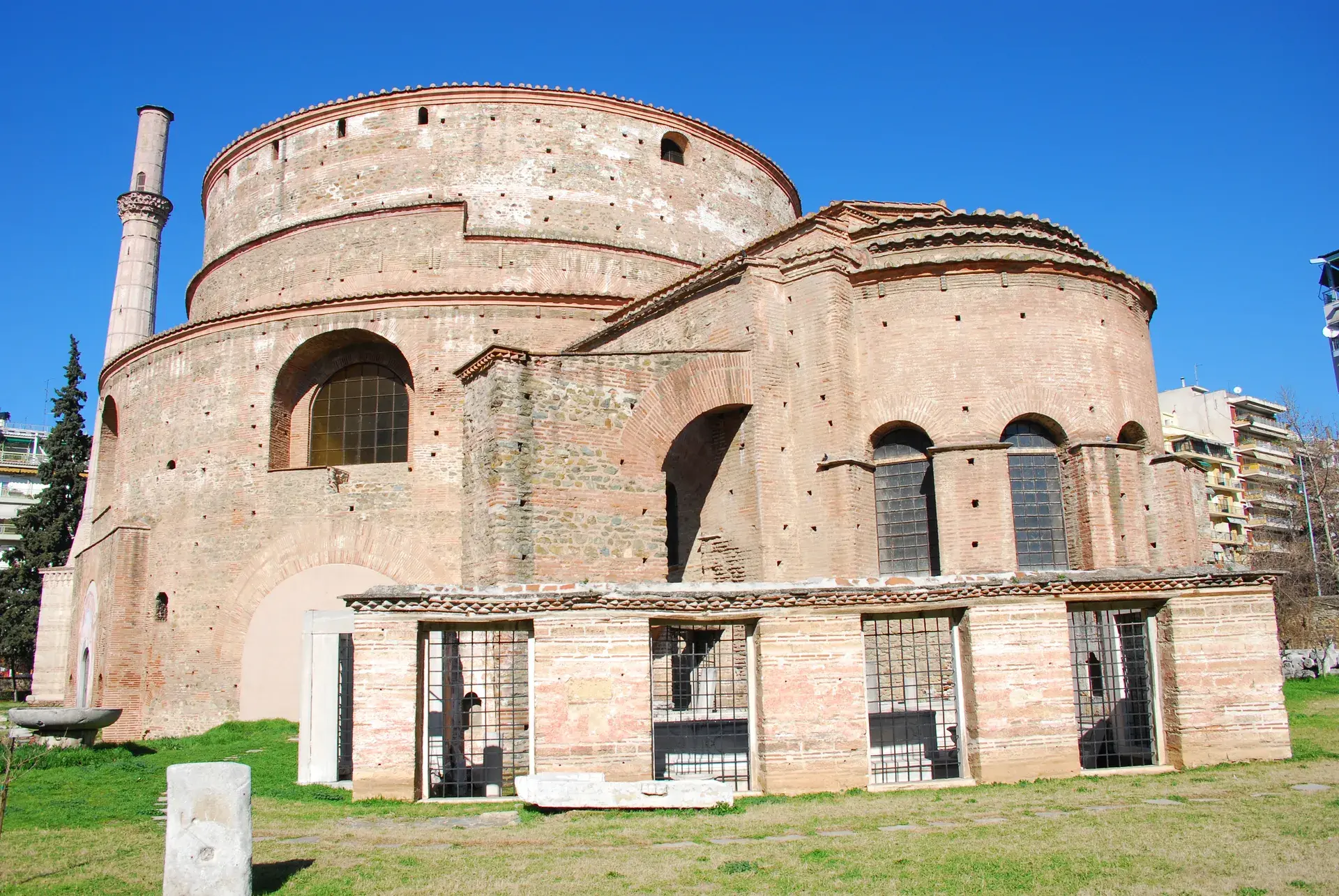
The Palace of Galerius anchors the central Roman-to-Byzantine architectural axis of Thessaloniki, connecting the Rotunda and the Arch of Galerius down to the seafront along the Dimitriou Gounari pedestrian route. Looking down into the sunken basin of Navarinou Square reveals the exposed court of a Roman Emperor sitting seamlessly integrated into the modern city center. Weathered red-brick masonry walls and geometric floor mosaics sit exposed directly beneath the balconies of mid-century apartment buildings and buzzing café terraces.
A Roman Emperor's Capital
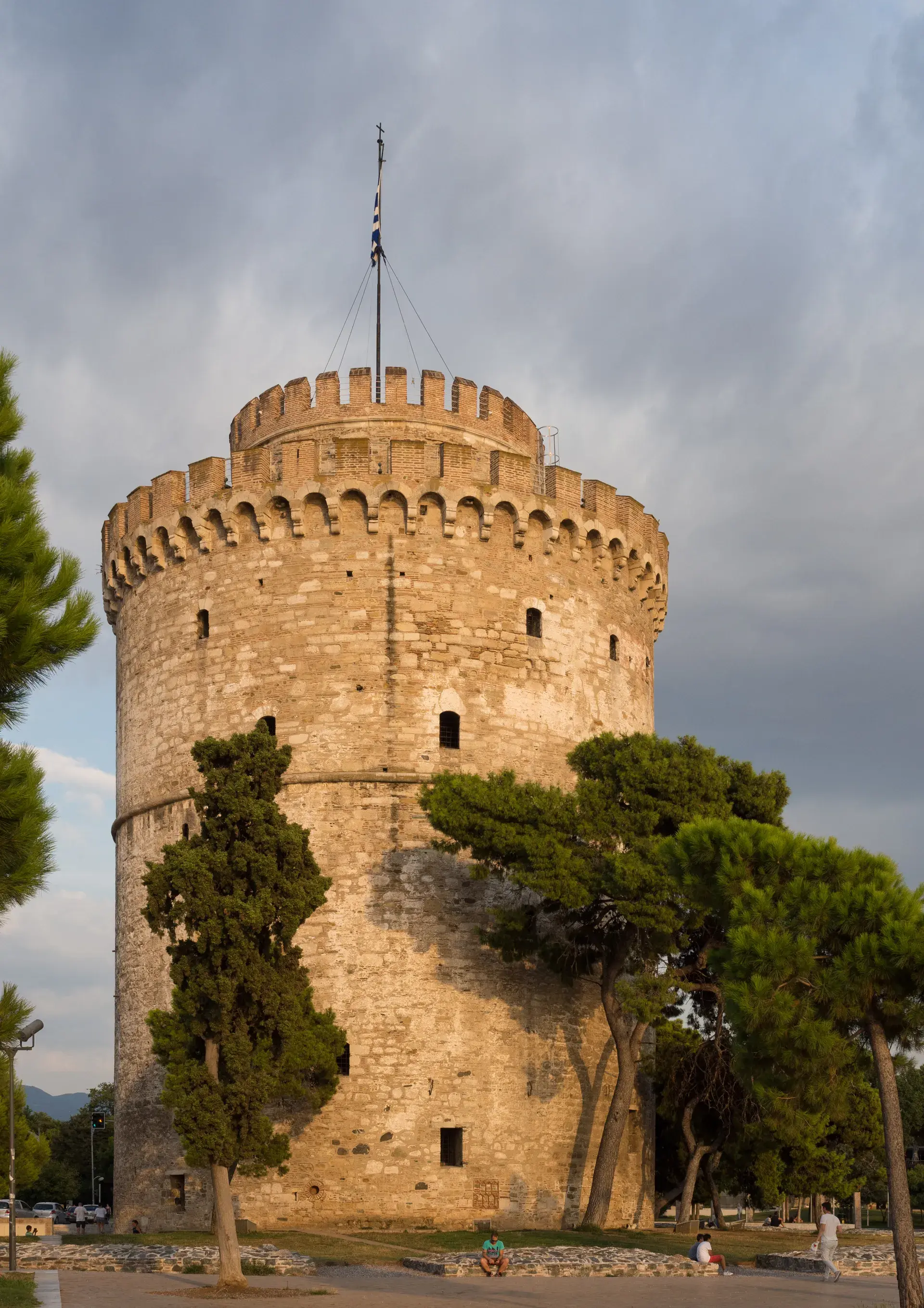
Built at the turn of the 4th century AD, around 298 to 300 AD, the imperial complex was commissioned by Roman Emperor Galerius. He established Thessaloniki as his capital for the eastern Roman provinces, using the grand palace to project imperial authority and grandeur. The complex formed the core residential and administrative area of a broader imperial precinct that included the Arch of Galerius, the Rotunda, and the ancient Hippodrome.
Following the death of Galerius in 311 AD, the palace continued to serve as a temporary residence for 4th-century Roman and Early Byzantine emperors. The city's strategic location between Rome and Constantinople made it an ideal operational base for imperial courts.
Unearthing the Imperial Court
The palace endured centuries of physical transformation. A major earthquake destroyed the grand Octagonal hall in the 7th century. The structure was subsequently modified into a vaulted water cistern, which remained in use until the 14th century. During the Ottoman period, new structures were built directly over the ancient ruins, including madrasas, schools, and the Akçe Mescid mosque, which stood above the Octagon until the 20th century.
Archaeological investigation of the site began in 1917 during World War I under French architect Ernest Hébrard. Interestingly, early archaeological efforts actually misidentified the palace's location. German researchers in 1935 originally believed the palace was situated north near the Rotunda. It was not until 1939 that Danish scholar E. Dyggve correctly pinpointed the ruins south of the Arch. Major excavations by the Greek Archaeological Service began in the 1950s, finally unearthing the Basilica, Apsidal Hall, and Octagon from beneath urban debris.
Exploring the Palace Grounds Today
Today, the Palace of Galerius operates as an 8,000-square-meter open-air state archaeological park managed by the Hellenic Ministry of Culture. The exposed structural units include the Apsidal Hall, the Basilica, central court buildings, thermal baths, and the Octagon. The exact original purpose of the Octagon remains a topic of debate among historians, with interpretations ranging from an imperial throne room or grand audience hall to a cult space.
Between 1993 and 2008, the site underwent extensive restoration. This effort won a 2008 Europa Nostra Award for successfully transforming an abandoned urban ruin into an accessible archaeological park. Visitors can view the sunken walls continuously from the surrounding elevated pedestrian promenades or enter via a ticketed area to walk among the preserved foundations.
For further historical context, the Galerian Complex Information Center operates at the Apsidal Hall site near the intersection of Dimitriou Gounari and Alexandrou Svolou Streets. The center offers 3D digital reconstructions and exhibitions detailing the site's history. Additionally, significant artifacts recovered from the ruins, such as the relief-carved "Small Arch of Galerius," are preserved and displayed today in the Archaeological Museum of Thessaloniki.
FAQ
When was the Palace of Galerius built?
The palace was built around 298 to 300 AD under the direction of Roman Emperor Galerius, who established Thessaloniki as his capital for the eastern Roman provinces.
What is the Octagon at the Palace of Galerius?
The Octagon is a large, ruined hall within the complex. While its exact original purpose is debated by historians—ranging from a throne room to a cult space—it was destroyed by a 7th-century earthquake and subsequently modified into a water cistern used until the 14th century.
Can visitors enter the Palace of Galerius ruins?
Yes, the 8,000-square-meter site operates as an open-air archaeological park with ticketed entry to walk among the ruins. The exposed foundations and floor mosaics are also continuously visible from the elevated pedestrian promenades surrounding Navarinou Square.