Aristotelous Square: Thessaloniki's Grand Seafront Plaza
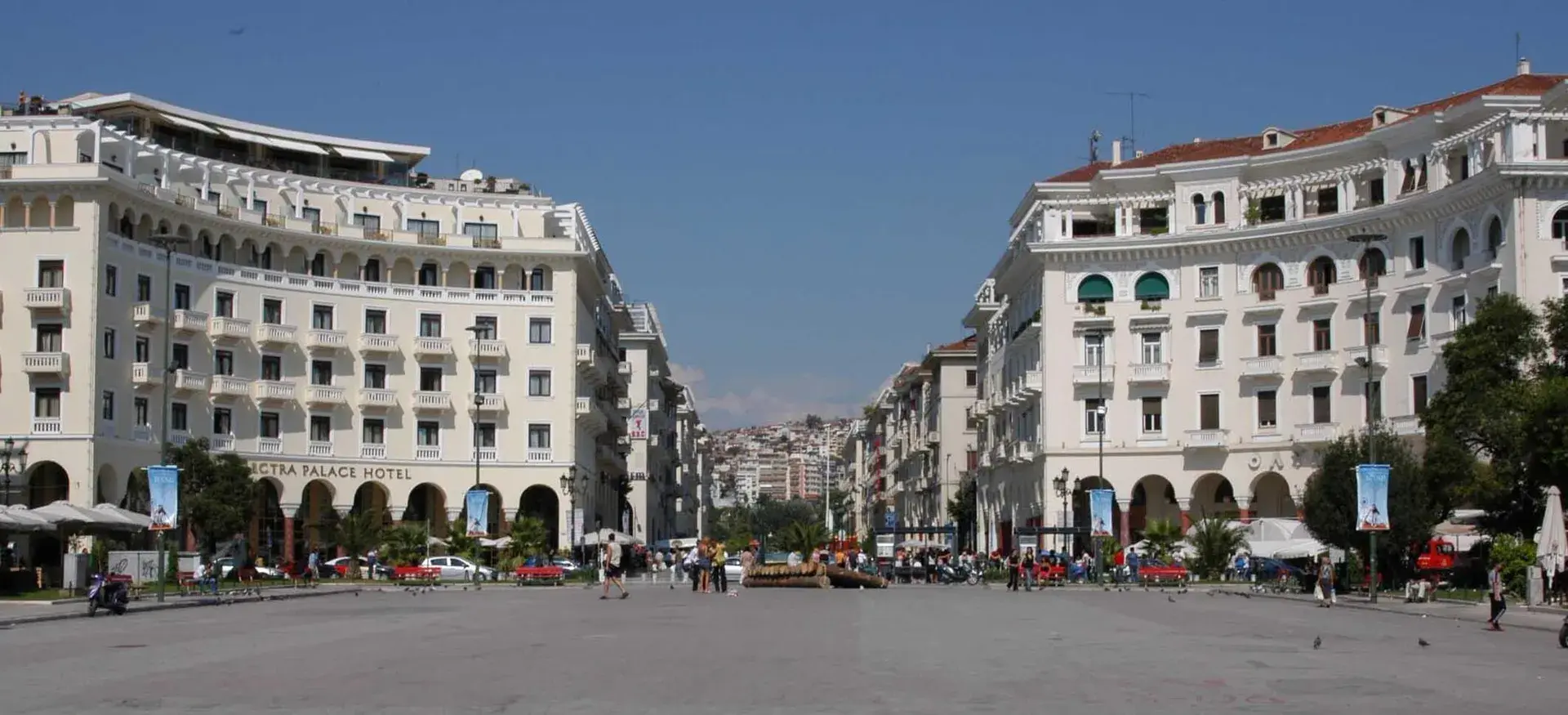
The grand scale of Aristotelous Square opens up to the waterfront, framed by Ernest Hebrard's sweeping neo-Byzantine mansion facades. Emerging from the ashes of a devastating fire, this grand seafront square transformed a dense Ottoman neighborhood into a modern European civic centerpiece.
Situated prominently along Nikis Avenue, Aristotelous Square serves as Thessaloniki's primary seafront plaza. As the central link bridging the waterfront promenade with the city's commercial grid, it functions as a 24-hour open public space and establishes a monumental axis that physically defines the modern layout of the city.
Rising from the Ashes of 1917
Before 1917, Thessaloniki's center featured a dense Ottoman-era layout devoid of large civic plazas. In August 1917, a devastating fire destroyed two-thirds of the city center. Following the destruction, Prime Minister Eleftherios Venizelos commissioned an international committee led by French architect Ernest Hebrard to reimagine the urban landscape.
Hebrard envisioned a grand monumental axis running uphill from the waterfront to the Roman Forum. Although his initial elaborate designs were simplified due to financial constraints and a reliance on private funding, the core layout was preserved. Construction of the surrounding buildings eventually took place primarily in the 1950s and 1960s.
Architectural Landmarks and Layout
Designed in 1918, the square blends Western European civic layout principles with Byzantine decorative elements, characterized by distinctive arches and colonnades. The twelve central buildings enclosing the space have been protected listed monuments since 1950.
The plaza is anchored by two notable quarter-circle buildings: the Electra Palace Hotel and the Olympion Theatre. The latter is renowned for hosting the annual Thessaloniki International Film Festival. Throughout the pedestrian arcades, cafes, bars, and retail shops operate, anchoring the city's commercial and social activity.
The Heart of Civic Life
Today, Aristotelous Square is Thessaloniki's main gathering space. The broad, open layout hosts major civic events, including concerts, political rallies, and widespread holiday celebrations such as Christmas and Carnival.
Statues and Unfulfilled Plans
Historically, the space was originally intended to be named Alexander the Great Square. Early designs featured a massive central statue of the legendary conqueror, but budget limitations prevented this vision from being realized.
Instead, a modern bronze statue of Aristotle stands near the square. A local tradition among university students claims that rubbing the philosopher's left big toe grants wisdom and brings luck for passing exams.
FAQ
Why was Aristotelous Square built?
The square was designed by French architect Ernest Hebrard in 1918 to rebuild and modernize Thessaloniki's city center after a devastating fire destroyed two-thirds of the area in August 1917.
Are the buildings in Aristotelous Square historic?
Yes, the twelve central buildings surrounding the square feature a blend of Western European and Byzantine architecture. While mostly constructed in the 1950s and 1960s, they have been protected listed monuments since 1950.
What is the tradition with the Aristotle statue in the square?
A modern bronze statue of Aristotle stands near the square. A local university student tradition claims that rubbing the philosopher's left big toe grants wisdom and luck for passing exams.