Hagia Sophia Thessaloniki: Byzantine History & Mosaics
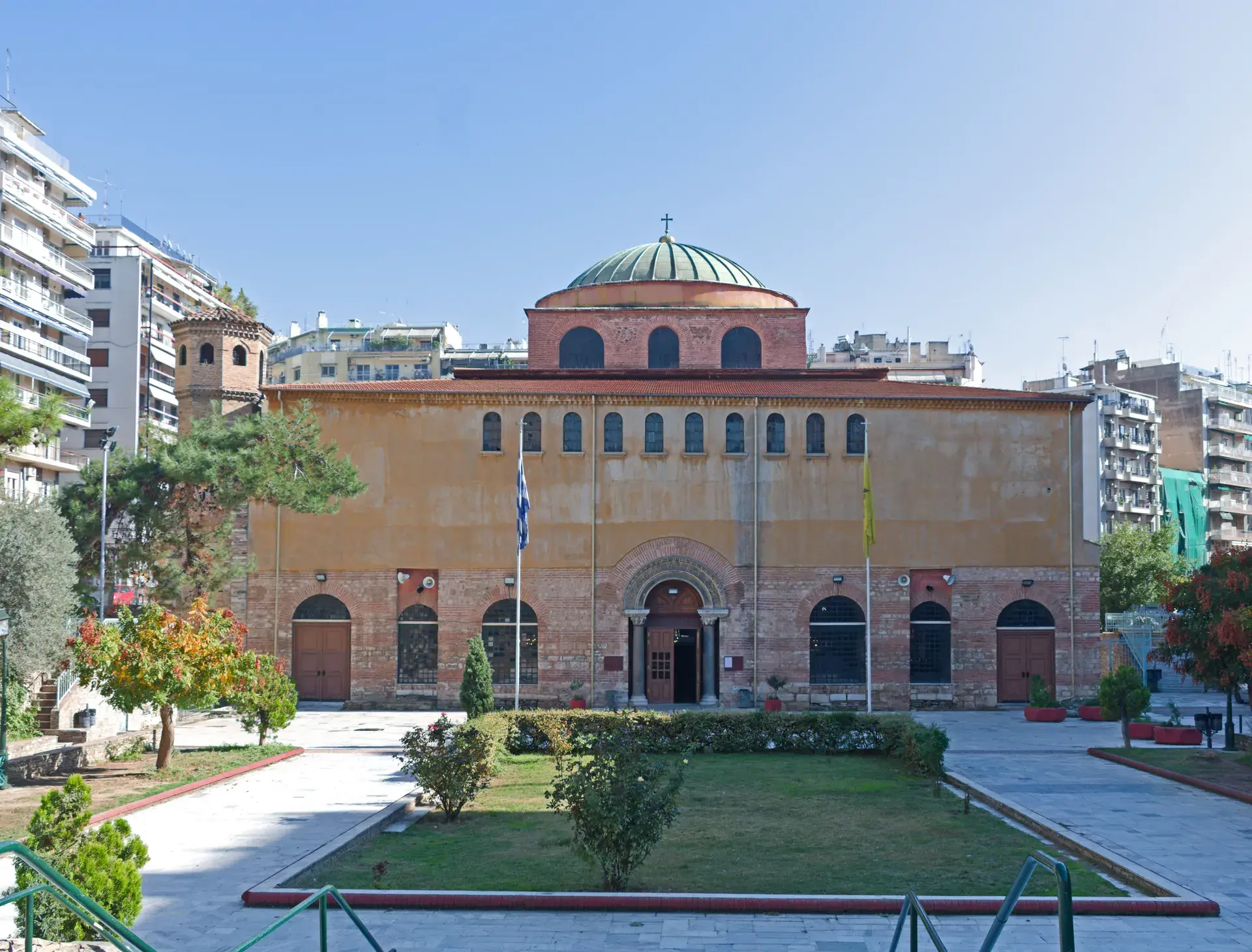
Gaze up from the bustling pedestrian street at the massive arches and historic brickwork of the iconic Holy Cathedral Church of Hagia Sophia.
A Pillar of Byzantine Heritage
The Holy Cathedral Church of Hagia Sophia stands as a spiritual anchor in central Thessaloniki, situated on a historic route between the seafront and the city's ancient Roman and Byzantine quarters. Constructed between the late seventh and mid-eighth centuries, the current structure was built over the ruins of a fifth-century basilica that collapsed during a severe earthquake. Recognized as a UNESCO World Heritage site since 1988, the monument preserves physical layers of Roman, Byzantine, Crusader, and Ottoman transformations.
Throughout the centuries, the building experienced significant religious upheaval. Built during the Iconoclastic era, the sanctuary apse originally displayed a plain gold mosaic cross. Following the victory of the Iconodules between 787 and 797 AD, this cross was replaced by a magnificent gold mosaic of the enthroned Virgin Mary holding the infant Christ. The cathedral later served as a Roman Catholic church during the Fourth Crusade and was converted into an Ottoman mosque, known as Aya Sofya Camii, in 1523 or 1524. It finally returned to Eastern Orthodox worship upon Thessaloniki's liberation in 1912, later surviving both the Great Fire of 1917 and a major earthquake in 1978.
Architectural Brilliance and Acoustic Innovation
The church represents a transitional cross-domed basilica, built with striking bands of brick and stone. The structure features a square cruciform nave measuring 30 by 30 meters. This compact footprint is notably small enough to fit completely underneath the central dome of the famous Hagia Sophia in Constantinople. Above the nave, four barrel vaults support a central dome spanning 10 meters in diameter, which was decorated in the late ninth century with a mosaic depicting the Ascension of Christ.
During excavations in the upper vault spaces, archaeologists discovered dozens of Middle Byzantine clay amphoras packed between the domes and outer walls. Medieval builders placed these vessels to reduce the structural weight on the arches while simultaneously functioning as acoustic resonators for church music. Inside the nave, natural light streams through twelve arched windows in the cubic drum. This light illuminates the gold-ground mosaics, dark stone columns, exposed brick vaults, and intricate marble details.
A Historic Headquarters and Active Landmark
Beyond its religious function, the cathedral once operated as a vital administrative center. Archaeologists have recovered seventeen lead administrative seals from the tenth and eleventh centuries in the western and southern galleries. These artifacts confirm that the church served as a headquarters for Byzantine state and religious officials.
Today, the Holy Cathedral Church of Hagia Sophia functions as an active Greek Orthodox parish church and a major landmark for tourists. It provides a quiet enclave with a pine tree garden amidst the high-density urban traffic of central Ermou street. Ongoing archaeological and landscaping projects in the courtyard and vestibules are integrating the exposed ruins of the earlier fifth-century basilica into an accessible open-air archaeological park.
FAQ
What architectural style is Hagia Sophia in Thessaloniki?
The church represents a transitional cross-domed basilica, featuring bands of brick and stone, a square cruciform nave, and a central dome supported by four barrel vaults.
How old are the mosaics in Hagia Sophia Thessaloniki?
The gold mosaic of the Virgin Mary in the apse dates back to 787–797 AD, while the central dome's mosaic depicting the Ascension of Christ was added in the late 9th century.
Did Hagia Sophia in Thessaloniki ever serve as a mosque?
Yes, the building was converted into an Ottoman mosque known as Aya Sofya Camii in 1523 or 1524, and it functioned as such until the city's liberation in 1912.
What unique acoustic feature does the church have?
Excavations revealed dozens of Middle Byzantine clay amphoras packed in the upper vaults. Builders used them to reduce structural weight and act as acoustic resonators for church music.