Roman Forum of Thessaloniki: Ancient History & Ruins
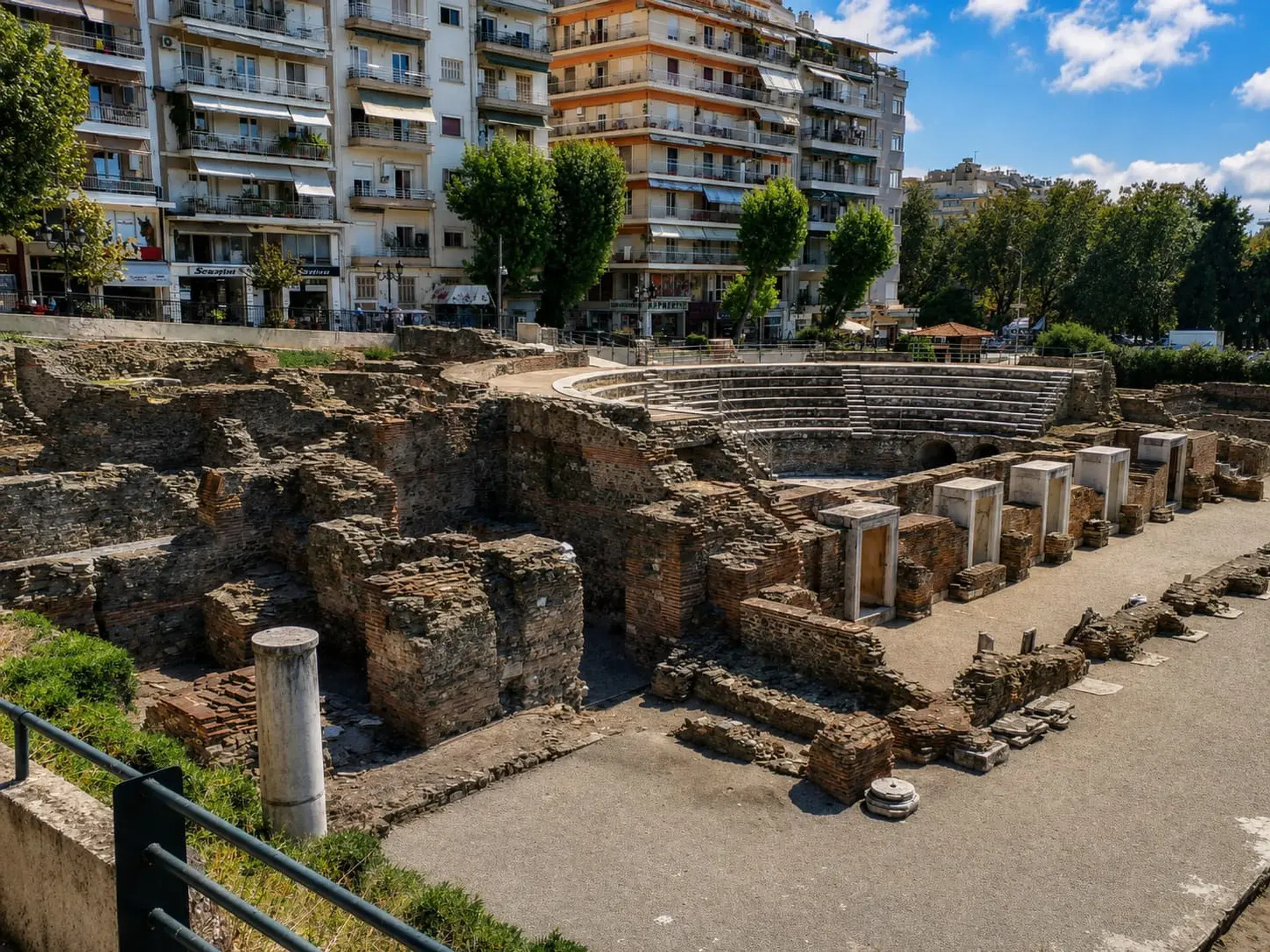
Peer down from the street into the sunken ruins of the Roman Forum of Thessaloniki to see the weathered stone of its 2nd-century amphitheater and excavated arches. Located on the central pedestrian axis connecting Aristotelous Square with Agiou Dimitriou Street, the two-hectare archaeological site illustrates the continuous 2,300-year urban layering of the city.
The Heart of Ancient Thessaloniki
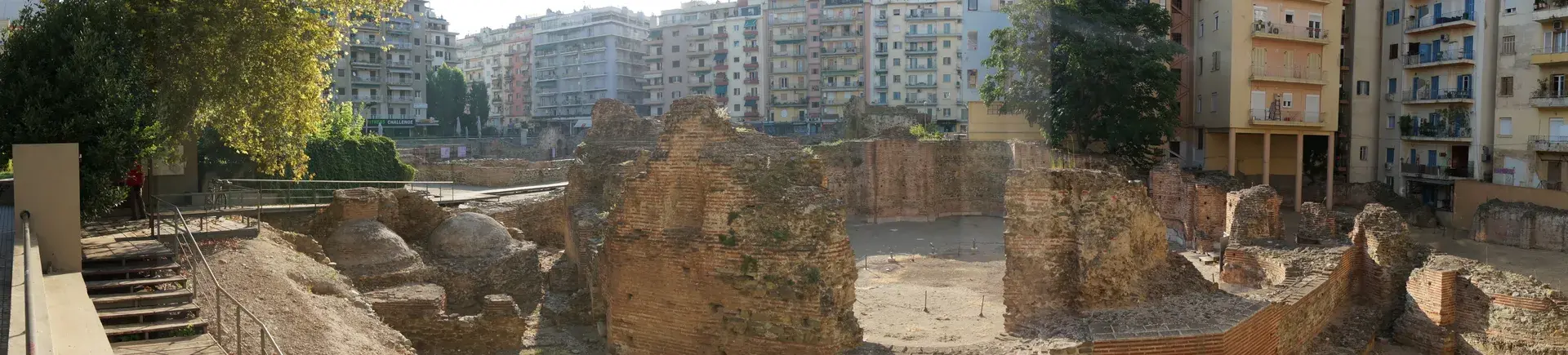
Built in stages between the late 2nd and early 3rd centuries AD over an older forum, the complex served as the political, administrative, and commercial center of the city for over three centuries. The site features a stone-paved, two-terraced rectangular plaza bordered by two-story double stoas. Key excavated structures include a row of 22 ancient shops, Roman public baths, and administrative spaces for archives and a state mint.
The Odeion and Cryptoporticus
The eastern Odeion originally functioned as a roofed council chamber before being expanded into an open-air venue in the 4th century AD. Below the surface lies the cryptoporticus, a subterranean double-vaulted gallery engineered to compensate for the land's natural slope toward the sea. The physical transition from the open, sun-exposed upper terrace down into the cool, quiet, brick-vaulted passages highlights the engineering of the underground structure. During the Early Byzantine and Ottoman eras, these subterranean tunnels were repurposed as city water reservoirs and drainage systems.
A Dramatic Rediscovery
The ancient administrative center was gradually buried under Byzantine and Ottoman urban layers and nearly lost to modern development. It was accidentally rediscovered in 1966 when workers digging foundations for a new courthouse unexpectedly struck Roman masonry. Curator Photios Petsas halted construction and saved the site from permanent destruction by restoring a single intact marble column to prove its historical importance.
Modern Operations and Lost Treasures
Today, the complex functions as an active open-air archaeological site and pedestrian gathering space operated by the Hellenic Ministry of Culture. An underground museum inside the cryptoporticus vault displays excavated artifacts, and the reconstructed Odeion serves as a venue for summer concerts and cultural events. A 2nd-century AD portico called Las Incantadas (The Enchanted Idols) once stood on the forum's southern edge until 1864, when its remaining pillars were dismantled from a local courtyard and taken to the Louvre.
FAQ
When was the Roman Forum of Thessaloniki discovered?
The forum was accidentally rediscovered in 1966 during excavations for a modern courthouse building. Construction was permanently halted to preserve the ancient ruins.
What is the cryptoporticus at the Roman Forum?
The cryptoporticus is a subterranean double-vaulted gallery built to compensate for the land's slope toward the sea. It originally supported the upper plaza and now houses an underground museum.
What happened to the Las Incantadas portico?
Las Incantadas was a 2nd-century AD portico on the forum's southern edge. In 1864, its remaining pillars were dismantled from a local courtyard and relocated to the Louvre in Paris.