Cork City Hall: A Symbol of Resilience and History
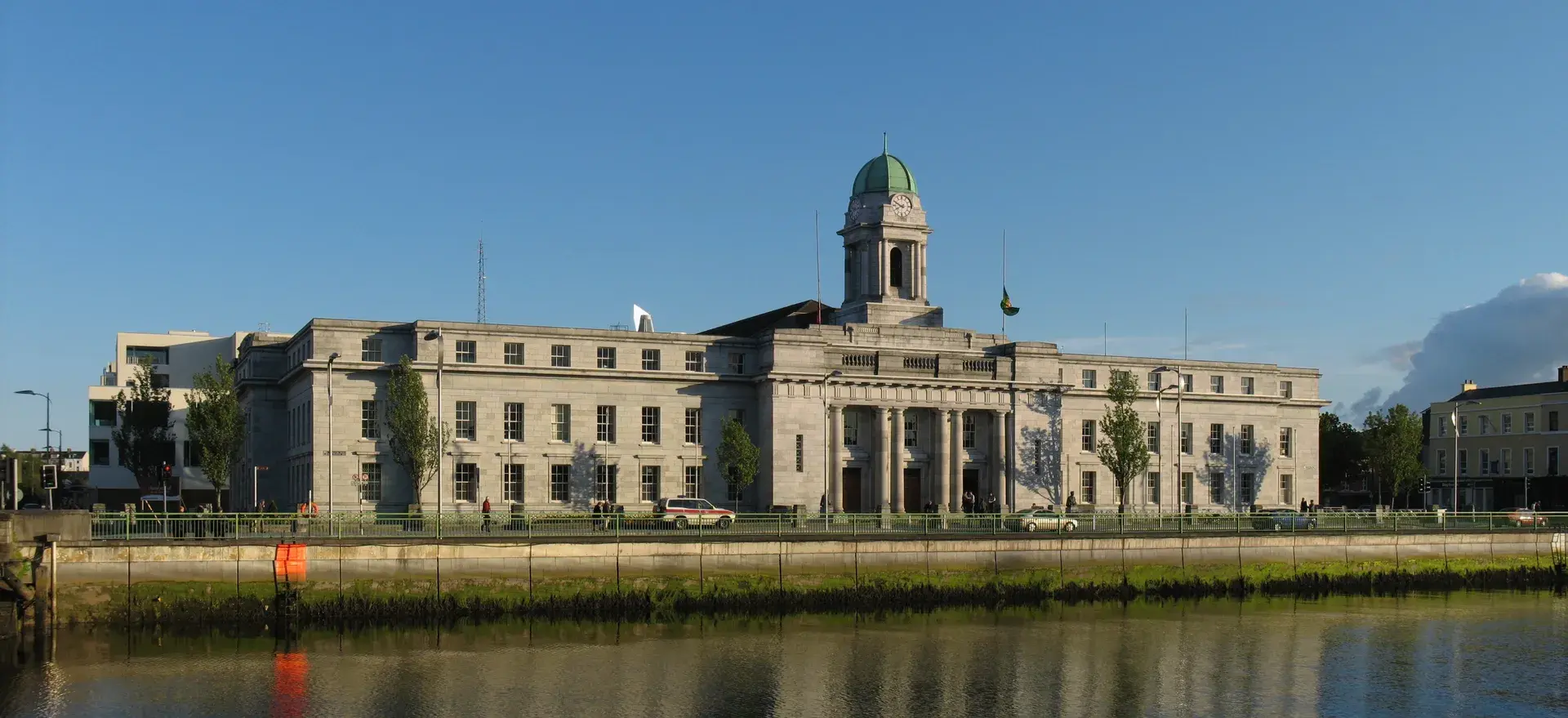
Rising from the ashes of its predecessor, Cork City Hall on Albert Quay stands as a powerful symbol of the city's resilience and civic pride. This monumental classical building embodies a complex history of destruction and reconciliation, serving today as a central administrative and cultural hub.
A History of Destruction and Renewal
The present City Hall is not the first to occupy this site. An earlier building, originally a corn exchange completed in 1843, was acquired by the Cork Corporation and began functioning as a city hall around 1903. This structure was completely destroyed on December 11, 1920, by the Black and Tans during the Burning of Cork in the Irish War of Independence. The fire also consumed the adjacent Carnegie Library, destroying many of the city's historical records.
In a remarkable turn of events, the British Government funded the reconstruction as a gesture of reconciliation. The foundation stone for the new building was laid by Éamon de Valera on July 9, 1932, and he officially opened the completed hall on September 8, 1936.
Monumental Classical Architecture
Designed by Dublin architects Alfred Jones and Stephen Kelly, Cork City Hall is celebrated for its grand Georgian character and is considered the last building of classical design constructed of stone on a grand scale in Ireland. The impressive facade is made from dressed limestone quarried from nearby Little Island. The building measures 76.6 meters long and features a prominent clock tower, reaching a total height of 27.5 meters.
Inside, the architectural elegance continues with features like the main staircase, which is crafted from Connemara marble. In 2007, a major extension designed by ABK Architects was added to the structure.
A Center for Civic and Cultural Life
Cork City Hall serves as the administrative headquarters for Cork City Council, hosting council meetings, citizenship ceremonies, and other civic functions. Beyond its governmental role, the building is a vital cultural venue. Its Concert Hall, which can seat over 2,000 people, is renowned for having some of the best acoustics in the country.
The venue is a cornerstone of the city's cultural calendar, hosting events like the Cork International Choral Festival. It has also been a stage for legendary musicians, including Rory Gallagher, who performed there over 20 times and recorded parts of his 'Irish Tour '74' album at the hall.
A Witness to History
Over the decades, City Hall has hosted numerous significant figures and events. On June 28, 1963, U.S. President John F. Kennedy visited and received the Freedom of the City. The building also honors key figures from the War of Independence, displaying busts by sculptor Séamus Murphy of former Lord Mayors Tomás MacCurtain and Terence MacSwiney, who both died during the conflict.
FAQ
Why was Cork City Hall rebuilt?
The previous City Hall was destroyed by fire on December 11, 1920, during the Irish War of Independence in an event known as the Burning of Cork.
Who paid for the rebuilding of Cork City Hall?
The reconstruction of City Hall, which took place between 1932 and 1936, was funded by the British Government as a gesture of reconciliation following the Irish War of Independence.
What is Cork City Hall used for today?
It serves as the administrative headquarters for Cork City Council and is a major cultural venue, hosting concerts, exhibitions, and civic functions in its renowned Concert Hall.
What is the architectural style of Cork City Hall?
Cork City Hall was designed in a classical style with a Georgian character. Its facade is made of dressed limestone, and the interior features a main staircase of Connemara marble.